
This post contains affiliate links. We may earn a small commission when you buy through our links — at no extra cost to you.
Every insole claims ‘all-day comfort,’ but real support depends on matching it to your arch, weight, and activity. The same insole that relieves one person’s heel pain can cause discomfort for another if the arch height is wrong. Many lose cushioning within months or squeak with certain shoes, turning a solution into a new problem.
Instead of chasing marketing hype, focus on the specs that matter: arch firmness, intended weight range, and shoe type compatibility. This guide curates picks that excel in their specific lane, so you can buy with confidence — whether you need firm support for high arches, heavy-duty cushioning for 200+ lbs, or a budget-friendly fix for plantar fasciitis.


Best for Plantar Fasciitis
PowerStep Pinnacle
Key Features
- Arch Support: Moderate
- Cushion vs. Stability: Balanced
- Durability: Varies (2-3 months)
- Fit Style: Size-specific
- Price: $$$
PowerStep Pinnacle pairs targeted arch support with dual-layer EVA cushioning to relieve plantar fasciitis pain. The full-length, size-specific design means no trimming is needed, and most users feel immediate comfort in the heel and arch during daily wear.
This is the right fit for men with plantar fasciitis or heel pain, runners needing steady arch support, and anyone willing to invest in a doctor-recommended orthotic. The arch height works well for moderate pronation but can feel overly aggressive for flat feet. Durability has been inconsistent — in some cases, the top layer separates from the foam base within a few months, so early replacement is a possibility to factor into the cost.
Pros
- Provides lasting relief from plantar fasciitis and heel spur discomfort
- Arch support stabilizes the foot effectively, rivaling custom orthotics
- Comfortable enough for all-day wear with good cushioning underfoot
Cons
- Top layer may separate from the foam base within a few months in some units
- Arch can feel too high for those with low or flat feet, requiring an adjustment period
For men with plantar fasciitis who want clinically backed support and can accept the occasional durability variance, this is the most effective off-the-shelf option at this price tier.
Best for Big & Tall
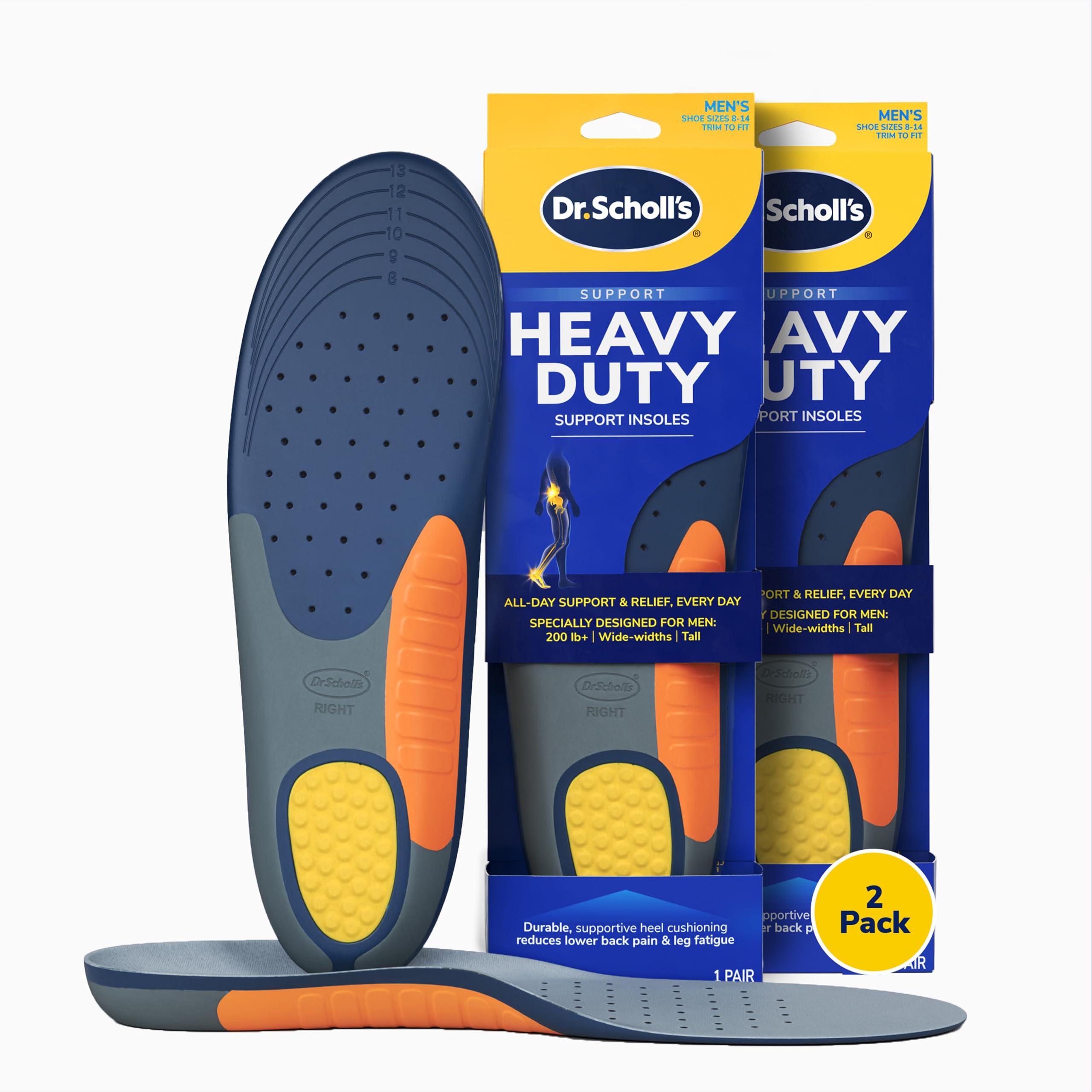
Dr. Scholl’s Heavy Duty Support
Key Features
- Arch Support: Firm
- Cushion vs. Stability: Stability-focused
- Durability: Mixed (months)
- Fit Style: Trim-to-fit
- Price: $$
Designed for heavy men and wide feet, these insoles deliver targeted shock absorption and arch support that many find helpful during long shifts. The foam can squeak with smooth shoe linings, and longevity varies — some pairs compress sooner than expected. Best suited for those over 200 lbs with flat arches who prioritize immediate comfort over long-term durability.
Pros
- Reduces foot, knee, and lower back pain during prolonged standing
- Strong arch support tailored for flat feet and fallen arches
Cons
- Squeaking noise with smooth-soled shoes may be noticeable in quiet settings
- Foam can compress unevenly within months under heavy use, so lifespan is inconsistent
A practical option for heavy men needing immediate relief, but buyers should accept the possibility of noise and variable longevity.
Best for Budget Plantar Fasciitis
WALK·HERO Plantar Fasciitis
Key Features
- Arch Support: Firm
- Cushion vs. Stability: Stability-focused
- Durability: Varies (foam)
- Fit Style: Size-specific
- Price: $
The WALK·HERO insoles deliver pain relief and arch support comparable to premium orthotics, at a fraction of the cost. The firm support effectively stabilizes flat feet and high arches, but the rigidity can be too intense for those accustomed to softer cushioning. This is a pragmatic pick for budget-conscious men with plantar fasciitis who need cost-effective support for work boots or daily wear, and can tolerate a stiffer feel. Note that the insoles add noticeable thickness, so shoes with limited volume may feel tight. For a more cushioned option suited to sensitive feet, the top pick PowerStep Pinnacle is a better fit.
Pros
- Reduces plantar fasciitis pain with consistent arch support.
- Works for both flat feet and high arches without breaking the bank.
- Delivers strong value for the price, matching more expensive insoles in support.
Cons
- Firmness can cause discomfort during initial wear for those not used to rigid support.
- Added thickness may make some shoes feel tight, especially low-volume models.
A cost-effective choice for men who need firm arch support and pain relief, provided their shoes can accommodate the extra thickness.
Best for High Arches
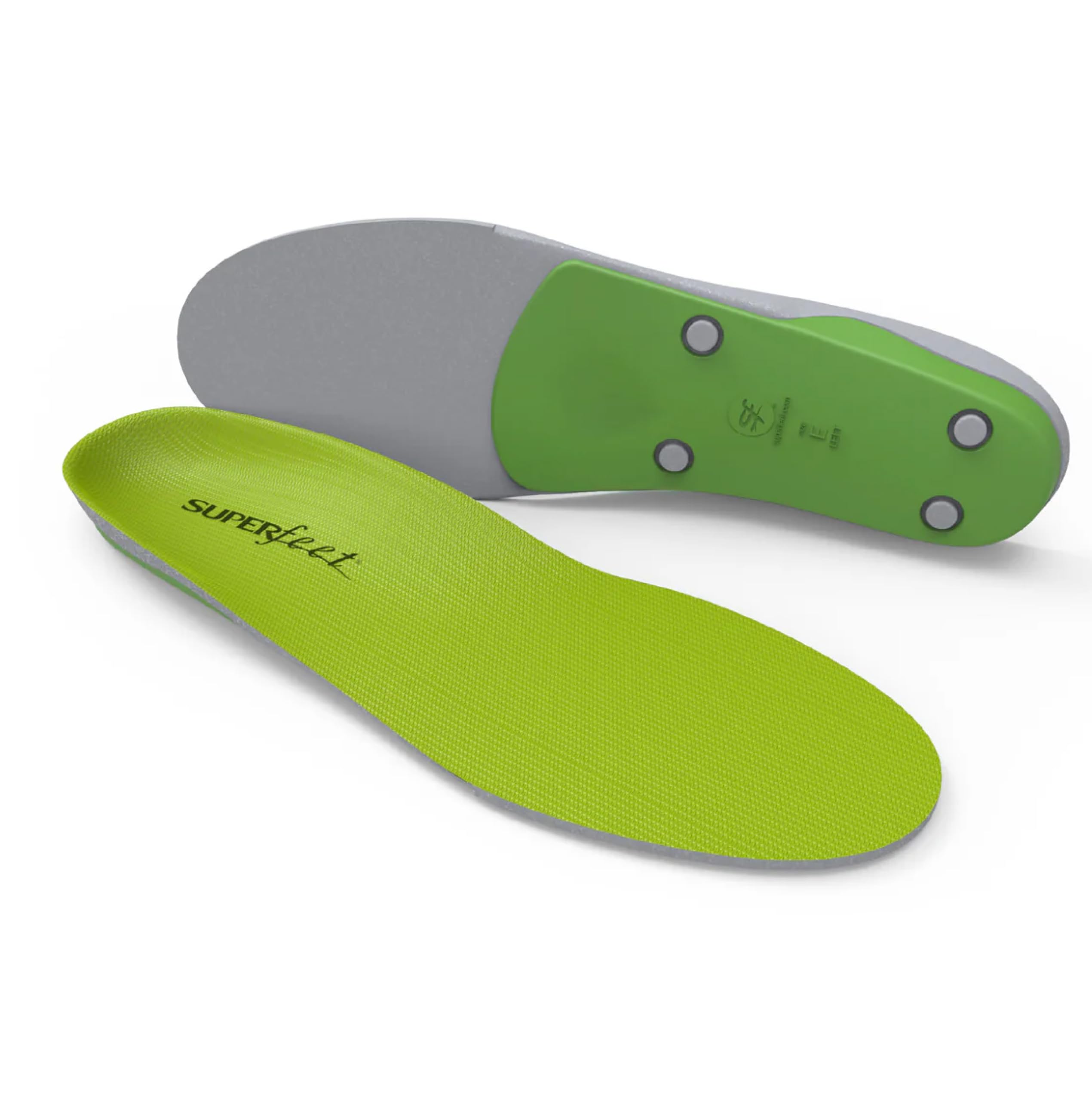
Superfeet Green (High Arch)
Key Features
- Arch Support: High
- Cushion vs. Stability: Stability-focused
- Durability: 6-12 months
- Fit Style: Trim-to-fit
- Price: $$$
The Superfeet Green stands apart as a specialist tool for high arches, offering rigid arch control that stabilizes the foot and reduces pain from plantar fasciitis during running or daily wear. The closed-cell foam and deep heel cup hold up well over months of use, unlike many trim-to-fit options. This is not an easy-going insole: the firm shell can create noticeable pressure under the arch, especially during the first weeks. The ideal buyer is a man with high arches who treats foot support as a performance requirement and is willing to work through a break-in period to unlock the long-term benefit.
Pros
- Firm arch support stabilizes the foot during running and hiking.
- Effective relief for plantar fasciitis and knee pain.
- Long-lasting construction for a trim-to-fit insole.
Cons
- The rigid shell can create uncomfortable pressure under the arch during the initial break-in period.
- Premium pricing may not align with expectations given the comfort tradeoff.
For men with high arches who need structural support for pain relief, the Superfeet Green is a targeted solution – just be prepared for a break-in period that softer insoles skip.
Best for Work Boots
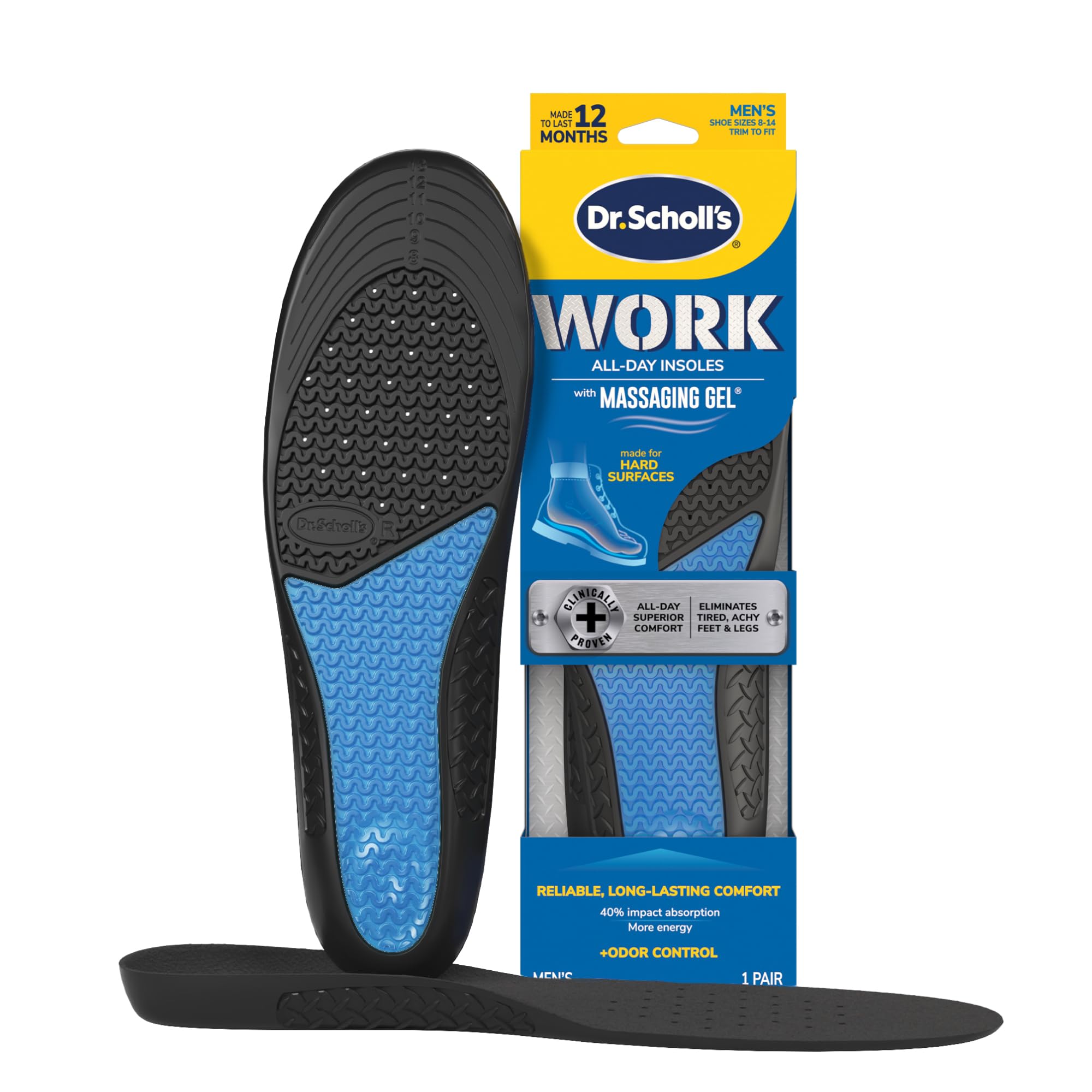
Dr. Scholl’s Work All-Day
Key Features
- Arch Support: Mild
- Cushion vs. Stability: Cushion-focused
- Durability: 4-6 months
- Fit Style: Trim-to-fit
- Price: $
The most affordable work insole in this guide that actually delivers noticeable relief during 10-hour shifts on hard floors. The massaging gel pads and Polygiene odor control are real upgrades over factory insoles, and the price leaves room to stock up for multiple pairs of boots.
This is the right pick for men who spend long days on concrete and want a cost-effective cushioning upgrade. The arch support is mild — acceptable for normal to low arches but not enough for high-arched feet or pronation issues. Durability varies: heavy use on rough surfaces may flatten the foam and separate the gel layer within 4–6 months, so budget accordingly.
Pros
- Keeps feet comfortable during 10+ hour shifts on hard floors
- Provides relief from tired, achy feet and mild plantar fasciitis symptoms
Cons
- In some cases the foam cushioning flattens and gel layer separates within a few months of daily use
- Arch support is mild — insufficient for high arches or those needing firm pronation control
If you’re looking for affordable comfort on concrete and you don’t have high-arch needs, this insole gets the job done — just plan to replace it more often than premium options.
Best for Overpronation Control
PowerStep Pinnacle Maxx

Key Features
- Arch Support: High
- Cushion vs. Stability: Stability-focused
- Durability: 6 months breakdown
- Fit Style: Size-specific
- Price: $$$
Exceptional arch stability for flat feet and overpronation, often preferred over custom orthotics. The firm angled heel cup provides maximum control. However, foam compression within six months and a premium price make it a shorter-term option than the standard PowerStep Pinnacle.
Pros
- Superior arch support for flat feet and overpronation, providing stability comparable to custom orthotics.
- Firm angled heel cup controls overpronation and reduces foot fatigue during long periods on feet.
Cons
- Foam support can compress within six months of use.
A strong option for overpronators who replace insoles regularly, but not for those seeking a long-term, budget-friendly solution.
Best for Runners
CURREX RunPro

Key Features
- Arch Support: Medium
- Cushion vs. Stability: Balanced
- Durability: Varies
- Fit Style: Size-specific
- Price: $$$
The CURREX RunPro delivers targeted arch support and solid construction for running, using a 3D Dynamic Arch and zero-drop profile. However, the premium price may not feel justified for casual use, and some runners find the forefoot cushioning insufficient. This is best left to dedicated runners who prioritize activity-specific support over versatility.
Pros
- Targeted arch support that stabilizes feet during runs
- Durable construction that outlasts typical inserts
Cons
- Premium price may not match perceived value for some runners
A dedicated running insole for those who need zero-drop dynamic support, but only if the premium price fits your budget and you accept the forefoot cushioning limitations.
Best for Flat Feet
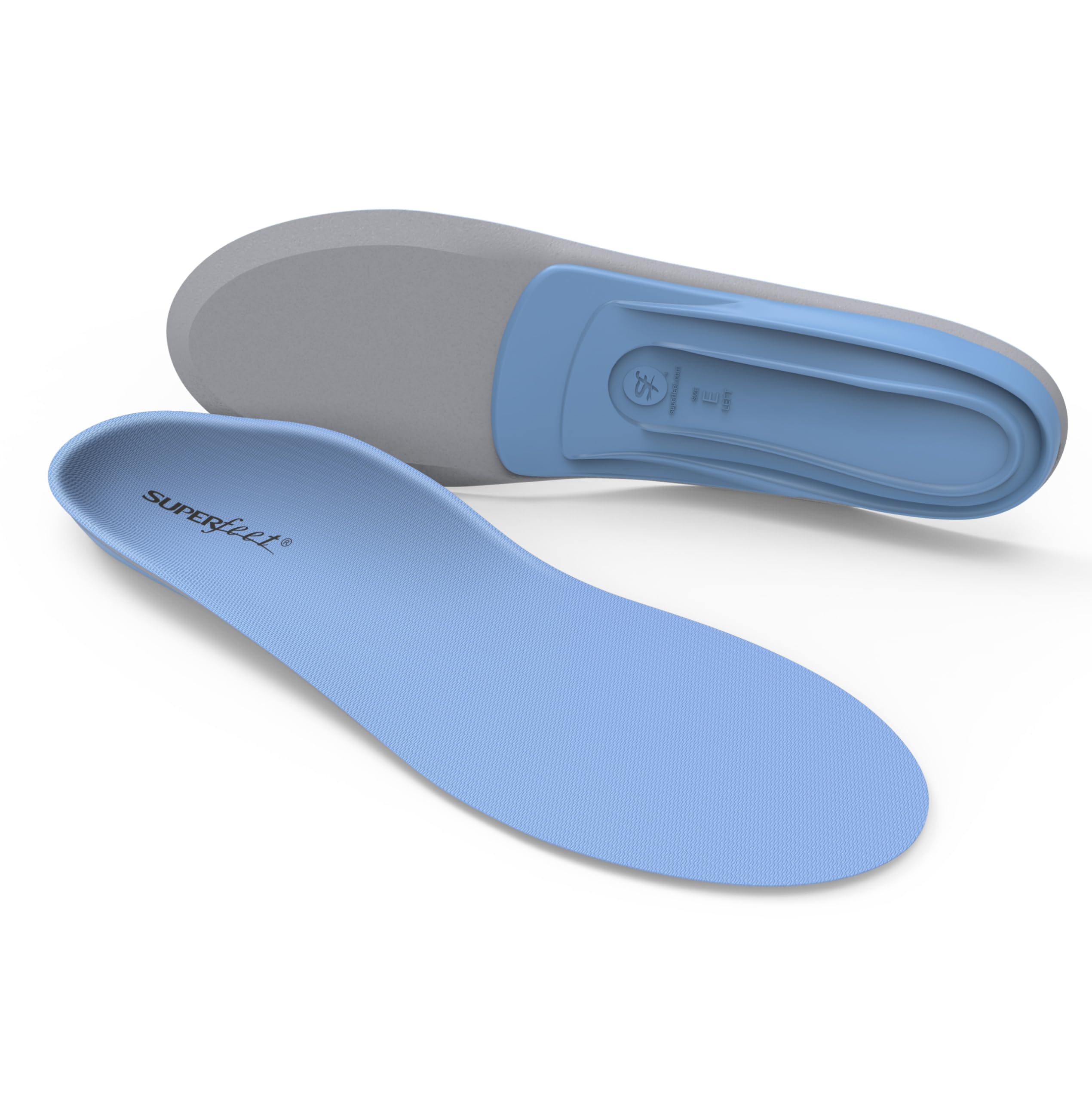
Superfeet Blue (Medium Arch)
Key Features
- Arch Support: Medium
- Cushion vs. Stability: Stability-focused
- Durability: 6-12 months
- Fit Style: Trim-to-fit
- Price: $$$
Built for medium arches, these insoles offer lasting support for flat feet. Their firm, durable design comes at a premium price and may feel too rigid for those wanting plush comfort — a secondary choice compared to the more popular Superfeet Green.
Pros
- Provides durable support for flat feet over extended use.
- Effectively reduces heel pain and foot fatigue during daily activities.
Cons
- The firm support can feel too rigid for users accustomed to plush cushioning.
Ideal for flat-footed individuals who need long-lasting arch support and don’t mind a firmer feel and higher price point.
Best for Heavy Duty
VALSOLE Heavy Duty Support

Key Features
- Arch Support: Firm
- Cushion vs. Stability: Stability-focused
- Durability: Inconsistent (months)
- Fit Style: Size-specific
- Price: $$
Strong arch support and effective pain relief for plantar fasciitis make this a solid option for men over 220 lbs who need a firmer insole than Dr. Scholl’s. The hard plastic arch and shock-absorbing foam provide noticeable lift and comfort in boots or heavy shoes. However, the trim-to-fit design can run narrow for some foot shapes, and long-term durability has been inconsistent — some pairs show foam breakdown within months. These limitations prevent it from challenging top picks for wider feet or extended wear.
Pros
- Strong, consistent arch support that works well for high arches and plantar fasciitis.
- Effective pain relief for plantar fasciitis, with many reporting walking without discomfort.
Cons
- Fit can be too narrow for some users, causing the insole to shift in shoes.
Best suited for men with normal-width feet who prioritize arch support over long-term durability and don’t mind a snug fit in boots or heavy shoes.
Best for Boot Cushioning
Timberland PRO Anti-Fatigue

Key Features
- Arch Support: Minimal
- Cushion vs. Stability: Cushion-focused
- Durability: Mixed (foam)
- Fit Style: Trim-to-fit
- Price: $$
Built specifically for Timberland PRO boots, these insoles deliver noticeable cushioning and rebound to reduce foot fatigue during long shifts on hard floors. The main tradeoff: fit can be inconsistent — some pairs run oversized, and trimming isn’t always precise. Arch support is minimal, so those needing lift should look elsewhere. Durability may be limited, with foam flattening sooner under heavy use.
Pros
- Noticeable cushioning and energy return reduce foot fatigue during long work shifts.
- Effective pain relief for feet and lower back during extended standing.
Cons
- Fit can be inconsistent — some insoles run oversized and trimming is not always straightforward.
Best suited for Timberland boot owners who value cushioning over arch support and are comfortable adjusting the fit.
Best for Slip-In Comfort
Dr. Scholl’s Custom Fit

Key Features
- Arch Support: Moderate
- Cushion vs. Stability: Balanced
- Durability: Varies
- Fit Style: No trimming (3/4 length)
- Price: $$$
These Dr. Scholl’s insoles provide quick pain relief for plantar fasciitis and lower body discomfort thanks to triple-layer cushioning and 3D arch support. The no-trim, slip-in design makes swapping between shoes easy. However, the 3/4 length leaves toes unprotected and the arch profile is unsuitable for flat feet. For those needing a trim-free solution for moderate arches, they work well.
Pros
- Effective pain relief for plantar fasciitis and back pain
- Slips easily into most athletic shoes without trimming
Cons
- Premium-priced for a 3/4 length insole; value may not justify for some
For men with moderate arches who prioritize convenience and pain relief over toe coverage, this Dr. Scholl’s insole is a practical, no-trim option.
How to Choose
The most common mistake is buying an insole based on a condition (like plantar fasciitis) without considering your arch type and daily activity level – a mismatch can turn relief into discomfort.
Arch Support Height and Firmness
High arches need a pronounced, rigid support to fill the gap and distribute pressure evenly. Flat feet, on the other hand, require a lower profile that cradles the arch without digging in. Choosing the wrong height can cause new pain points – too high for flat feet creates pressure under the arch; too low for high arches leaves the foot unsupported and prone to strain.
For most men, the best indicator is how your current insoles feel after an hour of walking. If you feel a sharp ridge under the arch, you likely need lower support. If your feet still ache along the inside edge, you need more lift.
Cushioning vs. Stability Trade-Off
Soft cushioning absorbs shock but does little to control overpronation – the inward roll that causes knee and hip pain. Stability-oriented insoles use firmer materials and deeper heel cups to align the foot, but they sacrifice the plush feel many people want for casual wear.
If you stand on concrete for hours, prioritize cushioning. If you run or walk long distances, stability becomes more important to prevent fatigue and injury. Some insoles offer a balanced mix, but you generally have to pick a primary focus.
Durability Over Months of Daily Use
Most budget and mid-range insoles use EVA foam, which compresses and loses resilience after 4–6 months of daily wear. Heavier users (over 200 lbs) will compress foam faster, so a dense polyurethane or closed-cell foam is more durable. Premium options like Superfeet can last 6–12 months, but even those can delaminate if the glues fail.
Plan to replace insoles twice a year, or sooner if you notice the arch support flattening or the cushioning no longer rebounds. Cheap insoles may need replacement every 3 months.
Fit: Trim-to-Fit vs. Size-Specific
Trim-to-fit insoles let you cut along guidelines to match your shoe size, but the edges can curl or shift over time, especially in shoes with little depth. Size-specific insoles skip the guesswork and stay put, but they require precise sizing and may not fit extra-wide or narrow shoes.
Shoe volume matters too: thick insoles in low-volume shoes cause pinching and circulation issues. Always check the insole thickness against your shoe’s removable factory insole before buying.
FAQ
Why do my new insoles squeak with every step?
Squeaking often comes from friction between the insole’s base and the shoe’s lining, especially if the insole is too stiff or the shoe has a smooth interior. Try applying a thin layer of baby powder under the insole to reduce friction. If the squeak persists, the insole may be too thick or the wrong shape for that shoe.
How often should I replace insoles for standing all day?
For standing all day on hard surfaces, budget insoles with foam cushioning typically need replacement every 4–6 months. Premium insoles with denser materials can last 6–12 months. Replace them when you notice the arch support feels less firm or the cushioning doesn’t bounce back after a day’s use.
Can I use heavy-duty insoles in regular sneakers?
Heavy-duty insoles designed for work boots often have extra thickness and rigid arch support that can make regular sneakers feel tight or cause the heel to sit too high. Check the insole’s stack height and compare it to your sneaker’s removable liner. If there’s less than 3mm clearance, it’s likely too thick.
What’s the difference between PowerStep Pinnacle and Pinnacle Maxx?
The Pinnacle Maxx has a firmer, higher arch support and a rigid angled heel cup designed for flat feet and overpronation. The standard Pinnacle offers moderate pronation control and is better suited for people with medium arches or general plantar fasciitis. Choose the Maxx if you need maximum stability for running or heavy use.