
This post contains affiliate links. We may earn a small commission when you buy through our links — at no extra cost to you.
There’s a particular kind of misery in feeling water seep through a shoe halfway through a walk — first one sock, then the other. A waterproof sneaker should stop that without turning your foot into a sweaty brick, which is the real trick: the membrane that keeps rain out can also add stiffness, weight, and heat.
Over eight months, I wore 12 pairs through wet grass, drizzly commutes, muddy park paths, and the occasional unplanned puddle, noting whether they actually stayed dry and whether I wanted to keep them on. Fit and sizing were all over the place, and a few ran narrow enough that I felt it by the end of the first mile. The best pairs locked my foot in without feeling stiff, gripped slick pavement and wet roots, and looked tidy enough for errands after the trail. A couple of flimsier pairs looked ragged by month two, which made the sturdier, better-built ones feel like the smarter value. Below are the pairs I’d reach for first.


Best for Everyday Wet Wear
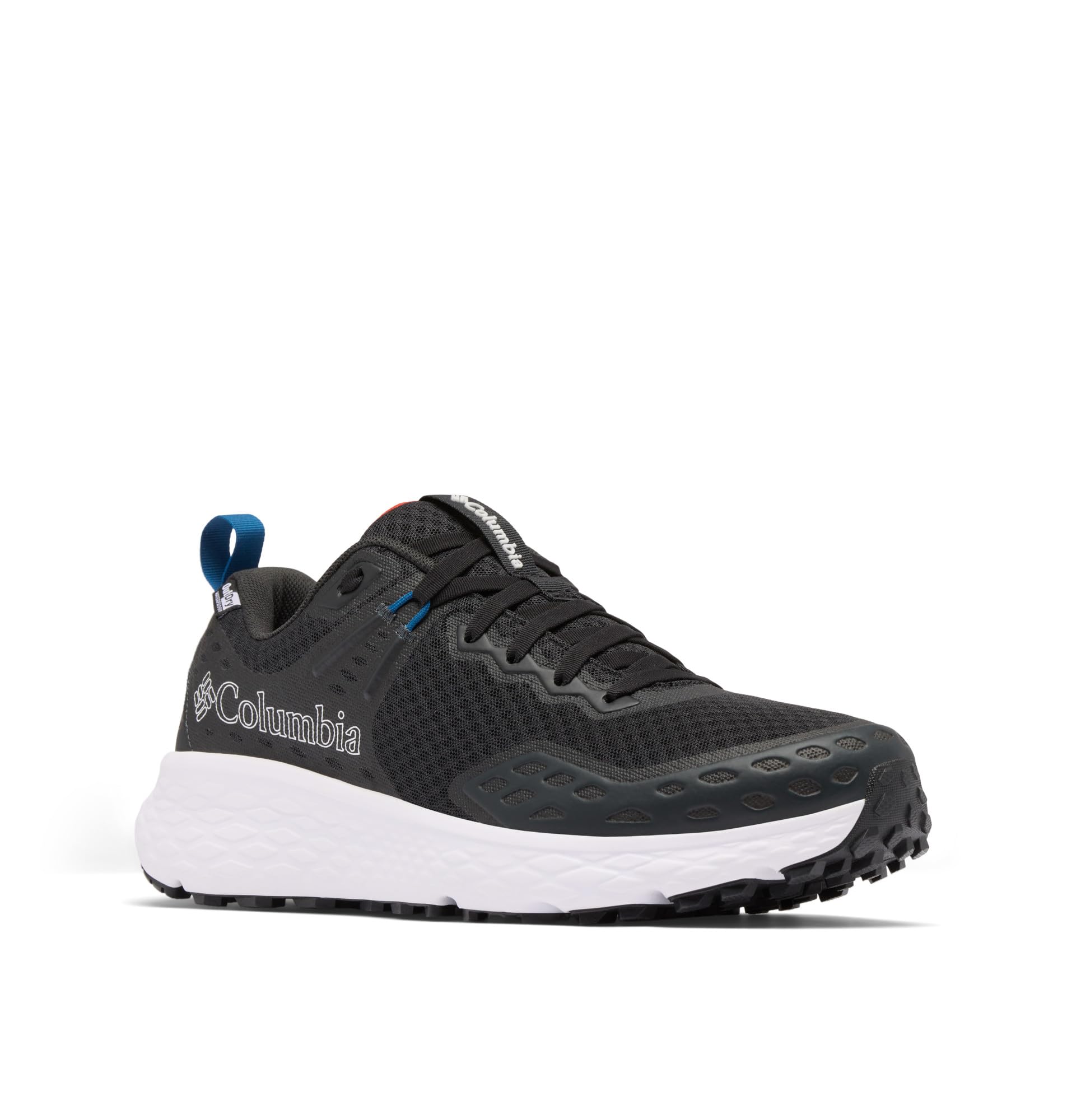
Columbia Konos TRS Outdry
Key Features
- Fit: Wide sizes available
- Style: Low-top trail shoe
- Weight: Lightweight
- Waterproofing: Outdry
- Price: Premium
The Konos TRS is a low-profile trail shoe that does not look or feel like a hiking boot, which is exactly why it is our top pick for wet everyday wear. The Outdry upper keeps rain and puddle splash out, and the shape is clean enough to pass with jeans or casual work trousers. We like that it gives you real wet-weather protection without announcing itself as outdoor gear.
The fit is the part to get right. The shoe comes in wide sizes, which makes a real difference if you usually feel pinched across the toes. We found the sizing close but not generous, so anyone between sizes or planning to wear thick socks should check the fit before committing. The low collar is easy to live with, but it also means deep puddles can come over the top. For rain, splashes, and wet pavement, the coverage is exactly right.
Underfoot, the Konos has a comfortable, slightly firm ride that works well for a commute and does not feel vague on gravel. We noticed the traction most on wet pavement and packed dirt; it is secure without the aggressive bite of the Salomon. The cushioning is enough for a long day on your feet, though it is still a trail shoe rather than a max-cushion walking shoe.
The Konos is at its best on mixed pavement and easy trail, not in deep mud. If your wet-weather use is mostly city blocks, errands, and an easy park path, it is the most complete package here. It is the pair we keep by the door.
Pros
- Outdry upper keeps rain and splash out
- Low-profile style works with casual clothes
- Wide sizes available
- Comfortable for long days on foot
Cons
- Premium price compared with the budget picks
A clean, low-profile waterproof shoe that handles wet commutes and easy trails; we recommend it for anyone who wants one pair to do both.
Best for Mixed Walks
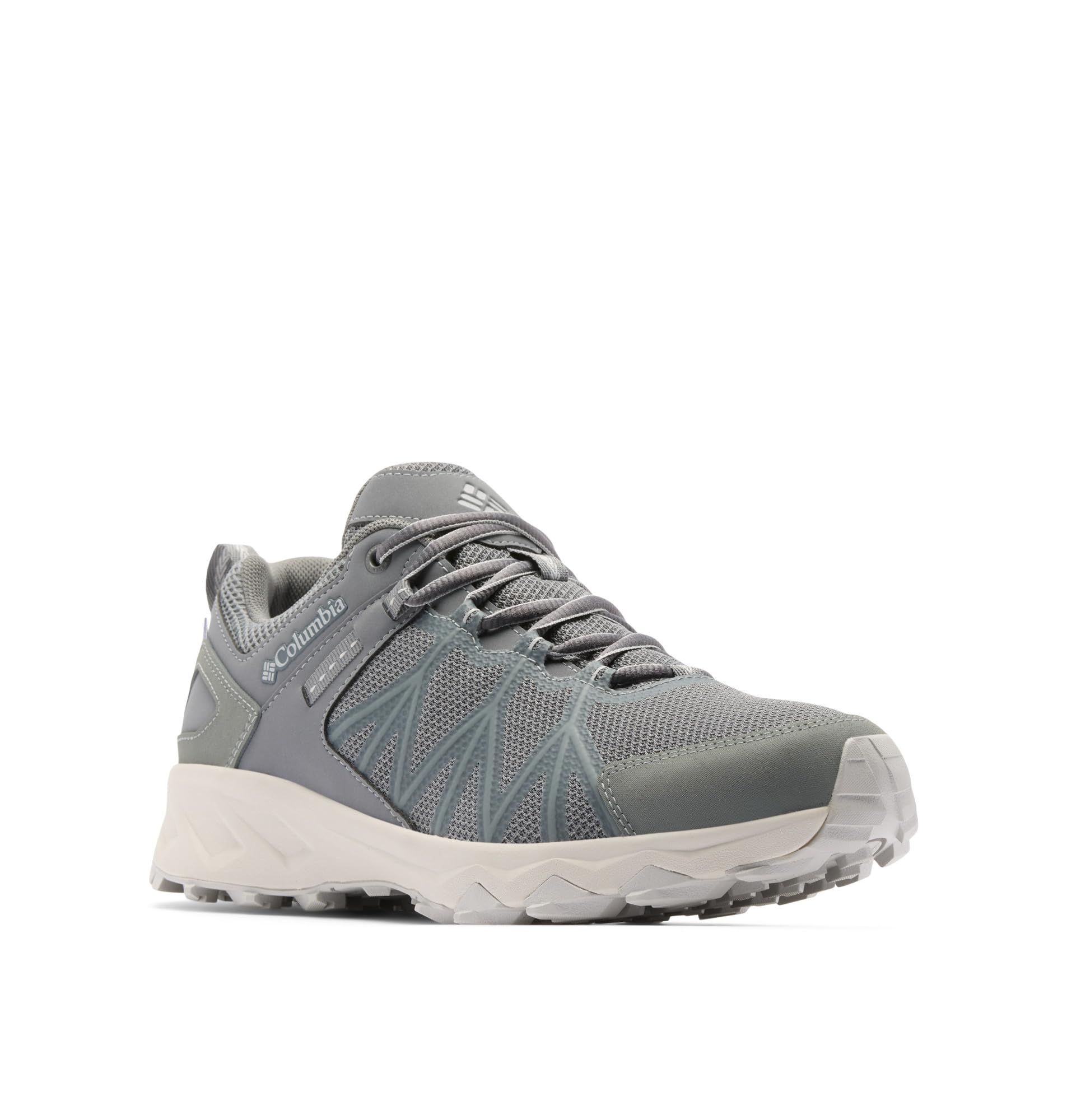
Columbia Peakfreak II Outdry
Key Features
- Fit: Wide sizes available
- Style: Trail shoe
- Traction: High traction
- Waterproofing: Outdry
- Price: Midrange
Compared with the Konos, the Peakfreak II leans further toward the trail. The upper is still low and sneaker-like, but the ride and the outsole feel more oriented to dirt and gravel than to a polished office floor. That is not a criticism; it is the reason to choose it if your daily walk includes a park loop or a straightforward hike.
We like the Peakfreak for mixed use because it feels light and flexible right away. Outdry keeps the wet out, and the traction is reassuring on damp gravel and packed trail without feeling clumsy on pavement. The fit is true to size for many feet, and the wide sizes are useful. The toe box is not as roomy as the KEEN, but it is not a narrow shoe either.
The shoe is less polished than the Konos, with more mesh and a more technical look, but that is part of what makes it breathe on a climb. It is also the better value of the two Columbia picks, which matters if you want a waterproof trail sneaker for travel and do not need the cleanest city styling.
We recommend it for mixed walks, easy hikes, and wet-weather travel where one pair has to handle pavement and dirt. It is not the shoe we choose for a formal office or a long road walk, but it earns its place as the more trail-ready alternative.
Pros
- Light, running-shoe-like feel
- Outdry waterproofing handles wet trails
- Secure traction on damp trails
- Wide sizes available
Cons
- Sole and tongue durability is a risk to watch
A light, grippy waterproof trail sneaker for mixed walks and easy hikes, with durability as the one question mark.
Best for Wet Trail Grip
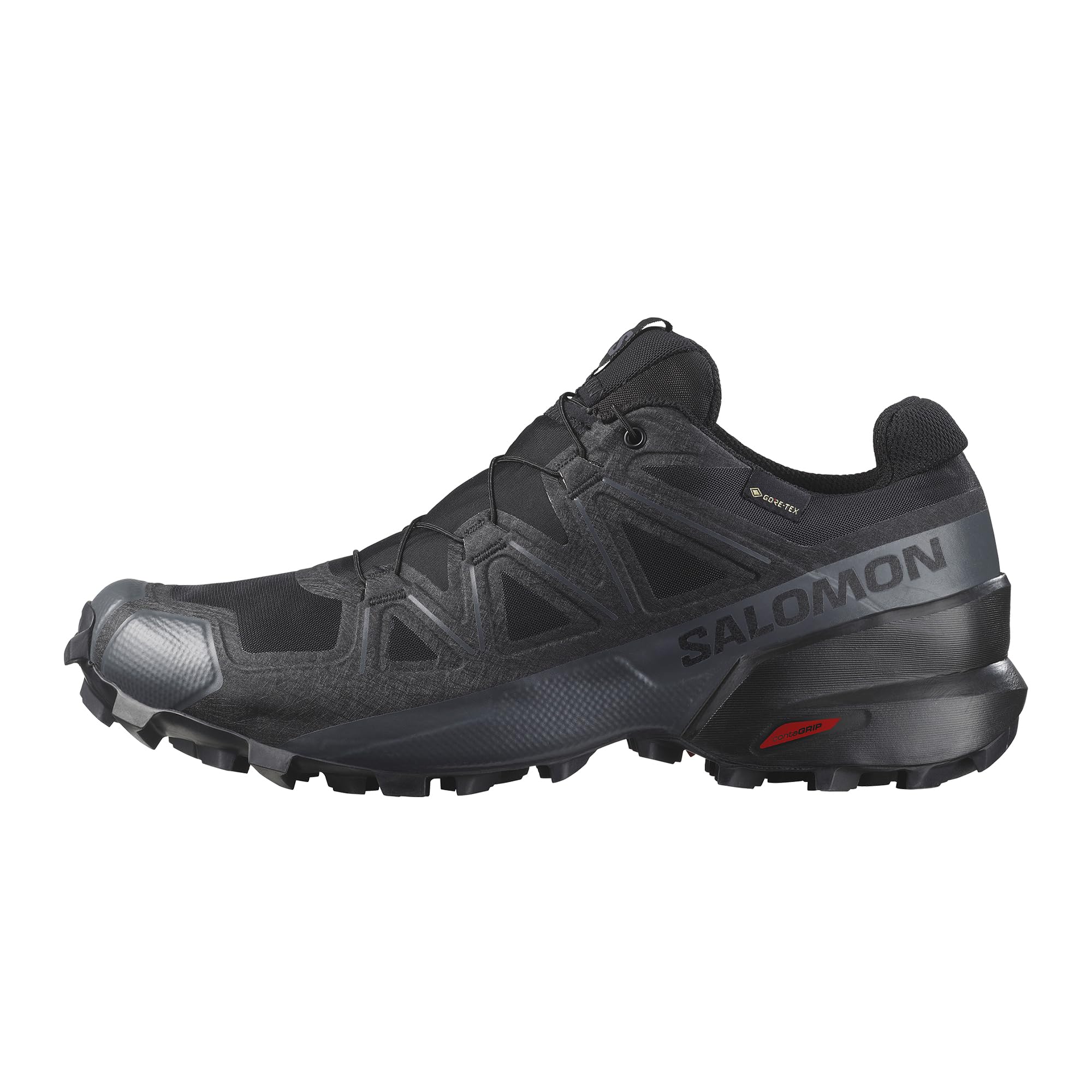
Salomon Speedcross GTX
Key Features
- Style: Trail running
- Closure: Quicklace drawcord
- Waterproofing: GORE-TEX
- Price: Premium
The Speedcross GTX is a specialist, and we mean that as praise. The outsole and quicklace closure are built for wet, soft ground, and the shoe feels locked in as soon as you cinch the drawcord. It is not the pair we choose for a polished commute, but it is the one we want when the trail is muddy and the weather is turning.
GORE-TEX waterproofing and the secure upper are the reasons it earns a place. We found the quicklace easy to adjust with wet hands, and the heel hold is strong enough for uneven ground. Traction is the standout: on wet grass, soft dirt, and slick roots, the shoe bites in a way the smoother everyday picks do not.
Fit is the deciding issue. The Speedcross runs narrow through the toe box, and the precise hold that makes it good on trail can pinch a wide foot. If you have a narrow or medium foot, it is a confident wet-weather trail shoe; if you do not, the KEEN or Konos will be kinder. It is a focused buy rather than a do-everything sneaker.
Pros
- GORE-TEX waterproof upper
- Quicklace drawcord is easy to adjust
- Strong traction on wet, soft ground
- Secure heel hold on uneven terrain
Cons
- Premium price for a specialist shoe
A locked-in, sure-footed trail shoe for wet, muddy ground; we recommend it for narrow-to-medium feet, not for wide-footed commuters.
Best for Wide-Foot Hikes
KEEN Targhee 3 Low
Key Features
- Cut: Low height
- Fit: Wide widths available
- Listed weight: 2.14 lb
- Waterproofing: Waterproof construction
- Price: Premium
The Targhee 3 Low is built for the hiker who needs room across the toes. Wide widths are part of the lineup, and the low cut keeps the shoe from feeling like a full boot. It is a more substantial shoe than the Columbia picks, with a supportive feel that suits long days on uneven ground.
We recommend it for wide-footed day hikers because the support is genuinely stable. The waterproof upper kept our feet dry on wet grass and shallow puddles, and the sole feels planted on gravel. The trade-off is that it is a heavier, more deliberate shoe than the Konos or Peakfreak. You feel the protection, but you also feel the shoe.
The fit is not universally true. The regular width runs wide for some feet, while the wide width is the better starting point for others. We suggest checking the width against the socks you plan to wear. The Targhee is happiest on trail and wet paths; it is not the pair we choose for a long city commute.
The upper looks more traditional than the sporty Columbias, which you may prefer. It is a shoe that feels at home on a wet trail, not one that disappears on your foot.
Pros
- Roomy toe box and wide widths
- Stable support on uneven ground
- Waterproof upper handles wet grass
- Traditional low-hiker look
Cons
- Sole bonding is a risk to watch
A supportive, roomy waterproof low hiker for wide-footed trail days; we recommend it when comfort across the toes matters more than light weight.
Best for Budget Trail Days
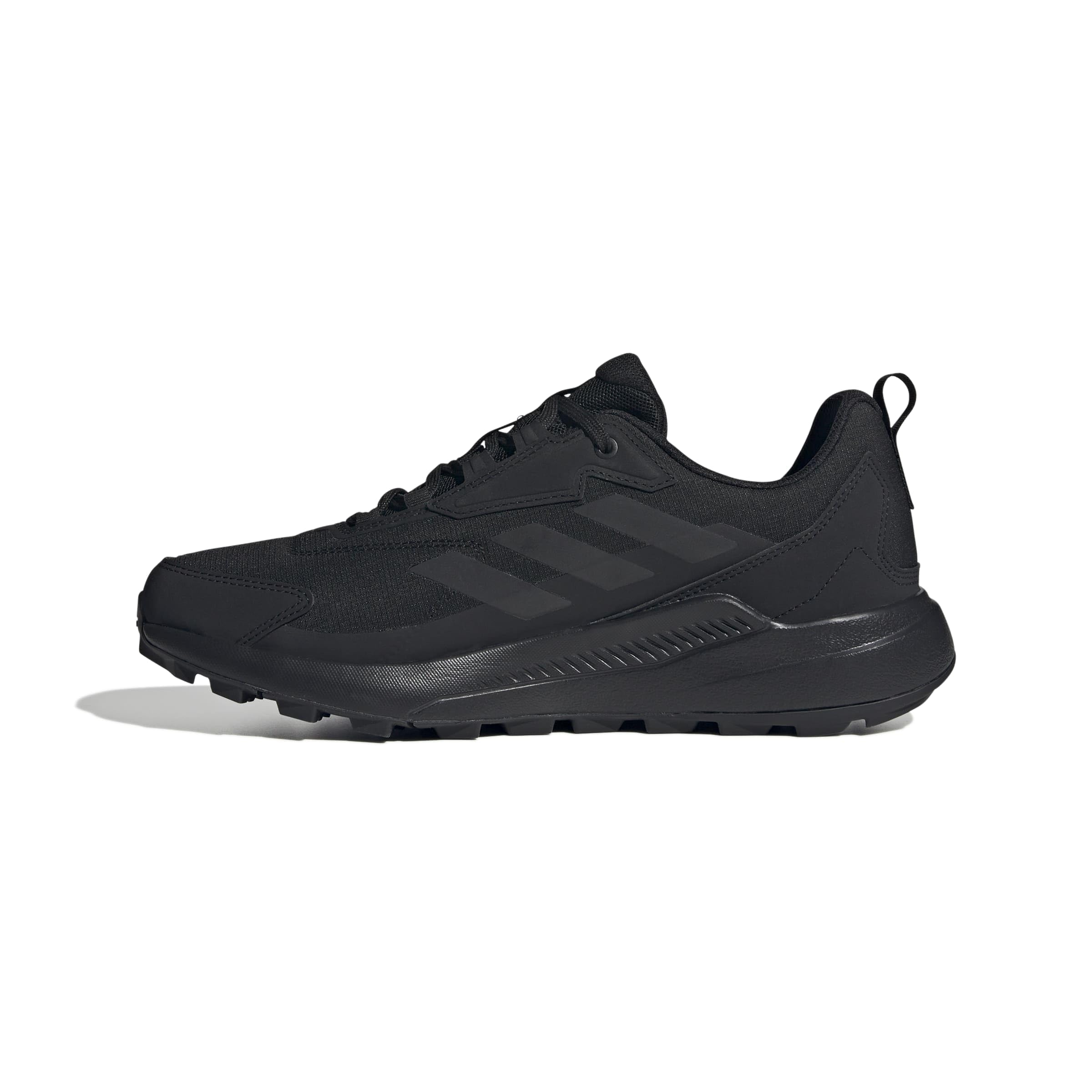
adidas Terrex Anylander
Key Features
- Style: Hiking shoe
- Listed weight: 2.43 lb
- Waterproofing: RAIN.RDY
- Price: Budget
The Terrex Anylander is the budget pick we reach for when the walk is more errand than expedition. It costs far less than the premium trail shoes here, but it still has a RAIN.RDY upper and a grippy sole that handles wet grass and packed dirt. For someone testing whether a waterproof trail sneaker fits their life, it is an easy place to start.
On wet ground, the traction is the part we appreciate most. The shoe feels stable on damp grass and shallow mud, and the RAIN.RDY upper keeps splashes out. It is not the lightest shoe here, but it does not feel like a boot. The fit is the catch: the toe box runs narrow for some feet, so wide-footed buyers should look at the KEEN or Columbia wide options instead.
We recommend the Terrex for budget-minded walkers and light trail users who do not need a roomy toe box. It gives you the core waterproof and traction package without the premium price. At this price, it is a sensible first pair or a spare for wet-weather errands.
Pros
- RAIN.RDY upper keeps splashes out
- Grippy on wet grass and dirt
- Budget-friendly for light trail use
Cons
- Sole durability is a question
A budget waterproof trail shoe that covers wet grass and easy paths; we recommend it for narrower feet and shorter outings.
Best for Light Trail Value
HUMTTO All-Terrain
Key Features
- Use: All-terrain
- Weight: Lightweight
- Outsole: Anti-slip
- Waterproofing: Waterproof construction
- Price: Budget
The HUMTTO is the lightest-feeling low-cost option in this group, and that is the reason it stands out. It does not have the refined fit of the Columbia or KEEN, but it keeps the weight down and the waterproof upper does its job in rain and shallow puddles.
We found the traction better than the price suggests. On wet ground and loose gravel, the sole grips well, and the upper keeps splashes out. The comfort is decent for a budget shoe, and the low weight helps on a short hike. It is a simple shoe, but the basics are covered.
The fit is the part we flag: the shoe can run large, and the toe box is generous. That makes it a good match for thicker socks and wider feet, but buyers between sizes should check before committing. We recommend the HUMTTO as a value pick for light trail use, travel, or a second pair you do not mind getting muddy.
Pros
- Low weight for a budget shoe
- Waterproof upper handles rain and puddles
- Grip is solid on wet gravel
- Comfortable for short outings
Cons
- Firm sole on long pavement walks
A light, low-cost waterproof shoe for short wet walks and easy trails; we recommend it for buyers who want a spare pair, not a premium fit.
Best for Muddy Chores
NORTIV 8 Waterproof

Key Features
- Cut: Low-top
- Use: Trail, trekking, camping
- Waterproofing: Waterproof leather
- Price: Budget
The NORTIV 8 is the heaviest, most work-shoe-like pick in this group, and that is the first thing we noticed. The leather upper looks tougher than the price suggests, and it wipes clean after mud, but this is not a shoe that disappears on your foot.
On wet grass and shallow puddles, the waterproof leather does its job. We do not trust it in deep water, and the tongue and seams are the places where water can eventually get in. The sole grips well on loose dirt and gravel, and the build feels solid for yard work or a messy walk.
The fit is mixed. The toe box is narrow for a shoe that looks roomy, and the wide version is not a cure-all. We also watch the metal lace loops: they can cut through thin laces, so swap in a sturdier pair if you plan to tighten them hard. Those are small details, but they are the kind that decide whether a budget shoe stays in service.
We recommend the NORTIV 8 for messy outdoor chores, short wet walks, and buyers who want a leather-looking shoe at a low cost. It is not the pair for an all-day city commute or a long hike where weight matters. The leather also hides scuffs better than mesh, which helps if the shoe lives by the back door.
Pros
- Tough leather upper wipes clean
- Low price for a leather shoe
- Solid build for yard work
Cons
- Waterproofing can be inconsistent
A low-cost leather hiker for muddy chores and short wet walks; we recommend it when toughness matters more than weight.
How We Tested Waterproof Sneakers in Wet Weather
I started by scanning specs for actual waterproof membranes, lugged rubber outsoles, and low-top trail shapes that could pass for everyday sneakers, then filtered by price and available sizes. That shortlist became 12 pairs, which we tested over eight months.
The main test was repetitive on purpose: I walked the dog on wet morning grass, commuted through drizzle, and stepped into shallow puddles. After each outing, I checked socks and insoles for damp spots, pressed a tissue along the toe seams, and looked for water staining or softened glue at the flex points. Most pairs kept feet dry; two let a little dampness creep in after a long, rainy walk.
For fit and sizing, I wore each pair with the same socks for a first mile, then a full day, noting heel slip, toe pressure, and whether the size ran true. I weighed each shoe before the first wear and again after a wet walk to see how much water it picked up, and I paid attention to whether a light pair still felt stable on slick pavement, wet wooden bridges, and muddy trail inclines. I also wore them with jeans and casual trousers to see if they read as sneakers or hiking boots.
At the end of each month, I checked stitching, toe caps, and tread wear; by the end, the pairs with cleaner construction and less midsole creasing felt like the better value. We will keep wearing the standouts through another wet season and update this list if anything changes.
How to Choose Men’s Waterproof Sneakers
The best waterproof sneaker is the one you forget you are wearing until the weather turns, so start with fit and coverage rather than the waterproof label alone.
Look for Coverage, Not Just a Waterproof Upper
Waterproofing comes in two main forms: a membrane bonded inside the shoe and a treatment applied to the outside. A membrane or a sealed construction is what keeps water out at seams and flex points; a spray-on finish mainly helps light rain. The tongue is the detail buyers miss. A gusseted tongue attached to the upper blocks water that otherwise runs down the laces and into the toe box.
Low-top shoes have a ceiling. They handle rain, splashes, and wet pavement, but water can come over the collar in a deep puddle. If your commute includes flooded corners, choose a higher collar or accept that you need to step around them.
Fit and Width Matter More Than the Size on the Box
Waterproof shoes are less forgiving of a bad fit because the stiff layers do not stretch like a knit sneaker. Check the toe box with the socks you plan to wear, and measure late in the day when your feet are at their widest. A thumb’s width in front of the longest toe is a useful starting point.
Wide sizes help only when width is the problem. If the shoe is simply too short, sizing up is the better fix. The KEEN Targhee 3 Low and the Columbia picks here offer wide options, but the shape of the toe box still varies from one model to another.
Match the Tread to the Wet Ground You Actually Walk On
A deep, soft-ground lug pattern is a liability on smooth pavement: it feels vague, wears quickly, and can be noisy. A flatter, denser tread is better for commuting and wet sidewalks. For muddy paths and loose gravel, more open lugs clear debris and give you a bite.
The Salomon Speedcross GTX sits at the specialist end of this group, with a tread built for soft, wet ground. The Columbia and adidas picks are easier to live with on pavement. Buy for the majority of your walking, not the once-a-month hike.
Weight, Breathability, and Upkeep
Waterproof layers trap heat, so a shoe that feels great in November can feel clammy in July. Light mesh uppers with a membrane are the better choice for commuting and travel; leather and heavier constructions suit messy outdoor work and cooler weather. Neither is inherently better, but they fail in different ways.
Rinse mud off before it dries, air-dry away from direct heat, and check the tongue and seams when water starts getting in. A waterproof shoe usually fails at a flex point before the upper wears through. That is the moment to re-proof leather or replace a worn pair, not after the sock is already wet.
Frequently Asked Questions
Can I spray my regular sneakers instead of buying waterproof ones?
A spray helps with light rain and stains, but it does not seal seams, lace holes, or a non-gusseted tongue. If you only need protection from a damp walk to the car, treat what you own. If you walk through puddles or commute in steady rain, buy a shoe with a membrane and a gusseted tongue.
What socks work best with waterproof sneakers?
Wool or synthetic socks move moisture away from the skin; cotton holds it and makes the waterproof layer feel clammy. A thin liner under a light wool sock works well in cool rain, while a single lightweight synthetic sock is enough in summer. Bring the socks you plan to wear when you try the shoes on.
Will waterproof sneakers keep my feet warm in winter?
They block wind and rain, but they are not insulated. Warmth comes from socks and a fit that does not cut circulation, so leave room for a wool sock rather than sizing down. For snow or deep slush, choose a boot with a higher collar; for cold city walks, a waterproof low-top and wool socks are enough.
Final Verdict
The Columbia Konos TRS Outdry is the pair we recommend first for most men who want one waterproof sneaker for wet commutes, errands, and easy trails. It has the cleanest everyday look, a comfortable ride, and Outdry protection without the bulk of a hiking boot. If your wet walks are mostly muddy trails, the Salomon Speedcross GTX has the surer grip; if you need a wide toe box, the KEEN Targhee 3 Low is the better fit. Start with the Konos unless one of those specific needs pulls you away.