
This post contains affiliate links. We may earn a small commission when you buy through our links — at no extra cost to you.
Holes in the heel after a few hikes – it’s the most common complaint about wool hiking socks. The frustration isn’t about wool itself, but about the gap between what you pay and how long they last. Some socks deliver plush comfort for a season; others hold up for years under heavy use. The choice comes down to how often you hit the trail.
This guide focuses on that decision: finding a sock that fits your hiking frequency, footwear, and budget without sacrificing the features that matter – moisture control, cushioning, and fit. Whether you need a do-it-all pair for weekend treks or a winter beater for deep snow, the right match is about connecting the spec to your reality.




Best for Day Hikers Backpackers
Darn Tough Hiker Midweight
Key Features
- Merino Wool %: Merino Blend
- Cushion Weight: Midweight
- Sock Height: Micro Crew
- Price: $$
This midweight micro crew delivers the cushion you want for rocky trails without the bulk that makes boots feel cramped. The merino blend keeps feet dry in summer and warm in winter, reducing blister risk during long days. Across extended use, the construction holds its shape and padding — no thinning after repeated washes.
Best suited for day hikers and backpackers who hike in varied conditions and want one sock that does it all without wearing out quickly. However, the fit around the ankle and toe box is snug — those with wide feet or sensitive ankles may find it constricting. Sizing up can alleviate this, making it worth a try before committing.
Pros
- Resists wear for years, outlasting several budget pairs over time.
- Keeps feet dry in summer and warm in winter — effective moisture regulation for varied conditions.
- Plush cushioning supports long hikes without feeling bulky inside boots.
Cons
- Snug ankle and toe box can feel constricting for those with wide feet or sensitive ankles.
For hikers who prioritize durability and temperature regulation over upfront cost, this sock pays for itself over time — just check the fit if your feet run wide.
Best for Winter Backpackers Mountaineers
Darn Tough Boot Full Cushion
Key Features
- Merino Wool %: 66% Merino
- Cushion Weight: Full
- Sock Height: Boot
- Price: $$$
This boot-height sock delivers maximum cushion underfoot and full terry coverage, making it the go-to for cold-weather backpacking and mountaineering. The 66% merino blend breathes well and resists odor even on multi-day trips, while the lifetime warranty backs the construction. Compared to the midweight micro crew top pick, this sock is noticeably thicker and warmer — too much for three-season use or low-cut shoes. It suits those who prioritize insulation and protection over versatility. The calf fit can be snug for some builds, and the texture may feel coarse against bare skin, so a thin liner sock helps if that bothers you.
Pros
- Heavy-duty full cushioning provides plush protection inside tall boots for long days on the trail.
- Durable construction that holds up to repeated hikes and machine washing season after season.
Cons
- The texture may feel coarse against bare skin, encouraging the use of a liner sock.
- Calf fit can be snug for some leg shapes; check sizing if you have larger calves.
If your trips involve snow, sub-freezing temps, or heavy boots, this sock delivers the warmth and durability you need — just be ready for a snugger fit and a liner if you prefer smoother texture.
Best for Slim-Calf Hikers
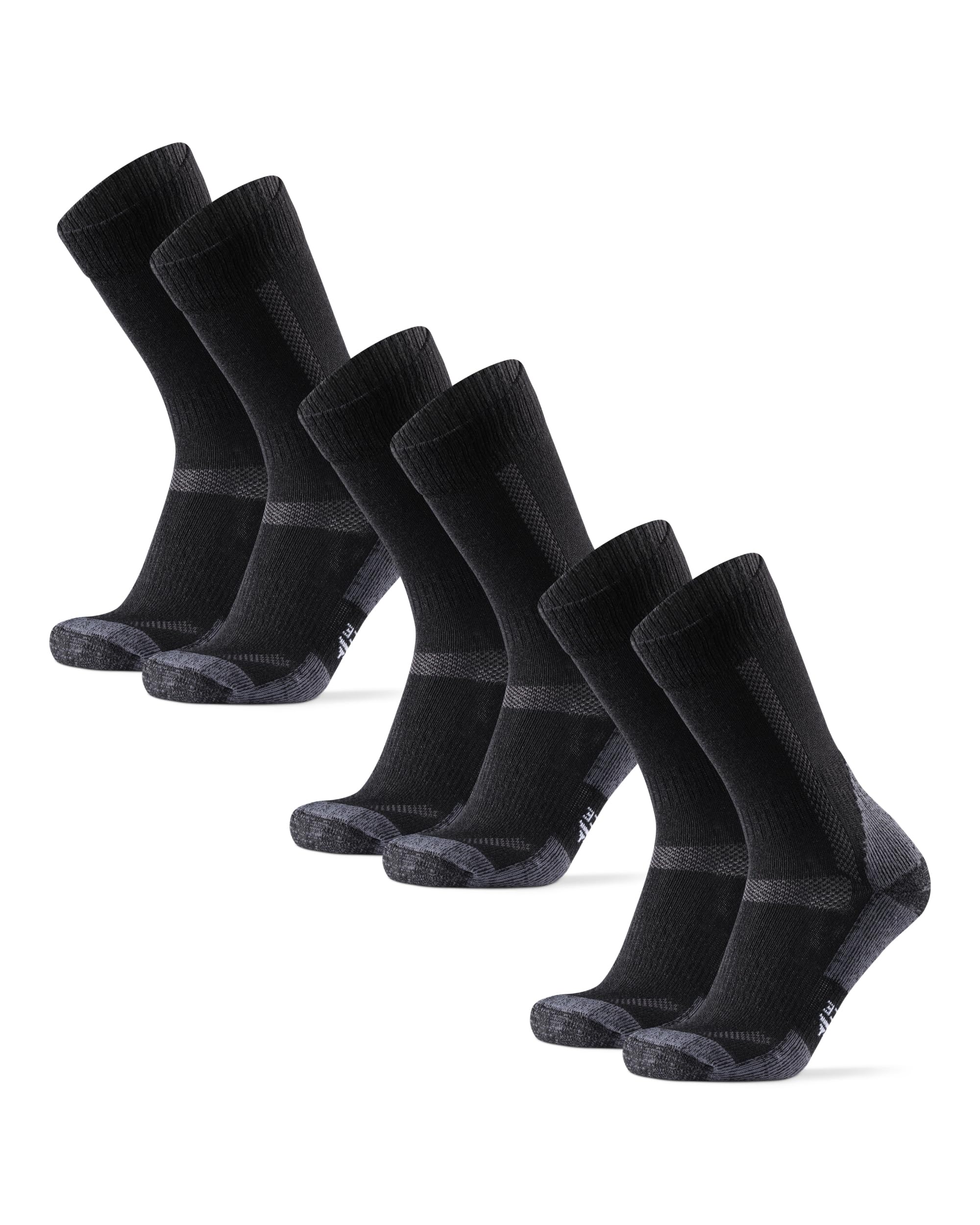
Danish Endurance 3-Pack
Reinforced heel and toe give this 3-pack better longevity than ultra-budget merino blends, and the cushioning stays comfortable through a full day on the trail. The multi-pack format keeps the cost per pair lower than single premium socks while still using a merino wool blend for moisture management and temperature regulation.
The calf band is cut narrower than many hiking socks—wearers with slimmer legs get a secure fit, but those with larger calves may find it constricting. The construction is also lighter than traditional cushioned hiking socks, making it a better match for three-season use rather than winter hikes requiring thick insulation.
Pros
- Reinforced heel and toe for added durability in high-wear areas
- Soft merino blend with cushioning comfortable for long days on the trail
- Cost-effective per pair compared to single premium socks
Cons
- Calf band can feel constricting for those with larger calves
- Sock thickness is lighter than typical hiking socks, less suited for cold conditions
Best for hikers who want a durable multi-pack and have slim legs – avoid if you need heavy insulation or a roomy calf fit.
Best for Women Hikers
Darn Tough Women Micro Crew
Key Features
- Merino Wool %: Merino Blend
- Cushion Weight: Cushion
- Sock Height: Micro Crew
- Price: $$$
The women-specific fit is the standout feature here – these socks hug the contours of a woman’s foot without constriction, reducing bunching and blister risk. The merino wool stays soft after repeated wash cycles, and the cushion does a real job of regulating temperature during varied hiking conditions.
For women hikers who value a precise fit and have standard to narrow calves, these deliver a more dialed-in feel than unisex alternatives. The premium price (~$25 per pair) is the main barrier – not ideal for tight budgets – but the lifetime warranty spreads the cost over years of regular use. If you have wide calves, the women’s cut may be too snug; consider the unisex Hiker Midweight instead.
Pros
- Tailored fit for women’s feet – hugs without slipping or squeezing.
- Merino wool stays soft and comfortable wash after wash.
- Cushion and wool blend keep feet warm without overheating.
Cons
- Premium price for a single pair – not for budget-conscious buyers.
A precision-fit women’s hiking sock that excels in comfort and durability – worth the investment for frequent hikers who value fit over upfront cost.
Best for Budget-Conscious Shoppers
Alvada 3-Pack Wool
The Alvada 3-pack delivers immediate warmth and softness at a fraction of the cost of premium hiking socks – ideal for budget-conscious shoppers needing winter comfort. The merino blend feels cozy against skin without itchiness. However, the heel construction wears through within a few months of regular use, and the fit runs small for some. These are best suited for occasional day hikes or everyday cold-weather wear, not extended backpacking trips.
Pros
- Excellent warmth for cold weather without breaking the bank
- Soft and itch-free merino blend feels comfortable against skin
- Budget-friendly 3-pack offers good value per pair
Cons
- Heel wear can develop within a few months of regular use
- Sizing may be too tight for those at the upper end of the size range – check fit
A warm, soft option for casual winter use at a low price, but expect to replace them sooner than premium alternatives.
Best for Low-Cut Trail Runners
Darn Tough Quarter Midweight
Key Features
- Merino Wool %: Merino Blend
- Cushion Weight: Midweight
- Sock Height: Quarter
- Price: $$
The Hiker Quarter Midweight brings Darn Tough’s build quality to a shorter cut designed for low-top trail runners and approach shoes. Unlike the micro crew top pick, this quarter-height version stays cooler in summer and pairs well with low-cut footwear. It’s a good match for hikers who find crew socks too warm, though the ankle opening can feel snug and the price is higher than other quarter socks on the market.
Pros
- Superior build quality in a quarter-height sock.
- Comfortable cushioning that doesn’t add bulk — suited for low-cut shoes.
Cons
- The ankle opening may feel snug for those with larger ankles or who prefer a looser fit.
- Premium price for a sock that covers less ankle.
If you prefer quarter-height socks for low-cut shoes and are willing to pay a premium for Darn Tough’s durability, this is a solid option — just check the ankle fit before committing.
Best for Women Hikers Low-Cut
Darn Tough Women Quarter

Key Features
- Merino Wool %: 59% Merino
- Cushion Weight: Midweight
- Sock Height: Quarter
- Price: $$
Darn Tough’s quarter sock brings the same construction quality to low-cut shoes – comfortable in summer heat with adequate cushioning. The price is high for a quarter sock, and the cut limits use to warm-weather hiking. It’s a niche option compared to the more versatile micro crew runner-up.
Pros
- Build quality that holds up over years of use
- Breathable quarter height keeps feet cool in hot conditions
Cons
- Higher cost compared to other quarter socks – noticeable when buying multiple pairs
Best for women who want Darn Tough durability in a summer-only sock for trail runners, and are willing to pay a premium for a quarter cut.
Best for Women Hikers Patterns
Darn Tough Treeline Midweight

Key Features
- Merino Wool %: 63% Merino
- Cushion Weight: Midweight
- Sock Height: Micro Crew
- Price: $$$
The Darn Tough Treeline Midweight pairs the same consistent merino construction and lifetime warranty as the standard women’s micro crew with a range of playful patterns. Because performance is identical, the pattern is the main reason to choose this over the plainer version. The higher cost per pair may not suit those who prioritize function over appearance.
Pros
- Durability that holds up over years of regular hiking use.
- Vibrant patterns that add personality on the trail.
Cons
- Premium pricing may feel steep for a single pair when patterns aren’t a priority.
Best for hikers who want their socks to reflect personal style; for pure performance, the standard Darn Tough women’s micro crew offers the same quality at a lower price.
Best for Women Casual Winter
Sandsuced 5-Pack Women

The Sandsuced 5-pack offers cozy warmth and softness straight out of the package at a low per-pair cost. The merino blend feels thick and comfortable against the skin. However, the toe and heel areas can wear through after a few uses, and pilling may occur after washing. This sock set is best suited for occasional winter walks or casual everyday cold-weather wear rather than regular hiking or backpacking.
Pros
- Great warmth and softness for cold weather
- Cost-effective 5-pack at a budget price
Cons
- Toe and heel areas may wear through sooner than expected with regular use
Best as a backup set or for light winter use where immediate comfort matters more than long-term durability.
Best for Casual Winter Hikers
COZIA 3-Pack

This unisex 3-pack delivers immediate warmth and a soft feel against the skin at a budget price, making it a solid choice for light winter walks or everyday wear. The merino blend stays comfortable for sensitive skin, but the heel construction can wear through sooner than premium options, limiting its use for frequent heavy hiking. It’s best seen as a cost-effective backup or casual-use sock rather than a long-term workhorse.
Pros
- Very warm and comfortable for a budget-friendly 3-pack.
- Soft against skin and suitable for sensitive types.
Cons
- Heel durability may be insufficient for regular heavy hiking.
A good pick for casual day hikes or as a backup pair, but not for anyone who expects their socks to survive repeated multi-day treks.
Best for Extreme Budget Shoppers
Time May Tell 4-Pack

Key Features
- Merino Wool %: 80% Merino (claimed)
- Cushion Weight: Cushion
- Sock Height: Crew
- Price: $
This 4-pack delivers the lowest cost per pair among merino blend socks, with good warmth and comfort for casual winter wear. The fit is decent for the price, suitable for emergency kits or short strolls. However, heel durability is limited – holes can appear within weeks of moderate use, so frequent hikers should look elsewhere.
Pros
- Lowest cost per pair for a merino blend sock – ideal for tight budgets.
- Keeps feet warm and comfortable in cold conditions.
Cons
- Heel holes can appear within weeks of moderate use.
Best as a budget-friendly backup or for occasional short walks where low cost matters more than longevity.
Best for Women Winter Lounging
Anlisim 5-Pack Women

Key Features
- Merino Wool %: Merino Blend
- Cushion Weight: Cushion
- Sock Height: Crew
- Price: $
Vibrant merino blend socks that feel genuinely warm and soft for casual winter wear. The colorful patterns and budget-friendly 5-pack make them a good gift option, but the toe seams can wear through after a few walks – they’re not built for serious hiking. Best for lounging or light outdoor use where warmth and style matter more than longevity.
Pros
- Very warm and soft, like a cozy blanket for cold days
- Vibrant colors and fun patterns add variety to a sock drawer
Cons
- Toe seams and heels can wear through after limited use on rough terrain
Best for light walking, lounging, or gift-giving where warmth and color variety matter more than longevity – not for regular hiking use.
Best for Color Variety Hikers
EnerWear Crew Pack

These socks deliver vibrant colors and soft merino warmth that feel great on casual day hikes. However, durability is inconsistent – holes or pilling can appear after a few months of use. The fit also varies between pairs, making this a fun variety pack for light wear rather than a long-term hiking staple.
Pros
- Wide range of fun colors and patterns
- Warm and comfortable without feeling heavy
Cons
- Durability may not hold up to regular use – holes and pilling have been noted
Best for hikers who want colorful options for light day hikes and casual wear, not for those seeking long-term durability.
How to Choose
The most important decision in wool hiking socks is not which brand, but how long you need them to last relative to what you’re willing to spend upfront.
Merino Wool Percentage
Higher merino content (60% or more) provides better moisture management and odor resistance. The synthetic blend (nylon, lycra) adds durability but reduces breathability. A 70/30 merino-to-nylon ratio is a common sweet spot for hiking.
Socks with lower wool percentages often rely on acrylic or polyester for warmth, which can trap sweat and increase blister risk. If you hike multiple days without washing, aim for at least 60% merino to keep feet fresh.
Cushion Weight
Cushioning ranges from lightweight (thin, close fit) to full (thick terry throughout). Midweight is the default for most hikers: enough padding for rocky trails but still fits in most boots. Full cushion adds warmth and impact protection but can make boots feel tight.
The trade-off: more cushion means less space in your boot. If you wear snug boots, a midweight sock paired with a thin liner may work better. For winter boots with extra volume, full cushion is ideal.
Sock Height
Quarter socks sit below the ankle – best for low-cut trail runners in warm weather. Crew socks cover the lower calf, standard for most hiking boots. Boot-height socks go to the mid-calf, often with extra cushion around the shin for snow and deep mud.
Height isn’t just about coverage: a taller sock prevents debris from entering your boot and adds warmth to the lower leg. The wrong height can cause bunching or slippage, so match your sock height to your boot’s collar height.
Durability Guarantees
Lifetime warranties (like Darn Tough’s) are rare in socks and turn a high upfront cost into a long-term investment. If a pair wears out, you get a free replacement. This makes sense for frequent hikers who would otherwise replace budget socks every few months.
Without a warranty, expect a mid-range merino sock to last 6–12 months of regular weekend use. Budget packs often show holes in the heel within weeks. A warranty effectively caps your cost per wear, which matters if you hike often.
Fit Consistency
Calf and ankle tightness is the most recurring fit issue across all price points. A sock that is too snug around the calf can cut circulation; one too loose slips into the shoe and causes blisters. Many brands use a similar size chart, but actual feel varies significantly.
The solution: check reviews specifically mentioning calf fit for your leg size. If you have larger calves, avoid brands with frequent tightness complaints (e.g., Danish Endurance). Unisex socks often have a narrower calf cut than men’s-specific ones.
FAQ
Why do my merino wool hiking socks develop holes in the heel so quickly?
Heel holes are almost always caused by friction against the back of the shoe, combined with thin or poorly reinforced heel fabric. Budget socks often skimp on nylon content in the heel area, so the merino wears through faster. To avoid this, look for socks with reinforced heels and a higher nylon percentage in the heel and toe zones – typically 30% or more nylon in those areas.
What’s the ideal merino wool percentage for hiking socks?
A 60–70% merino wool content with the rest being nylon and spandex strikes the best balance of moisture management, breathability, and durability. Below 50% merino, the sock behaves more like a synthetic, retaining odor and losing temperature regulation. Above 80% merino, durability drops sharply because wool wears faster without enough nylon reinforcement.
Are cheap merino wool socks from Amazon worth buying for hiking?
They can be worth it for occasional use or as backup socks, but not for regular hiking. Budget multi-packs under $15 deliver impressive warmth and softness initially, but heel holes and pilling typically appear within weeks to a few months. If you hike once a month or less, the cost-per-wear can still be acceptable. For weekly hiking, spend at least $15 per pair on a sock with a warranty.
How tight should hiking socks fit around the calf?
The sock should stay up without leaving deep marks or feeling restrictive. If you can slide two fingers under the calf band without force, the fit is likely fine. A too-tight calf band restricts circulation and causes discomfort on long descents. Many complaints about tight calves come from unisex or women’s socks on larger legs – check sizing reviews specific to calf circumference.