
This post contains affiliate links. We may earn a small commission when you buy through our links — at no extra cost to you.
Waterproof and breathable are locked in a permanent argument, and most hiking pants quietly pick a side. Go for a real shell and you get a crinkly, sweaty leg on the climb; go light and airy and the first wet rock you sit on soaks straight through. The pair worth owning does both well enough: sheds drizzle, wet brush, and splash, and still feels like something you’d wear back to the car.
It helps to know that most pants labeled waterproof are really water-resistant, treated with a finish that beads rain until it doesn’t. Seams, cuffs, and the seat give out first, and once the fabric wets out, the breathability goes with it.
We spent the past six months hiking, paddling, and packing for trips in 12 pairs to see which ones hold up past the first drizzle. Shedding water turned out to be the easy part; a waistband that doesn’t dig under a pack belt, an inseam that doesn’t drag, and zippered pockets that keep a phone put on a scramble decided which pairs stayed in rotation. Here are the ones that did.


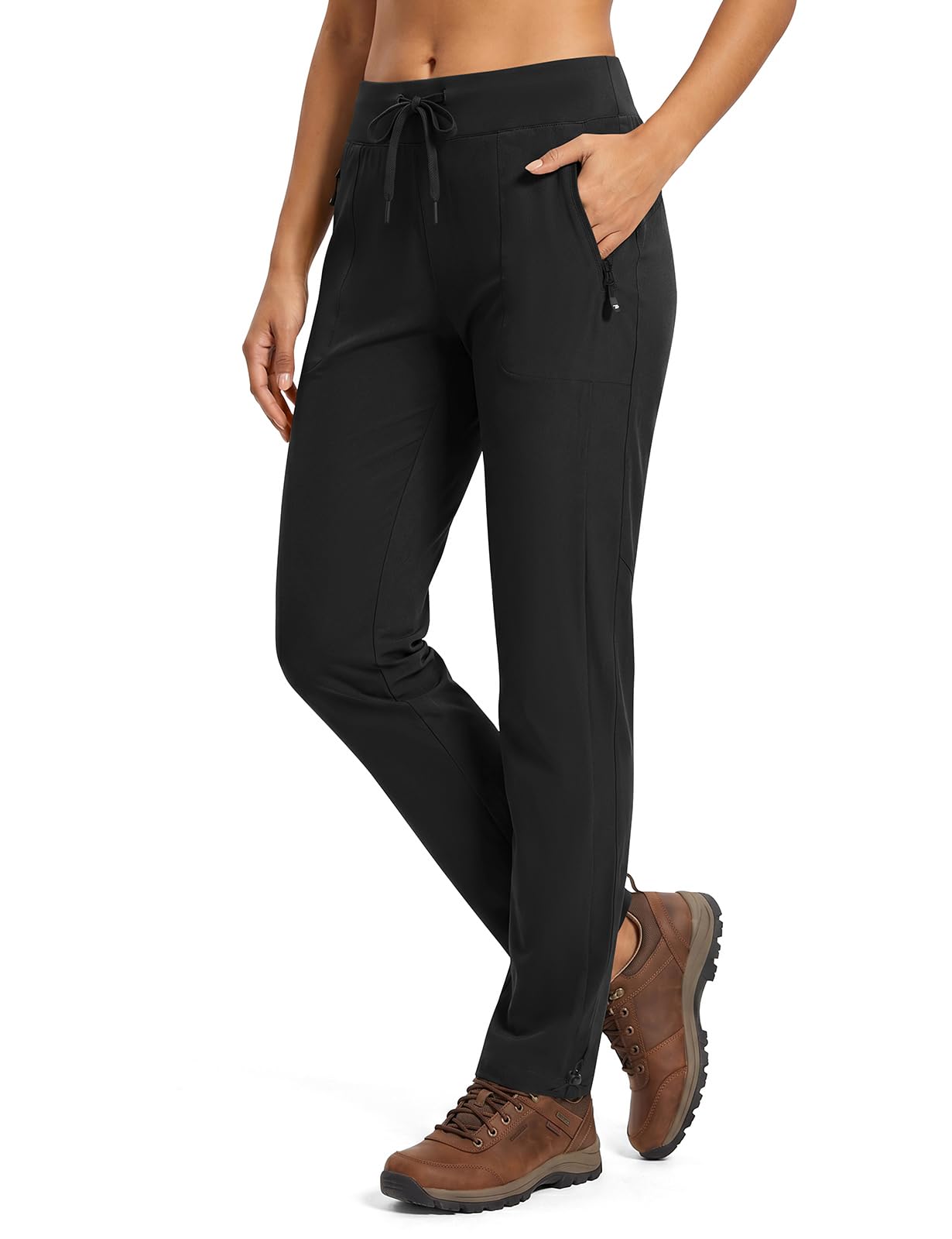

Best for Three-Season Hiking
baleaf Women’s Hiking Pants
Key Features
- Waist: Wide elastic waist
- Fabric: Lightweight quick-dry
- Pockets: Zippered cargo pockets
- Water resistance: Water resistant
- Price: Midrange
Waterproof is a generous word in this corner of the market. These pants are treated to shed rain, not built to hold it off: splashes bead and run, and a steady soaking works through the fabric. We still hand them to most hikers, because the alternative, a membrane pant that traps heat on the climb, costs more comfort across a season than one damp thigh on one afternoon.
Light, stretchy, and quick to dry is the trade we take every time. The fabric is thin enough to feel cool on a hot climb and dry enough that a soaking from wet grass or a passing shower is gone within a few miles of walking. That’s the practical version of waterproof on a trail pant: not staying dry, but not staying wet either.
The waist is the detail that keeps these in our bags. It’s a wide, high elastic band that sits where a hipbelt wants to sit, so there’s no hitching and no gap at the small of your back when you’re carrying weight. Zippered cargo pockets take a phone and a key, and a toggle at each ankle cinches the hem above mud or up out of ticks, which is a small thing that makes a real difference on overgrown trails.
They’re also plain enough to pass in town after a hike, which is more than we can say for the tactical-looking options here. We do slow down at the size chart: order with a week to spare and keep the tags on, because the fit splits in both directions depending on the pair you get. The pants are worth that bit of admin.
Pros
- Dries fast after rain, sweat, or a stream crossing
- Wide elastic waist sits under a hipbelt without hitching
- Zippered cargo pockets hold a phone and keys
- Thin and cool on hot climbs
Cons
- Sizing is inconsistent, so order early
Our default for most women hikers: light, quick-drying, and comfortable from the first mile, as long as you treat it as a shower pant rather than a storm shell.
Best for Sun-Exposed Trails
Rdruko Women’s Hiking Cargo Pants
Key Features
- Fabric: Quick-dry woven
- Pockets: Zippered
- Sun protection: UPF 50+
- Water resistance: Water resistant
- Price: Premium
Sun is the weather most hiking pants ignore, which is why the UPF 50+ rating is the first thing we look at here. On a shadeless traverse or a desert approach, the fabric blocks most of the UV that would otherwise reach your legs, and it does it without the heavy, sticky feel of a dedicated sun layer. That combination, protection that doesn’t cost breathability, is what earns these a place.
The fit leans flattering rather than boxy, with a stretchy waist that moves with you under a pack belt. The quick-dry fabric comes out of a cold wash ready to wear, which makes this as good a travel pair as a trail one: they look tidier than jeans at dinner, and nobody has to know you wore them up a mountain that morning.
Pockets are zippered and glide without snagging, with enough of them to keep a phone, a map, and a snack off your hands. Where it lands for us is a three-season pant for sun-exposed trips, best ordered after you’ve checked the inseam against your own legs rather than the size letter.
Pros
- UPF 50+ without a heavy, sticky feel
- Dries fast enough to rewear the next day
- Zippered pockets that don’t snag
- Stretchy waist works under a pack belt
Cons
- Inseam runs short on taller frames
- Crotch seams can pull apart with hard use
Our pick for shadeless trails: UPF 50+ fabric that stays light and dries fast, and looks tidier than jeans at the end of the day.
Best for Men’s All-Rounder
TBMPOY Men’s Hiking Pants
Key Features
- Fabric: Lightweight stretch
- Pockets: 5 zippered
- Included: Belt
- Water resistance: Water resistant
- Price: Midrange
A belt comes in the box, and it’s the kind of small practicality that tells you who these were built for: someone who keeps a pair in the truck for a spontaneous trailhead. It’s nothing fancy, and we swapped ours for a webbing belt we already liked, but it means the pants work out of the packaging instead of waiting on a shopping trip.
What keeps them in rotation is the fabric. It’s light and breathable enough that a warm climb doesn’t turn into a sauna, stretchy enough that a high step onto a rock doesn’t feel like a restriction, and quick to dry once it’s wet. We treat them as a shower pant rather than a storm one: light rain beads and rolls, a prolonged soaking gets through, and the fabric is dry again within a mile, which takes most of the sting out of it.
Five zippered pockets is more than most pants here, and the deep front slash pair is what we actually use; the thigh cargo pockets are the weak spot. Fit runs snug through the waist and seat, so if you’re between sizes, take the larger one. For most men’s hiking, though, these are the easy default.
Pros
- Five zippered pockets, including a deep front pair
- Stretchy enough for high steps and scrambles
- Light and cool in hot weather
- Belt included, so it’s wearable out of the box
Cons
- Thigh cargo pockets are too shallow for a big phone
The men’s pair we hand most hikers: light, stretchy, quick-drying, with five zippered pockets and a belt in the box for anyone who forgot one.
Best for Travel and Camping
TBMPOY Women’s Hiking Pants
Key Features
- Waist: Elastic drawstring
- Pockets: Zippered
- Stretch: 4-way
- Water resistance: Water resistant
- Price: Midrange
The test we set for a travel hiking pant is a sink wash at nine at night and a dry pair at seven the next morning. These pass. The fabric is thin, soft against the skin, and comes out of a hand wash ready to wear, so one pair can cover a week of hiking if you’re willing to spend five minutes on laundry in the evening.
The hem is the detail we didn’t expect to care about. Each ankle has a drawstring with a small link back to the pant, so the tie doesn’t dangle loose and catch on brush, and you can shorten the leg above the mud without stuffing the cuff into your sock. On a 5’3" hiker and a 5’7" one, the same pair covers both, which is rare in a pant ordered online.
The waistband is elastic with a drawstring, comfortable under a pack and forgiving after a long lunch, and the zippered pockets are deep enough for a phone in a case. It’s a quiet, good-looking pant that doesn’t announce itself as gear, which is why it also ends up at dinner.
Pros
- Dries overnight after a sink wash
- Drawstring hem shortens the leg on the trail
- Deep zippered pockets fit a phone
- Soft four-way stretch under a pack
Cons
- Waist tie can slide out of its channel
Our travel pick: a soft four-way stretch pant that washes in a sink and dries by morning, with a hem you can shorten without a tailor.
Best for Jogger-Style Fit
BVVU Women’s Hiking Joggers
Key Features
- Style: Cargo jogger
- Fabric: Stretch woven
- Pockets: Zippered cargo
- Water resistance: Water resistant
- Price: Premium
The cuff is what separates these from everything else here. It’s a jogger cut, gathered at the ankle, so the hem stays clear of mud, bike chainrings, and wet grass, and the shape reads as streetwear rather than technical gear. They also don’t rustle when you walk, which is the giveaway on most inexpensive nylon pants.
The woven fabric has a light sheen and a lot of give. It stays comfortable in heat and humidity, dries quickly after a soaking, and holds its shape through a day of walking, which is more than we expected from a cargo jogger. Pockets close with a mix of zips and Velcro, and the side cargo pocket sits flat instead of bulging at the hip.
Length lands differently on different frames, which is the usual hazard of ordering pants online, but the gathered cuff hides an inch of it either way. Check the hip measurement against the size chart before you commit; the cut is generous and the label runs large on the waist.
What we keep coming back to is how little these look like hiking pants while still doing the job. They’re the pair to pack when the day ends in a town with a restaurant in it. For scree fields and constant rock contact, we still take a heavier pant.
Pros
- Gathered cuffs stay clear of mud and chains
- Quiet fabric that doesn’t rustle when you walk
- Stays comfortable in heat and humidity
- Zippered and Velcro cargo pockets hold a phone
Cons
- Runs large through the hip and waist
The jogger cut is the reason to buy: cuffs that stay clear of mud and chainrings, in a light stretchy fabric that doesn’t look or sound like technical gear.
Best for Cargo Capacity
TACVASEN Men’s Tactical Pants

Key Features
- Style: Tactical cargo
- Fabric: Lightweight stretch
- Pockets: 8 pockets
- Water resistance: Water resistant
- Price: Premium
Eight pockets is the headline, and they aren’t decorative: two deep front slash pockets, zippered cargo pockets on the thigh, and a rear pocket set like a jean’s. That’s enough to carry a phone, keys, a folded map, a snack, and a small camera without touching a pack, which is the sort of load that usually means digging out a daypack.
The weave has more body than the lightest pants here, with enough stretch that crouching, stepping, and scrambling don’t bind, and it dries fast enough that a wet morning doesn’t follow you around all day. Wrinkles fall out on their own, so it packs flat in a duffel without a second thought.
Fit runs true, the waist doesn’t shrink in the wash, and the pants don’t ride up when you’re moving. The look is the honest caveat: cargo-heavy and tactical, closer to workwear than to the plain trail pants elsewhere in this guide. If that’s fine with you, this is a lot of pant for the money, and a good hybrid if your days mix trail and jobsite.
Pros
- Eight pockets, most of them zippered
- Plenty of stretch for crouching and scrambling
- Dries fast and resists wrinkles
- True-to-waist fit that survives washing
Cons
- Steady rain soaks through the fabric
For hikers who carry a lot: eight pockets, real stretch, and a fabric that dries fast, in a cut that looks more workwear than trailwear.
Best for Budget Weekends
Rrosseyz Women’s Cargo Pants

Key Features
- Ankles: Gathered cuffs
- Pockets: 4 side pockets
- Pocket closure: Velcro flaps
- Water resistance: Water resistant
- Price: Budget
This is the least expensive pair in the guide, and nothing about wearing it feels like a compromise. The fabric is soft rather than crisp, with room through the thigh for a long stride, and it comes out of the wash looking presentable enough for a casual dinner in town.
We take it on the trips where the forecast is uncertain and the ground is muddy. Mud brushes off once it’s dry, the fabric dries quickly, and the gathered cuffs keep the hem out of wet grass while closing off the ankle, which is what you want in tall grass and tick country. Cheap, soft, and unbothered by dirt is the whole reason it’s here.
The pockets are where the saving shows. There are four, and the big side ones close with Velcro flaps rather than zippers: fast with gloves on, noisy in a quiet forest, and prone to catching on a strap. As a first pair of hiking pants or a second pair for messy weekends, that’s an easy trade.
Pros
- Least expensive pair in this guide
- Soft fabric with room through the thigh
- Dries fast and mud brushes off
- Gathered cuffs seal out grass and ticks
Cons
- Legs run long for shorter hikers
The least expensive pair here, and it doesn’t feel like it: soft, quick-drying, roomy through the leg, with gathered cuffs and Velcro cargo flaps.
How We Tested 12 Pairs of Waterproof Hiking Pants
We started with search results and retailer filters, pulling more than 60 listings sold as hiking, travel, or cargo pants, then cut anything without a water-resistant finish, a zippered pocket, or a size range that ran past a medium. From that pool we ordered 12 pairs in the sizes our testers actually wear and split them among four people ranging from 5’2" to 6’1", so shorter and taller frames both got a read on length.
Each pair came on at least six outings: day hikes in drizzle and fog, two stream crossings, long sits on wet granite at lunch, a paddling trip, and several flights and car trips where they were crammed into a duffel and hand-washed in a sink. For a direct water comparison, we held each pair under a faucet for five minutes and looked for dark patches at the seams, seat, and cuffs, then misted the knees and watched whether water beaded or sank in. After a full soak we hung them and timed how long they took to go from dripping to dry enough to pack.
Fit got the most scrutiny, since sizing ran wildly inconsistent between pairs. We measured each listed inseam against where the hem actually landed on each tester, noted whether the waistband dug in under a loaded hip belt or stretched enough to sit through a big lunch, and loaded the pockets with a phone, keys, and a snack bar to see what stayed put after a scramble. Every pair was weighed and worn on warm climbs, because light fabric can mean comfortable or just thin.
Durability was the slow read. We scuffed knees against granite, crouched and high-stepped to check four-way stretch, and washed everything repeatedly to see whether the finish stopped beading, seams started to fray, or color faded. We also noted which pairs looked obviously technical and which could pass at a brewery on the way home.
How to Choose Waterproof Hiking Pants
Waterproof almost never means what shoppers expect in this category, and the pants that keep you comfortable are the ones that dry fast, so start there and check the rest before you order.
What Waterproof Means on a Trail Pant
The pants in this guide are treated wovens rather than membrane shells. The fabric is finished so water beads and rolls off instead of soaking straight in, which handles drizzle, wet grass, splash, and a passing shower. It does not handle an hour of steady rain, and none of these listings carries a hydrostatic rating or a taped seam.
So plan around the forecast. If you expect hours of rain, put a rain shell over the top and treat the pants as the fast-drying layer underneath. If your trips are showers, stream crossings, and wet mornings, buy for dry time instead: a pant that’s dry within a mile is worth more than one that resists and then stays damp against your legs.
Fit, Inseam, and the Waistband Under a Hipbelt
Length is the complaint that comes up most across these pants, and it goes both ways: some legs stop above the boot, others puddle over it. Letter sizing doesn’t rescue you, because a medium in one brand isn’t a medium in another, and a few of these run large enough that your usual size is the wrong order.
Measure your inseam and your hip before you buy, and order with time to exchange before a trip rather than the night before. Waist design matters just as much: a wide, high elastic band sits under a hipbelt without hitching, while a low or pure-drawstring waist can slide once a pack is pulling on it. Try them on with a loaded pack if you can.
Fabric Weight, Stretch, and Where a Light Pant Stops
Lighter fabric is cooler, dries faster, and packs smaller. Heavier fabric takes abrasion, wind, and brush better. Neither is better without a season attached: a thin quick-dry woven is the right call for summer and travel, and the wrong call for cold wind, sharp scree, or a shoulder-season trip where you’ll stand around at a belay.
Stretch matters more than weight once the ground gets steep. Look for a fabric that moves through a high step and a crouch without binding, and remember that an unlined pant needs a base layer once temperatures drop. Lightweight hiking pants are not warm pants, and no water-repellent finish changes that.
Pockets, Cuffs, and the Closures That Matter
Zippers are the secure choice for a phone and keys, and the fiddliness is worth it when you’re scrambling. Velcro is faster with gloves on, noisier, and eventually clogs with lint and trail grit. Count what you’ll actually use: two zippered hand pockets and one thigh pocket cover a normal day hike, and eight pockets is a lot of fabric flapping unless you’re carrying for two.
Cuffs are underrated. A cinch or gathered ankle keeps the hem out of mud and closes the gap where grass seeds and ticks get in, and a drawstring hem lets one pair cover more than one inseam. If you hike in tall grass or on tick-heavy ground, that detail is worth more than an extra pocket.
Frequently Asked Questions
How do I keep the water repellency working after a few washes?
Wash cold with a technical wash rather than regular detergent, skip fabric softener and dryer sheets because they coat the fibers that shed water, and tumble on low to reactivate the finish. When water stops beading and starts darkening the fabric, spray on a refresh treatment and let it cure overnight. A can of spray is a cheap yearly habit next to replacing the pants.
Are these pants safe to wear around a campfire?
Treat them like a synthetic puffy. Thin quick-dry weaves pick up sparks and embers, and a pinhole becomes a permanent hole in a way it doesn’t on wool or heavy canvas. Sit upwind, keep your legs clear of the fire ring, and don’t dry a damp pair over an open flame. Hang them from a branch instead.
Can one pair last a multi-day trip?
Yes, if you wash it. Rinse in a sink or a dry bag with a drop of camp soap, roll it in a towel to press the water out, and hang it overnight. The quick-dry fabrics here are usually ready by morning. On a long thru-hike, two pairs is the usual rotation: wear one, wash the other, swap each evening.
Final Verdict
Start with the baleaf pants. They’re the pair most hikers will be happy in, light and quick-drying and comfortable under a pack, and the water-repellent finish suits showers, wet grass, and splash rather than an all-day soaking. If you’re shopping for a man, take the TBMPOY: similar light fabric, more pockets, a belt included.
On shadeless trails rather than wet ones, the Rdruko’s UPF 50+ is the stronger reason to buy, and its quick-dry fabric still handles a wet morning. Whatever you choose, order with time to exchange, because length is where these pants disagree with their own size charts.