
This post contains affiliate links. We may earn a small commission when you buy through our links — at no extra cost to you.
You buy a travel umbrella expecting it to fit in your day bag and keep you dry, but too many flip inside out at the first gust, snap a rib after a few uses, or feel like a brick in your purse. Buyers quickly discover that ‘windproof’ and ‘compact’ on the label don’t guarantee real-world performance.
The best portable umbrellas manage a tricky balance: a canopy that vents wind instead of catching it, a folded length short enough to slip into a glovebox, and a weight you’ll actually carry all day. Our guide cuts through the marketing noise to show which designs deliver that balance—and which are best kept as emergency spares.
Small choices like fiberglass ribs instead of steel, and a vented double canopy instead of a single layer, separate umbrellas that survive windy commutes from those that end up in the trash after one storm.


Best for Proven Daily Use
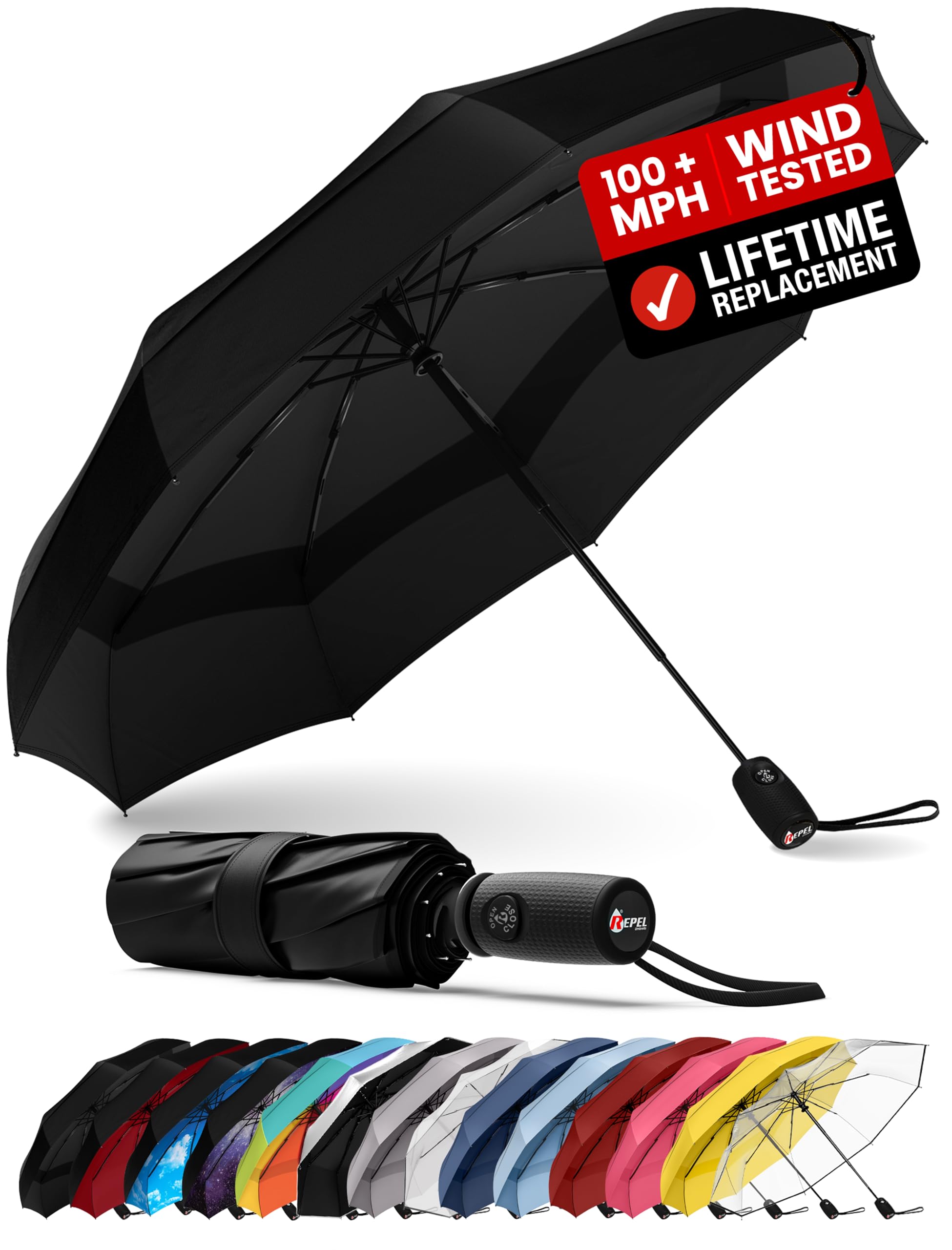
Repel Windproof Travel
The vented double canopy and fiberglass-reinforced frame resist inversion in gusts that would flip lesser umbrellas, keeping you dry when winds pick up. An auto-open button deploys the canopy instantly, and the auto-close retracts it back into a tidy bundle—though fully collapsing the shaft requires a separate manual push. At 1.85 pounds, it feels noticeably heftier than featherweight travel umbrellas, a tradeoff that comes from the sturdy frame and fabric that don’t feel flimsy in your hand. Its 11.8-inch folded length makes it easy to store in a backpack, center console, or glovebox without hogging space.
This umbrella is built for commuters who face unpredictable weather and want storm-ready reliability, not a disposable spare. The extra weight is felt in a small purse, so it’s better carried in a bag or car. The auto-close button only retracts the canopy; the shaft must be pushed firmly down to lock, which can be a struggle for anyone with limited hand strength or arthritis. For those who can manage that second step, the Repel’s wind resistance and long-term build quality make it a trustworthy daily tool.
Pros
- Fiberglass-reinforced frame resists inversion in strong gusts that overpower lighter umbrellas.
- Build quality and materials feel substantial enough to withstand daily commuting without fraying.
- Folds down to 11.8 inches and slips easily into a backpack side pocket or car glovebox.
Cons
- At 1.85 lbs, it’s heavier than many compact umbrellas; can feel bulky in a small purse.
- Some units may develop frame or rib breakage after moderate use; quality can vary between units.
If a few extra ounces and a two-step close don’t bother you, the Repel’s wind-fighting ability and sturdy construction make it a smarter everyday carry than lighter, less durable compact umbrellas.
Best for Lightweight Everyday
TUMELLA Travel Umbrella
Where the top pick leans into storm-ready toughness, the TUMELLA prioritizes lightweight portability and looks at a friendlier price. At 1.06 lbs and with a compact fold, it disappears into a bag, while the two-tone color options add a refreshing splash to gray-sky days. Auto open/close is smooth, and the reinforced ribs feel reassuringly solid for an umbrella in this range.
This is an umbrella for style-conscious walkers who face mostly light rain on calm streets. Wind resistance is a boundary — in a sudden gust, the canopy can invert, so it’s not the pick for blustery commutes. If your routine stays in low-wind urban drizzle, it delivers attractive convenience without overreaching on weather protection.
Pros
- Striking two-tone color options brighten up rainy outings.
- Reinforced ribs and solid frame feel well-built at this price.
- Weighs just 1.06 lbs and folds compactly — effortless to carry.
Cons
- The shaft needs a firm push to fully collapse after the auto-close button is pressed — can be stiff for some hands.
- Canopy may invert in stronger winds — wind resistance is inconsistent, so performance in gusts varies.
For calm, drizzly commutes where style and featherlight carry matter more than wind-battling grit, this TUMELLA brings eye-catching looks and solid build at a budget-friendly price.
Best for Windy Cities
EEZ-Y Windproof Umbrella
Unlike reverse-folding umbrellas that contain water but compromise in gusts, this 11-inch travel umbrella uses a vented double canopy to stay stable when wind kicks up. The fiberglass-and-steel frame resists bending, and the folded size slips into a briefcase or bag without struggle. Closing still requires two hands and some muscle — a reasonable tradeoff for reliable storm-day composure.
Pros
- Vented double canopy cuts the chance of inversion in gusty conditions.
- Fiberglass-reinforced steel frame holds its shape under wind load.
- Folds to 11 inches, fitting easily into commuter bags and gloveboxes.
Cons
- Hinge or rib breakage can occur over extended use, affecting longevity.
For commuters who face sudden gusts and value wind stability over one-handed convenience, this umbrella delivers dependable performance at a mid-range price.
Best for Drip-Free Car Use
LANBRELLA Reverse Umbrella
The LANBRELLA’s inverted fold traps the wet side inside when closing, leaving car seats, floors, and entryway rugs dry. This makes it a strong choice for drivers and frequent travelers who haul umbrellas through lobbies or trains, where drips are a nuisance. The 46-inch canopy spans generously for its 0.79-lb weight, and the auto open/close works smoothly. The reverse mechanism may develop play with heavy use, and collapsing the shaft after auto-close still demands a firm, two-handed push. If you need a wind-fighter rather than a drip-catcher, the anti-inversion specialist in this set handles gusts better.
Pros
- Reverse-fold design traps wet side inside, preventing drips on car seats and floors
- Generous 46-inch canopy at just 0.79 lbs — excellent coverage without bulk
- Auto open/close operates smoothly out of the box
Cons
- Closing requires a firm manual compression after auto-close, which some may find stiff
- Inverted folding mechanism can loosen with repeated use, reducing water containment
The LANBRELLA earns its place for anyone tired of wet umbrella runoff in cars and tight spaces. If your priority is containing drips rather than resisting gusty winds, the reverse design delivers — just know that the mechanism may not hold up to years of heavy use.
Best for Couples & Night
Bodyguard Inverted
A 46-inch inverted canopy with a reflective stripe sets this umbrella apart from slimmer reverse-fold models that prioritize drip containment. The Teflon-coated twelve-rib canopy shields two people and traps water inside when closed, while the reflective edge adds a safety layer for low-light walks.
Closing the shaft demands two hands and noticeable effort, making it a poor fit for anyone with limited grip strength or who needs a quick, one-second collapse. If a compact, effortless auto-close for travel is the priority, lighter options in this set will suit you better.
Pros
- 46-inch canopy covers two people and contains water when folded.
- Reflective stripe improves visibility and safety in low light.
- Teflon coating sheds rain effectively and dries quickly.
Cons
- Spokes can snap if the canopy is inverted too forcefully.
- Closing the shaft demands firm force and often two hands; strenuous for some.
For night walks or sharing coverage with a partner, the reflective canopy and two-person span are hard to beat. Those who need a quick, single-handed close for transit will want something less demanding.
Best for Premium Commuter
LifeTek Premium
The Teflon‑coated canopy sheds water on contact, leaving the umbrella drier and easier to stow than most after a drizzle. Its robust frame and dense fabric give it a substantial, confidence‑building feel absent in ultralight rivals. Where the top pick emphasizes sheer wind resistance, the LifeTek focuses on fast drying and build solidity.
Professionals who don’t mind the extra weight will appreciate the water beading and premium materials. The heft makes it better for briefcase or car carry than for packing into a small purse, and closing the shaft after auto‑close requires a firm push—typical of automatic umbrellas but worth considering if you have limited hand strength.
Pros
- Teflon coating beads and sheds water instantly, keeping the canopy drier and packable sooner.
- Dense, sturdy frame and tensioned canopy feel capable in gusty conditions.
- Auto open/close triggers reliably, minimizing fumbling at doorways.
Cons
- Noticeably heavier than most travel umbrellas—best carried in a briefcase or car, not a small purse.
- Shaft compression after auto‑close is stiff, which may be challenging for users with limited hand strength.
This umbrella makes sense if fast drying and robust construction matter more than shaving ounces, and your carry bag has room.
Best for Emergency Backup
Seniny Windproof

At under $10, the Seniny Windproof delivers auto open/close in a compact 11‑inch folded package — easy to toss into a daypack or car door pocket. The frame and canopy, however, aren’t built for repeated storms; treat it as an emergency backup rather than a daily companion.
Pros
- Under $10 with functional auto open/close
- Folds small enough to stash in any bag or glove box
Cons
Best used as a backup umbrella stashed in a bag or desk drawer for surprise showers, not for everyday reliance.
Best for Colorful Spare
Yoobure Travel Umbrella

Vibrant color options and auto open/close add cheer to light showers. Compact and easily stashed in a glove box. However, durability isn’t its strength — this umbrella best suits occasional use rather than daily windy commutes. For a spare in the car or a cheerful accessory, it works; just don’t rely on it as your one-and-only rain tool.
Pros
- Fun color selection and solid budget value.
- Compact profile slides into a glove box, tote, or daypack.
Cons
- Durability can be inconsistent; best treated as a backup umbrella.
If you need an inexpensive, colorful umbrella to keep in the car for surprise downpours, this works — just don’t expect it to replace a daily commuter tool.
Best for Good-Looking Occasional
Rain-Mate Windproof
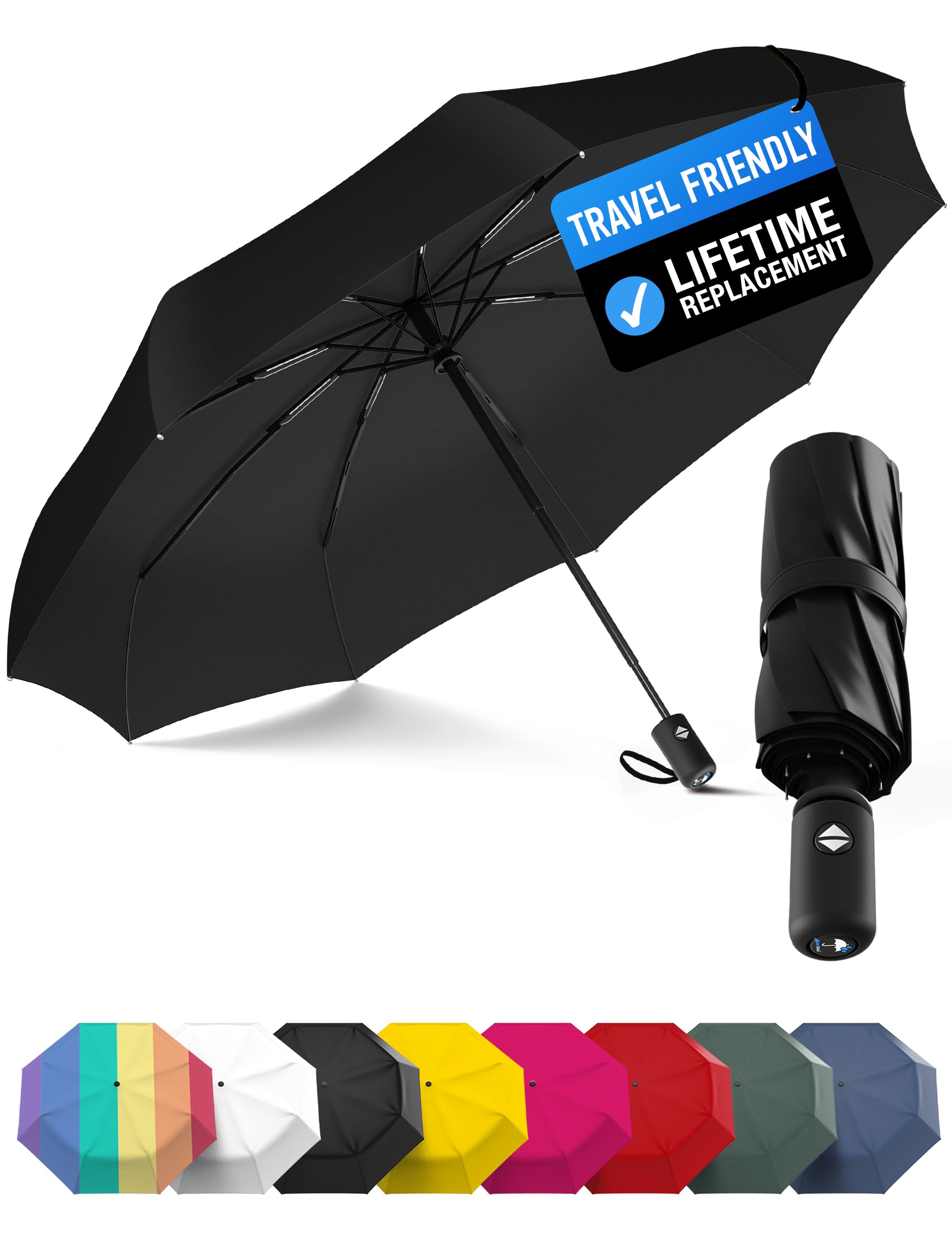
The Rain-Mate brings a polished appearance and a light, purse-friendly build with auto open/close for quick deployment. Its windproof construction handles daily drizzles, but rib or hinge failures have been noted after moderate use. Treat it as a good-looking occasional accessory rather than a multi-season workhorse — the higher-effort manual shaft close is a small tradeoff for the compact size.
Pros
- Attractive design with solid feel and refined details.
- Compact and lightweight at 12″ folded, 0.72 lbs — easy to stash in a bag.
Cons
- Auto-close button retracts the canopy, but fully collapsing the shaft still requires manual force — not unexpected for this size.
- Rib or hinge failure can occur after moderate use; best treated as a consumable for occasional rain.
An appealing, lightweight umbrella for purse or travel use when you prioritize looks and portability over multi-year durability. Best for occasional rain in calm conditions.
Best for Backpack Clip
QWB Inverted Carabiner

The carabiner handle and inverted closure add real convenience for bag-carry commuters. Closing the shaft can be stiff, and while the 10-rib frame offers decent wind resistance, durability over extended use is not yet established — making it a better fit for occasional rain than daily heavy reliance.
Pros
- Carabiner handle clips securely to bag straps for quick, hands-free carry.
- 10-rib inverted frame resists flipping better than standard canopies in gusts.
Cons
- Durability may not hold up to daily use; frame breakage can occur within the first season.
For students and backpackers who prioritize clip-on convenience over year-round reliability, the carabiner handle justifies the durability gamble.
Best for Sun Protection
Umenice Sun Umbrella

The Umenice umbrella excels at blocking UV rays and providing a cooling effect, making it a strong pick for hot, sunny outings. However, it’s a specialty sun umbrella that isn’t a primary compact rain solution—its design prioritizes sun protection over quick, lightweight rain deployment.
Pros
- Blocks UV rays effectively and reduces heat under direct sun.
- Creates a noticeable cooling sensation during sunny use.
Cons
- Heavier and more cumbersome to close than many compact rain umbrellas.
This umbrella fits sun-sensitive travelers who prioritize UV protection and cooling and only need occasional rain coverage on sunny trips.
Best for Ultralight Disposable
SY COMPACT Travel
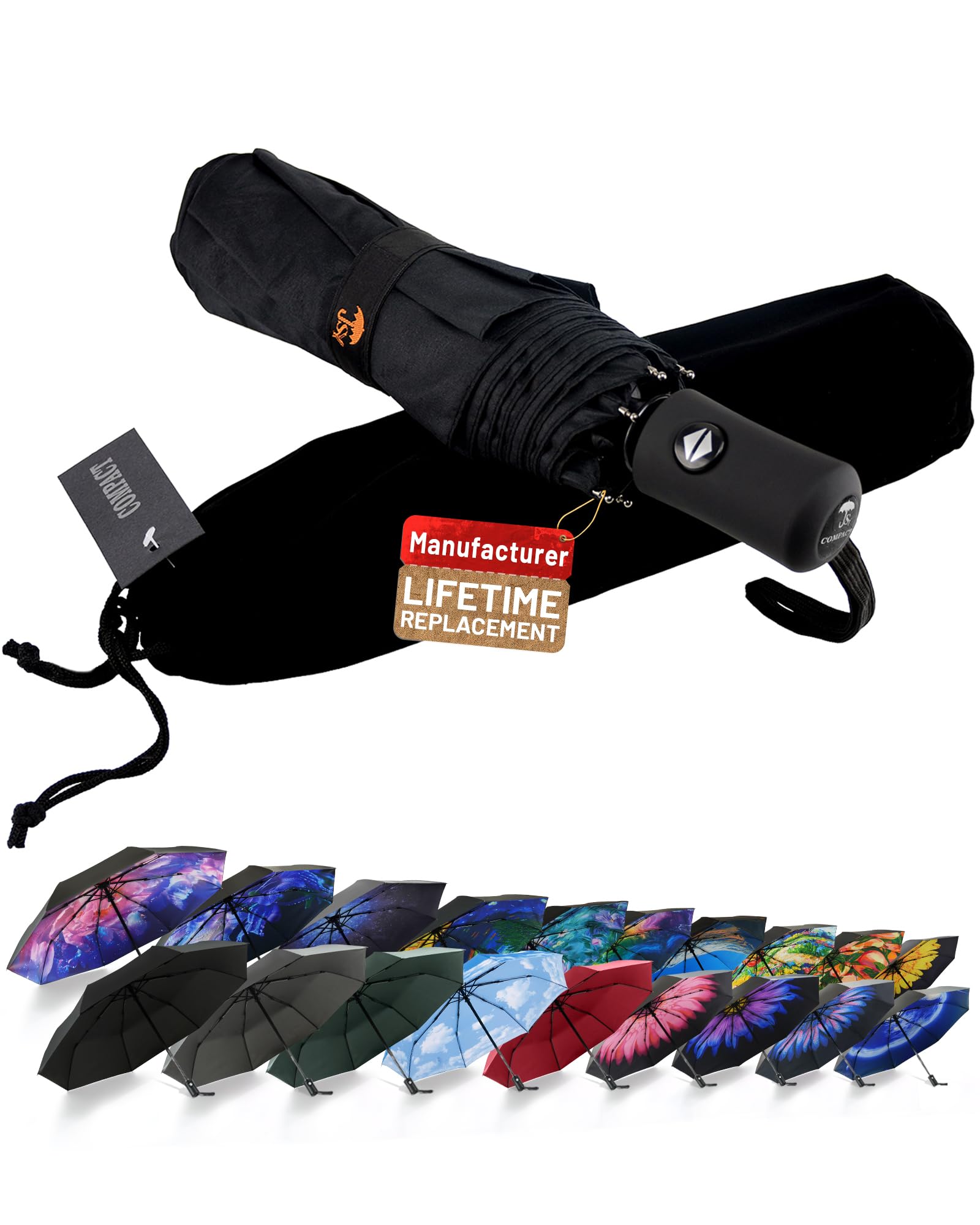
Weighing just 0.73 lbs and folding small enough for any bag, this umbrella delivers auto open/close at a budget-friendly price. Frame durability is inconsistent, and some units may not withstand repeated deployment or gusty conditions. It works as a disposable spare for the occasional drizzle — not as a daily commuter.
Pros
- Extremely lightweight and portable for carry-on or purse
- Very affordable with functional auto open/close
Cons
- Closing the shaft after auto-close demands significant force; one-handed operation can be difficult
If you need a nearly weightless, under-$10 emergency umbrella to toss in a bag for the occasional drizzle, this fits. Expect to replace it after limited use.
How to Choose
The difference between a disposable umbrella and a reliable travel companion often boils down to two specs: weight and canopy venting design.
Weight
Sub‑1‑lb umbrellas disappear into a purse or backpack, but the lighter the frame, the more likely it relies on thinner ribs that can buckle in wind. A 1.8‑lb model might feel bulky for all‑day carry, yet its heft usually signals sturdier fiberglass or steel spines that resist inversion. If you only grab an umbrella when a downpour hits, that extra weight means a longer‑lasting tool; if you’ll carry it every day just in case, prioritize under one pound.
Folded Length
A compact umbrella that stows at 11–12 inches fits standard glove boxes, backpacks, and tote bags without poking out. Models that fold slightly longer may be more awkward, but they often pack larger canopies. Check your bag’s depth before choosing—a 13‑inch folded umbrella might overhang a slim laptop sleeve, making zipping up frustrating.
Canopy Diameter
A 38–42‑inch canopy covers one adult head‑on, leaving shoulders vulnerable in sideways rain. Stepping up to 46 inches provides shoulder‑to‑shoulder coverage for two, though the larger surface catches more wind and can make the umbrella feel ‘sail‑like’ in gusts. Match the diameter to your typical commute: solo city walkers do fine with 42 inches, while parents pushing a stroller or couples sharing an umbrella benefit from 46 inches.
Rib Count and Material
Fiberglass ribs flex and spring back, reducing the chance of permanent bending or snapping during sudden gusts. Steel ribs are cheaper and can be strong, but once bent they stay deformed. An 8‑rib frame is standard for compact umbrellas; 10 or 12 ribs distribute wind force more evenly but add weight and folding complexity. For windy climates, look for fiberglass and a higher rib count.
Wind Venting and Double Canopy
A vented double canopy lets air pass through an upper layer while the lower layer repels rain, dramatically reducing the pressure that flips an umbrella inside out. Standard single‑layer canopies trap wind like a parachute. If you’ve ever wrestled an inside‑out umbrella on a street corner, a vented design is the single most effective upgrade you can make—more so than any ‘windproof’ claim on a box.
FAQ
Why is my travel umbrella so hard to close after pressing the button?
Because the auto-close button only retracts the canopy; the shaft must be manually pushed down, and manufacturers use stiff springs to keep the umbrella open in wind. To close it easily, brace the umbrella against your hip or the ground and compress firmly.
Can a compact travel umbrella really handle 40 mph winds?
Few compact umbrellas genuinely survive 40 mph gusts without inverting. Those with vented double canopies perform far better than single-layer designs. Realistically, treat wind ratings as relative indicators, not guarantees.
How do you fix an automatic umbrella that won’t stay open?
Often the locking mechanism is jammed with debris or a rib is bent. Try cleaning the catch and lubricating with silicone spray. If that fails, replacement is usually more cost-effective than repair.
Does a UV-blocking travel umbrella keep you cooler in the sun?
A UPF 50+ umbrella can reduce direct sun exposure and create shade, lowering perceived temperature by several degrees. It’s not a replacement for sunscreen, and it won’t perform as a dedicated sun umbrella if wind is a concern.