
This post contains affiliate links. We may earn a small commission when you buy through our links — at no extra cost to you.
A waterproof label on a hiking boot can create a false sense of security. Many boots marketed as waterproof work well out of the box, but after a few months of mud and puddles, leaks can appear — especially if maintenance is skipped. That’s the hidden reality most backpacking guides don’t mention.
This guide focuses on boots that deliver out-of-box comfort, light feel on long ascents, and traction that inspires confidence. Each pick is matched to a specific foot shape and hiking style, from narrow-footed trekkers to wide-footed weekend warriors, so you can find a boot that actually fits your feet and your trail routine.
The biggest mistake hikers make is assuming a waterproof membrane means dry feet forever. Regular re-proofing with a spray-on treatment extends protection and is the hidden cost of ownership for any hiking boot. This guide helps you choose a boot that’s worth that effort.


Best for Day Hiking, Fastpacking
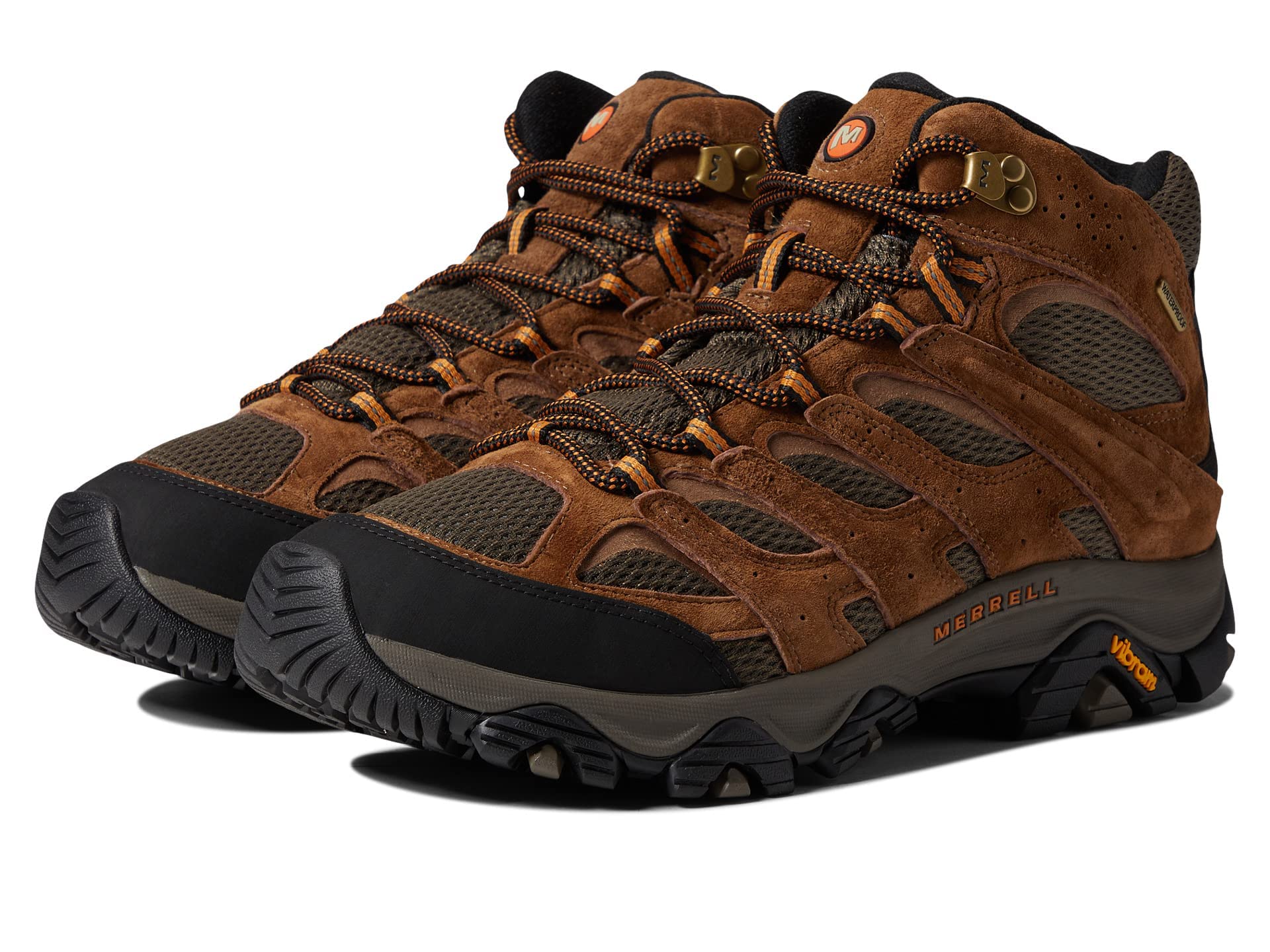
Merrell Moab 3 Mid
Key Features
- Outsole Traction: Vibram TC5+, Merrell stick rubber
- Price: Premium
At 11.68 oz per shoe, the Moab 3 Mid is one of the lightest waterproof mid-cut boots available, and it feels even lighter on the foot. The out-of-box fit is exceptionally comfortable, with arch support that reduces fatigue on long miles. The Vibram TC5+ outsole provides confident grip on rocky and loose surfaces, adding stability on descents.
Build quality is strong; many users report years of regular use without significant wear. The low weight translates to nimble footwork on uneven trails, making this boot feel closer to a trail runner than a traditional hiker. Underfoot feedback is clear enough to feel the terrain without being harsh.
This boot is best suited for day hikers and fastpackers who prioritize weight and comfort over absolute waterproofing. The waterproof membrane can let moisture through in sustained rain or shallow stream crossings, so those who frequently hike in wet conditions should plan to re-treat the boot or choose a more sealed option. For dry-weather trail use, the Moab 3 Mid excels in agility and support.
Pros
- Featherlight 11.68-oz build reduces fatigue and enhances agility on long trails.
- Slipper-like out-of-box comfort with excellent arch support minimizes foot fatigue.
- Vibram TC5+ outsole provides confident traction on rocky and loose terrain.
- Durable construction that holds up well over years of regular hiking.
Cons
The Moab 3 Mid is the go-to choice for lightweight day hiking comfort and traction, as long as you’re hiking in mostly dry conditions.
Best for All-Day Hikes, Backpacking
Merrell Moab 3 Mid W
Key Features
- Outsole Traction: Vibram TC5+, Merrell stick rubber
- Price: Mid-Range
The Merrell Women’s Moab 3 Mid delivers blister-free comfort straight out of the box, a direct result of its roomy toe box and plush arch support. Unlike the top pick’s ultralight build, this boot adds a Vibram TC5+ outsole that provides confident grip on loose rock and muddy slopes, making it a better match for uneven terrain and longer distances.
This boot suits women who prioritize foot health over minimal weight — the wide toe box easily accommodates orthotics, and the mid-height collar provides solid ankle support for day hiking or moderate backpacking. However, the M Select DRY waterproofing membrane can let moisture through after hours of steady rain or stream crossings, so those needing guaranteed dry feet in consistently wet environments should look elsewhere.
Pros
- Blister-free, no-break-in comfort with a wide toe box
- Solid ankle and arch support for long, uneven treks
- Vibram outsole provides durable, confident traction on mixed terrain
Cons
- In extended wet exposure, the waterproof membrane may let moisture seep through — suitable for fair-weather hikes or short rain showers
This is the boot for women who value all-day comfort and a roomy fit over minimal weight, and don’t expect absolute waterproofing in heavy rain.
Best for Budget Day Hikes
NORTIV 8 Backpacking
The Nortiv 8 boot delivers the roomiest fit in its price class, with enough toe space to prevent blistering on multi-day trips. Solid grip on rock, mud, and roots comes from an aggressive lug pattern, while the mid-top height gives decent ankle stability for backpacking loads. Compared to the top pick’s lighter, Vibram-equipped build, this boot trades some weight and waterproof precision for a budget-friendly price and backpacking-specific comfort.
Women who hike in dry to moderately wet conditions and want a comfortable, roomy boot without overspending will find this a strong fit. Treat it as water-resistant rather than fully waterproof — it handles light rain and puddles fine, but sustained downpours can lead to damp feet. The forgiving toe box suits wider feet and long-mile foot swell, making it a travel-ready backpacking option.
Pros
- Roomy toe box prevents blisters on long hikes, even with foot swell.
- Traction grips confidently on mixed terrain like rocks, mud, and roots.
- Near-premium comfort and durable build at a price that rivals boots costing twice as much.
Cons
- Waterproofing can falter in sustained rain — treat it as water-resistant rather than a guaranteed dry barrier.
For women who prioritize all-day comfort and foot-friendly space over absolute waterproof guarantees, this boot delivers exceptional value on dry to moderately wet trails.
Best for Budget Light Trails
NORTIV 8 Armadillo
The Armadillo offers an unexpected level of underfoot cushioning and a light, nimble feel that belies its low price. Where the top pick leans on a Vibram outsole for precision, the Armadillo prioritizes a plush midsole that forgives the occasional misstep on packed dirt and gravel. That cushioned ride does not sacrifice stability; the boot feels planted on moderate inclines, though the outsole lugs are less aggressive than those on pricier options.
This boot is for hikers who stick to dry trails and want to save money without sacrificing immediate comfort. The padded collar and lightweight build make it a natural for day hikes and weekend outings. The waterproof membrane can let moisture through in sustained rain or stream crossings — treat it as water-resistant, not waterproof. The sole bonding may give way earlier than with premium boots under daily use on rugged terrain. If your trails are tame and your budget tight, the Armadillo is a compelling value.
Pros
- Plush cushioning that makes long day hikes feel lighter on the feet.
- Exceptional value that rivals boots at twice the price.
- Stable, secure footing on packed trails and moderate inclines.
Cons
- Waterproof membrane can let moisture in during sustained rain, particularly at seams.
- Sole adhesive may weaken with heavy use, potentially leading to sole separation.
If your hiking stays on dry, moderate trails and you want to keep spending in check, the Armadillo delivers more comfort than its price suggests — just don’t expect it to survive monsoons or year-round abuse.
Best for Casual Trail Wear
Timberland White Ledge Mid
Unlike the sneaker-inspired silhouettes in this lineup, the Timberland White Ledge Mid stays true to its leather roots without the weight penalty. At just over a pound per boot, it pulls off a lightweight leather build that rivals synthetic competitors, while the padded ankle collar and gusseted tongue add support without stiffness. The multi-directional lug pattern handles packed dirt and gravel confidently.
Day hikers and weekend trail walkers who value immediate comfort and a classic look will find plenty to like here. Out of the box, the waterproof membrane repels puddles and short downpours effectively. With aggressive use over many months, however, the sole bond can begin to separate, so this boot fits best for those who treat their gear gently and prioritize a broken-in fit from the first step.
Pros
- Feels broken-in immediately with no chafing or hot spots.
- Unusually light for a full-grain leather boot, at roughly 1.1 lbs per boot.
- Waterproofing holds up well in puddles and light rain when new.
Cons
- Waterproofing may allow leaks after prolonged exposure to rain or puddles over time.
For day hikes and casual wear where immediate comfort matters most, the White Ledge Mid delivers — but those who put boots through hard miles should plan on a shorter lifespan.
Best for Rugged Trail Support
Columbia Newton Ridge Plus
Key Features
- Outsole Traction: Omni-Grip non-marking rubber
- Price: Mid-Range
Superior lateral stability and a near-zero break-in period set this boot apart from lighter, more pliable day hikers. The stiff mid-cut collar and well-structured heel cradle hold the ankle securely across roots and rocks, while the Omni-Grip outsole digs in confidently on packed dirt and loose gravel. The waterproof seam sealing goes beyond marketing: muddy trails and shallow stream crossings rarely phase it.
This boot fits women with narrow to medium-width feet best. The standard width runs noticeably snug through the toe box, so anyone with even slightly broad feet will want the wide option. It’s also not the choice for ultralight backpackers counting every ounce — the design favors support and durability over weight savings. For day hikes and weekend trips where stable footing and dry feet top the priority list, it’s a standout.
Pros
- Immediate out-of-box comfort with negligible break-in needed.
- Lateral stability and arch support that reduce fatigue on uneven terrain.
- Effective waterproofing that keeps feet dry through mud and shallow crossings.
Cons
- Standard width runs noticeably narrow through the toe box; a wide size is necessary for those with broader feet.
If unyielding ankle support and nearly instant comfort matter more than shaving ounces, this is a hard-to-beat choice — just be sure to pick the wide option if your feet aren’t narrow.
Best for Men’s Day Hiking
Columbia Newton Ridge II

Key Features
- Outsole Traction: Omni-Grip non-marking rubber
- Price: Mid-Range
This boot pairs low-bulk, trail-runner-like agility with above-average waterproofing out of the box. The fit runs narrow, particularly in the toe box, making it a better match for narrower feet or those willing to size up. While it nearly matches the top pick on comfort, its slightly less cushioned support and narrower last hold it back from being the best all-rounder. For day hikers who prioritize a nimble feel and don’t mind occasional re-proofing, it’s a strong mid-range alternative if the top pick’s fit isn’t right.
Pros
- Cushioned, comfortable out-of-box feel with no foot pain.
- Lightweight design that mimics trail runner agility rather than a clunky boot.
Cons
- Waterproof seam sealing may start to let moisture through after a season of regular hiking.
A solid choice for narrow-footed day hikers who want a lightweight boot with minimal break-in, provided they stay on top of seam re-proofing.
How to Choose
The defining trade-off in a lightweight hiker is that dropping ounces often means dropping material thickness and long-term waterproof reliability, so match the boot’s protection level to how wet and rocky your real trails get.
Weight vs. Durability
Measured weight per boot reveals the most immediate sacrifice: lighter builds use thinner leather, less midsole foam, and fewer reinforcements. A 11.68-oz boot like the Merrell Moab 3 Mid feels fast underfoot but won’t survive the same abrasive scree fields as a 1.5-lb leather workhorse.
If you regularly hike sharp talus or carry a multi-day pack, accept a slightly heavier boot with a full rubber rand and thicker outsole. Reserve the featherweight class for established trails and fast-and-light day missions.
Waterproof Reality
Every waterproof membrane — whether proprietary like M Select DRY or industry-standard — will eventually let moisture through once the surface DWR coating wears off. Waterproof failure rarely happens because the boot is defective; it happens because the owner hasn’t re-treated the outer fabric in months.
Budget boots compound this problem because seam sealing is less robust from the factory. Even in premium models, expect to apply a spray-on waterproofing compound every 2-3 months during heavy season. Think of it as maintenance, not a one-time purchase.
Cushioning and Arch Support
Thick, squishy midsoles feel plush for the first 10 miles, but soft EVA can compress and lose rebound after 200 miles, particularly under heavy hikers. A firm, anatomically shaped footbed with pronounced arch support (like that in the Merrell Moab line) distributes pressure better over a full day than pure pillow-top cushioning.
If you have flat feet or plantar fasciitis, prioritize a boot with a deep heel cup and removable insole so you can swap in custom orthotics. Soft cushion alone won’t correct biomechanical stress.
Outsole Grip on Mixed Terrain
Hard rubber compounds shed mud well but skate on wet rock; softer compounds (like Vibram TC5+) conform to micro-textures for grip on slick roots and angled stone. The trade-off is durability: soft rubber wears faster on pavement walks to the trailhead.
Lug depth and spacing matter too. Deep, widely spaced lugs clear mud better, while a very aggressive tread pattern under 5mm deep can clog on loamy trails. For mostly gravel and hardpack, a moderate 4-5mm lug works without sacrificing trail feel.
Getting the Right Fit
Boot fit is the difference between a 15-mile day and a blister-filled mile-two bailout. Models with a generous toe box allow toes to splay naturally on downhill braking, while narrow lasts can pinch the forefoot even in technically correct length.
Try boots on with the exact sock system you’ll hike in, and aim for a thumb’s width of space in front of your longest toe when laced tight and leaning forward. Brands like Columbia consistently run narrow, while Merrell and NORTIV 8 Backpacking models tend toward roomier forefoot shapes.
FAQ
Why do my waterproof hiking boots still let water in?
Water often enters through the tongue gusset or eyelets, not the membrane itself, especially if the boot isn’t treated with a DWR spray. Once the outer fabric wets out, the membrane can’t breathe and internal moisture builds up, feeling like a leak. Top up a spray-on waterproofing treatment every couple of months, and pay extra attention to seam-sealed areas.
Are lightweight hiking boots durable enough for rocky trails?
Lightweight boots use thinner leather and less shank stiffness, so sustained talus scrambling can abrade the upper and compress the midsole faster than a burlier boot. If your regular hike involves boulder hopping or sharp rock, choose a lightweight boot with a full rubber toe cap and a deeper lug pattern, and expect to replace it after 500-700 miles rather than 1,000+.
How long should hiking boot waterproofing last before wearing off?
Factory-applied waterproofing typically remains effective for 3-6 months of weekly use, depending on how much mud and grit scuff the surface. After that, water stops beading on the leather or fabric and the boot feels damp even without full soaking. Reapply a spray-on or wash-in DWR treatment at the first sign of that beading loss to keep the membrane performing.
Do I need to size up for hiking boots to wear thick socks?
Not always; many boots already account for light cushion socks in their standard sizing. However, if you plan to wear a heavy wool mountaineering sock, go up a half size. The safest check is to lace the boot fully, kick your heel back, and confirm there’s a thumb’s width between your longest toe and the front before descending.