
This post contains affiliate links. We may earn a small commission when you buy through our links — at no extra cost to you.
You pull your boots out for a weekend hike, and after a few miles you notice the sole starting to peel away from the upper. That sinking feeling is all too common — sole separation, broken lace hooks, and waterproof claims that fall apart in wet grass are the top complaints in this category.
The reality is that many boots deliver impressive comfort out of the box but sacrifice the bonding and materials that keep them intact beyond a season. This guide focuses on boots that avoid those failure points — without forcing you to spend a premium for basic reliability.
Whether you’re a day hiker or need a boot for mixed terrain, the key is matching your use to the boot’s actual construction limits, not the marketing promises.


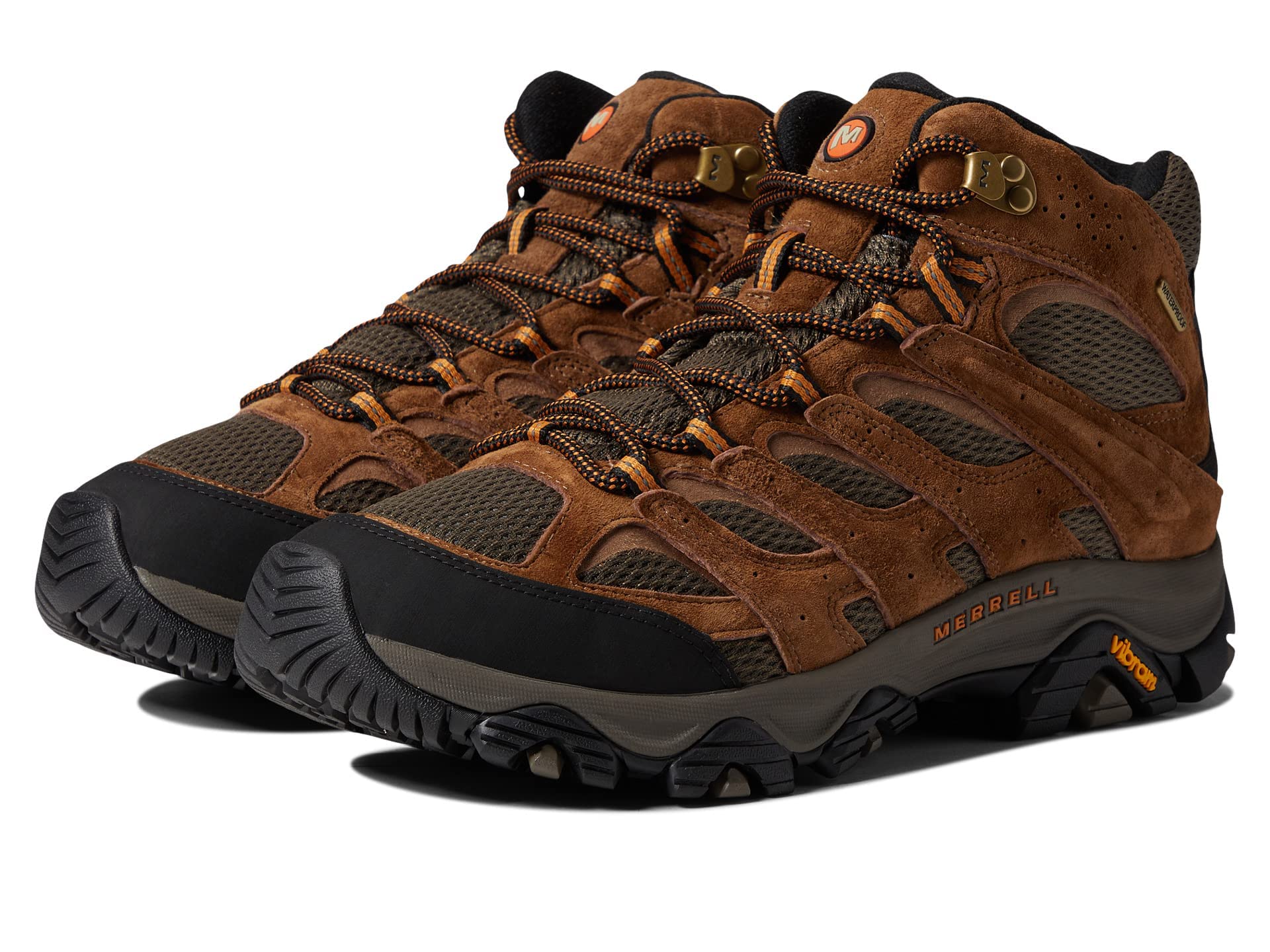


Best for Day Hikes, Moderate
Foxelli Hiking Boots
Key Features
- Waterproofing: Waterproof (claimed)
- Durability: No sole separation
- Comfort: Slipper-like
- Price: $$
The Foxelli Hiking Boots deliver immediate comfort that feels like wearing slippers, combined with sturdy suede construction and a waterproof membrane that keeps feet dry on wet trails. The lightweight build reduces fatigue on longer day hikes, and the included bonus socks and laces add practical value.
These boots are best for hikers who prioritize comfort and durability on day hikes or moderate backpacking trips, and want a boot that works well out of the box. The long-term durability beyond a year of heavy use is not yet widely documented, so those planning extended multi-day expeditions may want to verify track records with other models.
Pros
- Out-of-box comfort requires no break-in, with a plush feel from the first step
- Suede leather and stitching hold up well on rocky trails and repeated use
- Durable enough for regular day hikes at a price point that undercuts many competitors
Cons
For day hikes and moderate backpacking, the Foxelli boots offer a rare balance of immediate comfort and genuine durability without the usual trade-offs.
Best for Mixed Use, Work
Ariat Terrain H2O
Key Features
- Waterproofing: Waterproof (H2O)
- Durability: No sole separation
- Comfort: All-day comfort
- Price: $$$
The Ariat Terrain H2O uses top-tier full-grain leather that holds up to decades of abuse — a level of build quality most synthetic boots can’t match. Its waterproof H2O membrane keeps feet dry through puddles and light rain without sacrificing breathability.
This boot suits hikers who value longevity over weight savings. The leather construction makes it heavier than modern synthetics, and sizing varies between batches — some buyers need to exchange for a half-size up or down.
Pros
- Full-grain leather construction delivers exceptional durability for rugged trails.
- All-day comfort with minimal break-in, even during long hikes.
- Reliable water resistance keeps feet dry in wet conditions.
Cons
- Sizing inconsistencies can require exchanging for a different size.
For hikers who prioritize long-term durability over weight, the Ariat Terrain H2O delivers unmatched leather quality and water resistance — just plan for sizing adjustments.
Best for Dry Trails
Merrell Moab 3 Dry
Key Features
- Waterproofing: Non-waterproof
- Durability: No sole separation
- Comfort: Generous padding
- Price: $$
The Moab 3 Mid keeps the cushioned comfort that made its predecessor a favorite, while upgrading the outsole for better grip on loose dirt and rock. Without a waterproof liner, the boot breathes freely and dries quickly if splashed, making it a smart pick for hikers who stick to dry trails and want to avoid the weight and potential blistering of a membrane. Just keep these on sunny paths – stepping through puddles or wet grass will soak feet with no barrier to stop it.
This version suits hikers who prioritize breathability and light weight over all-weather capability. If you routinely hike in rain or cross streams, the waterproof Moab 3 (or a different boot with a reliable membrane) is the better call. For dry-weather day hikes and backpacking in arid climates, the tradeoff is straightforward: you lose water protection, you gain a boot that feels less like a rubber boot and more like a supportive sneaker.
Pros
- Plush cushioning straight out of the box with no break-in period
- Solid construction that holds up to repeated use on rocky terrain
- Outsole provides confident grip on dry dirt, gravel, and slab rock
Cons
- Not waterproof – wet grass or puddles will soak feet without protection
Choose the Moab 3 Non-Waterproof when your hiking route stays dry and you’d rather save weight and keep your feet cool than carry a membrane that can trap sweat.
Best for Budget Waterproof
Merrell Moab 3 WP
Key Features
- Waterproofing: Membrane (M Select)
- Durability: No sole separation
- Comfort: Plush comfort
- Price: $$
The Moab 3 Mid delivers the slipper-like comfort and arch support that made the Moab line famous, all in a lightweight package that feels far less bulky than its waterproof membrane suggests. The mid-height collar offers stable ankle support without feeling restrictive, and at its sale price, it provides solid value for comfortable day hiking.
This boot is best for budget-conscious hikers with wide feet who want Merrell quality and primarily hike on dry trails or in light drizzle. The waterproofing may not hold up in sustained wet conditions—walking through wet grass can leave feet damp, so treat it as weather-resistant rather than fully waterproof. For those who don’t need moisture protection, the non-waterproof Moab 3 offers lighter weight and better breathability at a lower cost.
Pros
- Slipper-like comfort with minimal break-in required
- Good arch support and stable platform for moderate trails
- Lightweight construction for a waterproof mid boot
Cons
- Waterproof membrane can let moisture through on wet grass or heavy rain – best treated as weather-resistant
For hikers who prioritize comfort and value over guaranteed waterproofing, the Moab 3 Mid is a smart buy for dry-weather trails.
Best for All-Day Comfort
Timberland Mt. Maddsen
Key Features
- Waterproofing: Seam-sealed
- Durability: Sole peeling, stitching
- Comfort: Anti-fatigue footbed
- Price: $$
The Timberland Mt. Maddsen stands out for its anti-fatigue footbed, which keeps legs feeling fresh on extended day hikes. This leather boot is lighter than most in its class, reducing fatigue over miles of trail. Compared to the more budget-oriented Timberland White Ledge, the Mt. Maddsen offers extra cushioning and a slightly more refined look.
This boot suits comfort-focused hikers who tackle moderate trails and occasional light work. The waterproofing handles light rain and shallow puddles. However, some pairs show sole separation or stitching issues under heavy use, and the sizing runs large—those between sizes should order a half size down. It’s best for day hikers rather than those needing years of rugged service.
Pros
- Anti-fatigue footbed keeps legs fresh on long walks
- Lightweight for a leather boot reduces fatigue
- Effective waterproofing for light rain and puddles
Cons
- Under heavy use, sole separation may occur in some pairs
- Sizing runs large; ordering a half size down is recommended
For hikers who value all-day comfort over long-term durability, the Mt. Maddsen delivers standout cushioning at a mid-range price.
Best for Casual Hiking
NORTIV 8 Armadillo
Key Features
- Waterproofing: Waterproof (claimed)
- Durability: Sole separation, wear
- Comfort: Good cushioning
- Price: $
The NORTIV 8 Armadillo delivers surprising cushioning and lightness at a cost that undercuts most competitors, including our top pick. There’s a catch: sole separation can occur within months of regular use, so this boot suits budget-conscious buyers who hike only on dry, easy trails and don’t expect it to last beyond a season or two.
Pros
- Very comfortable cushioning for all-day wear
- Lightweight build reduces fatigue on short hikes
Cons
- Water resistance can let moisture through during wet conditions
Buy the NORTIV 8 Armadillo if your budget is tight and you only need a comfortable boot for occasional, dry-weather hikes. For any regular or wet use, consider spending more on the top pick.
Best for Budget Day Hikes
Timberland White Ledge

Key Features
- Waterproofing: Seam-sealed
- Durability: Sole separation, eyelet
- Comfort: Exceptional comfort
- Price: $$
The Timberland White Ledge offers immediate comfort and a notably light weight for a mid boot, making it a good match for budget-conscious day hikers. However, sole separation and eyelet breakage can occur over extended use, so this boot suits occasional trail walks rather than heavy-duty backpacking.
Pros
- Comfort out of the box with minimal break-in required
- Notably lightweight for a mid boot, easy to wear on day hikes
Cons
- Sole separation or eyelet breakage may develop over time
Best for occasional day hikers who prioritize comfort and low weight over long-term durability.
Best for Wide Feet
Columbia Crestwood

Key Features
- Waterproofing: Water-resistant
- Durability: Soles wear, seams
- Comfort: Wide feet comfort
- Price: $
The Columbia Crestwood delivers immediate comfort and a generous toe box that wide-footed hikers will appreciate at a budget-friendly price. Waterproofing falls short in light rain or wet grass, and the sole can show wear sooner than some rivals — best suited for dry-day trips rather than wet or heavy use.
Pros
- Roomy toe box accommodates wide feet comfortably
- Budget-friendly price with decent comfort for casual day hikes
Cons
- Waterproofing does not hold up in wet grass or light rain — feet can get damp
A sensible choice for dry-trail day hikes on a budget, especially if you need extra space in the toe box.
Best for Casual Budget
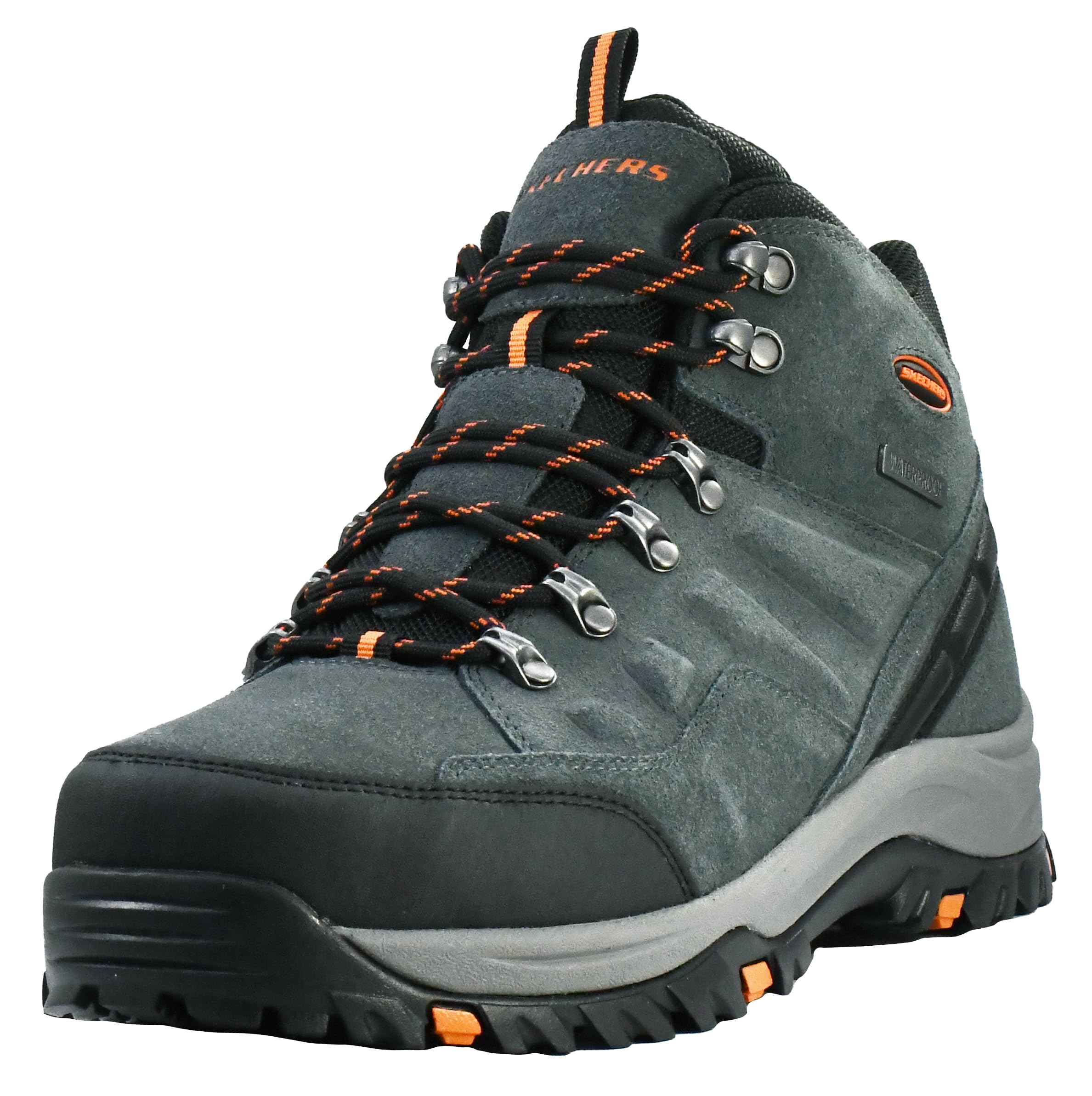
Skechers Relment-pelmo
Key Features
- Waterproofing: Water-resistant
- Durability: Lace hooks, sole sep
- Comfort: Slipper-like
- Price: $
The Skechers Relment-pelmo delivers sneaker-level cushioning that makes short walks feel effortless, all at a budget-friendly price. However, the lace hooks and eyelets can break over time, and sole separation is possible — this boot suits casual hikers who prioritize immediate comfort and don’t plan to rely on it for frequent rugged use.
Pros
- Slipper-like comfort with cushioned insoles for immediate ease on short walks.
- Budget-friendly price for the level of comfort and features offered.
Cons
- Lace hooks and eyelets may break over time; sole separation can occur under regular use.
A solid pick for light, occasional hiking on a tight budget, as long as you’re prepared to replace lacing hardware or treat it as a seasonal boot.
Best for Light Hiking, Daily
HUMTTO All-Terrain

Key Features
- Waterproofing: Waterproof (claimed)
- Durability: Early failure possible
- Comfort: Blisters-free
- Price: $
The HUMTTO All-Terrain offers good water resistance and comfortable cushioning at a budget-friendly price — a solid fit for light hikes and daily wear. Some boots may experience sole separation under heavier use, so this pair works best for easy, occasional trails rather than rugged terrain.
Pros
- Very comfortable with no blisters
- Good water resistance for the price
Cons
- Under heavier use, the sole may separate prematurely — best suited for light trails.
A budget-friendly option for those who prioritize water resistance and comfort on occasional, easy hikes over long-term rugged durability.
Best for Style, Moderate Trails
Columbia Newton Ridge II

Key Features
- Waterproofing: Seam-sealed
- Durability: Lace holders break
- Comfort: Soft interior
- Price: $$
This boot combines plush interior comfort with a handsome suede exterior that keeps its appearance well on light trails and casual outings. The lacing hardware—hooks and eyelets—can wear out sooner than expected, making this a better fit for occasional hikers rather than frequent use on rugged terrain.
Pros
- Very comfortable with soft interior
- Great style and appearance that lasts
Cons
- Lacing hardware can wear out prematurely
Best for day hikers who value immediate comfort and style over long-term hardware durability.
How to Choose
The biggest difference between a boot that lasts years and one that falls apart in months is the quality of the sole bonding, not the brand name.
Waterproofing Reality
Waterproof membranes and seam-sealed constructions keep moisture out only as long as the boot’s tongue doesn’t sit below water. Once submerged above the tongue line, water seeps in through the lacing area regardless of the membrane quality.
For day hikes with puddles and light rain, seam-sealed boots or basic membranes perform fine. If you expect sustained rain or stream crossings, look for a boot with a higher collar and a gusseted tongue — features that delay the failure point rather than eliminate it.
Durability and Sole Separation
Sole separation is the single most common long-term failure across all price tiers. It happens when the adhesive between the upper and outsole degrades from repeated flexing and moisture exposure. Boots with a direct-attach construction (sole molded to upper) resist this longer than those relying solely on glue.
If you plan to hike multiple times per week, avoid budget boots that use generic cement construction. Look for boots with a stitched welt or at least a reinforced toe cap — these add mechanical resistance to peeling.
Comfort and Break-In
Modern hiking boots often feel soft out of the box thanks to thick foam midsoles and padded collars. That immediate comfort can mask a lack of arch support or torsional rigidity, which only becomes apparent after a few miles on uneven terrain.
A boot that feels like a sneaker in the store may cause foot fatigue on rocky descents. Try boots with your hiking socks and walk on an incline to test heel slip. The best boots balance plushness with a stable shank that prevents the foot from rolling over edges.
FAQ
Why do my hiking boots fall apart after a few months?
The most common cause is sole separation due to poor adhesive bonding, especially in budget-priced boots that use glue-only construction. Check if the boot has a stitched welt or reinforced sole — these resist peeling far longer. Also, storing boots in a hot car or direct sunlight accelerates adhesive breakdown.
Are Merrell Moab hiking boots worth the money?
Yes, especially the Moab 3 version. They offer exceptional out-of-box comfort, good arch support, and available wide sizes. The non-waterproof version has fewer durability complaints. The waterproof version is a solid value at sale prices, though its membrane may not hold up in sustained wet conditions.
How to make cheap hiking boots last longer?
Use a quality shoe glue (like Shoe Goo) to reinforce the sole-to-upper seam before the first hike. Avoid leaving boots wet or in a hot car. Rotate boots if you hike frequently — letting the adhesive dry between uses reduces separation risk. Replace the insoles immediately with ones that offer better arch support.
Do I need waterproof hiking boots for day hikes?
Only if you expect to walk through wet grass, mud, or light rain. For dry trails or arid climates, a non-waterproof boot is lighter, breathes better, and typically lasts longer because there is no membrane to delaminate. Waterproof boots are worth it if you hike in the Pacific Northwest or during spring thaw.