
This post contains affiliate links. We may earn a small commission when you buy through our links — at no extra cost to you.
Many men shopping for a down coat expect genuine down insulation—but the ‘down’ tag doesn’t always guarantee it, especially at lower price points. This creates real confusion when a jacket feels warm but the fill turns out to be polyester, leaving you wondering if you got what you paid for.
Beyond fill type, the perfect down coat depends on how you’ll use it: ultralight packability for travel versus heavy insulation for harsh winters. Each choice carries trade-offs—thin shells that risk tearing, zippers that snag on linings, or bulk that won’t fit in a carry-on. This guide cuts through the marketing to match you with the coat that fits your actual needs.


Best for Ultralight Traveler
Eddie Bauer CirrusLite
Key Features
- Fill Type: Genuine down
- Weight & Pack: Ultralight, packable
- Zipper Quality: Standard zipper
- Warmth Rating: Light to moderate
The Eddie Bauer CirrusLite achieves a warmth-to-weight ratio that few jackets match – the 850-fill down insulation keeps you warm in the 30°F–50°F range while the jacket itself weighs under 8 ounces. It stuffs into its own pocket, making it a natural travel companion for layering or as a standalone piece in cool weather.
This jacket suits travelers and active users who prioritize weight and insulation over abrasion resistance. The thin outer shell is a deliberate tradeoff for packability – it can snag on rough surfaces or sharp objects, leading to down leakage in some cases. For casual commuting or layering under a shell, this isn’t an issue, but those needing a rugged outer layer should look elsewhere.
Pros
- Outstanding warmth-to-weight ratio keeps you warm without heavy layers
- Extremely lightweight and packable – feels nearly weightless and stuffs into its pocket
- Well-made construction for the price with comfortable, roomy fit that allows layering
Cons
- When brushing against rough surfaces or sharp objects, the thin outer shell may tear and allow down leakage
A smart buy for anyone who values lightweight warmth and knows the shell requires careful handling – the CirrusLite is a top pick for packable insulation in moderate cold.
Best for Budget Style
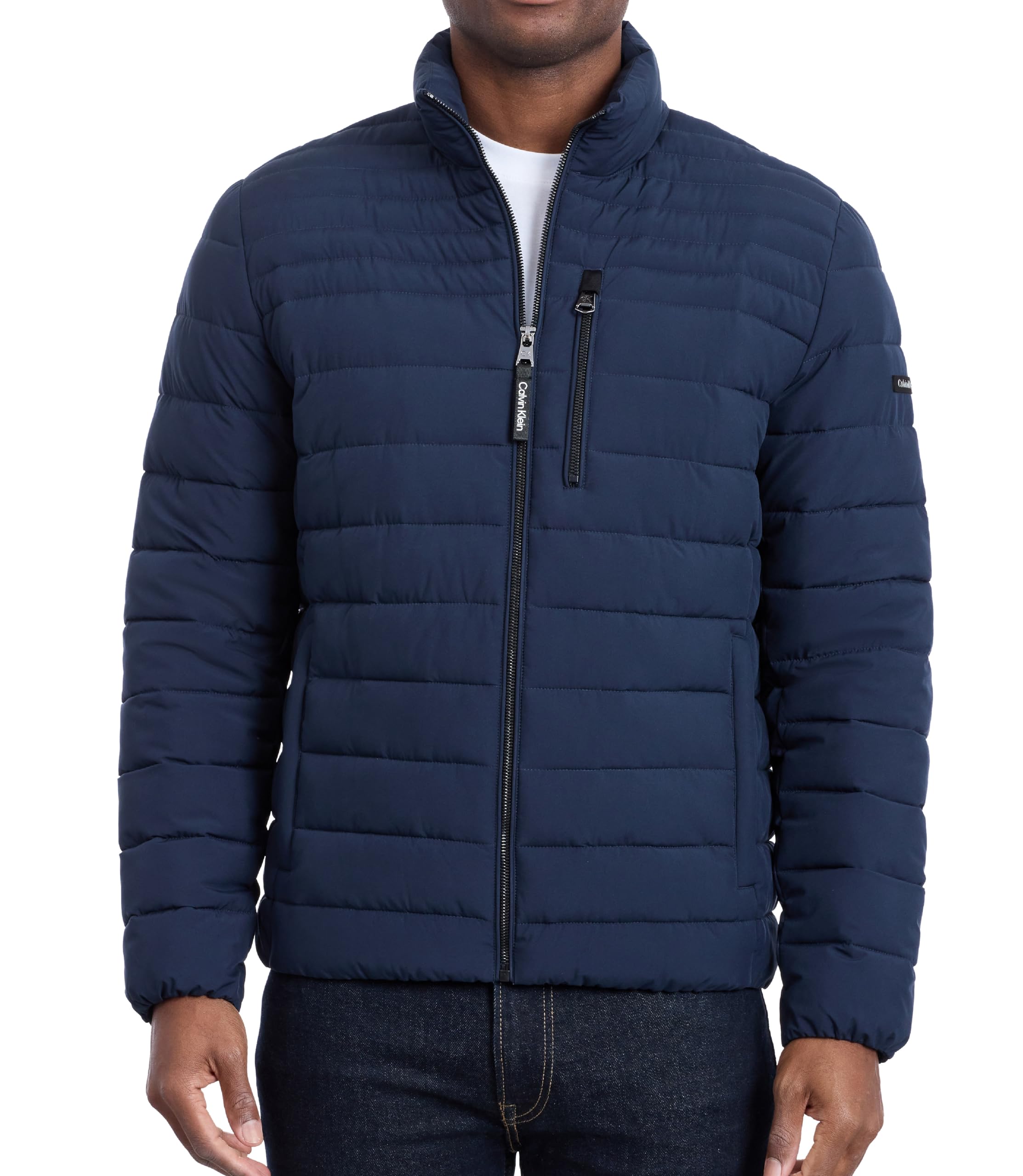
Calvin Klein Full Zip Puffer
Key Features
- Fill Type: Polyester alt
- Weight & Pack: Lightweight
- Zipper Quality: Standard zipper
- Warmth Rating: Light to moderate
This Calvin Klein puffer combines a sharp, tailored silhouette with a price that undercuts most competitors — a convincing alternative if you prioritize looks over down purity. The lightweight shell and synthetic fill provide enough warmth for chilly commutes and mild winter days, though buyers who expect genuine down insulation should verify the label, as some units ship with polyester. It’s best suited for style-conscious shoppers on a tight budget who need a presentable, packable coat for above-freezing conditions.
Pros
- Sleek cut that looks more expensive than the price suggests
- Lightweight and easy to pack for travel or daily carry
Cons
- Fill material may be polyester instead of genuine down — still warm but not for buyers seeking natural insulation
For budget-minded shoppers who want a stylish, lightweight coat for mild winter days and don’t need genuine down, this Calvin Klein puffer delivers strong value.
Best for Daily Comfort
Calvin Klein Sherpa Lining
Key Features
- Fill Type: Down + sherpa
- Weight & Pack: Moderate weight
- Zipper Quality: Prone to sticking
- Warmth Rating: Moderate to warm
- Features: Sherpa lining
The Calvin Klein Sherpa Lined Jacket delivers superior warmth from genuine down and a plush interior that feels premium. Its softness stands out against the slimmer polyester-filled option in this set. Ideal for fall to mild winter use, this jacket suits those who prioritize interior comfort. The zipper may snag on the sherpa lining, so buyers needing quick, fuss-free operation should factor that in.
Pros
- Superior warmth from down insulation and sherpa lining
- Very soft and comfortable interior
- Attractive design with a flattering fit
Cons
- Zipper may snag on the sherpa lining during use
For those who value warmth and a soft interior above all else, this jacket is a strong mid-range pick. Just account for the zipper when you need to dress in a hurry.
Best for Extreme Cold
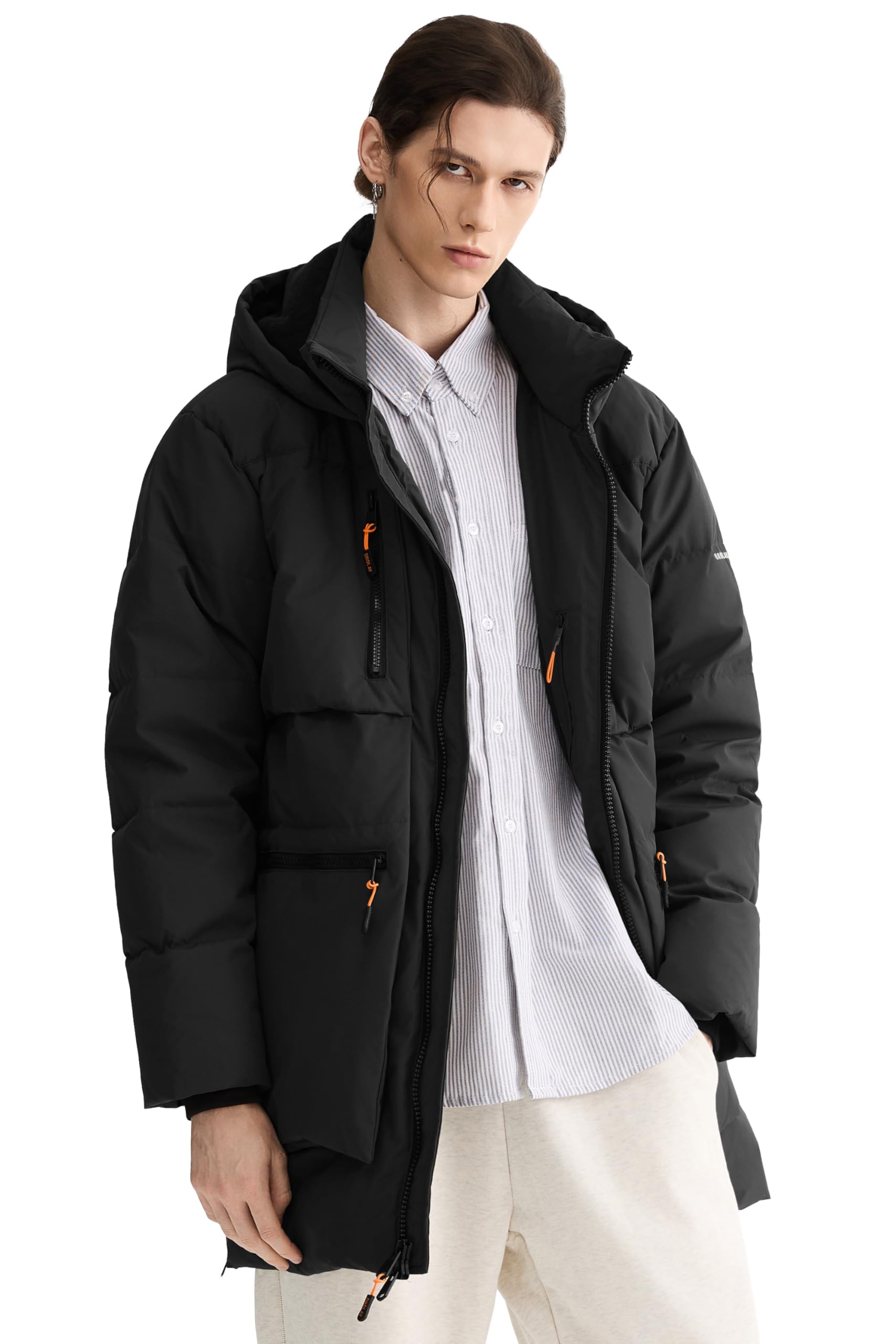
Orolay Thickened Down
Key Features
- Fill Type: Thickened down
- Weight & Pack: Heavy, not packable
- Zipper Quality: Reversed on some
- Warmth Rating: Extreme (sub-zero)
- Features: Hood, 6 pockets
The Orolay Thickened Down Jacket delivers sub-zero warmth and six functional pockets in a heavy-duty parka cut. Unlike the top pick’s lightweight packability, this coat prioritizes maximum insulation and storage for the coldest conditions.
Best for men who need a hardcore winter coat for extreme cold and value multiple pockets. The longer cut accommodates layering and larger frames. Note that the zipper orientation may be reversed on some units (left-side instead of right), a minor design quirk that doesn’t affect function.
Pros
- Reliable warmth in sub-zero temperatures
- Feels durable and well-constructed
- Six pockets keep essentials organized
Cons
- Zipper may be reversed (women’s side) on some units
A heavy-duty cold-weather coat for anyone who values warmth and pocket capacity over lightweight portability.
How to Choose
The most critical decision when buying a down coat isn’t just the fill power—it’s whether the ‘down’ label matches what’s actually inside.
Fill Type
Down insulation traps body heat in clusters of feathers, offering the best warmth-to-weight ratio. Polyester alternatives mimic this but lack the same compressibility and breathability. A jacket labeled ‘down’ may still use a polyester blend—check the care tag or spec sheet for ‘down content’ or ‘100% down.’ If you need true down for packability and longevity, avoid vague terms like ‘down-like fill.’
Weight and Packability
Ultralight jackets (under 10 ounces) stow into a fist-sized stuff sack, ideal for travel and layering. The trade-off: the shell fabric is often thin and can tear on sharp edges or rough use. Heavier coats (over 1.5 pounds) offer more durability and insulation but take up luggage space. Decide whether you’ll wear it as an outer layer in town or as a carry-on emergency layer.
Zipper Quality
Zippers on mid-range puffers are a common weak point—plastic teeth can warp in cold weather, and linings catch in tracks. A stuck zipper is a daily frustration that often worsens over time. Look for metal zippers or jackets with a zipper guard. If a jacket has a sherpa or fleece lining, be extra cautious: reviews frequently report snagging.
Warmth Rating
Warmth depends on fill power (higher = more loft) and fill weight (more down = more insulation). A light down jacket handles 30°F to 50°F with a mid-layer; a heavy parka with baffled construction can handle sub-zero temperatures. Don’t rely on marketing claims—check customer feedback for real-world temps and layering strategies.
Additional Features
Hoods, pockets, and linings add utility but also weight and bulk. A removable hood offers flexibility for mild days. Internal pockets secure valuables, while handwarmer pockets should sit at the right height for your torso. A sherpa lining adds noticeable comfort but can make zipper snagging more likely—decide if the coziness is worth the extra maintenance.
FAQ
How can I tell if my down jacket is really filled with down or polyester?
Look for a sewn-in care label that lists the fill material. Legitimate down jackets will state ‘100% down’ or ‘down cluster’ with a fill power number. Jackets using polyester alternative fill will say ‘polyester,’ ‘hollow fiber,’ or ‘down alternative.’ If a product page uses vague terms like ‘down-like’ or ‘down fill’ without specifics, verify before buying. When in doubt, read customer reviews that mention checking the tag.
Why does the zipper on my puffer jacket keep sticking and how to fix it?
Zippers stick because fabric (especially sherpa or fleece) catches in the slider teeth, or because plastic zippers warp in cold temperatures. Fix: rub a graphite pencil or wax bar along the teeth to lubricate the track. If the lining is the issue, hold the fabric away from the zipper as you close it. For persistent snagging, consider a jacket with a metal zipper or a zipper guard.
Is the Eddie Bauer CirrusLite down jacket warm enough for 20°F weather?
With a proper mid-layer (like a fleece or merino wool sweater), the CirrusLite can handle 20°F for short periods of light activity. However, it is designed as a lightweight layer for moderate cold (30°F–50°F), not as a standalone winter parka. If you face 20°F while standing still or in wind, you’ll need a heavier jacket. For active use like hiking, it works well with layering.