
This post contains affiliate links. We may earn a small commission when you buy through our links — at no extra cost to you.
Shopping for an outdoor enthusiast often means wading through kits that promise everything but deliver little. Many survival bundles pack in tools that break on first use—flashlights that flicker, compasses that point nowhere. This guide skips the bundles and highlights standalone pieces that earn their place in a pack.
The best outdoor gifts do one thing well: filter water without fail, provide a comfortable sleep system, or teach a skill that lasts. Whether you’re buying for a backpacker, a hunter, or a weekend camper, a single-purpose item will outperform a dozen mediocre ones.




Best for Solo Hikers, Emergency
LifeStraw Personal Filter
Key Features
- Weight & Portability: 1.62 oz, ultralight
- Field Durability: Filters 4000 liters
- Versatility & Use Cases: 1 function: filtration
- Ease of Use & Setup: Mouth suction needed
- Price: $
The LifeStraw Personal Filter strips out bacteria, parasites, and microplastics from any freshwater source — no chemicals, no batteries, just suction. Its 0.2-micron hollow fiber membrane meets EPA standards for cyst and bacteria removal, and the filter lasts for 4,000 liters before needing replacement. At 1.62 ounces, it fits inside a jacket pocket or the smallest corner of a pack, making it a genuine weight-saver for anyone counting grams.
That filtration comes with a physical cost: you have to suck the water through the straw. In clear streams the flow is steady, but in silty or murky water the filter can slow to a trickle. A vigorous exhale back through the mouthpiece clears most clogs, but the process adds a few seconds to each drink. This isn’t a faucet — it’s a tool that demands some lung power and patience.
Best suited for solo hikers, backpackers trimming pack weight, and emergency kits where every ounce counts. The mouth-suction method and slow flow make it a poor fit for groups or anyone who wants quick refills on a water bottle. If your outdoor use involves fast hydration or turbid sources, consider the bottle-attached version instead. For the ultralight soloist or a grab-and-go survival kit, this is the right call.
Pros
- Removes bacteria, parasites, and microplastics from any freshwater source
- Weighs just 1.62 ounces — disappears into any pack or pocket
- Filters up to 4,000 liters, enough for years of solo trips
- Budget-friendly price for a piece of safety gear that works without power
Cons
- In silty or murky water the filter can slow to a trickle and may need blowing out
- Requires strong suction to draw water — not for quick hydration or low lung capacity
For solo backpackers and emergency kits needing ultralight water security, this filter delivers on its promise — just expect to work for each sip.
Best for Couples Camping
Wise Owl Double Hammock
Key Features
- Weight & Portability: 24 oz hammock only
- Field Durability: 500 lb capacity, seam issues
- Versatility & Use Cases: Couples camping, lounging
- Ease of Use & Setup: Easy strap setup, fast
- Price: $$
With a 500-pound weight capacity and straps that wrap around trees in seconds, this hammock is built for two people to relax comfortably. It packs down small and weighs just 24 ounces, making it easy to bring on backpacking trips or toss in the car for backyard lounging. The nylon fabric and stitching hold up well to regular use, and setup takes under two minutes.
Best suited for couples camping together, backpackers wanting a light sleep system, or anyone looking for a spacious backyard swing. The double width gives room to sprawl, but under heavy or repeated use, the stitching may pull — a minor issue for casual lounging but worth considering for frequent expeditions. Keeping a small repair kit or extra stuff sack on hand adds insurance.
Pros
- Durable nylon fabric resists wear over time
- Strap system allows fast, tool-free setup
- Spacious enough for two people to lounge together
Cons
- Under heavy use, the stitching may pull apart — less of a concern for casual lounging
This hammock provides comfortable double lounging and quick setup for couple campers at a mid-range price — though the stitching under heavy loads may require attention.
Best for Hunters, Anglers
MeatEater Cookbook
Key Features
- Weight & Portability: Hardcover, 368 pages
- Field Durability: Hardcover binding
- Versatility & Use Cases: Recipes, butchering guides
- Ease of Use & Setup: Step-by-step instructions
- Price: $
Steven Rinella’s MeatEater Cookbook delivers step-by-step recipes and butchering guides that turn a fresh harvest into a memorable meal. With hundreds of recipes covering big game, small game, waterfowl, and fish, plus instructions on field dressing, smoking, and preservation, it’s one of the most thorough wild-game cookbooks available. The photography helps visualize each step and the finished dish.
This book is built for hunters and anglers who want to cook their own kill—not for vegetarians or anyone looking for everyday grocery-store recipes. The ingredients are geared toward game meat and wild fish, so some items require specialty sourcing or online orders. That’s the tradeoff for authentic, expert-level guidance on transforming your harvest into something you’d be proud to serve.
Pros
- Step-by-step recipes with clear instructions for field dressing and cooking.
- Comprehensive coverage of butchering, smoking, and preserving techniques.
- Beautiful photography that inspires and guides preparation.
Cons
- Some recipes call for ingredients not found in standard grocery stores, requiring online or specialty orders.
- Not designed for quick meals with supermarket meat; assumes access to game or wild fish.
A practical and thoughtful gift for any hunter or angler looking to elevate their cooking from field to table.
Best for Beginners, Preppers
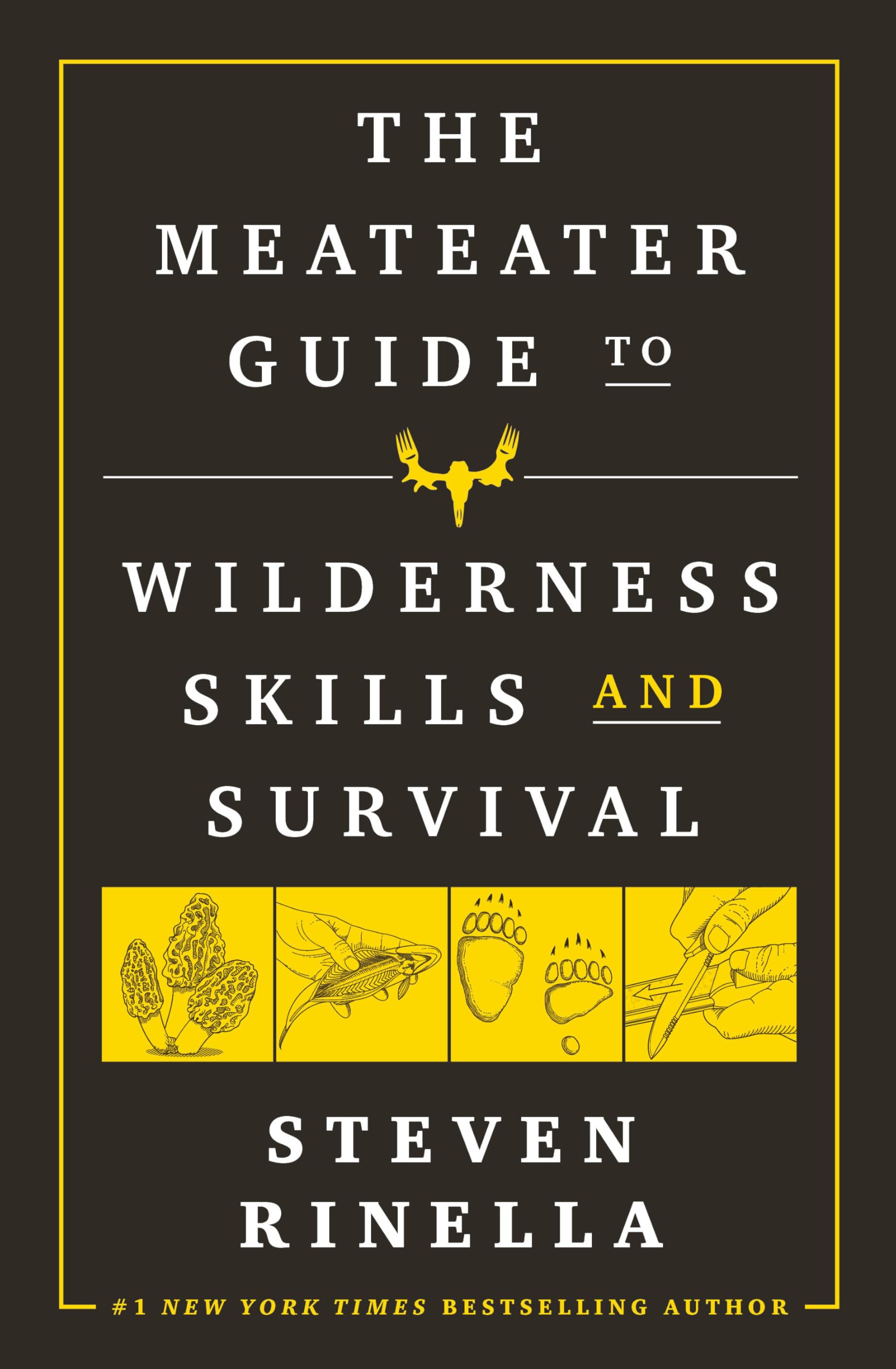
MeatEater Survival Guide
Key Features
- Weight & Portability: 464 pages, paperback
- Versatility & Use Cases: Wilderness skills, survival
- Ease of Use & Setup: Mentor-style writing
- Price: $
Steven Rinella’s 464-page guide delivers practical wilderness and survival advice focused on real-world application, from building shelter to finding food. The writing reads like a mentor guiding you through each skill, emphasizing actionable steps rather than abstract theory. Sections on navigation, first aid, hunting, and weather reading are presented with clear, humble explanations that build confidence. It avoids jargon and assumes no prior experience, making it accessible to anyone.
This book is best suited for novice outdoor enthusiasts, preppers, and as a thoughtful gift for scouts or young adventurers. Experienced bushcrafters may find the material too basic for their needs, and visual learners should note that some sections have sparse illustrations. Given its budget-friendly price and comprehensive coverage, it delivers exceptional value for anyone starting their outdoor journey. For someone new to camping or hiking, this guide provides a solid reference they’ll reach for repeatedly.
Pros
- Covers 464 pages of wilderness skills in a clear, step-by-step manner that beginners and intermediates can follow easily.
- Provides real-world, actionable advice drawn from hunting and camping experiences, not just textbook theory.
- Written in an engaging, conversational style that feels like a knowledgeable friend sharing tips.
Cons
- Visual learners may find some sections lacking diagrams for complex techniques like knots or shelter building.
- Experienced outdoorspeople looking for advanced or specialized skills will find the content stays at an intermediate level.
This guide earns its place as a thoughtful gift for anyone new to the outdoors. It combines depth with approachability, building a solid foundation without overwhelming.
Best for Car Emergencies, Gifts
XKASE 19-in-1 Survival Kit
Key Features
- Weight & Portability: 1.8 lbs, compact case
- Field Durability: Waterproof case
- Versatility & Use Cases: 19 tools included
- Ease of Use & Setup: Organized, grab-and-go
- Price: $$
While compact kits trade variety for portability, the XKASE delivers a broader set of tools — 19 pieces in a waterproof foam case that keeps everything neatly in place. The paracord bracelet, knife, fire starter, and compass cover the basics without demanding a separate pouch for each item.
This works best as a gift for the outdoor newcomer or as a glove-box backup — not for trips where every tool must function on demand. Component quality varies across the set: the flashlight may arrive non-functional, and some items feel less substantial than standalone equivalents. The mid-range price reflects the quantity, not consistent build.
Pros
- Tools stay organized in a compact waterproof case that fits a backpack.
- Covers essential survival needs with a solid variety of items.
- Packaging and presentation make it a ready-to-give option.
Cons
- Flashlight may not work out of the box; other items can feel cheap.
This kit suits the casual camper or someone needing a starter emergency set, but the occasional dud tool means it’s not a go-to for serious outings.
Best for Kids, Beginners
Atomic Bear Paracord Bracelet
Key Features
- Weight & Portability: 12 ft paracord each, wearable
- Field Durability: Compass unreliable, clasp issues
- Versatility & Use Cases: Fire starter, whistle, compass
- Ease of Use & Setup: Adjustable, easy to wear
- Price: $
Two bracelets for under ten dollars, each packing 12 feet of 550 paracord, a ferro rod, striker, compass, and whistle. That’s a lot of gear for the cost, and the wearable format makes it easy to keep on hand for casual hikes or camping trips. The paracord itself can be unravelled for shelter lashing, gear repair, or tinder — adding real utility beyond the novelty.
This set works best for kids and beginners learning outdoor skills, or as a backup item tucked into a daypack or glovebox. The compass can give inaccurate bearings, so it’s not suited for navigation beyond getting a rough sense of direction. The whistle may not carry far in an emergency. For a young scout or someone who just wants a lightweight kit to practice with, these limitations are manageable — not dealbreakers.
Pros
- Good value for a multi-function bracelet set — two pieces at this price is a bargain
- Useful outdoor tools packed into a wearable form that hikers and campers appreciate
- Each bracelet holds 12 feet of 550 paracord for emergency cordage needs
Cons
- Compass accuracy can be inconsistent, making it unreliable for navigation
- Whistle volume may not be loud enough for reliable emergency signaling
Best for gifting to young outdoor enthusiasts or as a low-stakes kit for learning, where the tools serve as practice aids rather than primary gear.
Best for Backpackers, Bottle Users
LifeStraw Peak Series

Key Features
- Weight & Portability: 3.5 oz, lightweight
- Field Durability: 4000 liter capacity
- Versatility & Use Cases: Bottle attachment, faster flow
- Ease of Use & Setup: Screws onto bottles
- Price: $$
The Peak Series screws onto standard water bottles, delivering water at 2.5 L/min — noticeably faster than the original. It’s compact and lightweight at 3.5 oz, with a 4000-liter capacity. However, its filtration protection matches cheaper options, and the higher price targets users who prioritize convenience over cost savings. For a gift, it suits backpackers who want to filter directly from a bottle rather than using a straw.
Pros
- Faster flow rate (2.5 L/min) makes drinking easier than the original LifeStraw.
- Attaches to standard water bottles and gravity hoses for flexible use.
Cons
- Priced higher than the original LifeStraw, with comparable filtration coverage.
For backpackers who prefer bottle-based hydration and value a faster drinking experience, the Peak Series is a worthwhile upgrade despite its higher price.
Best for Gifts, Teens
Veitorld 12-in-1 Survival Kit
The VEITORLD kit packs a dozen basic tools into a palm-sized case, making it a low-cost option for introducing a young outdoor enthusiast to gear. The wire saw, blanket, and flint are functional for light use, and the overall build quality exceeds expectations at this price. But the flashlight and plastic case can feel flimsy — not suited for anything beyond a glovebox or a teen’s first camping trip. For comparable money, the XKASE kit offers better organization and more items, which limits this kit’s appeal to gift-givers who prioritize novelty over durability.
Pros
- Generous variety of tools in a single compact package
- Build quality is decent for the price point
Cons
- Flashlight and case can feel cheap — better for occasional car use than field trips
- Smaller tool size than some may expect
Ideal as a starter gift for a teen or for stashing in a car’s emergency kit — skip if the recipient needs gear that will hold up to repeated outdoor use.
Best for Aspiring Bushcrafters
Canterbury Bushcraft Set

Key Features
- Weight & Portability: 4 books, 1024 pages
- Versatility & Use Cases: 4 volumes on bushcraft
- Ease of Use & Setup: Beginner-friendly text
- Price: $$
The Canterbury Bushcraft Set builds a thorough foundation in bushcraft with four volumes spanning basic skills, advanced techniques, trapping and cooking, and wilderness first aid. The set is text-intensive, and readers who rely on visual diagrams may find the sparse illustrations a shortcoming. For casual gift-giving or light reading, this level of depth can feel like overkill — it serves best the motivated learner who plans to study and practice systematically.
Pros
- Covers bushcraft fundamentals across four volumes from basics to first aid.
- Four books at a mid-range price offer strong value for the content delivered.
Cons
- Text-heavy format with limited illustrations may not suit visual learners.
Best for a dedicated outdoor enthusiast who wants a complete reference library rather than a quick read; less suitable for a casual gift recipient.
Best for Camping Backup
LcFun Arc Lighter

Key Features
- Weight & Portability: Compact, 0.47" thick
- Field Durability: Battery life concerns
- Versatility & Use Cases: Windproof, waterproof
- Ease of Use & Setup: USB rechargeable
- Price: $
The LcFun Arc Lighter delivers consistent windproof ignition and a compact USB-rechargeable design that fits a gift box easily. It’s a convenient backup for camp stoves or candles in exposed conditions. For casual outdoor use where charging is accessible, it’s a thoughtful gift; for backcountry reliance, a butane lighter or ferro rod is more dependable.
Pros
- Consistent ignition in wind and rain — ideal for exposed campsites.
- Small, lightweight build suits everyday carry or a gift assortment.
Cons
- Battery life is suited for intermittent use; extended trips may require a power source.
- USB charging port has been noted to loosen over time, affecting charge consistency.
A suitable backup lighter for car camping or base camp use where charging is available, but not for backpacking or primary fire-starting duties.
Best for Family Campfires
MEKER Color Fire Packets

Key Features
- Weight & Portability: Lightweight packets
- Field Durability: Single-use
- Versatility & Use Cases: Color fire effects
- Ease of Use & Setup: Toss into wood fire
- Price: $
These packets create vibrant, dancing colors when tossed onto a natural wood fire, making them a hit at family campfires and parties. The color effects may fade after a few minutes, and the packets are explicitly designed for wood fires only—not for gas or propane pits. As a novelty add-on rather than essential gear, they work best as a budget-friendly stocking stuffer for casual outdoor fun.
Pros
- Vibrant color effects turn any campfire into a magical display for kids and adults.
- Adds excitement to family gatherings with simple toss-in use.
Cons
- Color duration can be short; some packets fade after a few minutes.
- Not suitable for gas or propane fire pits — wood fires only.
Best as a low-cost novelty gift for occasional campfire fun, not a core piece of outdoor gear.
Best for Novelty Gifts
UST Tool-a-Long Carabiner

Key Features
- Weight & Portability: 1.2 oz, keychain size
- Field Durability: Not heavy-duty
- Versatility & Use Cases: Bottle opener, screwdrivers
- Ease of Use & Setup: Clip-on design
- Price: $
This stainless steel carabiner packs a bottle opener, screwdrivers, and ruler into a keychain-friendly design that adds a bit of fun to a casual hiker’s gear. However, the tool isn’t built for rugged outdoor tasks—it can be damaged under stress, and its size is noticeably bulkier than typical carabiners. It’s a novelty gift rather than a serious survival companion.
Pros
- Fun conversation piece for gadget lovers
- Stainless steel construction feels solid for light daily tasks
Cons
- Not suited for heavy loads or survival scenarios; can be damaged under stress
- Larger than typical keychain carabiners, which may be noticeable in a pocket
Best suited for casual day hikes or as a stocking stuffer for someone who appreciates quirky gear rather than a serious outdoor tool.
Best for Scouts, Backpackers
ReferenceReady Knot Cards

Key Features
- Weight & Portability: Credit card size, waterproof
- Field Durability: Waterproof plastic
- Versatility & Use Cases: 22 knots reference
- Ease of Use & Setup: Clips to pack, small text
- Price: $
This pocket guide packs 22 essential knots onto waterproof plastic cards small enough to clip onto a pack. The color-coded diagrams are clear and easy to follow, making it a handy reference for practicing knots on trail or at camp. However, the text and diagrams are very small—good eyesight or reading glasses are necessary, and it serves better as a supplement to a full-sized knot book rather than a primary learning tool.
Pros
- Clear, color-coded diagrams that are easy to follow despite the small size.
- Lightweight and portable with a mini carabiner for clipping onto a pack.
Cons
- Text and diagrams are very small, requiring good eyesight or reading glasses.
Best as a compact practice companion for scouts and backpackers who already have a full-size knot book.
Best for Armchair Travelers
NatGeo 50 States Ideas

Key Features
- Weight & Portability: 288 pages, paperback
- Versatility & Use Cases: Travel inspiration, photos
- Ease of Use & Setup: Readable, coffee table
- Price: $
This National Geographic book delivers vivid photography and destination ideas across every state, making it a natural fit for gifting to someone who enjoys planning future road trips or simply dreaming about places to explore. The content stays at a high level — you get suggestions on what to see and when to go, but not the step-by-step itineraries needed for serious trip planning. For an outdoor enthusiast who already knows the major attractions, the depth may feel thin, but as a coffee table book or casual browse, it hits the mark.
Pros
- Exceptional photography that sparks travel ideas and conversation.
- Covers all 50 states with seasonal recommendations for each location.
Cons
- Information stays at a surface level — not enough detail for building a full itinerary.
Best as a thoughtful gift for someone who enjoys armchair travel or needs a starting point for trip ideas, not for the outdoor enthusiast who wants gear or detailed planning resources.
How to Choose
The best outdoor gifts focus on one reliable function rather than packing in a dozen mediocre tools.
Weight and Portability
Every ounce matters on the trail. A water filter that weighs 1.62 oz is easier to carry than a survival kit weighing over a pound. But lighter gear often means fewer features or less durability. For backpackers, prioritize items that tuck into a pocket or clip to a pack strap without adding bulk.
Hammocks and books have weight trade-offs too: a double hammock with straps adds about 2 lbs to your pack, while a paperback guide at 1 lb is manageable. Consider how the gift will be carried—a weekend car camper can handle heavier items, a thru-hiker cannot.
Field Durability
Durability in outdoor gear is about materials and construction—nylon vs. polyester, welded seams vs. stitched, stainless steel vs. plastic. A hammock with occasional seam failures may hold up for casual use but could fail on a multi-day trip. Water filters with a 4000-liter lifespan outlast cheaper alternatives.
Books are inherently durable, but look for waterproof covers or hardcover bindings if they’ll be used in damp conditions. Survival kit components are the weak link: multi-tool carabiners and cheap flashlights often break under stress. A single-purpose tool built from metal or reinforced plastic will outlast a dozen plastic items.
Versatility and Number of Use Cases
A versatile tool can serve multiple scenarios—a fire starter works for campfires, stoves, and emergencies. But versatility often comes at the cost of specialization. A 19-in-1 survival kit covers many functions, but each function is compromised. A dedicated water filter does one thing perfectly.
For gifts, consider the recipient’s typical activities. A hunter will use a cookbook dozens of times; a color fire packet is a one-time novelty. Books and hammocks offer repeated use across trips, while multi-tools may sit unused. Match versatility to the user’s habits.
Ease of Use and Setup
The best gear is the gear you actually use. A hammock with a fussy knot system may stay in the trunk, while one with included tree straps sets up in minutes. A water filter that requires strong suction can be frustrating for first-timers—practice at home before relying on it in the backcountry.
Quick-setup items make better gifts for casual outdoor enthusiasts. For experienced users, a learning curve is acceptable if performance is superior. Look for products with clear instructions, intuitive mechanisms, and minimal assembly. The time saved on setup is time spent enjoying the outdoors.
FAQ
How long does a LifeStraw last before it needs to be replaced?
A LifeStraw filters up to 4000 liters, which equals about a year of regular backpacking use. Once it becomes difficult to draw water or you’ve reached capacity, replace it. It cannot be cleaned back to full performance, so treat it as a consumable item.
Can I use color-changing fire packets in a gas fire pit?
No. These packets are designed for natural wood fires only. The chemical reaction requires wood embers; gas fire pits will not produce the color effect and may damage the packets. Use them only on campfires with wood logs.
Is the compass on a paracord bracelet accurate enough for navigation?
Most paracord bracelet compasses, including this one, are not reliable for serious navigation. Many users report they point in random directions. For backcountry travel, carry a dedicated compass or GPS device—the bracelet compass is at best a rough reference.
How do I prevent my hammock straps from damaging tree bark?
Use wide tree straps (at least 1 inch wide) to distribute weight and avoid thin ropes that cut into bark. The included straps on the Wise Owl hammock are tree-friendly. Always check local regulations—some areas require specific strap widths or prohibit hammock use on certain trees.