
This post contains affiliate links. We may earn a small commission when you buy through our links — at no extra cost to you.
A 5-year-old’s excitement can turn to frustration fast when a new toy breaks on day three or doesn’t work quite like the box promised. Parents and gift-givers quickly learn that flashy packaging and high ratings don’t always mean a toy will hold up to the enthusiastic, often rough, play of a kindergartner. The real challenge is finding gifts that are as durable as they are delightful, without sacrificing educational value or the sheer joy a great present should bring.
This guide cuts through the noise by focusing on toys, books, and crafts that have proven they can survive real-world use. We’ve zeroed in on picks that balance developmental benefits with build quality—because a thoughtful gift is one that keeps giving long after the party ends, not one that ends up in the trash before the week is out.
From mess-free travel entertainment to active living room games, every recommendation is built around how a 5-year-old actually plays. You’ll find clear trade-offs explained honestly, so you can match the gift to the child’s real personality and your own tolerance for cleanup.


Best for Family Game Night
ThinkFun Zingo Bingo
The Zinger device randomizes two tiles per turn, creating a fast-paced matching game that naturally reinforces word recognition and picture association. Turns move quickly enough to hold adults’ attention, while preschoolers pick up the rules within a round and start playing independently. The double-sided cards and large tile set keep sessions fresh, and the competitive race to cover spaces adds just the right level of excitement without frustration. The educational aspect slides in silently — children start recognizing sight words and matching patterns without realizing they’re practicing reading.
This is best suited to families with kids aged 4–6 who want a screen-free game that everyone actually looks forward to playing. The Zinger mechanism and cards can handle gentle daily use, but rough handling may lead to jams and bent tiles; replacement parts aren’t widely available, so treating the Zinger with care extends its life. It’s a lively group activity, so families seeking a quiet solo puzzle will want a different choice.
Pros
- Fast-paced matching keeps kids engaged and adults coming back for repeat play.
- Builds pre-reading vocabulary and pattern recognition during natural gameplay.
- Rules are graspable within a single round, letting children play independently.
Cons
- Cards may bend after heavy or unsupervised use.
- Zinger mechanism can jam; replacement parts are not widely available.
Zingo earns its spot on the game shelf by weaving reading practice into a fast, satisfying group activity. With gentle handling, it will outlast the early-reading stage.
Best for Curious Kids
NG Little Kids Big Book of Why
Stunning photographs and hundreds of simple answers make this large hardcover a calming alternative to the top pick’s fast-paced game. It excels during bedtime or quiet time, turning a child’s endless “why” questions into shared discovery — a grandparent can page through with ease, sparking conversations about animals, weather, and the body.
Best for curious 4–7 year olds who love to be read to, especially those who ask question after question. For high-energy children, the book works best paired with a hands-on toy; it won’t hold attention without an adult reading aloud. Some answers may need a parent’s translation for the youngest listeners, but that’s precisely what fuels the discussion. Very young toddlers who might rip pages should consider the board book version instead.
Pros
- Packed with fascinating, age-appropriate facts that captivate curious young minds.
- Beautiful, vibrant photographs and illustrations hold attention and invite questions.
- Perfect for reading together; sparks wonderful discussions between child and adult.
Cons
- Some science and nature explanations can be too advanced for the youngest readers, requiring a parent to rephrase.
- This book depends entirely on an adult reading aloud; high-energy children may not sit through it without a hands-on activity alongside.
A standout choice for grandparents or parents looking to spark curiosity through shared reading — pair it with a hands-on gift if the child needs physical engagement.
Best for Young Artists
Crayola Inspiration Art Case
Key Features
- Age Appropriateness: Ages 5+
- Ease of Use & Cleanup: Organization trays, compact case
- Price: Mid-Range
Unlike focused craft sets that center on one art form, this kit packs 140 genuine Crayola crayons, markers, short colored pencils, and paper into a portable tie-dye case. A 5-year-old can jump from coloring to drawing to sketching, keeping creative options wide open across multiple mediums.
It arrives gift-ready and beautifully organized, which makes a strong first impression for birthdays or holidays. The case hinges can begin to loosen after weeks of regular carrying; this suits a household that handles supplies gently or plans to move the art tools into a sturdier bin when needed. The contents themselves remain authentic Crayola quality.
Pros
- Authentic Crayola quality across crayons, markers, and colored pencils that lay down rich, consistent color.
- Arrives in a ready-to-gift, organized layout that feels like a present the moment it’s opened.
- Built-in trays keep 140 pieces sorted and accessible, reducing art-supply clutter at home.
Cons
- The carrying case hinges can weaken with regular use, making a backup storage container advisable.
The real value lives in the authentic Crayola tools, not the case — this set makes sense for gift-givers who prioritize immediate creative variety and don’t mind adopting a backup container down the road.
Best for Sensory Play
Kinetic Sand Ice Cream Playset
Key Features
- Age Appropriateness: Ages 3+
- Ease of Use & Cleanup: Easy cleanup, reusable
- Price: Budget
This playset delivers the sticky-free moldability that Kinetic Sand is known for, packed into three scented colors and six serving tools. The chocolate and strawberry scents add to the ice cream theme — most kids enjoy them, though sensitive noses may find them strong. Cleanup is straightforward: the sand sticks to itself, not to carpet or hands.
Best for kids ages 3+ who love tactile play and parents looking for a screen-free activity that cleans up faster than paint or slime. The scent is part of the experience, so this isn’t a fit for homes where strong fragrances are unwelcome.
Pros
- Provides hours of imaginative, sensory play that kids actively engage with
- Cleans up more easily than other messy play materials like slime or kinetic sand alternatives
Cons
- Some kits arrive with sand that feels dry and won’t mold well without kneading or adding moisture
A budget-friendly sensory toy that delivers lasting play value for kids who enjoy the scent and parents who can handle minor prep.
Best for Active Indoor Play
The Floor is Lava! Game
Where the top pick sharpens reading skills around a table, The Floor is Lava! gets kids physically leaping across colorful foam stones. The 25 tiles, spinner, and 27 challenge cards create a simple, active game that draws the whole family in — adults often join just as eagerly. It shines in carpeted playrooms or living rooms during parties and rainy days, offering a screen-free way to burn off energy. Two practical notes: the foam stones have a strong chemical smell that fades after several days of ventilation, and they pose a high slip risk on hardwood or tile floors, so this game is strictly carpet-only.
Pros
- Hilarious, engaging game that gets the whole family moving
- Adults and kids alike get caught up in the energetic jumping challenges
Cons
- Tiles pose a high slip risk on hardwood or tile floors
If your 5-year-old has a carpeted play space and you’re ready to jump in yourself, this game delivers laughs and exercise in equal measure.
Best for Craft Projects
Made By Me Window Art
Unlike the competitive energy of a board game, this craft kit delivers a calm, independent project for a creative 5-year-old. Twelve suncatchers and easy-to-use paint pens provide everything needed to make colorful window art without brushes. The kit makes a great gift and keeps kids engaged for hours, but perfectionists should know paint can be runny, causing colors to bleed across sections, and suction cups may not hold indefinitely. For its budget price, the enjoyment far outweighs these minor quirks.
Pros
- Keeps kids entertained for hours with a creative, hands-on activity.
- A well-liked gift that consistently delights young crafters.
- No-brush paint pens simplify the craft, making it easy for young children.
Cons
- Suction cups can lose grip, causing suncatchers to fall from windows over time.
- Paint may be too thin, allowing colors to bleed across intended design sections.
A high-fun, low-cost craft that turns windows into kid-made art — expect some paint bleed and plan for suction cups that may need replacing.
Best for Pattern Lovers
Spirograph Jr.
Key Features
- Age Appropriateness: Ages 3+
- Ease of Use & Cleanup: Carry case with drawing desk
- Price: Mid-Range
Jumbo gears and washable markers in a self-contained carrying case make this an accessible introduction to spiral art for young children. Unlike the original Spirograph, the jumbo gears and simplified patterns are sized for smaller hands, but the designs are less intricate. This is ideal for ages 3-5 who are fascinated by patterns and need a quiet, portable activity. Older children or those seeking complex designs may lose interest quickly.
Pros
- Quality build and jumbo size suit small hands well.
- All pieces store neatly inside the case, great for travel.
Cons
- Simpler designs than the original Spirograph may bore older children quickly.
Best for preschoolers and kindergartners who want a mess-free introduction to geometric drawing, but expect to outgrow it by age 6 or 7.
Best for Travel & Drawing
Bravokids LCD Writing Tablet

Key Features
- Age Appropriateness: Ages 3-8
- Ease of Use & Cleanup: One-click erase
- Price: Budget
This 10-inch LCD tablet with one-click erase slips into any bag, giving kids a mess-free drawing surface for car trips and restaurants. Screen colors are muted—more pastel than vibrant—and some units may stop working after a short period. For travel entertainment at a budget price, it works, but don’t expect a durable, long-lasting device.
Pros
- Great for travel and quiet entertainment, keeping kids occupied without mess.
- Very easy for 3-year-olds to use independently, with a one-click erase and lock key.
Cons
- Screen colors are muted and not as vibrant as product photos suggest, appearing more pastel than rainbow.
If you need a lightweight, no-mess drawing tool for car trips and restaurants, and can accept muted colors and the small chance of early failure, this budget tablet does the trick.
Best for Mess-Free Art
ZMLM Scratch Paper Notebooks

Key Features
- Age Appropriateness: Ages 3-12
- Ease of Use & Cleanup: No paint, no mess
- Price: Budget
The notebooks uncover brilliant rainbow hues beneath the black surface, giving kids a satisfying, mess-free way to draw without paints or markers. While the pages are finite and the scratched-off black bits can scatter, the compact size and silent operation make it a handy plane or restaurant companion for a 5-year-old.
Pros
- Keeps kids engaged for long stretches, making it a handy quiet-time activity for car rides and restaurants.
- The scratch-off surface reveals vivid rainbow colors, delivering a satisfying reveal with each stroke.
Cons
- Scratching off the coating creates small black flakes that can scatter, requiring a quick wipe-up.
For travel entertainment, restaurant outings, or any setting where silence and zero-paint mess are priorities, these scratch notebooks deliver a contained, engaging activity—just pack a small bag for the black residue.
Best for Disney Princess Fans
Skillmatics Disney Princess Search & Find

Key Features
- Age Appropriateness: Ages 3-6
- Ease of Use & Cleanup: Wipe-clean mats
- Price: Premium
The illustrated mats captivate with familiar characters while building observation and vocabulary. Wipe-clean pages work repeatedly, though markers can dry out prematurely and occasional staining occurs. At a premium price, the set feels lean — best for gifters who prioritize the Disney Princess theme over maximizing page count.
Pros
- Keeps kids engaged for long stretches with a search-and-find format they return to.
- Builds vocabulary and observation skills through themed, hands-on play.
Cons
- The price feels high for six activity mats, leading some to expect more content for the cost.
This fits Disney Princess enthusiasts who value character-driven learning and reusability, but cost-conscious buyers may find similarly educational activities with more pages for less.
Best for Unicorn Craft Lovers
PURPLE LADYBUG Water Bottle Kit

Key Features
- Age Appropriateness: Ages 6+
- Ease of Use & Cleanup: Leakproof flip-top lid
- Price: Mid-Range
The decorating process grabs a 5-year-old’s attention with abundant sparkly stickers and gems, resulting in a bottle she’ll be proud to show off. The finished bottle, however, is better treated as a keepsake accessory than a rugged daily drink container — stickers and gems can detach after hand washing.
Pros
- A gift that excites unicorn-obsessed kids, who love personalizing their own bottle.
- The decorating activity holds attention with plenty of sparkly pieces to arrange.
Cons
- Gem stickers and charms may not survive regular hand washing, leaving the bottle better suited as a display piece.
A hit craft gift for a unicorn-obsessed child who will treat the finished bottle as a treasure, not an everyday school bottle.
Best for Gardening Start
Dan&Darci Flower Growing Kit

Painting the planter and planting the seeds gives kids two crafts in one, and watching sprouts emerge fosters a sense of care. The tin is sized for a windowsill, but its compact dimensions and limited soil mean it’s more of a starter novelty than a substantial garden. When seeds cooperate, the quick payoff delights young gardeners.
Pros
- Loved as a gift; kids enjoy the hands-on mix of painting and planting.
- Seeds often sprout within days, offering a rewarding quick win.
Cons
- Some seed packets may fail to germinate, leading to disappointment for a child eagerly awaiting flowers.
This kit is a good fit for craft-focused kids who enjoy the process; keeping backup seeds on hand removes the biggest uncertainty.
Best for Retro Light Art
Lite Brite Classic
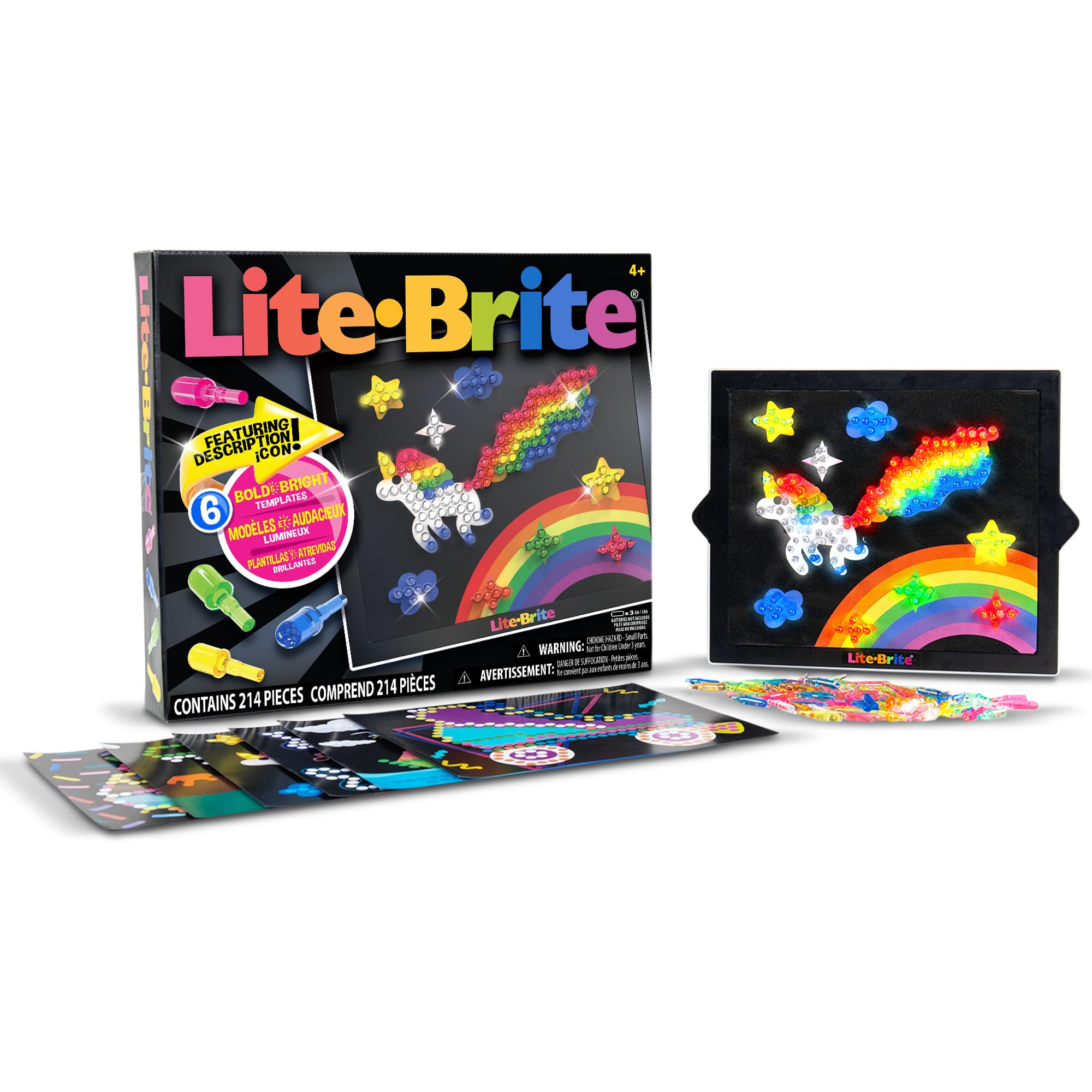
The Lite Brite Classic packs 206 pegs in six colors, plus templates and light modes, for screen-free art play. The plastic construction feels thinner than the 1980s version; whether it survives drops or rough use is hard to say. For a careful 5-year-old, it’s a charming throwback that rewards patience.
Pros
- 206 colorful pegs provide plenty of material for creative designs and fine motor practice.
- Four light modes add a fun, responsive element to each finished picture.
Cons
- The lighter plastic build may not survive a 5-year-old’s frequent drops or accidental bumps, making long-term durability uncertain.
Best for a gentle 5-year-old who enjoys meticulous, light-up art and has a grown-up nearby to handle battery changes; not for rough-and-tumble play.
Best for Pretend Explorer
GeoSafari Kidnoculars

These lightweight, no-focus binoculars are sized for small hands and faces, with a breakaway strap that adds safety during playful tumbles. The 2x magnification offers only a hint of zoom, making them a pretend accessory rather than a tool for real observation. Lenses can occasionally pop out under rough use. Perfect for a 3-year-old playing explorer, but a 5-year-old expecting real magnification may find them unsatisfying.
Pros
- Easy-to-hold design with large eyepieces that fit small faces comfortably.
- Encourages imaginative outdoor play and sparks curiosity about nature.
Cons
- 2x magnification offers only a minimal zoom effect, leaving kids unable to see distant details.
Reserve these for a younger sibling or toddler who enjoys pretend play; a 5-year-old expecting real observation will find them too limited.
How to Choose
The best gift for a 5-year-old matches their real developmental stage—not just the age printed on the box—and survives enthusiastic, everyday play far beyond the first week.
Age-Appropriateness
Manufacturer age ranges are often optimistic. A 5-year-old’s fine motor skills and attention span vary widely, so look for toys that a child can operate independently after a short demonstration, or with minimal adult help. A game labeled 4+ may be perfect for a confident kindergartner, while something marked 6+ might still work if it uses large pieces or simple mechanics.
In practice, if a toy requires constant adult intervention—like threading tiny pieces or decoding complex rules—it risks shelf abandonment. Matching the challenge level to the child’s patience ensures the gift sees regular play instead of collecting dust.
Durability & Reliability
Toys for this age take a beating. Moving parts like hinges, slide mechanisms, and electronic components are the most common failure points. A snap-shut case that breaks after a dozen uses or a keyboard that stops responding turns a would-be favorite into a disappointment. The physical materials matter: solid wood or thick, flexible plastic outlasts brittle shells.
Electronics deserve extra scrutiny. Internal batteries can fail suddenly, touch screens may go unresponsive, and there’s rarely a simple fix. If a toy plugs in or beeps, assume it might not become a hand-me-down. For longevity, simple, non-electronic designs with replaceable parts (like cards or paper pads) almost always outlast their tech-heavy counterparts.
Educational & Developmental Value
Not every ‘educational’ label translates to real learning. The most effective toys bake skill-building into the play itself rather than drilling facts. A matching game that improves pre-reading through rapid visual processing, or pattern gears that introduce geometry by feel, teach without the child noticing.
Books and discovery kits work best when they spark conversation. A question-and-answer book read together does more for vocabulary and critical thinking than a solo electronic quiz, because the back-and-forth adapts to the child’s curiosity in real time.
Ease of Use & Cleanup
Messy toys get avoided. If a craft kit requires newspaper, smocks, and a 10-minute scrub-down afterward, it will come out of the closet less often. The best gifts—like scratch paper notebooks, erasable drawing tablets, or washable markers—keep cleanup under a minute.
Look for features like self-contained storage, no-liquid paints, or one-button erase functions. These small design choices decide whether a toy becomes a daily go-to or a special-occasion-only hassle.
Gift Appeal & Presentation
The initial wow factor matters, especially at a birthday party. A beautifully organized case or an instantly recognizable brand can make the gift feel more generous. But packaging that’s flimsy or hard to open subtracts from the experience.
More importantly, the substance inside must match the first impression. A flashy box with a toy that underperforms leads to buyer’s remorse. Prioritize items where the contents are the star, and the packaging is sturdy enough to serve as long-term storage.
FAQ
Why does my Kinetic Sand feel dry and hard right out of the box?
Kinetic Sand can lose moisture or arrive tightly packed. Start by kneading the sand thoroughly in your hands for a few minutes; the warmth and pressure often restore its soft, moldable texture. If it remains crumbly, add one or two drops of water and knead again. When no improvement happens, the batch may be old or defective, and an exchange is the best path.
Do the gems fall off the Purple Ladybug water bottle after washing?
Yes, the adhesive stickers and gemstones frequently peel after hand washing or prolonged contact with moisture. To preserve the decorations, wipe the bottle gently with a damp cloth and avoid submerging it. If the recipient wants a rugged everyday water bottle for school or sports, this kit works better as a gentle-use keepsake.
Is the magnification on the GeoSafari Kidnoculars good enough for a 5-year-old to watch birds?
No. The 2x magnification is extremely modest and leaves most children disappointed when they try to view distant objects. These binoculars function better as a safe pretend-play prop for backyard exploration. For actual bird watching or nature observation, you would need real optics with higher magnification.
Does The Floor is Lava game smell bad, and is it safe for indoor play?
The foam tiles often emit a strong chemical odor when first opened; airing them out for a day or two usually reduces the smell. Regarding safety, the tiles are dangerously slippery on hardwood, tile, or vinyl floors, creating a real fall risk. Use this game only on carpeted surfaces to keep it safe and fun.