
This post contains affiliate links. We may earn a small commission when you buy through our links — at no extra cost to you.
Finding a gift for a 13-year-old boy often means choosing between something that breaks within weeks or something that requires you to become a co-engineer. The most popular options — light-up sports gear and fidget toys — have well-known reliability gaps.
This guide highlights gifts that deliver on their promise: durable fun, genuine engagement, and the right balance of independence and guidance. Whether you need a screen-free travel toy, a hands-on STEM kit, or a practical accessory, the key is matching the gift to the boy’s personality and your own willingness to help troubleshoot.
The best picks here avoid the common trap of short-lived novelty — they offer replay value that keeps a 13-year-old interested past Christmas morning.


Best for Fidgety Kids
Shashibo Shape Shift Box
This shape-shifting cube packs over 100 transformations into a 2.5-inch magnetic core. The ultra-strong magnets snap satisfyingly into place, allowing anyone to fold, twist, and reconfigure the cube into dozens of geometric shapes. Its compact size makes it easy to carry in a pocket or backpack, and the quiet operation suits classrooms or car rides without causing distraction.
Best for a 13-year-old who enjoys tactile, open-ended play rather than structured games or electronics. It’s a solid choice for travel entertainment or as a screen-free gift when you want to reduce digital time. Teens who prefer only video games may not find the same appeal, but for those open to hands-on fidgeting, the Shashibo delivers consistent fun without batteries, setup, or cleanup.
Pros
- Over 100 shape transformations encourage creative, repetitive play.
- Compact and quiet design works well for travel, waiting rooms, or quiet time.
- Strong magnets provide a satisfying click and hold shapes securely during play.
Cons
- Not engaging for teens who prefer only electronic games — best suited for hands-on fidgeters.
For a teen who enjoys physical fidget toys and needs a durable, portable screen break, this cube is a straightforward, no-fuss gift.
Best for Night Outdoor Play
TOSY RGB LED Flying Disc
This flying disc brings bright multicolor LEDs to a regulation-weight frisbee, turning evening games into a visual spectacle. The 175g weight and textured grip allow for accurate throws comparable to a standard ultimate disc. While light-up balls can have similar issues, the light function may stop working after limited use in some units — something to consider if the glow is the main draw. Best suited for nighttime outdoor play, camping, or beach trips where the novelty of a glowing disc outweighs the need for long-term durability.
Pros
- Stunning night-time light display makes frisbee games after dark fun for all ages.
- High-quality balance and professional grip enable accurate throws and catches.
Cons
- Light function may stop working after limited use in some units.
Good value for a unique night frisbee, but reliability is inconsistent.
Best for Coding Engineering
ELEGOO Robot Car Kit V4
This kit provides a full robotics platform using an Arduino UNO R3, with modules for obstacle avoidance, line tracing, IR remote, and Bluetooth control. It’s a hands-on introduction to coding and engineering that works best for teens who are ready to troubleshoot — the pre-loaded code may need adjustments, and adult help with initial setup prevents frustration. The component quality and organization are solid, making the assembly process rewarding for those with a bit of guidance.
Pros
- Gives a practical introduction to robotics and programming through building and coding.
- Components are well-made and the kit is neatly organized for assembly.
Cons
- Pre-loaded code can require troubleshooting before the car runs as expected.
- Instruction manual could be clearer for someone new to Arduino projects.
A solid educational kit for teens who want to learn coding and robotics, provided they have help to get past the initial setup hurdles.
Best for Puzzle Lovers
FOLDOLOGY Origami Puzzle
FOLDOLOGY’s origami puzzle pad offers 100 challenges in a 6×6 booklet that slips into a backpack or glove compartment. Each puzzle asks you to fold the paper along printed lines to complete a picture, with difficulty spanning five levels. The sheets are small, which keeps the whole thing portable but can make precise folds a bit fiddly.
This is a solid choice for a 13-year-old who likes logic puzzles and wants a screen-free break. It works well for car trips or quiet afternoons, though it demands focus and fine motor control — not a casual fidget toy. The variety from simple to multi-step folds keeps it engaging over time.
Pros
- Progressive difficulty keeps the brain engaged from simple folds to complex challenges.
- Compact and portable with no loose pieces, perfect for travel or waiting rooms.
Cons
- Small puzzle sheets can make folding fiddly, especially for larger hands.
For teens who enjoy a focused, screen-free challenge, this origami pad delivers plenty of puzzles in a travel-friendly format.
Best for Hands-On Learners
Smartivity DIY Pinball
Unlike screen-based STEM kits or instant-play gadgets, this one asks for hours of hands-on assembly with laser-cut wood and rubber bands. The result is a sturdy, playable pinball table that kids 8–14 can actually enjoy after building it. The lifetime replacement parts policy adds peace of mind if a piece gets lost or broken.
Best for a 13-year-old who enjoys engineering-style projects and has patience (or a parent willing to help). Assembly is genuinely challenging and can take several hours – this isn’t a toy for someone who wants instant gratification. Younger kids will need adult assistance. The finished game offers real replay value, making it a gift that rewards effort.
Pros
- Fun to build and play – kids who like constructing things get double the value.
- High-quality engineered wood with clear, well-illustrated instructions.
- Laser-cut pieces fit precisely; no glue or tools needed beyond what’s included.
Cons
- Assembly takes several hours and can be tricky – a parent or older sibling’s help is often needed.
- Rubber bands may wear out over time with heavy play; replacements are available but require rethreading.
Right for a tinkerer who wants a build-and-play challenge rather than a plug-and-play gift – the payoff is a real pinball machine they made themselves.
Best for Travel Games
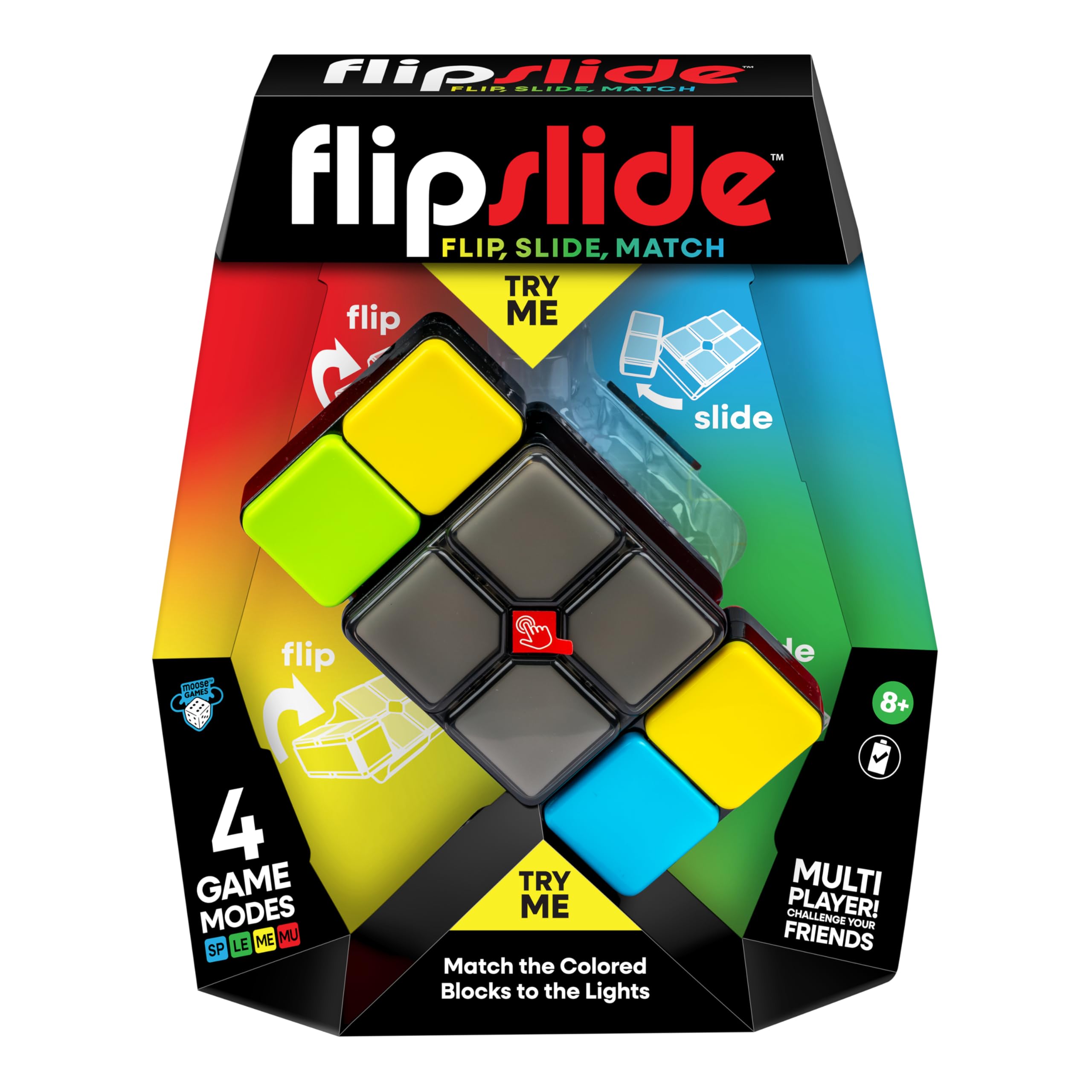
Moose Flipslide Handheld Game
The Flipslide packs four distinct gameplay modes—Speed, Multiplayer, Level, and Memory—into a compact unit that fits in a jacket pocket. It runs on two AA batteries (included) and requires no setup, making it a grab-and-go option for car rides or waiting rooms. The tactile flipping action keeps hands busy without a screen, and the price point is low enough to treat as a low-risk gift for a 13-year-old who likes quick challenges. The sound can be loud in quiet spaces, and some units develop degraded audio over time—less an issue in a noisy family room or outdoors, but worth knowing if your teen is sensitive to beeps and buzzes.
Pros
- Four game modes keep the play fresh across different skill levels.
- Small size and battery operation make it easy to take on trips.
Cons
- Volume is noticeable in quiet rooms and sound quality can fade over time.
A budget-friendly, screen-free puzzle game that works well for travel or short car rides—just keep the volume in mind.
Best for Basketball Fans
GlowCity LED Basketball

The GlowCity Basketball lights up on impact, making evening play more visible and fun — ideal for a 13-year-old who wants to extend outdoor basketball time after sunset. It comes with spare batteries and a tool to swap them, which is thoughtful. However, the lights can stop working after limited use, so this is best as a novelty gift for occasional night games rather than a daily practice ball.
Pros
- Bright impact-activated glow makes dusk games fun.
- Comes with spare batteries and a tool for easy swaps.
Cons
- Lights may stop working after limited use.
Works well as a fun, occasional night basketball for a teen who already has a reliable day ball.
Best for Creative Building
TOSY Magnet Pyramid Stone

12 cubes with 243 magnets offer endless shape possibilities – a creative fidget toy for teens. The magnets are weaker than ideal, so larger constructions may collapse; the small pieces can be fiddly. Unlike more robust magnetic sets, this is best for handheld exploration rather than sturdy builds.
Pros
- Endless creative building possibilities – keeps teens occupied for hours.
- Great fidget toy that also supports STEAM learning and fine motor skills.
Cons
- Small pieces can be fiddly to handle, especially for teens with larger hands.
A good pick for teens who enjoy creative fidget play and don’t need durable constructions; consider this for casual exploration rather than serious building.
Best for Gamer Decor
Jekeno Gaming Glow Blanket

Extremely soft plush with a controller pattern makes this a cozy gaming blanket. The glow-in-the-dark feature is inconsistent — treat this as a normal throw with a decorative bonus rather than a nightlight. Best for a 13-year-old who wants gamer room decor or a snuggle blanket for movie nights, not a functional glow toy.
Pros
- Extremely soft plush fabric makes it comfortable for lounging during gaming or movies.
- Affordable gaming-themed gift that appeals to kids as bedroom decor or a cozy accessory.
Cons
- Glow effect may be very dim or absent in some cases, limiting its use as a nightlight.
A solid pick for a gamer who wants a soft blanket with a controller design — the glow is a nice extra, not the main feature.
Best for First Wallet
Lamiza Kids RFID Wallet

This camo wallet uses tough canvas with five compartments including a coin zip and RFID blocking. Perfect for a teen’s first wallet — cards, cash, and change fit securely. But it’s sized for kids, not adult everyday carry, so treat it as a practical add-on gift rather than the highlight of the occasion.
Pros
- Durable canvas construction holds up to daily pocket carry.
- Five compartments with RFID blocking for cards, cash, and coins.
Cons
- Too small for an adult’s wallet needs — best suited for a child or teen.
Buy this as a useful stocking stuffer or first-wallet option for a boy, not as the main present — it does the job without fanfare.
How to Choose
The biggest mistake is assuming a high rating guarantees durability — many top-selling gifts have a short lifespan.
Age Appropriateness
A 13-year-old is straddling childhood and teenage interests. Gifts that feel too young get ignored, while overly complex ones frustrate. The right pick challenges without intimidating.
Look for age ranges on STEM kits and puzzles — 10+ or 8-14 are safest. Avoid items marketed as ‘for all ages’ that may lack depth for a teen.
Durability & Reliability
Light-up sports toys and electronic gadgets often fail after a few uses. The weak points are impact sensors, battery contacts, and moisture seals. Once the lights die, the toy loses its main appeal.
For maximum longevity, choose gifts with no electronics — fidget cubes, paper puzzles, or mechanical building kits. If you do buy light-up gear, treat it as disposable fun and set expectations accordingly.
Engagement & Replay Value
The best gifts for a 13-year-old offer open-ended play — something that doesn’t have a fixed end point. Shape-shifting cubes, building kits, and games with multiple modes keep interest alive longer than single-use novelties.
Avoid gifts that rely on a gimmick (like a one-time glow) unless the core activity is still fun without it. A basketball is still a basketball even when the lights stop working — but a light-up ring is just plastic.
Portability
Gifts that travel well get used more. Compact items like handheld puzzles, folding origami pads, and small fidget cubes fit easily into a backpack or carry-on. They turn waiting rooms and road trips into entertainment.
Battery Life
Battery-powered gifts fall into two camps: those with replaceable AA/AAA cells and those with built-in rechargeable batteries. Replaceable batteries are easier to maintain long-term, but rechargeable ones save money upfront.
Check user reports about actual battery longevity — many LED toys claim 30 hours but deliver far less in practice. If the gift is for travel, choose one with accessible battery compartments so you can swap on the go.
FAQ
Why does my light-up basketball stop glowing after a few weeks?
Most light-up balls use impact-activated sensors inside a rubber shell. The contacts corrode or break from repeated dribbling. Even the best-reviewed ones have a high failure rate. Think of them as novelty toys, not long-term sports equipment.
Is the Shashibo shape-shifting cube safe for younger siblings?
The cube contains strong internal magnets that can pinch skin if mishandled. For a 13-year-old it’s safe, but it’s not suitable for children under 6. Keep it away from younger siblings who might try to open the cube and swallow magnets.
Can a 13-year-old build the ELEGOO robot car without help?
Many 13-year-olds can assemble the hardware and follow the illustrated manual. However, the pre-loaded code often requires troubleshooting, and the programming concepts are deeper than the quick-start suggests. Expect to help with the software side unless your teen already has Arduino experience.
What age is the ‘Interesting Facts For Curious Minds’ book actually appropriate for?
Despite its family-friendly title, the book contains explicit references to drugs, sex, and violence. Thousands of reviewers confirm it’s not suitable for children or young teens. It’s better suited for adults who want trivia — do not give it to a 13-year-old.