
This post contains affiliate links. We may earn a small commission when you buy through our links — at no extra cost to you.
A backpack that rides well on a bike and one that’s pleasant to carry all day aren’t always the same bag. Crank the straps down so nothing shifts when you stand on the pedals and you’ve built a harness; leave it loose and it thumps your back at every light. The bags that get it right stay put on the ride, keep a laptop dry, and act like ordinary backpacks once you lock up.
My team and I have spent the last six months with twelve of these, loading and strapping and riding them to work through rain and July heat. One thing I’d tell a first-time buyer: the liter count on the tag matters less than the shape — a boxy 27 can swallow more than a bulging 32 — and the zipper is what quits first, usually at the corner where the main compartment curves.
The picks below are sorted by what each pack is good at: some swallow a full day of gear, others are trimmed for a laptop and a lunch.


Best for Daily Commuting
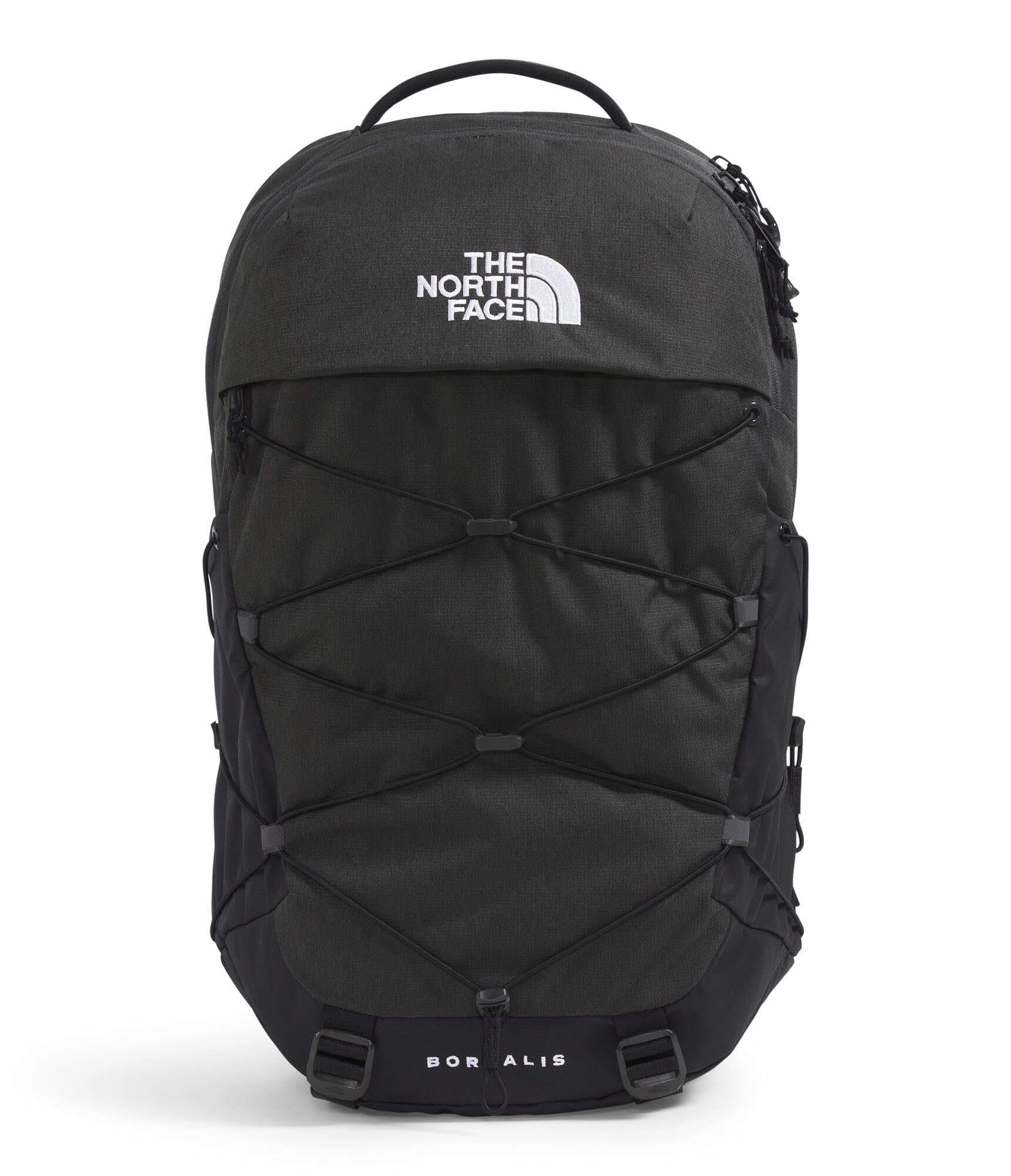
The North Face Borealis 28L
Key Features
- Weight: 2 lb
- Capacity: 28 liters
- Laptop sleeve: Fits up to 16 inches
- Water resistance: Water repellent
- Price: Midrange
This is the pack we reach for on a five-day-a-week ride, and the harness is why, not the 28-liter body. The FlexVent suspension uses articulated shoulder straps and a rounded back panel, and it includes a sternum strap and a waist belt that comes off when you don’t want it. On a bike that belt earns its keep: it stops the load shifting when you stand to push over a rise, and it unclips in a second for the walk into the office.
The laptop sits in a padded sleeve rated to 16 inches, with a separate tablet sleeve in the front compartment, so the power brick isn’t grinding against the screen. The bag stands up on its own while you load it, which sounds trivial until you’re packing one-handed in a dark hallway. Two side pockets take one-liter bottles, and one side has a quick-draw phone pocket exactly where your hand goes.
The shell is water-repellent rather than waterproof. That’s enough for drizzle and road spray and not enough for a proper downpour, where a roll-top dry bag around the laptop is cheaper than a new machine. We’re fond of the bungee on the front for the same practical reason — a shell, wet gloves, or a lock you don’t want sitting against the laptop.
Two pounds empty is the price of all that structure, and 28 liters goes faster than you think once shoes and a lunch box are in. Neither bothered us on a normal commute; both show up the week you decide to bring everything.
Pros
- Waist belt and sternum strap hold the load still
- Padded 16-inch sleeve plus a separate tablet sleeve
- Front bungee takes a shell or a lock
- Two side pockets fit one-liter bottles
Cons
- Two pounds empty before you pack anything
- Tight once shoes go in beside a laptop
The one we recommend for a daily ride: a harness that keeps a loaded pack still, a 16-inch sleeve, and a shell that shrugs off drizzle.
Best for Large Laptops
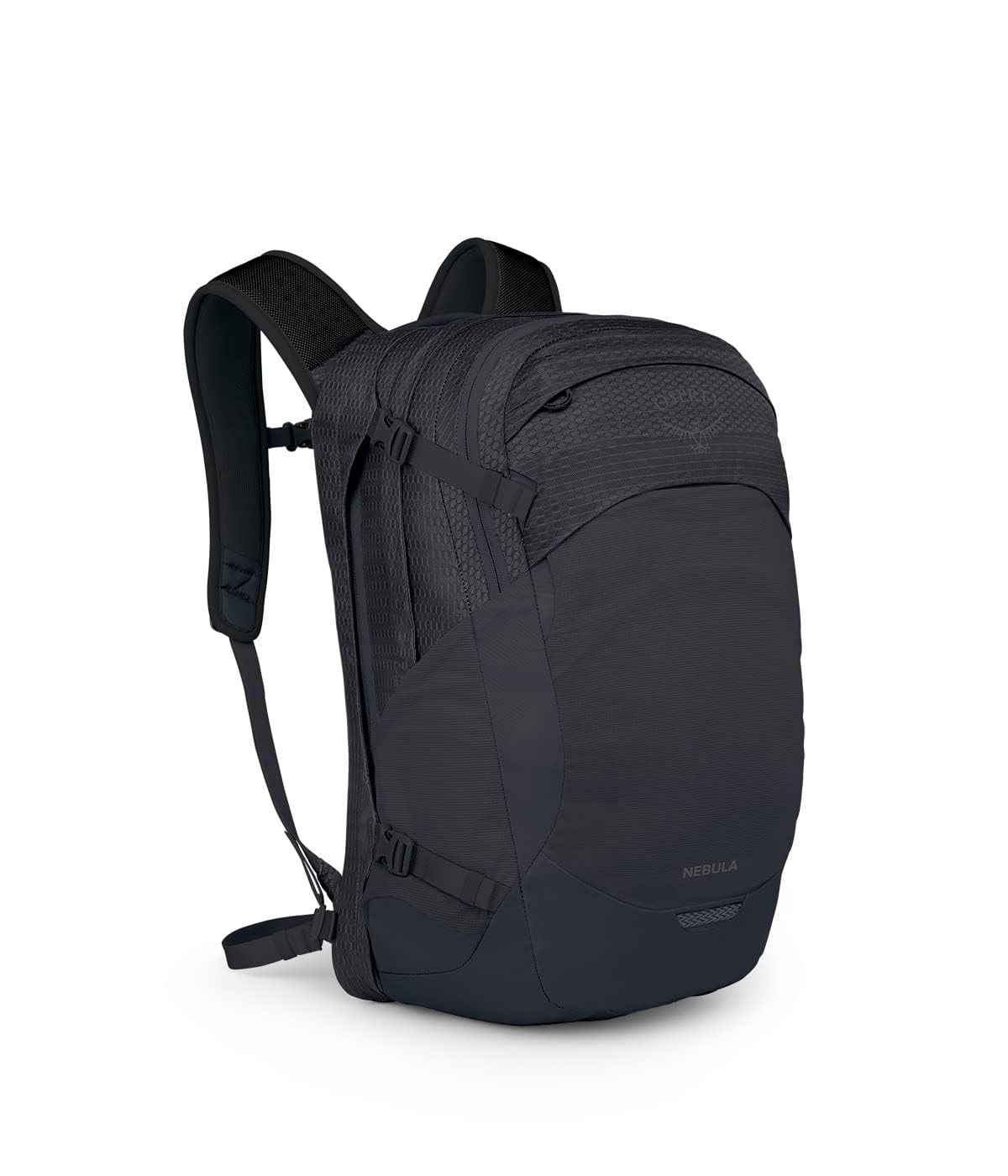
Osprey Nebula 32L
Key Features
- Weight: 2.1 lb
- Capacity: 32 liters
- Laptop sleeve: Fits up to 17 inches
- Water resistance: Water resistant
- Price: Premium
Seventeen inches is the number that decides this pack. The padded compartment takes a 17-inch laptop, which puts the Nebula at the top of this list for anyone hauling a big workstation machine, and the sleeve sits flat against the back panel so the weight stays close to your spine instead of hanging off it.
The other half of the story is capacity: 32 liters swallows a laptop, a change of clothes, and a pair of shoes without a fight. What we appreciate most is the way it carries that load — a waist belt and compression straps pull a full pack tight against your back, so it stops swinging when you get out of the saddle to climb. That’s the difference between a bag you tolerate and one you forget about.
The shell has a water-resistant finish and a substantial feel, and the stretch mesh bottle pockets take a big bottle without complaint. Organization is deliberately lean — four pockets across three compartments — which we don’t mind on a pack this size, since the alternative is a filing cabinet you never finish filing.
Two pounds and change empty, a two-tone grey that hides road spray, and a silhouette that stays narrow even when it’s packed. If a large laptop is the constraint that rules out everything else, this is the pack that solves it.
Pros
- Padded compartment takes a 17-inch laptop
- Waist belt and compression straps steady a full load
- 32 liters for a laptop, clothes, and shoes
- Stretch mesh pockets swallow large bottles
Cons
- Zips run stiff around the top curve
Worth it if your laptop is 17 inches or your day needs a full change of clothes; the harness carries the weight without complaint.
Best for Hot-Weather Rides
Osprey Daylite Plus
Key Features
- Weight: 1.3 lb
- Capacity: 30 liters
- Laptop sleeve: Fits up to 14 inches
- Water resistance: Water resistant
- Price: Midrange
At 1.3 pounds empty, this is the pack that disappears on your back, and it’s the one we wear when the forecast is hot. The AirScape back panel sits close and lets air move behind it instead of trapping it under a slab of foam, which on a summer commute is the difference between a damp shirt and a soaked one.
What it gives up is laptop room. The sleeve is rated to 14 inches, so a 15- or 16-inch machine is out, and a thick-chassis 14-inch laptop can still be a snug fit. Under that ceiling it carries well: a chest strap and a hip belt keep it from bouncing when you stand on the pedals, and the whole pack weighs less than a full one-liter bottle.
The rest is sensible light-hiking kit repurposed for the road — a stretch shove-it pocket on the front that takes a shell, deep mesh bottle pockets, a zip front pocket with a key clip, and a shell in recycled polyester with a water-resistant finish. The stated capacity is 30 liters; it carries like a pack you fill to the top rather than one you organize into.
One main compartment and four pockets means everything goes in together, and over a short ride we didn’t miss a filing system. It also cinches down smaller than the 32-liter packs here, which matters if you’re short in the torso and tired of shoulder straps floating above your collarbone.
Pros
- 1.3 pounds empty, the lightest pack here
- AirScape panel keeps air moving on climbs
- Chest and hip belts stop it bouncing
- Recycled polyester shell with a water-resistant finish
Cons
- One main compartment and only four pockets
Buy it for a 13- or 14-inch laptop and a hot ride — nothing here breathes better, and nothing here is lighter to carry.
Best for Budget Build
The North Face Vault 27L
Key Features
- Weight: 1 lb 11 oz
- Capacity: 27 liters
- Laptop sleeve: Fits up to 15 inches
- Water resistance: Water repellent
- Price: Budget
The Vault shares its harness with our top pick — the same FlexVent suspension, molded shoulder straps, padded back panel, and sternum strap — and it costs a good deal less. Since the harness is what decides whether a commute is comfortable, that’s a strong place to start.
You get 27 liters, a padded sleeve for a 15-inch laptop, and a front compartment with a tablet sleeve and a key hook. It stands up on its own while you pack it, the two side pockets take bottles, and at 1 pound 11 ounces it’s lighter than the Borealis on your back.
What you don’t get is the Borealis’s structure. The fabric is thinner, and the front pocket is shallow, stopping well short of the bottom of the bag, so anything bulky has to go in the main compartment. For a commute that’s a laptop, a lunch, and a rain jacket, none of that matters much — and the saving is real.
Where the lighter build shows is a heavy load over a longer ride, when thinner foam and a softer back panel make themselves known. Keep it to the day’s essentials and it’s the best value in this group.
Pros
- Same FlexVent harness as our top pick
- Lighter than the Borealis at 1 lb 11 oz
- Stands up on its own while you pack
Cons
- Laptop sleeve stops at 15 inches
- Zips feel light for daily use
Our budget pick: the same comfortable harness as the top pick for far less, as long as a 15-inch laptop is enough.
Best for Tech Organization
Thule Crossover 32L
Key Features
- Weight: 2.89 lb
- Capacity: 32 liters
- Laptop sleeve: Fits up to 17 inches
- Water resistance: Water resistant
- Price: Premium
The crushproof SafeZone pocket on top of the Crossover reads as a gimmick in a product photo and makes sense the first time you set the bag down hard with sunglasses inside. It’s a hard shell, it’s lined, and it’s where the phone and the glasses go.
The rest of the pack follows the same idea: everything has a home. Ten pockets across seven compartments, a rear compartment where a 17-inch laptop rides elevated off the bottom of the bag with a tablet sleeve beside it, and plush-lined pockets for a phone or a music player. Of the packs here, this is the one that stops a charger, a cable, a dongle, and a notebook from becoming one tangled mass, and that is a real commuting pleasure.
The shell is water-resistant nylon with aluminum hardware, there’s a shove-it pocket on the front with compression straps for a jacket, and the whole thing carries like a structured piece of luggage rather than a sack. At 1.31 kg it’s heavier than the Ospreys here, and you feel that square-backed shape on the bike until you get used to it.
Pros
- Crushproof SafeZone pocket for glasses and a phone
- Ten pockets across seven compartments
- 17-inch laptop rides elevated off the bag’s base
Cons
- Plastic zipper pulls can detach
- The priciest pack on this list
Choose it when the gear needs a place for everything: ten pockets, a hard shell, and a 17-inch sleeve, at the top of the price range.
Best for Hauling Work Gear
Carhartt Nylon Duck 35L
Key Features
- Weight: 2.76 lb
- Capacity: 35 liters
- Laptop sleeve: Fits up to 15 inches
- Water resistance: Water resistant
- Price: Premium
Thirty-five liters buys a bag that takes a full change of work clothes, a lunch, and a pair of boots without anything being squashed, and the wide mouth opens far enough that you can see the bottom of the main compartment while you pack.
The body is 700-denier nylon canvas with a durable water-repellent finish and coated canvas flaps over the outside pockets, which is how you build a pack that lives on a workshop floor as happily as on a bike. There’s a padded sleeve for a 15-inch laptop, two vertical sleeve pockets on the outside of the main flap, a front pocket with a key clip, a trolley sleeve, and one mesh bottle pocket.
What we like most is how little we worry about it. The fabric shrugs off scuffs and road grit, the mouth stays open while you load it, and it holds its shape when it’s empty instead of collapsing into a heap.
It is not a technical riding pack, and a full 35 liters moves around more in traffic than a 27-liter bag pulled tight with a belt. If your commute is short and fast, one of the Ospreys suits better; if you arrive with tools and a change of clothes, this is the one that takes the abuse.
Pros
- 700-denier nylon with a water-repellent finish
- Wide mouth lets you see the whole load
- 35 liters for clothes, tools, and boots
Cons
- Only one side bottle pocket
For riders hauling clothes and tools, this is the pack that shrugs off rain, grit, and being set down anywhere.
Best for Office Days
BANGE Business Smart Backpack

Key Features
- Weight: 2.49 lb
- Laptop sleeve: Fits up to 15.6 inches
- Water resistance: Waterproof
- Price: Midrange
Some riders have to walk into a meeting five minutes after locking up, and this is the pack in the group for that: coated oxford, clean lines, matte black hardware, and a profile that reads as a briefcase with straps rather than outdoor kit.
It’s roomier than it looks. There’s a padded sleeve for a 15.6-inch laptop, five pockets, and a front compartment that opens almost flat so you can pack it like a small suitcase for an overnight. The shoulder strap has a card pocket, which is a small thing you’ll use every day.
The shell is the only one here rated waterproof rather than water-repellent, and on a bike that counts for something — though a soaked zip is still a soaked zip, so the laptop goes in its own sleeve either way. The USB port is a pass-through, not a battery: you supply the power bank and the cable, and it saves you opening the bag, nothing more.
We call it a work-and-travel pack that happens to commute well. If your ride is short and most of your day is meetings, that trade is worth making.
Pros
- Coated oxford shell rated waterproof
- Front compartment opens almost flat
- Padded sleeve for a 15.6-inch laptop
Cons
- Uneven durability next to the brand-name picks
A good-looking, genuinely roomy pack for short rides and office days, provided you’re not buying it as a ten-year bag.
How We Tested Bike Commuter Backpacks
We started with a list of about 40 packs sold as commuter or everyday-carry bags and narrowed it by three things: volume between roughly 27 and 35 liters, a padded laptop sleeve that hangs off the back panel instead of sitting flat against it, and water-resistant fabric with zippers to match. That left twelve bags, which we bought at retail so no brand could hand-pick a good unit for us.
Each one went into a six-month rotation that followed a real commute: loaded at 7 a.m., ridden three to eight miles, hung on a hook or shoved under a desk, then worn to the store on the way home. We packed the same kit into every bag — a 15-inch laptop, charger, U-lock, flat shoes, lunch, and a spare shirt — and noted what had to come out before the main zip would close. Weekend trips and a couple of flights tested those same pockets against packing cubes and a carry-on sizer.
Zippers got the closest look, since they’re what fails first. We opened and closed each main compartment one-handed and in cycling gloves, overstuffed the bags on purpose, and pulled at the stress points where the track curves. After six months of daily use we went back to the same corners to check for skipped teeth, frayed tape, and sliders that had started to wander.
Durability and design came down to smaller observations: how the base held up to being set on pavement every morning, whether the shoulder straps still held their shape, and whether the bag looked like something you’d carry into a meeting. We also counted what the outer pockets actually swallowed — phone, keys, card wallet, rain shell — rather than how many of them there were.
How to Choose a Bike Commuter Backpack
A commuter pack has to do two things a hiking pack never has to: stay still while you stand on the pedals, and keep a laptop dry when the weather turns. Everything else — pockets, colors, sleeve sizes — is a preference you can settle once those two are handled.
The harness decides the ride
Two straps and a back panel are the whole difference between a pack that rides and a bag that swings. Look for a sternum strap that adjusts across your chest and, for rides over about twenty minutes or anything with a climb, a waist belt that takes some of the load onto your hips; the one on the Borealis unclips for the office and goes back on in a second.
The trap is buying on padding. Plush straps feel wonderful in a shop and do nothing for a load that shifts every time you stand up. The Vault makes the point neatly — same suspension system as our top pick, much less money, because the harness is where the value sits.
Ventilation is worth more than padding
A thick foam back panel feels luxurious on the shop floor and turns into a wet patch ten minutes into a climb. What you want is a panel with channels or mesh that lets air move between the pack and your back. The AirScape panel on the Daylite Plus is the clearest example here of a pack built to run cool, and the FlexVent back on the two North Face packs does something similar with more structure behind it.
If you run hot, trade padding for airflow and accept a lighter frame. If your ride is ten minutes downhill to a desk, it barely matters.
Water resistance lives in the closure
Almost every pack here is water-repellent rather than waterproof, and the difference shows up at the zip, not in the fabric. A coated shell sheds road spray beautifully and still lets water through a standard coil zip in a real downpour. The BANGE is the only pack in this group rated waterproof, which counts for something, though we still wouldn’t leave a laptop behind a zip alone.
Spend a little on a roll-top dry bag sized to the machine. It is the cheapest insurance in this guide and it works inside any pack you buy.
Match the sleeve to the machine
Sleeves are sized by the biggest laptop that fits, and the gap between a 14-inch ceiling and a 17-inch one narrows your shortlist faster than any other specification. Measure the chassis rather than the screen: a thick 14-inch machine can be tight in a sleeve rated for 14 inches, and a slim 15-inch laptop sometimes squeezes into one.
The Borealis sleeve measures 13.75 by 11.25 inches, which is a more useful number than the marketing size if your laptop sits between categories.
Bulk matters more on a bike than liters
A 35-liter pack that fits beautifully in a car boot can feel like a sail on a windy ride, and a half-full big bag flops unless compression straps pull it in. Buy for the load you carry most weeks, not for the biggest day of your year.
Whichever pack you choose, add a clip-on rear light and tuck the strap ends. A matte black bag in the dark is invisible, and a loose strap near a disc brake is a bad trade.
Frequently Asked Questions
How many liters do I need for a laptop, a change of clothes, and a lunch?
Twenty-one to 28 liters covers that combination with room left for a rain jacket, which is why most of the packs here sit in that range. Add shoes, tools, or a week of groceries and you want 30 liters or more.
If the laptop and a notebook are the whole load, something smaller will do — as long as the sleeve is rated for your machine.
Where do you put a bike lock?
A U-lock is the densest thing you’ll carry, and the place it hurts least is the main compartment, flat against your back: close to your spine, the weight stops the pack swinging. A long shackle can ride on a frame-mounted clip instead.
Keep it off a front bungee or a shoulder strap. The swing is noticeable in traffic and the lock will mark the shell.
Can I wash a commuter backpack?
Hand wash with mild soap and warm water, then air dry away from direct heat. Every pack here is listed as hand wash or wipe clean, and a machine cycle is what kills a water-repellent finish and can deform a padded back panel.
Spot-clean the shell and the insides of the bottle pockets first, since that’s where road grit and leaks collect, and re-proof the shell with a spray-on treatment once water stops beading.
Final Verdict
Buy the Borealis. It has the harness that keeps a loaded pack still on the ride, a sleeve that takes a 16-inch laptop, a water-repellent shell for the drizzle you’ll actually meet, and enough pockets that nothing ends up loose in the main compartment.
Change one requirement and the answer moves: a 17-inch machine or a full change of clothes points to the Nebula, and if you overheat on the way in, the Daylite Plus breathes better than anything else here.