
This post contains affiliate links. We may earn a small commission when you buy through our links — at no extra cost to you.
Cobblestones are where vacation shoes go to die—or at least where bad ones announce themselves. A Europe trip turns walking into a full-time job: train stations, museum floors, uneven streets, and one more block because the view is supposed to be worth it. The right pair makes that mileage feel unremarkable; the wrong pair sends you hunting for the nearest pharmacy. After learning that the hard way, my team and I spent six months wearing 12 pairs through airports, cities, and long weekend walks.
Buying for the first mile is a classic mistake. A shoe that feels marshmallow-soft in the store can go unstable by mile four; a firmer, breathable upper with arch support and a non-slip outsole tends to travel better. I notice appearance and ease of use—whether the pair works with the clothes I’ll repeat, and whether I can kick them off at security without wrestling a lace. Comfort gets attention, but quality, durability, traction, and value are what keep a light pack honest—these picks are for city days and long walks, not alpine trails.

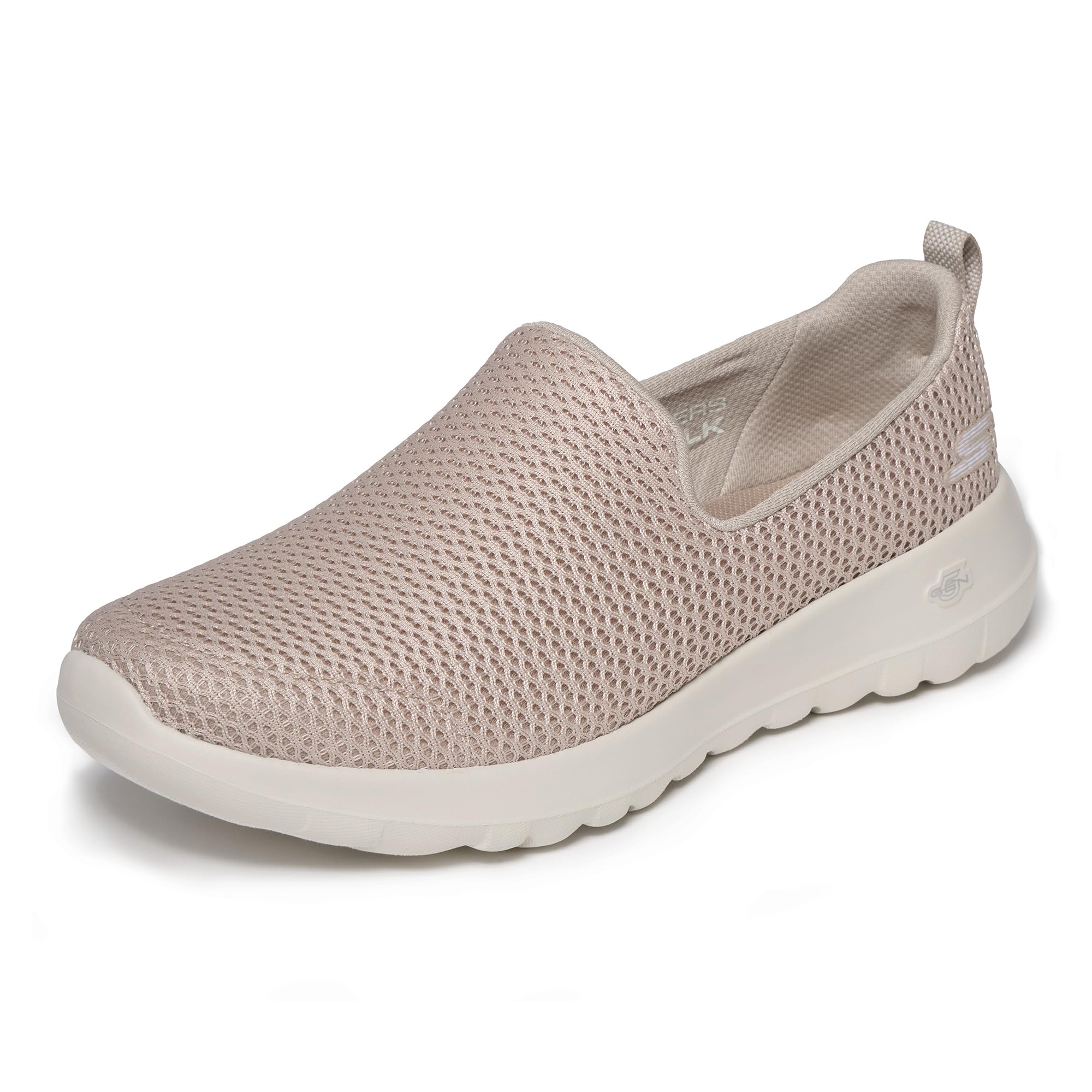
Best for Long Sightseeing Days
ALLSWIFIT Slip-On Walking Shoe
Key Features
- Style: Low-profile sneaker
- Closure: Slip-on
- Cushioning: Soft cushioned insole
- Price: Midrange
Support is where slip-on sneakers usually give up, and it’s the reason this pair ended up at the top of our list. There’s a firm cradle under the arch and around the heel rather than a flat foam bed, and the cushioning under the ball of the foot stays soft without turning to mush. Over a long day of pavement and museum floors, that’s the difference between a shoe you forget about and one you start negotiating with by mid-afternoon.
Getting them on is the other thing we kept appreciating. There are no laces to tie, so you step in and go — which matters far more on a trip than at home, between security lines, rented apartments, and the shoes-off rules of a dozen different doorways. They also read as a clean, low sneaker rather than a technical running shoe, so one pair can carry you from a morning of churches to a casual dinner without announcing itself as athletic gear.
Fit is the one place to slow down. They run roomy through the toe box, and if you’re between sizes the smaller one is the better bet. A broader foot will be comfortable from the first wear, and the upper breathes well enough for a warm afternoon uphill — a small thing until you’re actually doing it in August.
Pros
- Firm arch and heel support for long days
- Slip-on entry, nothing to tie
- Clean enough to wear to dinner
- Roomy toe box suits wider feet
Cons
- Too wide through the toe box for narrow feet
The pair we point travelers to first: firm arch and heel support that lasts a full sightseeing day, slip-on entry for security lines, and a clean look that works at dinner.
Best for Light Packing
Skechers Go Walk Joy
Key Features
- Care: Machine washable
- Upper: Vegan materials
- Cushioning: 5GEN with Goga Max insole
- Price: Budget
Weight and packability are what put these in the bag. They’re light enough to disappear in a carry-on, they take up almost no room, and they cost less than any other pair here. As a second shoe for evenings and short city days — or as the main one for a trip that’s more café than colosseum — that’s a genuinely useful combination.
On the foot they’re soft and uncomplicated: flexible, no break-in period, and comfortable from the first morning. They go on without laces and feel less like a technical walking shoe than like a slipper with a sole, which is exactly what some travelers want at the end of a day.
Care is where they quietly win. The upper is machine washable, so a week of dust and spilled coffee doesn’t have to follow you home, and it’s made from vegan materials. Sizing runs generous — if you’re between sizes, take the smaller one — and there’s a wide width for anyone who needs more room across the ball of the foot.
Pros
- Light enough to pack as a second pair
- Machine washable vegan upper
- Lowest price of anything here
- Soft from the first wear, no break-in
Cons
- Little arch support for long walking days
The lightest and least expensive pair we recommend, and the easiest to pack — a soft, simple slip-on for short city days and evenings, not for twelve-mile afternoons.
Best for Everyday Walking
NORTIV 8 Walking Sneaker

Key Features
- Midsole: Cushioned
- Outsole: Non-slip
- Shoe type: Walking and running sneaker
- Price: Midrange
Sizing is the first thing to settle with these: they run small, and half a size up is the safe order — a full size if you’ll be wearing thick socks on a cold-weather trip. Get that right and the toe box opens into something generous, which is more room than most sneakers at this price give you.
On the foot they feel like a light athletic shoe rather than a walking-specific one: easy to move in, soft underfoot, and available in colors that don’t default to gray. Flat, dry ground is where they do their best work — pavement, museum floors, a long queue. What holds them out of our top tier is consistency: the cushioning reads plush on some pairs and firm to the point of hard on others, and there’s no way to know which one you’ll open.
Grip is the bigger question for a European trip. The outsole holds on dry pavement and rough ground, but wet, polished surfaces — station concourses, hotel marble, a rainy cobbled square — are where it turns unpredictable. If you’re traveling in the wet season, that’s a reason to look at one of our other picks; for a dry summer city break it rarely comes up.
Pros
- Generous toe room once you size up
- Light, cushioned ride for pavement
- Color range beyond basic black
Cons
- Unpredictable grip on wet, polished floors
A roomy, sporty sneaker that handles flat dry pavement well once you size up — worth a look if you want color and toe room rather than slip-on convenience.
Best for Swelling, Wide Feet
Scurtain Wide Walking Shoe

Key Features
- Width: Wide width
- Closure: Adjustable hook-and-loop
- Heel drop: Zero drop
- Price: Budget
Feet change shape on a trip. Ten hours in a plane, a hot afternoon, a day spent at walking pace, and the shoe that fit at home doesn’t fit by dinner. This one is built around that foot: a wide toe box, a soft zero-drop sole, and a hook-and-loop strap at the side that opens wide and tightens down without laces.
Sliding them on takes a second, they weigh next to nothing, and they’re the least expensive pair here by a wide margin. For the flight itself, for evenings, for a traveler whose feet swell or whose toes need space, there’s a real case for keeping them in the bag.
The trade is support. The footbed is soft and flat — the least structured of anything we recommend — so a high arch or a long day of standing will feel it. The sole grips on dry ground but isn’t trustworthy on wet tile, and the soft upper runs warm on a hot afternoon.
Heel slip is the fit issue to watch. The strap snugs the middle of the foot but won’t shorten a shoe that’s too long, so if you’re between sizes, take the smaller one and check the heel on a slope before you commit.
Pros
- Wide toe box with an adjustable strap
- Very light and easy to slide on
- Lowest price in this guide
Cons
- Minimal arch support
- Soft sole is unsure on wet floors
Built for feet that need room and adjustability — a light, wide, strap-fastened shoe for swelling and sensitive toes, not for arch support on a long stone-paved day.
How We Tested These Europe Walking Shoes
We built the shortlist by reading customer reviews, comparing fit ranges and cushioning, and filtering for breathable uppers and outsoles with real tread. Then we ordered 12 pairs—enough to compare slip-on styles, lace-ups, and cushioned walkers—and wore them for six months. Each pair went through airport security, train platforms, museum floors, grocery runs, and long weekend walks over cobblestones, wet pavement, and polished station tile.
Comfort and walking performance were judged on the move, not in the mirror: I noted where pressure showed up after two hours, whether the toe box crowded my toes on descents, and if the cushioning packed out by the end of a long day. For fit and arch support, I wore each pair with the socks I’d pack and checked whether the heel locked down without squeezing the instep. We also watched quality and durability—seams, outsole wear, and insole flattening—after repeated wear, and tested traction and non-slip grip on wet stone and smooth station floors. On warm afternoons, I checked breathability by seeing whether my socks felt damp after a few miles.
Ease of use got a practical test: getting shoes on and off at security, adjusting laces or straps one-handed, and packing them into a carry-on. Appearance was judged against the two or three outfits we actually repeat on a trip, not a styled photo. At the end, we compared what each pair delivered for the money, including whether a cheaper shoe needed replacing mid-trip—the real value test.
How to Choose Walking Shoes for a Europe Trip
The pair that works for a two-week trip is the one that still feels fine at hour six, not the one that feels best in the shop.
Support matters more than pillow softness
Ten minutes of wearing a shoe tells you almost nothing. Deep, soft cushioning feels wonderful while you stand in a store and flattens under a full day of pavement; what carries you through a museum-and-market afternoon is a firm arch and a heel that holds the foot in place rather than letting it slide. Press a thumb into the arch — if it collapses without resistance, you’re looking at a slipper with a sole.
If you already wear orthotics, check that the footbed comes out before you commit. Our most supportive pick is the ALLSWIFIT; our softest is the Skechers, and that difference is the whole decision.
Size for the foot you’ll have at four in the afternoon
Feet swell. A shoe that fits at breakfast can be tight by the time you’ve walked a city all day, which is why sizing ends up mattering more than any other spec on this page — some of these run large and one runs small. Shop in the late afternoon if you can, wear the socks you’ll travel with, and leave a thumb’s width between your longest toe and the end of the shoe.
Slip-on styles are the least forgiving here, because there are no laces to loosen when your foot spreads out. With a laceless shoe, get the length right rather than hoping it stretches into shape.
Outsole grip for wet stone and polished floors
European cities are hard on smooth soles: cobbles, station concourses, marble lobbies, and rain. Look at the tread before anything else — a shallow, flat outsole is fine in July and skittish in October. A slightly firmer midsole also transmits less of the stone through your foot than a very soft one, which is why a shoe that feels a touch firm in the shop can be the better companion for a week of old streets.
If you’re traveling in spring or autumn, treat grip as a top-three criterion alongside support and fit.
Slip-on convenience versus laces you can adjust
Laceless shoes are a genuine travel advantage: security lines, rented apartments, overnight trains, and the shoes-off habit of half of Europe. The cost is adjustability — you can’t cinch a slip-on when the upper stretches or your feet swell, and a heel that lifts in the morning will still be lifting at night.
Laces let you tune the fit twice a day. If you go laceless, walk up a slope in the pair you’re considering and watch whether the heel stays put.
Frequently Asked Questions
How many pairs of walking shoes should I pack for a two-week trip?
Two is the practical answer: one on your feet, one in the bag. Rotating lets the foam in each pair recover between days, and a spare covers a soaked afternoon or a blister you didn’t plan for. Wear the bulkier, more supportive pair on the plane — it saves suitcase space and keeps your feet happy through a long flight.
If you only take one, make it the most supportive pair you own rather than the newest.
How do I break in new walking shoes before a trip?
Start about two weeks out and build: an hour around the neighborhood, then a half day, then a full day of errands in the socks and insoles you’ll travel with. You’re looking for heel slip, a hot spot at the toe or the back of the heel, and whether the shoe still feels right at hour five.
Fix anything you find at home, where a return is still possible, instead of in a hotel room abroad.
What’s the best way to avoid blisters on a walking trip?
Two things do most of the work: a thin liner sock under a thicker wool one, so the layers rub against each other instead of your skin, and stopping the moment you feel a hot spot. Tape it at lunch, not at dinner.
Air your feet and change socks at the midpoint of a long day, and keep the first day with a new pair short rather than testing them on a ten-mile afternoon.
Final Verdict
Start with the ALLSWIFIT. The arch and heel support is the most convincing of anything we recommend, it goes on without laces, and it looks tidy enough for dinner — the three things a single pair has to manage on a European trip.
If you’re packing light and walking less, the Skechers cost less, weigh less, and survive a washing machine. If your feet swell or your toes need room, the Scurtain opens wide and adjusts without laces, as long as you treat it as the comfortable backup rather than the only pair in your bag.