
This post contains affiliate links. We may earn a small commission when you buy through our links — at no extra cost to you.
Many parents have been burned by a holiday gift that broke within a week or lost its shine by New Year’s. At nine, boys are in that tricky spot between little-kid toys and more complex tween interests, so finding something that’s both rugged and truly interesting can feel like a gamble. The difference often comes down to how well a product handles real-world, sometimes rough, play.
We focused on gifts that balance hands-on action with reliable construction—whether for quiet solo challenges, messy experiment sessions, or page-turning adventures. This guide matches the gift to the actual child, not the hype on the box, so you can pick with confidence even if you’re shopping for a very specific personality.





Best for Puzzle Lovers
ThinkFun Gravity Maze
Key Features
- Age Range: 8+
- Pieces/Experiments: 60 cards, 9 towers, 3 marbles
- Play Style: Solo puzzle
- STEM Value: Logic, spatial reasoning
- Construction: Plastic towers
- Price: Mid-Range
Gravity Maze merges a marble run with a logic puzzle that requires arranging nine colorful towers on a grid to route a marble from drop point to target. The 60 challenge cards climb from beginner to expert, which means a 9-year-old can start with guided builds and work up to brain-bending configurations that stump grown-ups. The pieces snap cleanly onto the grid, and the translucent plastic lets kids watch the marble’s path — a small visual reward for each correct setup. Build quality stands up to repeated handling: there are no loose parts or cheap joins to worry about.
This is a quiet, concentrated toy — ideal for a kid who loses himself in puzzles. It won’t grab a child who craves action or group play, and it demands a stable surface; a bumped table will send the towers scattering. But for a 9-year-old who enjoys solving things step by step, it’s the kind of gift that gets pulled out again and again, no batteries or screens required.
Pros
- Captures attention for hours with a satisfying marble-run mechanic — even teens and adults find it engaging.
- Solid construction with no loose parts; pieces endure repeated play without wear.
- Builds spatial reasoning and critical thinking through 60 escalating challenges.
Cons
- Towers can tip if the grid is bumped, forcing a restart.
For a kid who loves to figure things out on his own, Gravity Maze delivers countless hours of screen-free logic play that never feels repetitive.
Best for Curious Minds
Nat Geo Kids Why? Book
Key Features
- Age Range: 7-10
- Pieces/Experiments: 224 pages
- Play Style: Solo reading
- STEM Value: Knowledge, curiosity
- Construction: Hardcover
- Price: Budget
For the child who devours facts instead of building or experimenting, this book offers a quiet alternative to hands-on kits. National Geographic’s signature photography turns every page into a visual rabbit hole, and the bite-sized answers cover everything from animal oddities to space mysteries without overwhelming. It’s built for browsing — kids can jump in anywhere and lose an hour.
This suits a 9-year-old who genuinely enjoys reading and learning solo. A kid more drawn to video games or active play may leave it on the shelf. But for the relentless “why?” asker, it’s a gift that feeds curiosity long past Christmas morning.
Pros
- Captivating questions and answers spark endless curiosity.
- Stunning National Geographic photography makes every spread a visual treat.
- Exceptional value — a large, gift-worthy hardcover at a budget-friendly price.
Cons
A book that earns its place on the shelf of any fact-obsessed 9-year-old — no gimmicks, just stunning visuals and endless answers.
Best for Fidget Travelers
Shashibo Shape Shifting Box
Key Features
- Age Range: 8+
- Pieces/Experiments: 1 cube (connects multiple)
- Play Style: Solo fidget
- Construction: ABS plastic, magnets
- Price: Mid-Range
Unlike noisy electronic puzzle games, the Shashibo offers silent, open-ended manipulation. The magnetic cube folds and twists into over 100 configurations, delivering a satisfying tactile experience that’s easier to pick up and put down than a structured challenge.
It suits fidgeters who prefer mindless creativity over goal-driven play. The main tradeoff: stickers can peel off with rough handling, and internal magnets may loosen over time. Treat it gently, and it stays travel-ready.
Pros
- Addictive, screen-free fidgeting that keeps kids engaged for hours
- Satisfying magnetic clicks and a premium feel that elevates it above plastic toys
- Wins as a gift for ages 8 and up, from stocking stuffers to travel companions
Cons
- Mid-range price can feel steep next to basic plastic fidget toys
- Stickers may peel off the cube over time, and magnets occasionally loosen with heavy use
A quiet, compact companion for car trips and waiting rooms — just be ready to reinforce the stickers if your 9-year-old is hard on toys.
Best for Gross-Out Scientists
Nat Geo Gross Science Kit
Key Features
- Age Range: 8+
- Pieces/Experiments: 45 experiments
- Play Style: Messy solo/group
- STEM Value: Chemistry, biology
- Construction: Plastic tools, safe chemicals
- Price: Mid-Range
With 45 experiments including a brain dissection and slime-making, this kit turns kitchen chemistry into a laugh-filled adventure. The instructions are clear, and the variety keeps kids engaged across multiple sessions. Unlike a quiet reading book, it gets hands-on and messy — ideal for a 9-year-old boy who loves disgusting science. Since some kits may arrive missing a small scoop or vial, opening the box to verify components before gifting is recommended.
Pros
- The ‘gross’ theme is wildly entertaining – kids love the disgusting effects
- Great gift that sparks a love for science – ideal for curious 9-year-olds
- Easy-to-follow instructions and a good variety of experiments keep things fresh
Cons
- In some cases, a kit may arrive missing a small scoop or vial – checking contents before gifting is wise
A messy, memorable gift that balances learning and laughter for the right kid – just inspect components first.
Best for Animal Builders
LEGO Creator Surprising Spider
Key Features
- Age Range: 7+
- Pieces/Experiments: 153 pieces, 3 builds
- Play Style: Creative building
- STEM Value: Engineering, creativity
- Construction: LEGO bricks
- Price: Budget
While larger LEGO sets in this guide reward patience over hours, this 153-piece spider comes together in under 30 minutes and becomes a toy immediately. The spring-powered web launcher adds a prankish twist that kids love—build, then surprise someone.
It’s designed for animal fans and first-time builders who enjoy a creepy-crawly theme. The spider can be rebuilt into a scorpion or snake, keeping the box in play beyond a single sitting. The compact finished size packs easily for travel, but it’s not a days-long challenge or a detailed display piece. For a 9-year-old who wants a fast build with an instant payoff, it hits the spot.
Pros
- Posable spider shoots a retractable web for instant, giggle-inducing play.
- Clear instructions let even a 7-year-old build solo with minimal help.
- Three build options—spider, scorpion, snake—pack more variety into a small set.
Cons
A stocking-sized treat that won’t strain a gift budget, perfect for a child who wants a quick build with a surprise factor—just skip it if spiders cause genuine fear.
Best for Gamer Readers
Trapped in a Video Game Series
Key Features
- Age Range: 8-10
- Pieces/Experiments: 5 books
- Play Style: Solo reading
- Construction: Paperback
- Price: Mid-Range
For the video-game-obsessed 9-year-old who’d rather hold a controller than a book, this series delivers the same adrenaline rush in chapter-book form. Where a fact-dense encyclopedia like 5,000 Awesome Facts invites casual dips into trivia, these five interconnected adventures demand sustained reading—and that’s the point. The breakneck pacing and age-appropriate humor pull even reluctant or ADHD readers through 150–200 pages per volume, making it a stealthy tool for building reading stamina. Kids who still gravitate toward heavily illustrated picture books may find the blocks of text intimidating at first, but the video-game stakes and cliffhanger chapters push them forward.
Pros
- Reads like a video game adventure, keeping screen-loving kids hooked on books.
- Fast-paced, easy-to-follow text that engages reluctant readers and children with ADHD.
- Clean, age-appropriate humor that parents appreciate and 8-11 year-olds love.
Cons
For the kid who explores digital worlds more than pages, this set rewires the reading circuit—not a fact book to sample, but a series to binge.
Best for Cozy Kids
KFUBUO Wearable Blanket Hoodie

Key Features
- Age Range: 6-10
- Pieces/Experiments: 1 hoodie
- Play Style: Lounging
- Construction: Polyester flannel
- Price: Mid-Range
This wearable blanket wraps a 9-year-old in soft sherpa warmth for movie nights, car rides, and sleepovers. The deep pocket swallows a tablet, snacks, or a small stuffed animal. However, the oversized fit can feel cumbersome when running or playing, so it works best for kids who prefer curling up with a book or screen over active games.
Pros
- Extremely soft sherpa fabric that stays cozy wash after wash
- Deep kangaroo pocket fits tablets, snacks, or even a small pet
Cons
- Oversized fit can be bulky during active play; suited for lounging only
A unique comfort gift for the 9-year-old who loves to snuggle rather than sprint; not for kids who need freedom of movement.
Best for Aspiring Engineers
LEGO Technic Lamborghini

Key Features
- Age Range: 9+
- Pieces/Experiments: 806 pieces
- Play Style: Advanced building
- STEM Value: Engineering
- Construction: LEGO Technic
- Price: Premium
An 806-piece set with a moving V10 engine, steering, and opening doors that rewards patient builders with a realistic display model. The premium price and complex instructions mean it’s not for casual builders. Best suited to car-obsessed 9-year-olds who enjoy intricate, multi-day projects.
Pros
- Realistically detailed replica with moving V10 engine and opening doors that looks sharp on display.
- Engaging, multi-hour building challenge that teaches patience and basic engineering concepts.
Cons
- Loose sticker sheets can wrinkle or tear during unboxing; a few instruction steps may confuse younger builders.
If you’re shopping for a car-obsessed 9-year-old who thrives on multi-day LEGO projects and wants a shelf-worthy supercar, this Lamborghini delivers — just keep the sticker sheet safe during unboxing.
Best for Crafty Kids
Klutz Paper Airplanes Book

Key Features
- Age Range: 8-10
- Pieces/Experiments: 10 designs, 40 sheets
- Play Style: Folding activity
- STEM Value: Aerodynamics
- Construction: Paper
- Price: Budget
Ten distinct designs with pre-printed paper deliver flights that genuinely soar—an engaging stocking stuffer for craft-loving 9-year-olds. The activity may be short-lived for some, but the satisfaction of a plane that actually flies is hard to beat. A couple of designs push dexterity limits, so younger children may need an adult’s help to avoid frustration.
Pros
- Instructions are clear enough that kids can produce planes that fly well.
- The included paper is colorful, sturdy, and eliminates material hunting, while the 10 designs offer variety.
Cons
- Some folds demand precision that may require an adult’s help for younger or less patient kids.
This kit fits a 9-year-old who enjoys a hands-on challenge and doesn’t mind that the activity may wrap up quickly—especially if an adult can assist with the trickiest folds.
Best for Travel Gamers
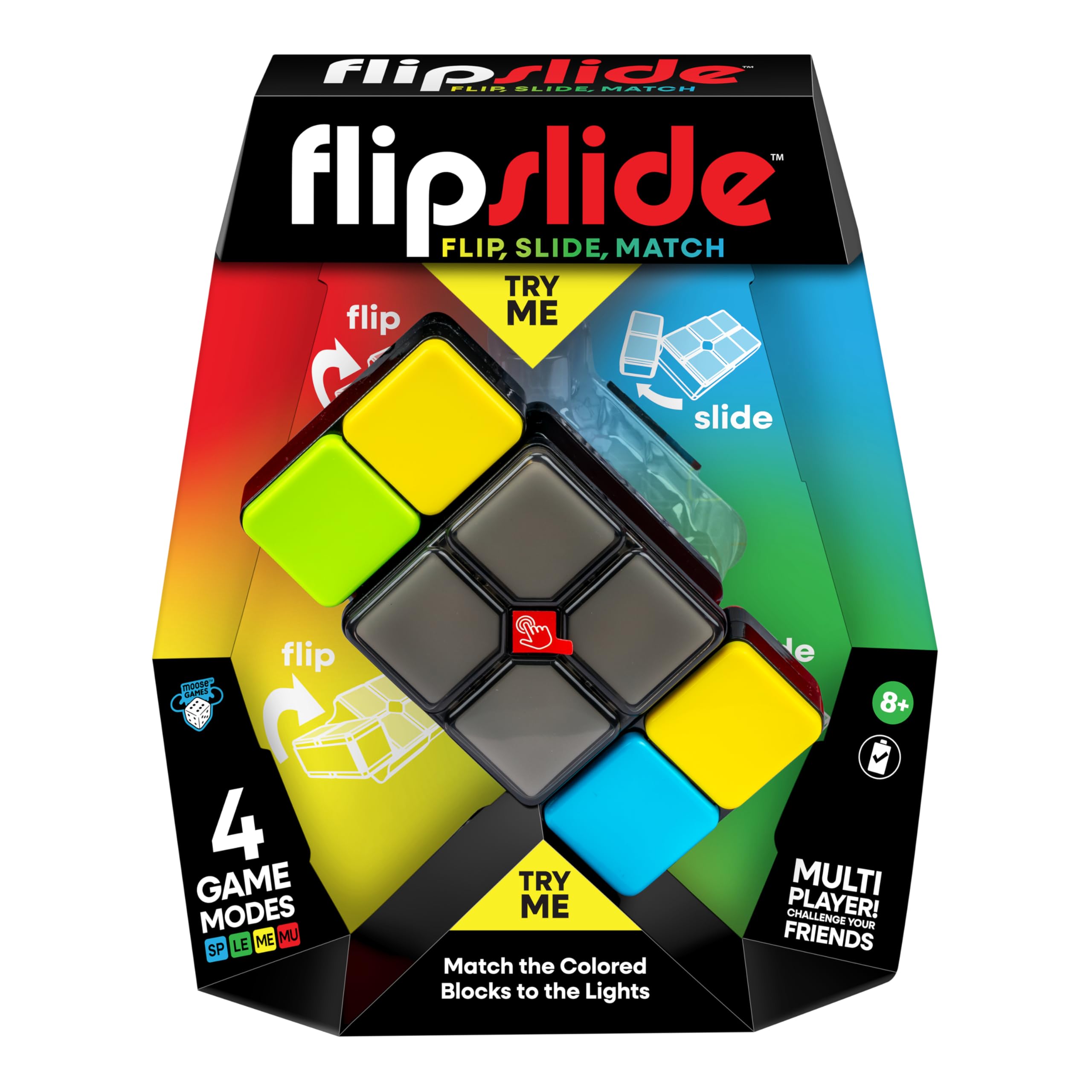
Flipslide Puzzle Game
Key Features
- Age Range: 8+
- Pieces/Experiments: 1 handheld
- Play Style: Speed puzzle
- Construction: Plastic
- Price: Budget
Flipslide mixes Simon-like pattern-matching with speed across four game modes in a handheld that slips into a backpack. It shines on car trips and family competition nights. The speaker remains intrusively loud even on low, and a true silent mode doesn’t exist — so libraries and quiet waiting areas aren’t the best fit, but for noisy play it delivers.
Pros
- Addictive speed-and-pattern gameplay keeps kids and adults engaged for long stretches.
- Compact, travel-friendly design slips into a backpack and entertains on planes and car trips.
Cons
- Audio can cut out unexpectedly, interrupting the fast-paced flow.
If noisy play isn’t a concern — think family game nights, playgrounds, or backseat competitions — this handheld delivers addictive puzzle fun that’s easy to pass around.
Best for Magic Scientists
Nat Geo Magic Chemistry Set

Key Features
- Age Range: 8+
- Pieces/Experiments: 10 tricks
- Play Style: Solo magic/science
- STEM Value: Chemistry
- Construction: Plastic tools, chemicals
- Price: Budget
With all chemicals included, there’s no last-minute store run—the magic tricks, from floating coins to color changes, captivate kids who prefer a clean mystery over messy goo. It’s a quieter alternative to the gross-out science kit, but with only 10 experiments it may feel brief; a few boxes ship missing a wand or packet, so check before wrapping.
Pros
- Magic-themed experiments ignite wonder — children are thrilled by floating coins and color changes.
- Clear instructions let kids perform most tricks independently, reducing parent intervention.
Cons
- A box may arrive without a wand or chemical packet — verify contents promptly.
For the 9-year-old who loves magic and tidy play, this kit delivers clean, wonder-filled experiments—just open it early to confirm all pieces are there.
How to Choose
The best gifts bridge the gap between educational value and the kind of fun that keeps a nine-year-old coming back day after day, but balancing those priorities starts with a few key decisions.
Age Range & Challenge Level
Nine-year-olds sit at a developmental crossroads: they want toys that feel ‘big kid’ but may still get frustrated by overly complex instructions. Look for products that offer adjustable challenge levels—like puzzle games with beginner-to-expert cards—so they can grow with the child rather than being abandoned.
Conversely, a kit that’s too simple for their ability will be dismissed after one use. Check for recommended age ranges, but also watch for comments about actual difficulty from parents.
Quantity vs. Longevity
A big number of experiments or pieces sounds impressive, but the real question is how many times they can be used independently. A science kit with 45 experiments may require common household supplies for 30 of them, meaning the fun stops if you’re missing baking soda.
Look for sets that clearly state ‘includes all ingredients’ or ones where the core activity can be repeated, like a marble run that allows endless new configurations. Avoid assuming more pieces equals more playtime—fiddly, one-use paper cutouts often end up in the bin.
Solo vs. Social Play
Nine-year-old boys commonly enjoy both communal and independent activities, but a gift that forces group play when the child prefers solitude—or vice versa—collects dust. Consider whether he likes to build alone in his room or engage with siblings.
A portable fidget cube or logic game excels for travel and quiet time, while a gross-science kit doubles as a party activity. The safest bet is a toy that works both ways, but either path is fine if you match it to his personality.
Real STEM vs. Superficial ‘Learning’
Many toys claim to teach engineering or chemistry, but the educational value comes from the child actively reasoning, not just following steps. A good STEM gift requires problem solving—like figuring out the marble path in a logic maze or understanding chemical reactions in a kit.
Beware of flashy packaging that oversells; genuine STEM toys provide clear explanations of ‘why’ things work, not just magic tricks without context.
Construction That Survives Rough Play
Nine-year-olds aren’t gentle. The most common disappointment is a toy whose stickers peel or plastic snaps within days. Choose materials like thick cardboard books, ABS plastic, or solid LEGO bricks over flimsy foam rockets or weak magnets.
When possible, look for products with minimal small glued pieces and consistent manufacturing—reviews frequently call out cheap adhesive on magnets or brittle launcher legs. If the product image shows stickers, assume they’ll need replacing after heavy use.
FAQ
Which STEM toys for 9-year-olds are quiet and portable for car rides or plane travel?
Gravity Maze offers silent solo play without batteries, and Shashibo’s magnetic cube folds down to pocket size. Flipslide is also portable but generates a loud click even on the lowest volume setting, so pack it with tape over the speaker or skip it for shared quiet spaces.
Why do the stickers on my magnetic fidget cube peel off after a few weeks?
The Shashibo cube relies on printed paper stickers for its designs, and regular manipulation causes the adhesive to lift. Handle it gently and avoid picking at the edges; some owners apply a thin layer of clear tape or mod podge to slow the peeling.
Does the National Geographic Air Rocket actually fly 100 feet every time?
No. Many buyers report inconsistent performance, with some rockets barely leaving the launcher or breaking on impact. The legs often crack after a few uses, making it a poor choice for a lasting Christmas gift.
Are there any science kits that don’t require extra household supplies?
The Nat Geo Magic Chemistry Set includes all chemicals and tools for its 10 tricks, so you won’t need pantry items. The Gross Science Kit also includes everything for its core 15 experiments, but 30 bonus activities call for common household supplies like vinegar or food coloring.