
This post contains affiliate links. We may earn a small commission when you buy through our links — at no extra cost to you.
Walk into any travel or pharmacy aisle and you’ll see ‘compression socks’ with no compression level listed. That missing number matters: without a stated mmHg rating, you’re buying a regular sock with a tighter weave, not therapy-grade support.
For the socks that do specify 15–20 or 20–30 mmHg, the real puzzle is how many pairs to buy and whether they’ll hold up. An eight-pack at $20 looks like a steal, but reviews frequently mention holes after a few washes. The most useful sets combine verified compression with construction that survives the laundry.
Getting the right fit—measuring your calf, not just shoe size—is the final piece. Even a perfect mmHg rating means little if the sock is too tight or too loose. This guide picks the socks that check all three boxes: clear compression, durable build, and a fit that works.


Best for Travel & Nurses
ACTINPUT 8pk 15-20 mmHg
These compression socks deliver a clear 15-20 mmHg gradient across all eight pairs, with a strong track record of reducing swelling and discomfort during long hours on your feet. The nylon-polyester blend breathes well enough for all-day wear, and the price per pair is among the lowest you’ll find for a stated mmHg rating — making them a practical choice for travelers, nurses, or anyone who needs a week’s supply without a premium outlay.
Fit consistency between individual socks can vary in some packs — one sock may feel slightly tighter or looser than another. This is more an annoyance than a deal-breaker: checking each pair before a long shift allows you to pair up matching sizes. For first-time compression buyers or budget-focused users who don’t need a clinically uniform fit across every pair, the value still outweighs the occasional mismatch.
Pros
- Solid 15-20 mmHg compression with reliable swelling reduction
- Exceptional value — eight pairs at one of the best price-per-pair ratios in this category
- Comfortable for all-day wear and easy to pull on
Cons
- Fit can vary slightly between pairs in the same pack — some users receive socks with different sizing
A cost-effective eight-pack with dependable compression for everyday circulation support — just give each pair a quick check before relying on them for long stretches.
Best for Leg Fatigue Relief
Iseasoo Copper Compression 8pk
The Iseasoo 8-pack delivers noticeable circulation support thanks to its copper-infused fabric and clear 15-20 mmHg compression. Users report reduced leg fatigue and swelling during long shifts or travel, matching the feedback of more expensive options.
This set suits budget-conscious buyers who need multiple pairs for daily rotation — nurses, travelers, and runners. The tradeoff: individual socks may show wear sooner than the more consistent 8-pack in this roundup, so expect to replace them after a few months of heavy use.
Pros
- Support for circulation reduces swelling and leg fatigue during long shifts or travel.
- Eight pairs at a budget-friendly price make rotating and washing easy.
- Comfortable fabric for extended wear, even during long workdays.
Cons
- Durability can be inconsistent – some socks may develop holes or tearing after several wash cycles.
A strong pick for anyone needing multiple compression pairs without a high upfront cost – just plan for faster rotation than a premium single pair or the top pick’s 8-pack.
Best for Firm Compression Pack
FITRELL 3pk 20-30 mmHg
The FITRELL 3-pack delivers the same 20-30 mmHg compression found in premium single-pair options, but at a fraction of the cost per sock. The fabric is noticeably soft and cushioned, which helps during long hours on your feet or while recovering from surgery. Unlike the top pick (which offers a broader size range for larger calves), FITRELL focuses on delivering consistent compression at a better per-pair value.
This set suits men who need reliable graduated compression for circulation issues, 12-hour shifts, or post-surgery use — provided the calf measurement falls within the manufacturer’s guide. The top band can feel snug on some legs, so reviewing the sizing chart and possibly sizing up is recommended if you have larger calves or are between sizes.
Pros
- Firm 20-30 mmHg compression in a three-pack at a competitive price
- Soft, cushioned fabric adds comfort during extended wear
- Effective for standing jobs and pregnancy-related swelling
Cons
- Top band can be too tight if calf measurement is at the upper limit of the size chart
Best value for firm compression in a multi-pack — just double-check your calf measurement before ordering.
Best for Wide Calf Sizing
SB SOX 20-30 mmHg
The SB SOX compression socks stand out for accommodating calves up to 24 inches – a size range rarely available in 20-30 mmHg medical-grade socks. This makes them a primary option for men with larger legs who need firm graduated compression for circulation on flights or after surgery. The firm compression does require noticeable effort to pull on, so those with limited hand strength may find them challenging. For standard or narrow calves, lighter options or multi-packs will offer better value. The construction holds up well with repeated wear, justifying the per-pair cost for those who need the wide fit.
Pros
- Sizing accommodates large calves up to 24 inches – a rare find in compression socks.
- 20-30 mmHg compression effectively reduces swelling and leg fatigue.
Cons
- Putting them on requires significant effort due to firm compression.
For men with larger calves who need medical-grade compression, these deliver the fit and pressure most alternatives lack – just be prepared for a struggle getting them on.
Best for Colorful Rotation
CHARMKING 8pk Compression
The CHARMKING 8-pack stands out for its vibrant patterns that mimic everyday socks, making it one of the most popular compression sock sets on the market. Best suited for style-conscious buyers who want light compression support for travel or daily wear, rather than medical-grade firmness — the compression can feel looser than the advertised 15-20 mmHg for some users.
Pros
- Wide selection of colors and patterns that look like normal socks
- Comfortable material that is easy to pull on and off
Cons
- Compression strength can feel lighter than the stated 15-20 mmHg rating
A great pick for those who prioritize style and comfort over firm compression — just don’t expect medical-grade support from this budget multi-pack.
Best for Single High Compression
Physix Gear 20-30 mmHg

These socks deliver consistent 20-30 mmHg compression that reduces swelling and leg fatigue, making them a strong choice for circulation support. The tradeoff is a single-pair purchase and a notably difficult donning process due to the firm compression – best for those who can manage the effort and don’t need multiple pairs.
Pros
- Firm 20-30 mmHg compression reduces swelling and leg fatigue effectively.
- Comfortable fit for a high-compression sock – legs feel better during extended wear.
Cons
- Putting them on requires notable effort due to the firm compression – a consideration for those with limited hand strength.
Best suited for individuals who prioritize medical-grade compression and swelling relief over cost-per-pair and don’t mind the extra effort to put them on.
Best for Budget 4-Pack
Aoliks 4pk 15-20 mmHg

Under $10 gets you four pairs with a claimed 15-20 mmHg rating, making this the most affordable entry point. However, compression can feel lighter than advertised and the L/XL sizing runs large, so reliable circulation support is not guaranteed. Best suited for budget-conscious buyers who prioritize low cost over precise fit and pressure.
Pros
- Budget-friendly price for four pairs with claimed compression
- Lightweight and comfortable for long wear
Cons
- Compression may feel lighter than the stated 15-20 mmHg, reducing effectiveness for circulation needs
A viable pick only if your main priority is rock-bottom price and you can accept lighter compression and loose sizing.
Best for Value 8-Pack
Sooverki 8pk 15-20 mmHg
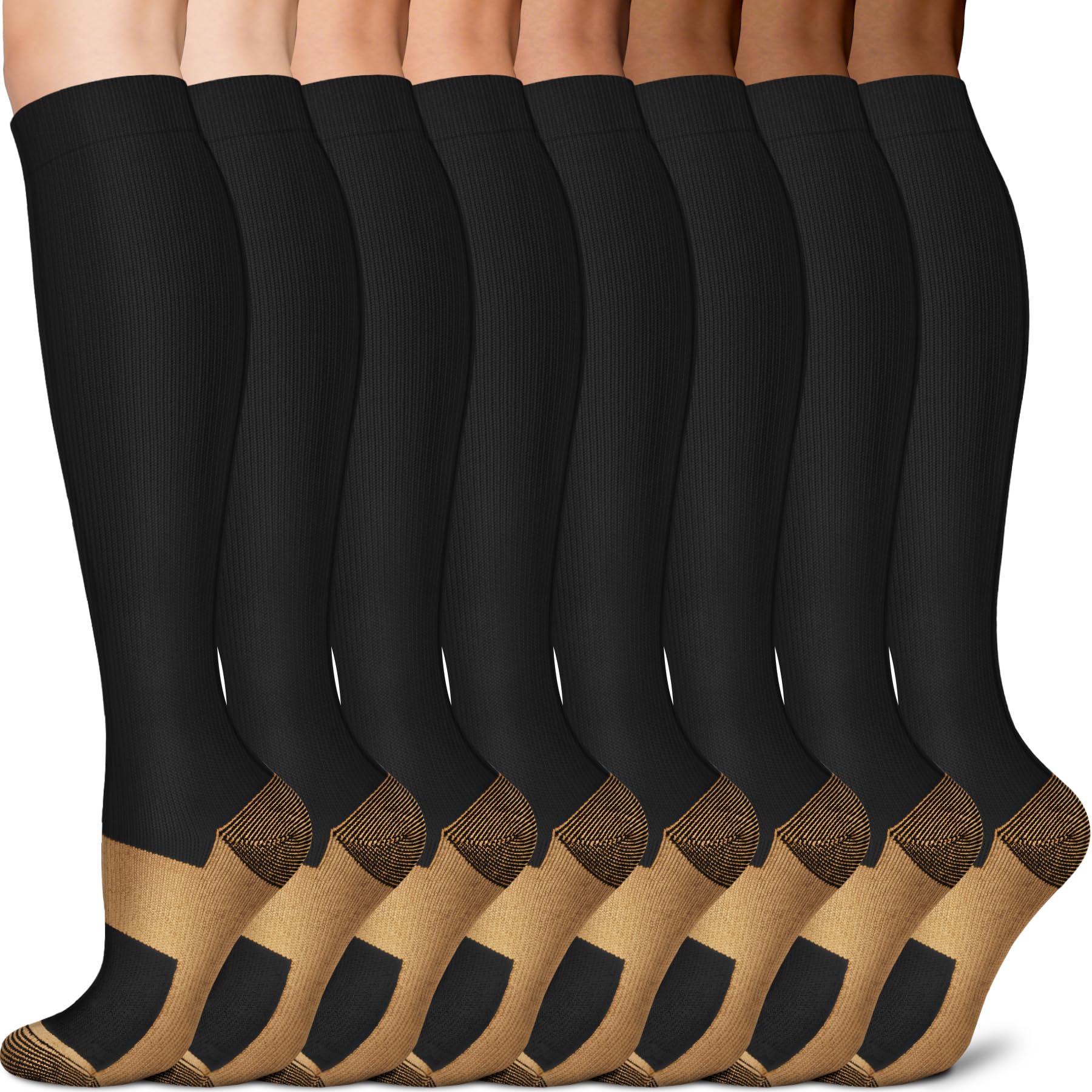
Offers good value with 8 pairs of 15-20 mmHg socks that feel comfortable initially and provide circulation support. However, durability varies – some pairs may develop holes after a few washes, making this a better fit for short-term use or rotation with multiple pairs rather than a long-term investment.
Pros
- Effective 15-20 mmHg compression at a budget-friendly price for an 8-pack
- Comfortable for daily wear with an easy-on design
Cons
- Durability may be inconsistent – some socks can develop holes after limited use
Best for buyers seeking an affordable multi-pack for occasional wear or rotation, and who are comfortable replacing them after a few months.
Best for Premium Single Pair
NEWZILL 20-30 mmHg

This NEWZILL sock offers high-quality construction and fun designs paired with genuine 20-30 mmHg graduated compression. However, the premium-priced single pair and potential fit inconsistencies make it a better fit for those who prefer buying one standout pair over a multi-pack or budget option.
Pros
- High-quality materials with appealing patterns
- Effective 20-30 mmHg compression that stays in place
Cons
- Premium-priced for a single pair, and fit may vary across sizes
Fits the buyer who values style and single-pair quality over cost, provided the fit works for their calf size.
Best for Light Support Style
Bluemaple 6pk No mmHg

This 6-pack is comfortable and well-liked for everyday wear, but lacks a specified mmHg rating — buyers report it feels more like light support or a regular sock than true compression. It’s a good choice for those wanting stylish, lightweight legwear without firm compression, not for circulation needs requiring at least 15 mmHg.
Pros
- Widely liked with strong buyer approval
- Comfortable and well-fitting fit
Cons
- No stated mmHg rating – feels like light support only
A comfortable, stylish option for those who prioritize light leg support and appearance over verified compression, but not suitable for circulation needs requiring a minimum mmHg.
How to Choose
The most critical factor is verifying the mmHg rating – without it, you cannot be sure the sock provides any meaningful compression for circulation.
Compression Level (mmHg)
Graduated compression socks use a pressure gradient to push blood upward. 15–20 mmHg works well for travel and mild swelling, while 20–30 mmHg is stronger and often used for medical conditions or long shifts.
Higher mmHg means more effort to put on and a tighter feel. If you have dexterity issues or sensitive skin, start at 15–20 mmHg. The right level depends on your specific circulation needs and daily routine.
Pack Count vs. Durability
Multi-packs lower the cost per pair, but construction quality varies. Budget 8-packs often use thinner fabric that can develop holes after a few wash cycles. Single pairs from established brands tend to use denser knits that last longer.
If you need a daily rotation for work or travel, a multi-pack is practical – just check recent reviews for durability complaints. For occasional wear, a single high-quality pair may offer better value over time.
Fit and Calf Measurement
Most compression socks rely on calf circumference, not shoe size. A sock that is too tight around the calf can leave painful marks or restrict circulation. Too loose, and it won’t provide the graduated compression needed.
Measure your calf at the widest point and compare to the brand’s sizing chart. Brands like SB SOX offer sizes up to 24-inch calves, while many generic packs only fit medium legs. Ignoring this step is the most common cause of poor results.
Material and Construction
Standard compression socks are made of nylon and spandex blends. Copper-infused fabric is marketed for odor control, but there’s limited evidence it improves compression or circulation. Focus on the weave density and reinforced heel/toe areas.
Durability often comes down to seam quality and fabric thickness. Socks with flat seams and higher denier count (thicker yarn) resist wear better. Heel and toe reinforcement is a strong sign of longer life.
FAQ
Why do my compression socks leave marks on my legs?
Marks usually mean the band is too tight or the sock is not the right size for your calf. Check that the top band doesn’t exceed your calf circumference. If the marks last for more than a few minutes after removing the socks, try a larger size or a brand with adjustable calf fit.
Can compression socks help with swollen ankles from flying?
Yes, graduated compression socks (15–20 mmHg or higher) help prevent fluid from pooling in the lower legs during long flights. They stimulate blood flow and reduce swelling. For best results, put them on before the flight and keep them on until you land.
Are 15-20 mmHg compression socks enough for circulation?
For most travel, light swelling, and daily fatigue prevention, 15–20 mmHg is sufficient. It’s the standard level for over-the-counter medical compression. If you have chronic venous insufficiency, deep vein thrombosis history, or severe edema, a doctor may recommend 20–30 mmHg or higher.
How tight should compression socks feel?
They should feel firm but not painful. The pressure is highest at the ankle and gradually decreases up the leg. You should be able to bend your ankle and walk normally. If they leave deep indents or cause numbness, they are too tight – size up or try a lower mmHg level.