
This post contains affiliate links. We may earn a small commission when you buy through our links — at no extra cost to you.
Most ski gloves claim to be waterproof, but many budget options rely on a simple DWR coating that fails after a few runs in wet snow. The difference between a glove that keeps your hands dry and one that soaks through often comes down to the membrane inside – and the gauntlet that seals snow out.
This guide cuts through the marketing to highlight the gloves that deliver on their promises for different skiing styles and budgets. Whether you ski a handful of days a year in dry powder or you’re on the mountain every weekend in the Pacific Northwest, the right pair exists without requiring a second mortgage.
We focus on the key specs that actually matter: waterproofing type, insulation weight, gauntlet length, and removable liners. The trade-off between warmth and control is real, but knowing what to prioritize makes the choice clear.



Best for Modular Cold-Weather
Dakine Titan Gore-Tex
Key Features
- Waterproofing: Gore-Tex
- Insulation: 110-230g Hi Loft
- Gauntlet Closure: Buckle gauntlet
- Removable Liner: Removable fleece liner
- Price: Mid-Range
The Dakine Titan brings genuine Gore-Tex waterproofing and a removable 280g fleece liner to a price point that typically requires compromises. The liner system lets you run the glove shell alone on warmer days or layer up for sub-freezing conditions, with 110g/230g Hi Loft insulation in the shell adding extra warmth. This modular approach covers a wider temperature range than most fixed-insulation gloves in this tier.
Fit is where the Titan asks for a decision. The removable liners run snug, which helps with dexterity but can feel restrictive for those with larger or wider hands. On the shell side, the buckle gauntlet closure seals well against snow. A small number of buyers have noted seam splitting after several days of use – not a universal issue, but worth checking the stitching on arrival.
This glove suits skiers and snowboarders who want a predictable waterproof barrier and the flexibility to adjust insulation without buying two pairs. If you have very large hands, the liner may be tighter than ideal – consider the shell-only fit for milder days. The occasional seam split means heavy users or those planning multiple seasons of aggressive riding may want to inspect build quality, but for the price, the Titan covers the essentials better than any other mid-range option.
Pros
- Removable liner lets you adapt warmth from 25°F down to 0°F in a single glove.
- Gore-Tex insert provides guaranteed waterproof protection, not just water resistance.
- Mid-range price with premium features – hard to match under $100.
Cons
- Removable liners can feel tight, reducing comfort for those with larger hands.
- Seam splitting may occur with heavy use – inspect stitching early.
For skiers who want Gore-Tex and liner modularity without the premium price, the Titan delivers consistent performance where it counts.
Best for Extreme Cold Dexterity
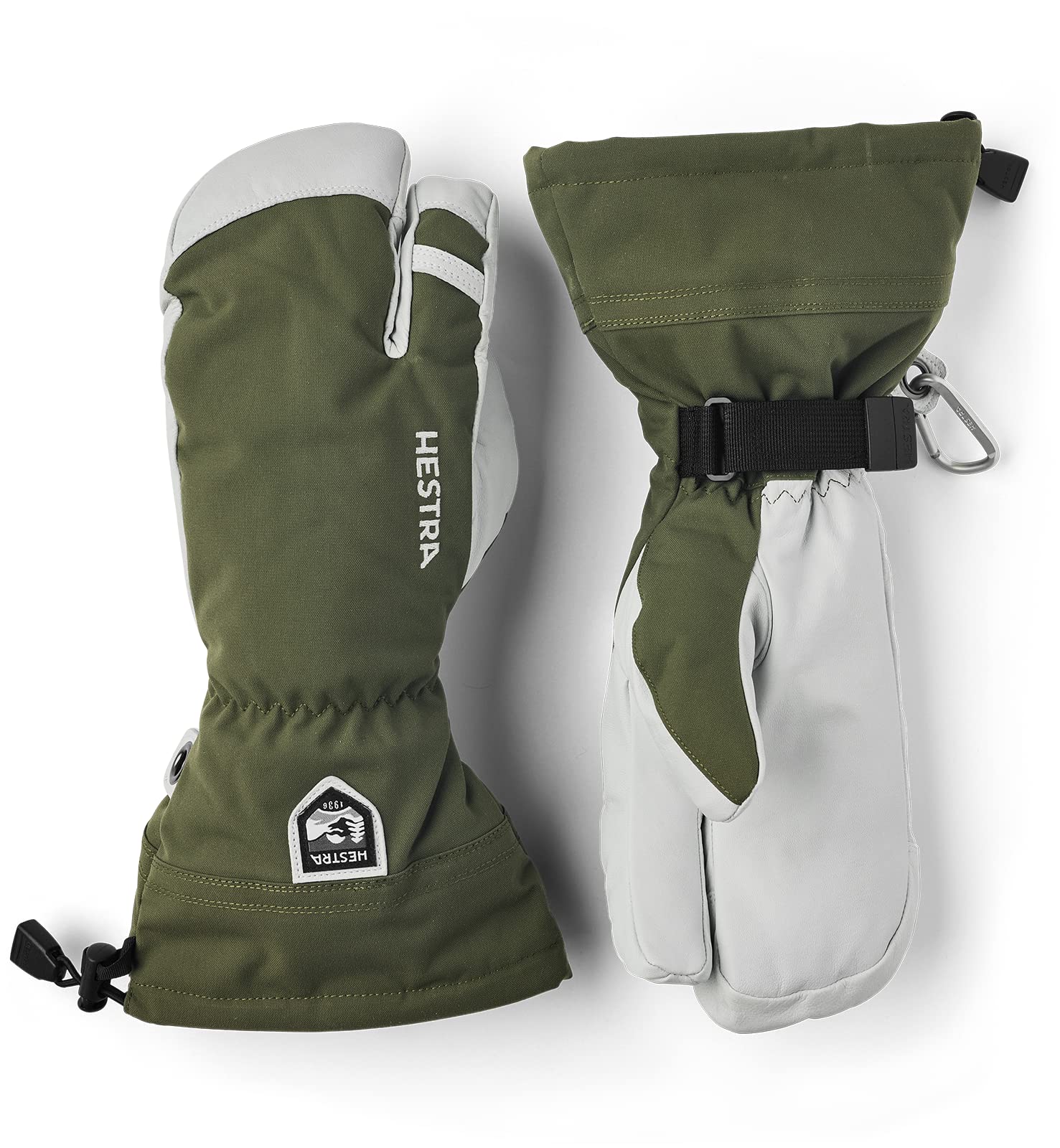
Hestra Heli 3-Finger Glove
Key Features
- Waterproofing: Gore-Tex
- Gauntlet Closure: Long gauntlet drawstring
- Removable Liner: Yes
- Price: Luxury
The 3-finger layout pairs the warmth of a mitten with the dexterity of a separate index finger, making it easier to adjust zippers or handle gear without fully removing the glove. Goat leather palm and Gore-Tex waterproofing provide a grip that holds up across seasons, while the removable liner allows quick drying after a sweaty run.
This glove is built for serious skiers who spend long days in extreme cold – think backcountry tours or lift-served riding below 10°F. On warmer days above 30°F, the insulation may cause hands to overheat, and the premium price puts it out of reach for occasional resort visitors. If raw warmth is your only metric, the Hestra mitt goes even further but locks your fingers together entirely.
Pros
- 3-finger design combines mitten warmth with independent index finger dexterity
- Goat leather palm and Gore-Tex construction hold up well over many seasons
- Removable liner simplifies drying and lets you adjust insulation level
Cons
- Heavy insulation can cause sweating on days above 30°F, limiting its use to deep cold
- Premium pricing makes it a commitment best reserved for dedicated skiers
For skiers who face extreme cold but still need finger dexterity, this is the glove to buy – just reserve it for days below freezing.
Best for Budget Casual Slopes
Krosa 3M Insulation Gloves
Key Features
- Waterproofing: Water-resistant coating
- Insulation: 3M + fleece
- Gauntlet Closure: Elastic + drawstring
- Price: Budget
The Krosa gloves deliver 3M insulation and a soft fleece lining that keeps hands toasty in sub-zero conditions, matching the warmth of gloves costing twice as much. The 4-layer construction and adjustable drawstring seal out cold air effectively, while the conductive leather on thumb and index finger allow basic touchscreen use without removing the glove.
Where these fall short of the top pick is water resistance: the coating handles light, dry snow but will soak through in wet snow or sustained rain. That makes them a solid backup pair for occasional resort days or a primary glove for winter commuters and casual walks — not for skiers who need all-day waterproofing. The elastic wrist and drawstring provide a comfortable fit for most hand shapes, though the lack of a gauntlet means snow can work its way inside if you fall.
Pros
- Sub-zero warmth from 3M insulation and plush fleece lining at a budget price.
- Soft interior and good stitching quality for the price point.
- Adjustable drawstring and elastic wrist keep cold air and snow out during dry conditions.
Cons
- In wet snow or rain, the water-resistant coating gives out after extended exposure — best reserved for dry conditions.
- No gauntlet cuff means loose snow can enter the sleeve during deep powder or falls.
A warm, comfortable glove for dry, cold days at a price that lets you buy a backup pair — ideal for commuters or occasional slope use, not for wet conditions.
Best for Budget Occasional Ski
MCTi 3M Thinsulate Gloves
Key Features
- Waterproofing: PU coating
- Insulation: 3M Thinsulate
- Gauntlet Closure: Long gauntlet drawstring
- Price: Budget
The MCTi gloves deliver steady warmth for their price bracket, thanks to 3M Thinsulate insulation and a long gauntlet with a drawstring that helps keep snow out during casual resort runs. Silicone grip palm adds control for pole handling. This is the most widely-reviewed glove in its category, and the consensus around its warmth-to-cost ratio is strong.
Where these gloves fall short of the top pick is in long-term construction and waterproofing. Seams can split after a few outings under regular use, and the claimed waterproof layer (likely a PU coating) may let moisture through in wet snow rather than holding it at bay. These are not gloves for frequent skiers or anyone expecting a season of hard use in damp conditions. Instead, they suit occasional skiers on a tight budget who prioritize warmth and low cost over durability, as well as snow shoveling or other cold-weather tasks where waterproofing isn’t critical.
Pros
- Warmth is consistent across a wide range of cold temperatures, with 3M Thinsulate doing its job.
- Cost-effective pick for casual winter use without sacrificing insulation.
- Long gauntlet with drawstring helps seal snow out during resort days.
Cons
- Seams can separate after a few days of regular skiing — more of a concern for weekly users than occasional ones.
- Waterproofing is hit-or-miss in wet snow; the glove may soak through rather than stay dry.
A solid warm glove for occasional resort days on a budget, but if you ski frequently or in wet conditions, the top pick’s Gore-Tex shell is worth the extra cost.
Best for Wet Snow Conditions
Gordini Gore-Tex Gauntlet
Key Features
- Waterproofing: Gore-Tex
- Gauntlet Closure: Long gauntlet drawstring
- Price: Mid-Range
The Gordini Gore-Tex Gauntlet delivers genuine Gore-Tex waterproofing at a price that undercuts many competitors. The long gauntlet with drawstring seals out snow effectively, making it a strong option for slushy days or rain-snow mix. Where the top pick adds a removable liner and hand warmer pocket, this glove keeps the design simple and focused on keeping hands dry.
This glove suits skiers and snowboarders who encounter wet conditions regularly, as well as anyone using it for snowblowing or shoveling. The warmth is sufficient for below-freezing temperatures, but those who put in 50+ days a season should consider that seam durability can become an issue after a season or two of heavy use. For moderate use in damp climates, it performs well.
Pros
- Gore-Tex insert keeps hands dry in wet snow and rain.
- Warm enough for below-freezing conditions without overheating.
- Breathable construction reduces sweat buildup during active use.
Cons
- Seams may split after a season or two of regular use.
- Long gauntlet with drawstring can feel bulky for those who prefer shorter cuffs.
A waterproof-focused glove that handles wet snow well, best suited for moderate use in damp climates rather than daily resort riding.
Best for Value Gore-Tex Glove
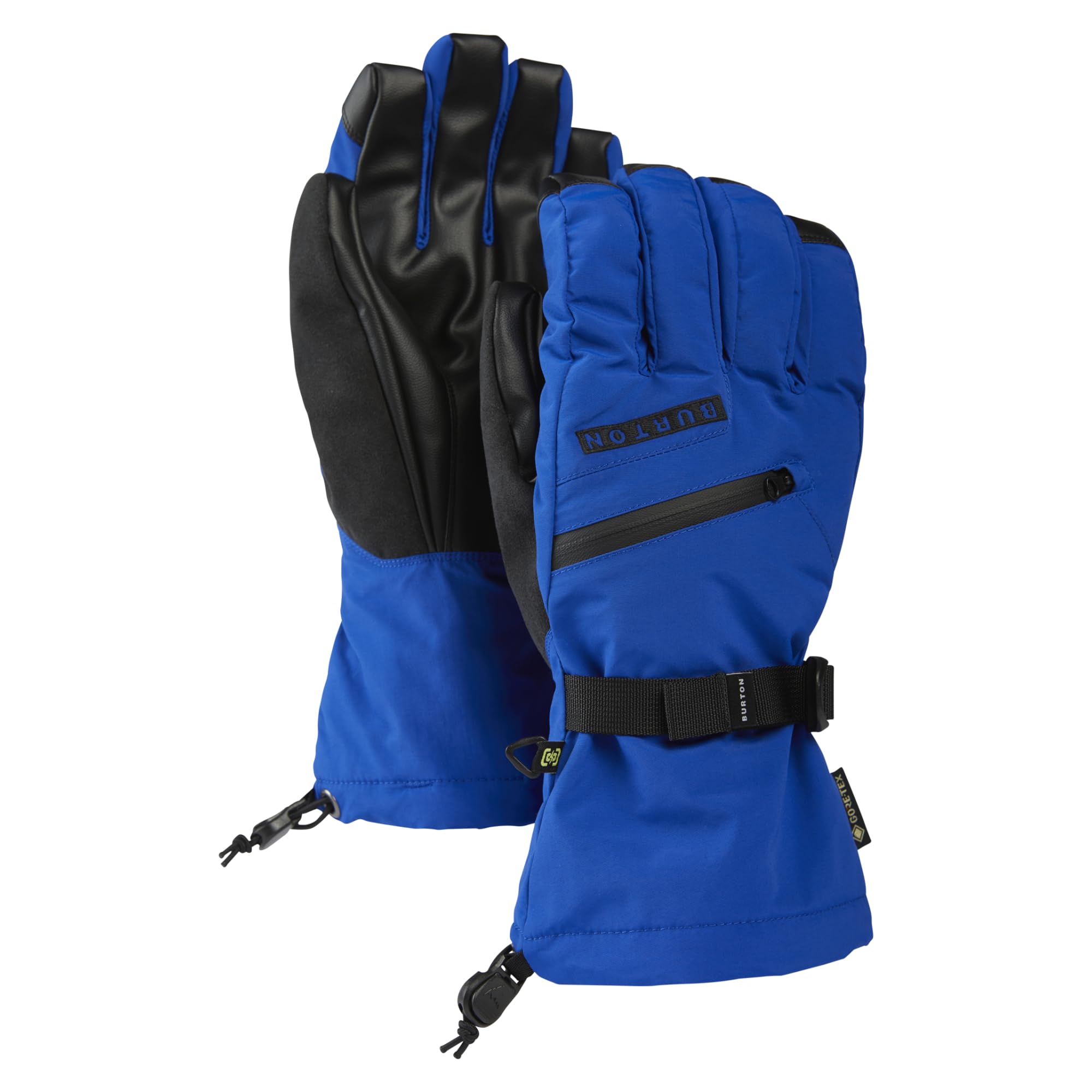
Burton Gore-Tex Men’s Glove
Key Features
- Waterproofing: Gore-Tex
- Gauntlet Closure: Standard gauntlet
- Removable Liner: Yes
- Price: Mid-Range
Burton delivers genuine Gore-Tex waterproofing at a mid-range price, a rarity in this category. The removable liner adds flexibility for drying or adjusting warmth, and the build quality holds up through regular resort use. Where the top pick (Dakine Titan) offers a more accommodating fit, this glove focuses on delivering the core waterproof membrane and modular design for less money.
This glove suits budget-minded skiers and snowboarders who prioritize waterproofing and can work with a snug fit. The fingers run tight – anyone with average or wide hands should order a size up. If you prefer a roomier feel or need extreme-cold performance beyond what the insulated liner provides, consider a different model. But for moderate resort days and wet snow, the Burton delivers reliable Gore-Tex protection without the premium cost.
Pros
- Very warm and durable for the price – Burton quality shines.
- Removable liner adds versatility and speeds up drying after wet days.
- Touchscreen-compatible fingertips allow quick phone use without removing gloves.
Cons
- Fit runs narrow, especially in the fingers – sizing up recommended for normal hand shapes.
For skiers on a budget who want genuine Gore-Tex waterproofing and don’t mind a snug fit, this Burton glove delivers outstanding value.
Best for All-Mountain Resort
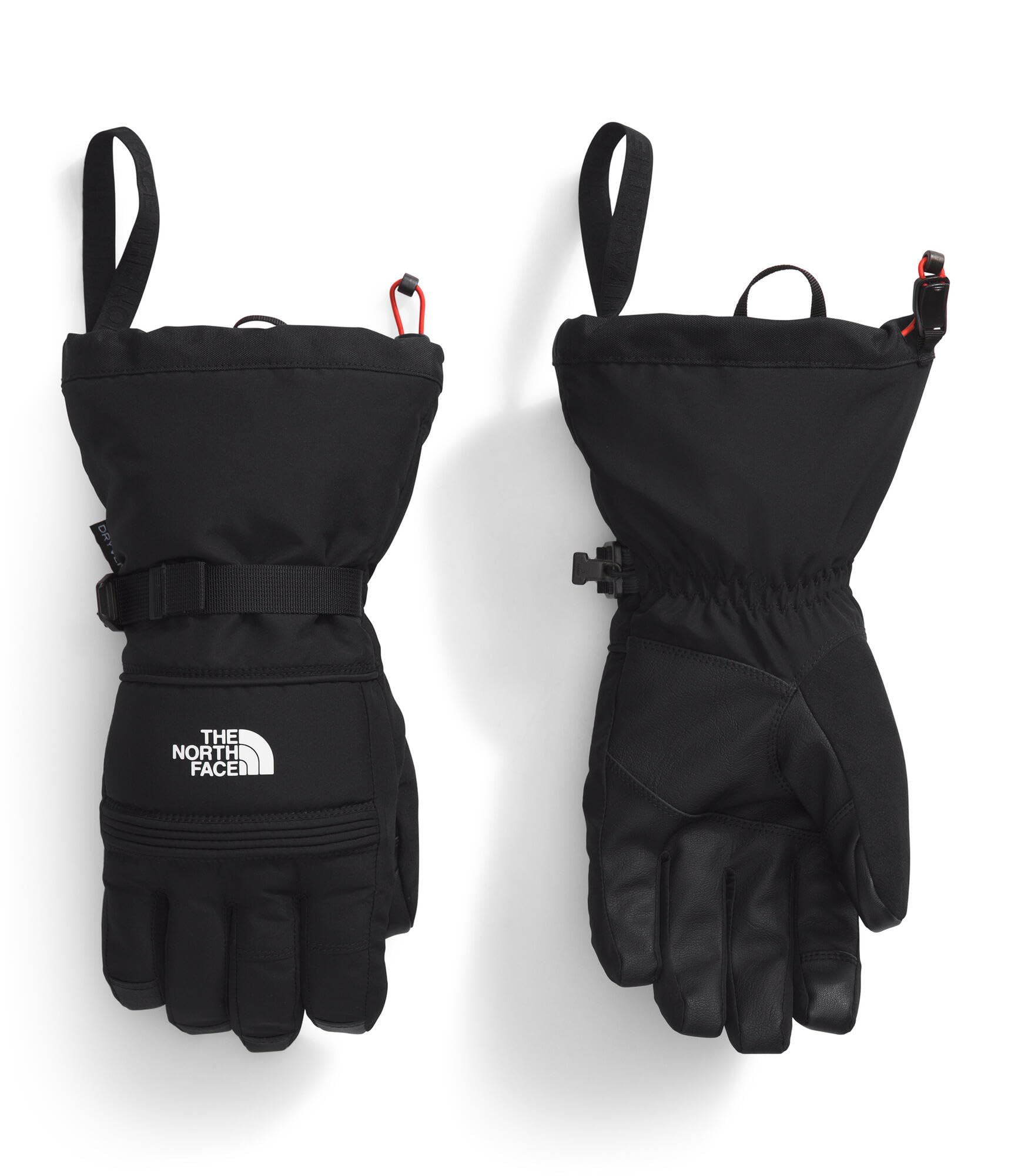
TNF Montana Ski Glove
Key Features
- Waterproofing: DryVent + DWR
- Insulation: 250g Heatseeker
- Gauntlet Closure: Shockcord + elastic
- Price: Mid-Range
The North Face Montana delivers dependable warmth for resort skiing in single-digit to 20°F conditions, with 250g synthetic insulation and a fleece lining that holds up well on cold days. DryVent waterproofing keeps hands dry in steady snow, though the glove lacks extras like a removable liner or hand warmer pocket found on the similarly priced Dakine Titan. Fit may run tight for some, especially those between sizes, so going up a size helps avoid a cramped feel. It’s a solid option for skiers who value straightforward warmth and brand consistency over modular features.
Pros
- Very warm for cold days thanks to 250g insulation and fleece lining.
- Solid build quality with DryVent waterproofing keeps hands dry in snow.
Cons
- Fit may be tight for some; consider sizing up if between sizes.
A good fit for resort skiers who want reliable warmth from a familiar brand and don’t need extra features like a removable liner or hand warmer pocket.
Best for Extreme Cold Mitt
BD Mercury Mitts

Key Features
- Waterproofing: BD.Dry
- Insulation: Primaloft Gold + liner
- Gauntlet Closure: Long gauntlet drawstring
- Removable Liner: Yes
- Price: Premium
Primaloft Gold insulation and removable liner make the Mercury one of the warmest mitts for sub-zero days. The treated leather palm and comfortable lining add to the appeal. However, the proprietary BD.Dry insert is not as reliable as Gore-Tex in heavy snow, and the wrist can feel snug with a watch or extra layers. For consistent all-weather performance, the Hestra mitt or Dakine Titan are better options.
Pros
- Exceptional warmth that handles sub-zero temperatures effectively.
- Soft leather palm and comfortable lining with a removable liner for added flexibility.
Cons
- Proprietary BD.Dry insert may let moisture through in heavy snow compared to Gore-Tex.
- Wrist elastic can feel tight if wearing a watch or multiple base layers.
Best suited for skiers who prioritize warmth over all else and ski in dry, extreme cold conditions rather than wet snow.
Best for Women Small Hands
Burton Women’s Gore-Tex Glove
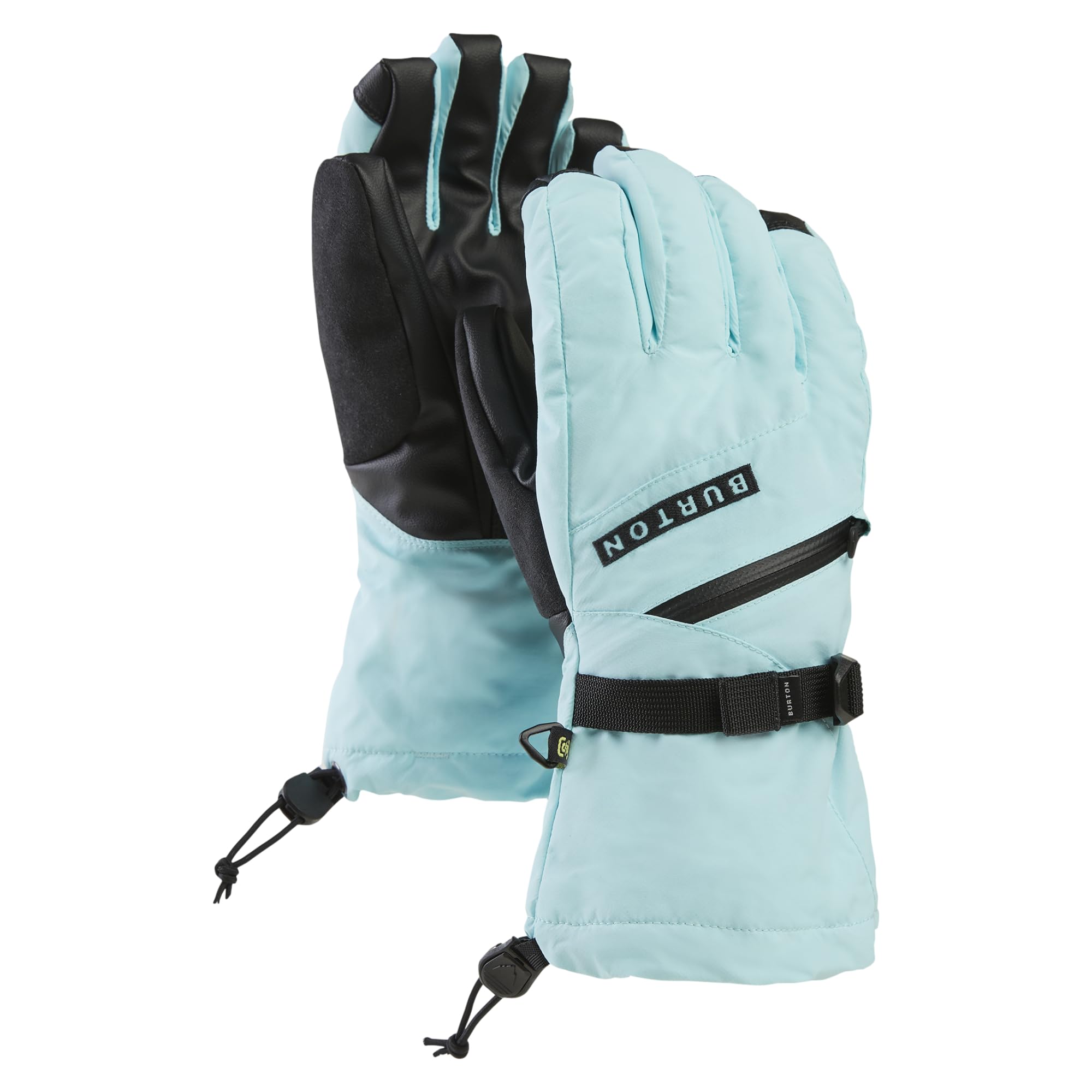
Burton’s women-specific Gore-Tex glove delivers reliable warmth for resort days in the 10–20°F range and has a clean, attractive look. The removable liner and touchscreen compatibility add everyday convenience. However, finger length runs short – women with average or longer fingers will find the fit restrictive, making this best suited for those with smaller hands. That fit limitation keeps it from working for a broader audience, so check your hand size before buying.
Pros
- Warm for resort skiing in moderate cold – comfortable down to 10-20°F.
- Good quality build and attractive appearance.
Cons
- Finger length runs short – women with average or longer fingers will find the fit too snug.
Best for women with small hands who need a Gore-Tex glove for moderate resort days without spending a premium.
Best for Cold Resort Mitt
TNF Montana Ski Mitt
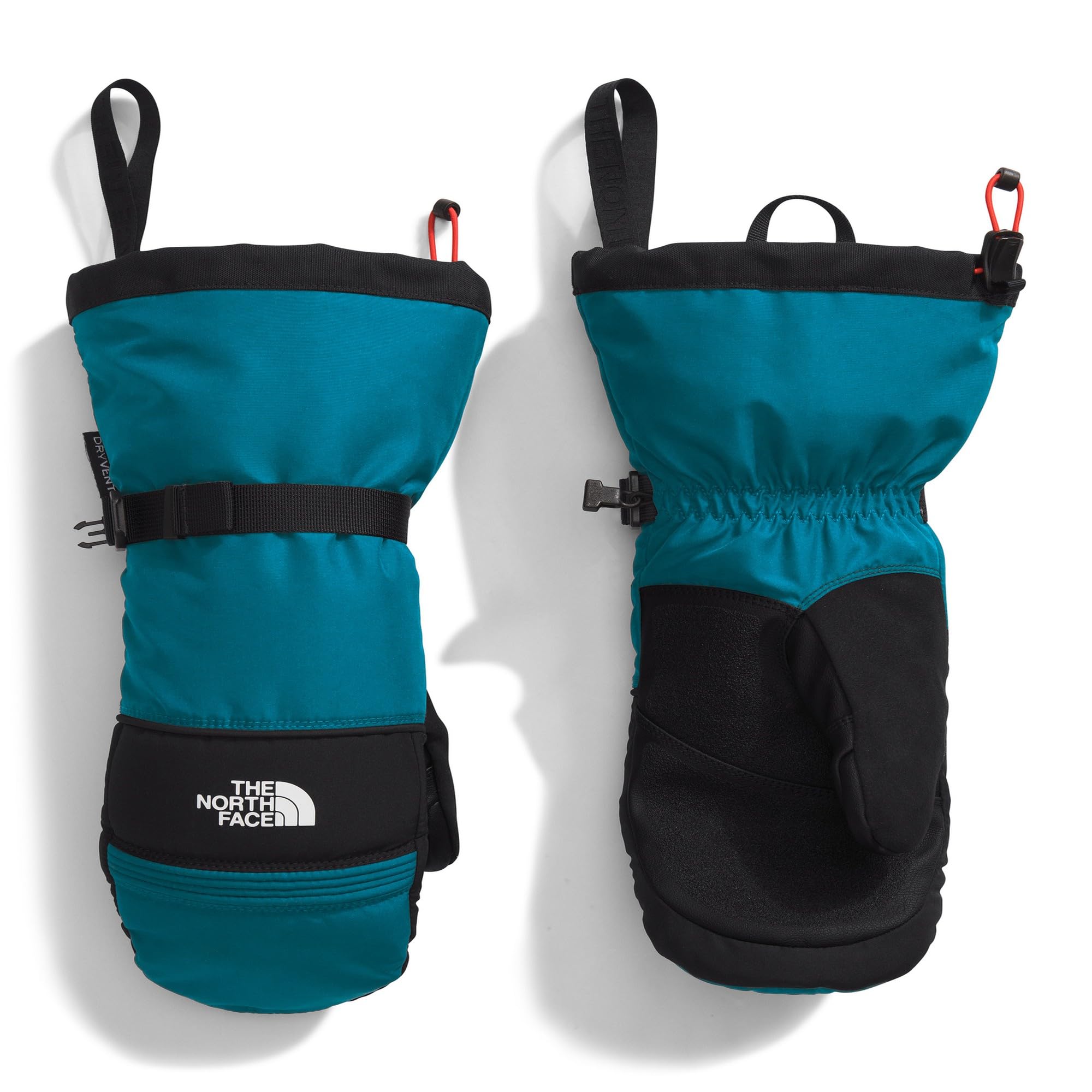
Key Features
- Waterproofing: DryVent + DWR
- Insulation: 250g Heatseeker
- Gauntlet Closure: Shockcord hem
- Price: Mid-Range
The North Face Montana Ski Mitt delivers dependable warmth and solid build quality at a mid-range price. The mitt design limits dexterity, so adjusting straps or using a phone takes extra effort – a tradeoff well suited to snowboarders who keep hands buried in gloves. It lacks the modular features of the Dakine Titan and the premium leather feel of Hestra mitts, placing it as a budget-friendly alternative for cold resort days.
Pros
- Keeps hands warm on cold resort days with balanced insulation.
- Well-constructed from quality materials for long-lasting use.
Cons
- Mitt design limits dexterity – not suitable for tasks requiring finger movement.
Best for snowboarders who want maximum warmth on cold resort days and rarely need to adjust buckles or poles.
Best for Casual Winter Use
ihuan Waterproof Ski Gloves
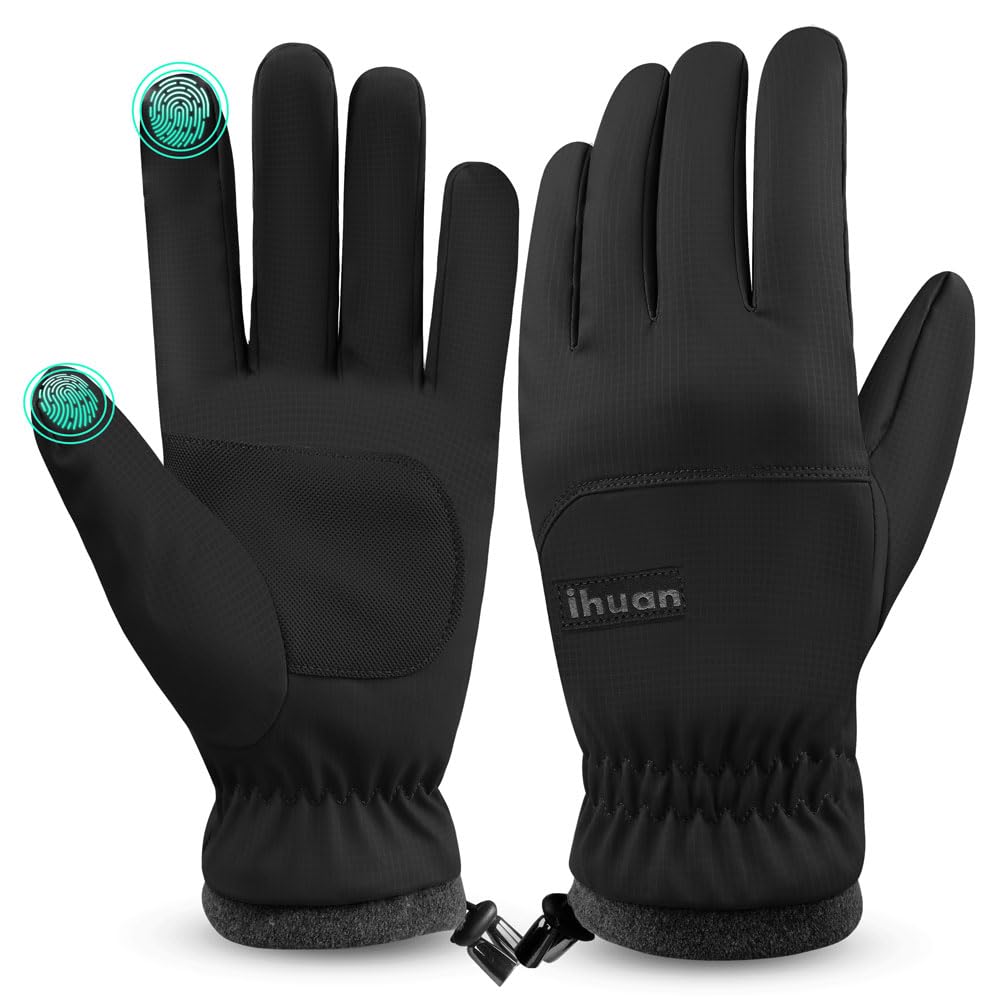
Key Features
- Waterproofing: Water-resistant coat
- Insulation: Fleece lining
- Gauntlet Closure: Drawstring cuff
- Price: Budget
For casual winter walks and dry-weather commutes, this glove delivers soft fleece warmth and touchscreen access across all fingers at a budget-friendly price. However, its water-resistant coating won’t hold up in wet snow or heavy precipitation, and the cuffs lack waterproofing entirely. Sizing runs small enough that ordering one size up is advisable. These limitations make it unsuitable for skiing or snowboarding, but for mild errands under dry cold conditions, the value is clear.
Pros
- Strong warmth and comfort for moderate cold at an entry-level price.
- Soft fleece lining and all-finger touchscreen for everyday convenience.
Cons
- Water resistance is limited; coating won’t handle wet snow or heavy precipitation.
Best for occasional dry-cold use; if wet snow is likely, the Krosa offers better protection for a small price increase.
Best for Premium All-Mountain
Hestra Heli 5-Finger Glove

Key Features
- Waterproofing: Gore-Tex
- Insulation: Removable Carvico
- Gauntlet Closure: Long gauntlet
- Removable Liner: Yes
- Price: Premium
The Hestra Heli 5-Finger Glove delivers exceptional durability with its goat leather palm and Gore-Tex construction, offering a good balance of warmth and dexterity for advanced skiers. Sizing runs large, so consulting the size chart and considering a size down is wise. It’s more expensive than the Dakine Titan and not as warm as the 3-finger or mitt versions, but skiers who value craftsmanship and long-term longevity will find it a worthwhile investment.
Pros
- Goat leather palm and Gore-Tex construction withstands seasons of use.
- Five-finger design offers good dexterity without sacrificing warmth for most conditions.
Cons
- Sizing runs large; checking the size chart and possibly ordering a size down is recommended.
Best for skiers who value craftsmanship and durability over cost or maximum warmth, and are willing to manage the sizing.
How to Choose
The biggest mistake buyers make is assuming ‘waterproof’ on a budget glove means it will keep your hands dry in wet snow – it usually doesn’t.
Waterproofing Type
Gore-Tex inserts provide a guaranteed waterproof barrier that also breathes, preventing sweat buildup inside the glove. Cheaper DWR coatings or PU layers lose effectiveness after a few hours of wet snow or repeated flexing.
If you ski in the Pacific Northwest or other wet climates, invest in a glove with a Gore-Tex or equivalent membrane. For dry powder days, a water-resistant coating may be sufficient.
Insulation Weight and Type
Insulation is measured in grams per square meter – higher numbers mean more warmth but also bulk. 200g+ insulation is suitable for sub-zero temperatures, while 100-150g works for mild winter days.
Synthetic fills like 3M Thinsulate and Heatseeker retain warmth even when wet, unlike down. Removable liners let you adjust warmth across seasons.
Dexterity and Touchscreen
Thicker insulation and waterproof layers reduce finger mobility. Gloves with conductive tips on thumb and index allow basic phone use, but full-hand touch sensitivity is rare even in premium models.
If you need to adjust bindings or operate a phone frequently, a 5-finger glove offers better dexterity than a mitt. For pure warmth, mittens are warmer but sacrifice all finger control.
Gauntlet Length and Closure
A long gauntlet that extends past your jacket cuff is the primary defense against snow getting inside your sleeve during a fall. Elastic or drawstring closures at the wrist help seal the opening.
Short cuffs are fine for mild conditions but will let snow in during deep powder or crashes. Always check that the gauntlet can cinch snugly over your jacket.
Removable Liner
A removable inner liner lets you dry the glove faster between ski days and wear the liner alone on warmer spring days. It also adds versatility, turning a single glove into a three-season piece.
However, removable liners can shift or bunch inside the glove, and some add bulk that reduces dexterity. Try them on with the liner inserted to ensure the fit still works.
FAQ
Why do my ski gloves get wet inside even though they say waterproof?
Many budget gloves use a DWR coating that resists light moisture but fails under prolonged wet snow or pressure from gripping poles. True waterproofing requires a sealed membrane like Gore-Tex. If your gloves are labeled ‘water-resistant’ rather than ‘waterproof’, they will soak through in wet conditions.
Can you wash Gore-Tex ski gloves in the washing machine?
Yes, but use a gentle cycle with a tech wash detergent designed for waterproof fabrics. Do not use fabric softener or bleach. After washing, tumble dry on low heat or air dry – heat helps reactivate the DWR coating. Always check the manufacturer’s care label first.
What temperature rating do I need for skiing in single-digit weather?
For temperatures between 0°F and 10°F, look for gloves with at least 200g of synthetic insulation and a windproof shell. Mittens or a 3-finger design retain more heat than 5-finger gloves. If you ski in sub-zero conditions, a premium mitt like the Hestra Heli with a removable liner is ideal.
Are mittens warmer than gloves for snowboarding?
Yes, mittens are significantly warmer because your fingers share heat rather than being isolated in individual slots. This design also allows for thicker insulation. The trade-off is near-total loss of finger dexterity – you’ll need to remove the mitten to adjust bindings or use your phone.