
This post contains affiliate links. We may earn a small commission when you buy through our links — at no extra cost to you.
Most lightweight travel jackets promise waterproofing but deliver only light drizzle protection. The difference between a jacket that beads water for an hour and one that soaks through in ten minutes often comes down to materials and construction — not the label on the tag. Sizing varies wildly across brands, with many running snug in the hips and chest, making layering a gamble.
This guide focuses on jackets that actually perform for travel: packable enough for carry-on, water-resistant enough for city showers, and warm enough for cool evenings without adding bulk. We’ve prioritized verified water resistance from buyer feedback, consistent fit advice, and the trade-off between breathability and weather protection.
The choice often comes down to versatility versus breathability. A softshell with fleece lining handles both rain and cool temperatures in one layer, while a more breathable option may require a separate rain shell. Your travel style and expected weather determine which side of that balance makes sense.


Best for Cool Rainy Cities
Outdoor Ventures Rain Softshell
Key Features
- Water Resistance vs. Waterproof: Water-resistant, not fully waterproof
- Packability: Folds, no pouch
- Weight and Warmth Balance: Lightweight, fleece lined
- Fit Consistency: Tailored, waist cinch
- Hood Design: Fixed with drawstrings
- Price: $$
This softshell combines fleece warmth with water resistance that handles light rain consistently, so you can wear one jacket from the airport to an evening walk. The tailored fit and waist cinch give a polished look that suits urban exploration.
Ideal for travelers who want a single jacket for cool, damp conditions without layering. The water resistance holds up in drizzle and short showers, but prolonged heavy downpours may eventually seep through the shoulders — best for city travel and light outdoor use, not all-day exposure.
Pros
- Fleece lining provides warmth without an extra layer
- Water-resistant outer effectively sheds light rain and wind
- Tailored fit with waist cinch flatters without restricting movement
Cons
- In heavy downpours, water may eventually seep through the shoulder seams
For travelers who value a single-layer solution that balances warmth, rain protection, and style, this jacket fits the bill — keep an umbrella handy for extended rain.
Best for Cool Dry Trips
Amazon Essentials Packable Puffer
Key Features
- Water Resistance vs. Waterproof: Water-resistant only
- Packability: Packs into pouch
- Weight and Warmth Balance: Warm, lightweight
- Fit Consistency: Runs slightly small
- Hood Design: Elasticized hood
- Price: $
The Amazon Essentials Packable Puffer delivers genuine warmth without the bulk of a traditional winter coat. It compresses into its included pouch, taking up minimal space in a suitcase — a practical advantage for carry-on travel. Customer feedback highlights a warmth-to-weight ratio that competes with jackets costing twice as much. This jacket fits budget-minded travelers who need a compact layer for cool, dry conditions. However, its water-resistant finish handles only light drizzle; steady rain will soak through, and the regular fit runs slightly snug — ordering one size up may be necessary for layering.
Pros
- Lightweight warmth that packs into a small pouch — ideal for travel and layering.
- Budget-friendly price point with performance that rivals more expensive jackets.
- Comes with its own storage pouch for easy suitcase organization.
Cons
- Regular fit runs snug through waist and hips — may require sizing up for a comfortable layering fit.
A warm, packable layer for budget travelers who can work around the water resistance limits and plan to size up.
Best for Active Hikes
33,000ft Fleece Softshell
Key Features
- Water Resistance vs. Waterproof: Water-resistant, beads light rain
- Packability: Folds, no pouch
- Weight and Warmth Balance: Light, fleece lined
- Fit Consistency: Runs small
- Hood Design: Fixed with drawstrings
- Price: $$
The 33,000ft softshell uses a fleece lining to deliver warmth without bulk, making it a comfortable layer for hiking or outdoor excursions in moderate climates. The water-resistant surface handles light rain and drizzle, though heavy downpours will eventually wet through. Sizing can run small for some body types, so checking measurements before ordering is advisable.
This jacket suits active travelers who need a breathable, wind-resistant shell for days with variable conditions—not for steady rain or extended exposure. If you prioritize staying dry in a downpour, a fully waterproof hardshell is a better fit. For anyone who runs warm and wants a single layer that cuts wind and sheds light precipitation, the 33,000ft delivers.
Pros
- Fleece lining adds cozy warmth without the bulk of a puffy.
- Water-resistant finish beads light rain well during short drizzles.
- Stitching and zippers feel solid for routine outdoor use.
Cons
- Sizing can run small for some body types, especially when adding a mid-layer.
A solid mid-range softshell for active travelers who value breathability over full waterproofing — just check the fit before buying.
Best for Urban Style
Kikibell Striped Raincoat
Key Features
- Water Resistance vs. Waterproof: Water-resistant, light rain
- Packability: Folds, moderate bulk
- Weight and Warmth Balance: Lightweight shell
- Fit Consistency: True to size
- Hood Design: Fixed hood
- Price: $$
The Kikibell’s tailored cut and unique striped lining give it the appearance of a proper coat, not a generic rain shell. It sheds light rain and wind reliably enough for a walk between cafes or a quick dash to a museum, and the construction feels substantial for the price. However, the lack of breathability means heat buildup is noticeable during any sustained activity or in moderate warmth.
This jacket suits style-conscious travelers who want a rain layer that looks intentional in travel photos and city settings. It is not designed for hiking, humid destinations, or packing into a small pouch – plan to carry it over the arm or wear it as a top layer when the weather demands something more than a windbreaker.
Pros
- Distinctive striped lining gives the jacket a premium, dressed-up look.
- Effective at shedding light rain and wind during urban travel.
- Quality stitching and comfortable fit suggest good longevity.
Cons
- In warmer conditions or during brisk walking, heat can build up inside.
If your travel wardrobe demands a rain jacket that looks like a fashion piece, this Kikibell delivers – just keep it for cool, light-rain days.
Best for Light Showers
Diamond Candy Rain Jacket
Key Features
- Water Resistance vs. Waterproof: Inconsistent, light drizzle
- Packability: Rolls up small
- Weight and Warmth Balance: Shell only
- Fit Consistency: Runs small in hips
- Hood Design: Removable hood
- Price: $
The Diamond Candy jacket delivers on portability and style at a budget-friendly price. Its lightweight build and multiple color options make it a favorite for travelers who want an emergency layer that looks good. However, water resistance is inconsistent — the jacket can wet through in moderate rain, making it better suited for short trips with an umbrella nearby. The narrow hip fit also means some may need to size up for full comfort.
Pros
- Lightweight and packs small for easy carry-on travel.
- Budget-friendly with a wide selection of colors and styles.
- Great value considering the low price point.
Cons
- In a steady drizzle, the jacket may wet through after 20 minutes — more of an emergency backup than a primary rain shell.
- If you carry weight in your hips, the narrow cut can feel restrictive; sizing up is advisable.
A smart pick for budget travelers who pack light and don’t mind grabbing an umbrella when the rain picks up — not a replacement for a proper rain shell.
Best for Max Compression
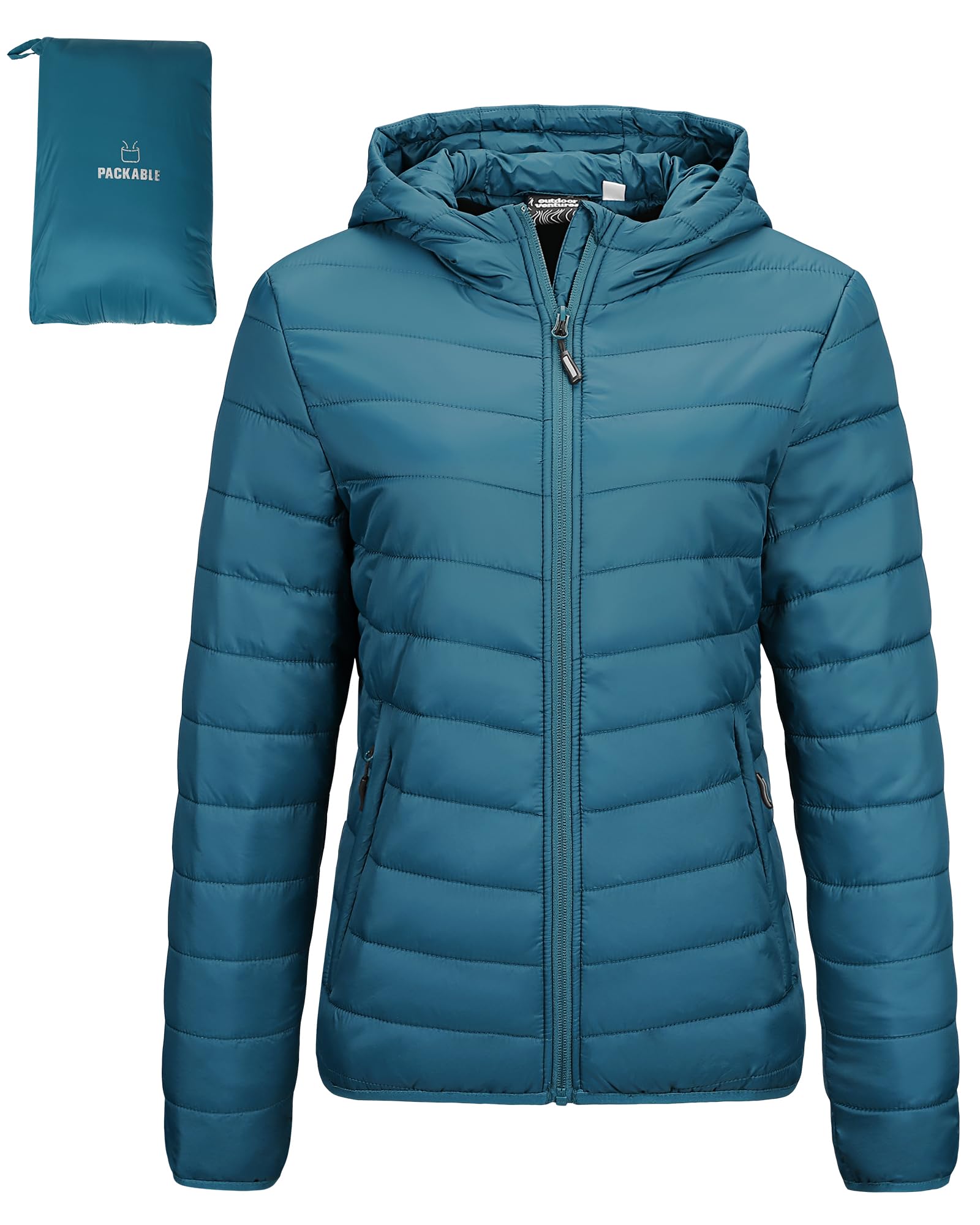
Outdoor Ventures Puffer
Key Features
- Water Resistance vs. Waterproof: Water-resistant only
- Packability: Packs into own pocket
- Weight and Warmth Balance: Warm, synthetic fill
- Fit Consistency: Inconsistent across colors
- Hood Design: Elasticized hood
- Price: $$
Built-in storage pouch compresses the jacket to a small bundle — a real space-saver for carry-on luggage. The synthetic insulation handles cool weather (40–60°F) comfortably, though the outer shell is only water-resistant; expect it to wet through in steady rain. Fit inconsistency across colors means you may need to try two sizes to find the right one. This puffer is best for travelers who need a warm, compressible layer for dry, cool trips, not as a rain jacket.
Pros
- Packs into its own storage pouch, compressing small for carry-on travel.
- Lightweight synthetic insulation keeps you warm in 40–60°F conditions without bulk.
Cons
- Fit can vary noticeably between color options, making size selection a bit of a gamble.
If packability is your top priority, this puffer delivers warmth and portability — just be prepared to double-check sizing for your preferred color.
Best for Slim Rain Jacket
DECKTIN Raincoat

Key Features
- Water Resistance vs. Waterproof: Light rain, not sustained
- Packability: Lightweight, foldable
- Weight and Warmth Balance: Shell only
- Fit Consistency: Slim fit
- Hood Design: Detachable hood
- Price: $
This DECKTIN raincoat offers a slimming cut and detachable hood that look more polished than typical budget shells. It packs down small for travel and handles light showers effectively. However, water resistance can falter under sustained rain — not a jacket for all-day downpours or consistently wet climates.
Pros
- Lightweight and packable design makes it easy to stow in a carry-on.
- Slim cut flatters without the bulk of standard rain shells.
Cons
- In steady rain, the jacket can wet through after extended exposure — better suited for light showers than heavy downpours.
A stylish travel companion for brief rain, but not a substitute for a dedicated waterproof shell in wetter conditions.
Best for Long Coverage
LOMON Trench Raincoat
Key Features
- Water Resistance vs. Waterproof: Moderate rain
- Packability: Longer, takes space
- Weight and Warmth Balance: Medium weight
- Fit Consistency: Runs small, size up
- Hood Design: Fixed hood
- Price: $
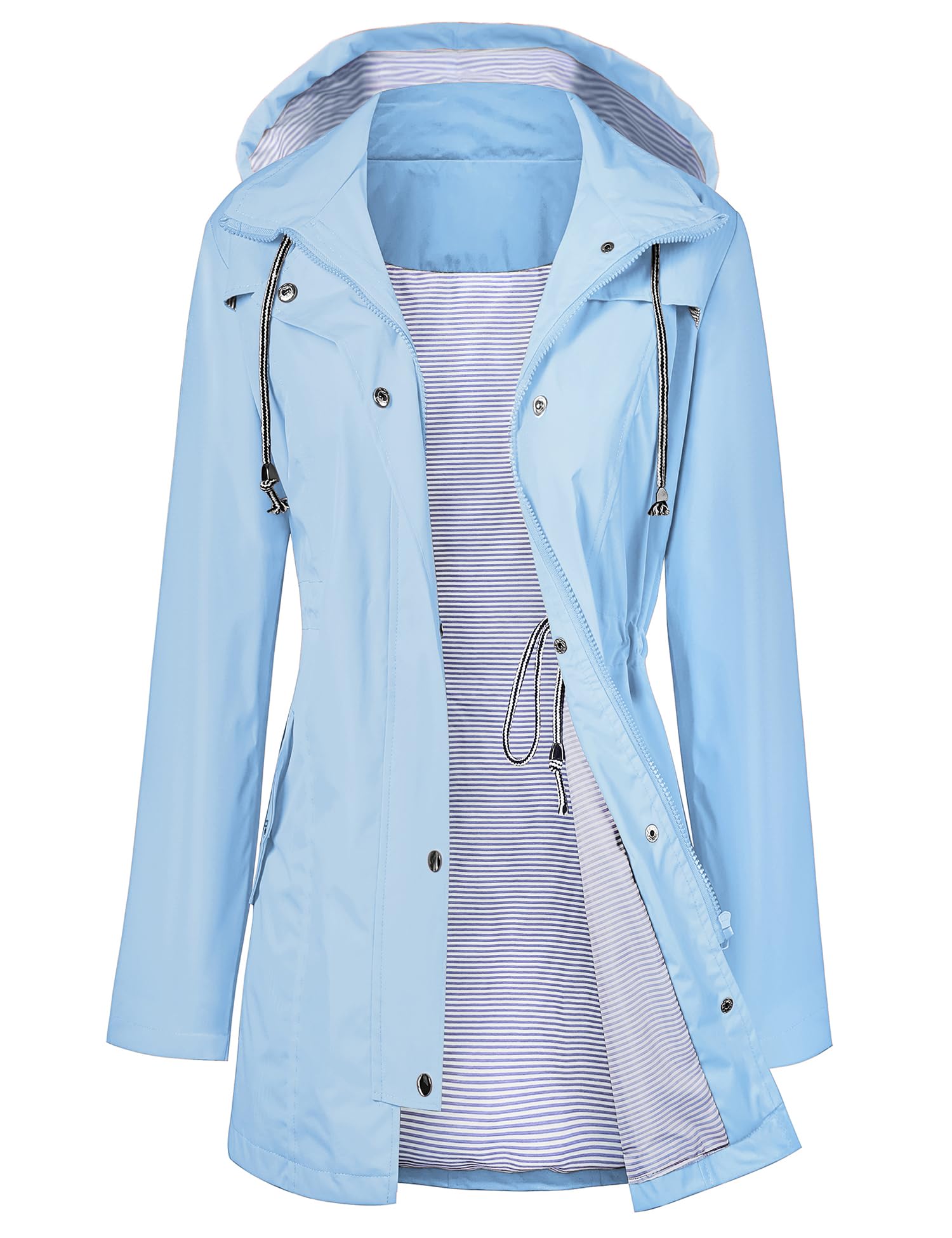
The LOMON trench offers good water resistance for moderate rain and a longer cut that protects the seat. Its roomy fit allows layering, but sizing runs small in some cases — ordering up is recommended. The length and cinched waist make it a stylish option for urban travelers who prioritize coverage over packability; if stowing space is critical, consider the top pick for pure rain protection.
Pros
- Stylish trench design with cinch waist
- Good water resistance for moderate rain
Cons
- Sizing can run small — ordering up is recommended if layering
Best for travelers who value a longer, stylish raincoat and are willing to order up a size; less suited for ultralight packing.
Best for Cold Dry Travel
Amazon Essentials Sherpa Puffer

Key Features
- Water Resistance vs. Waterproof: Water-resistant
- Packability: Bulkier, no pouch
- Weight and Warmth Balance: Warm, sherpa lined
- Fit Consistency: Variable sizing
- Hood Design: Fixed hood
- Price: $
The sherpa lining keeps you cozy in chilly weather, and the lightweight build doesn’t weigh you down. However, it lacks a compression pouch and offers only water resistance — not waterproofing — making it a poor fit for travel where packability and rain protection are priorities.
Pros
- Soft sherpa lining delivers noticeable warmth without bulk.
- Budget-friendly price with quality that exceeds expectations.
Cons
- Lacks a compression pouch, so it takes up significant luggage space.
Best for travelers who drive to cold destinations and prioritize comfort over compression — not for carry-on or rainy travels.
Best for Newer Design
33,000ft Softshell Rain
Key Features
- Water Resistance vs. Waterproof: Light rain, new model
- Packability: Folds, no pouch
- Weight and Warmth Balance: Lightweight shell
- Fit Consistency: Slightly small
- Hood Design: Fixed hood
- Price: $$
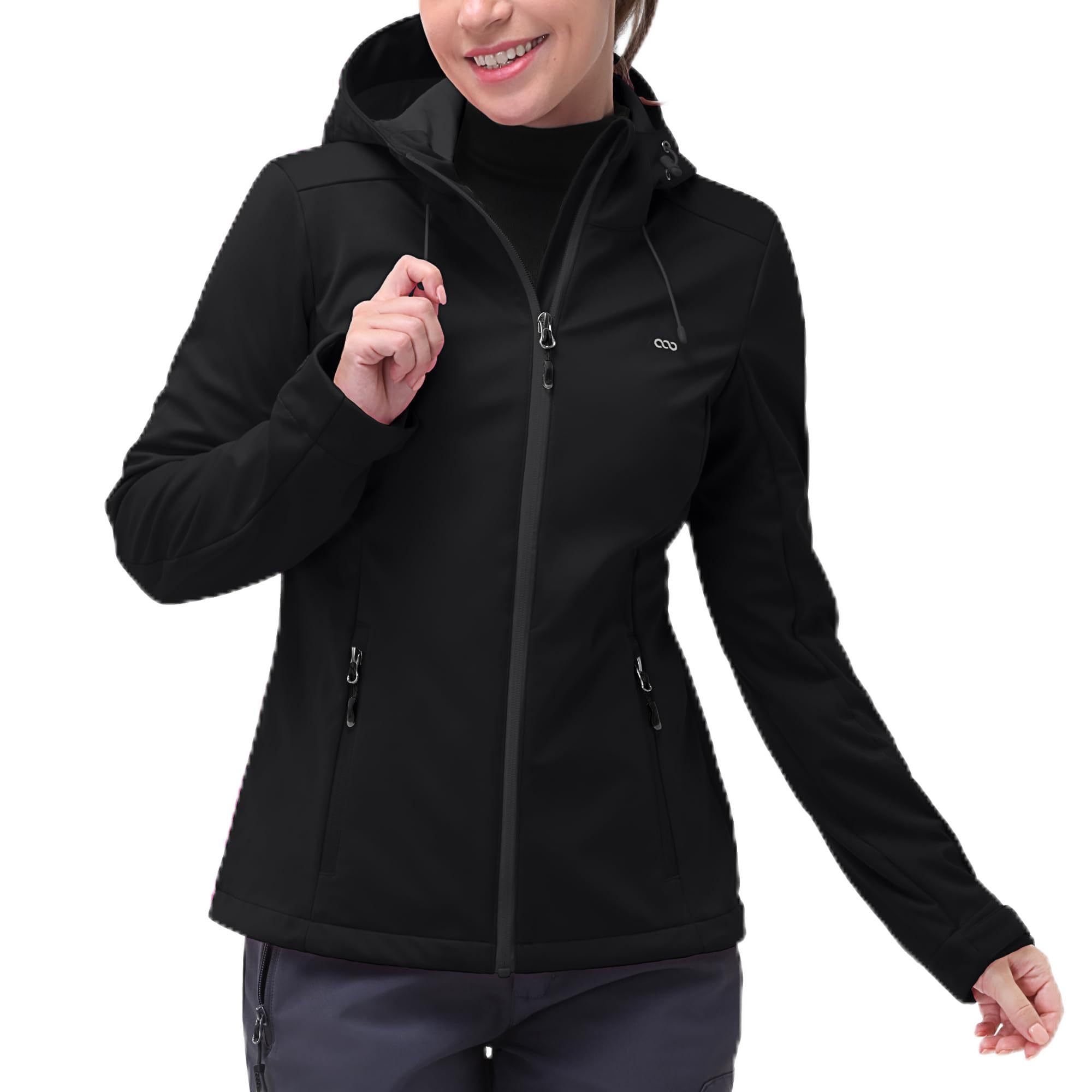
This softshell offers effective water beading for light rain and a soft, modern fabric that feels nice against the skin. The fit is comfortable with room for a base layer, though some may find the sizing a touch snug. It’s a newer model with less long-term track record compared to the more established softshell in this set, so its durability over many trips remains to be seen.
Pros
- Good water resistance for light rain.
- Well-constructed with a soft, modern texture.
Cons
- Sizing can run small for some builds; consider ordering a size up.
This is a suitable pick for travelers who want a modern softshell with good light-rain performance, provided you’re comfortable accepting that its long-term toughness isn’t yet established.
How to Choose
The most important insight: almost every budget ‘waterproof’ jacket under $50 is actually water-resistant at best — the key is understanding which jackets handle real rain and which are just windbreakers.
Water Resistance vs. Waterproof
The difference lies in fabric coatings and seam sealing. True waterproof jackets use taped seams and a waterproof membrane (like Gore-Tex or a branded equivalent). Budget options rely on a DWR (durable water repellent) coating that wears off over time and fails under sustained rain. For travel, you need to decide: occasional light showers (DWR is fine) or all-day downpour (invest in a sealed shell).
Most jackets in the $35–55 range use DWR only. Buyer reviews consistently show that after 20–30 minutes of moderate rain, water begins to soak through the shoulders and zippers. If your trip includes hiking in rain, skip cheap rain shells and look for verified water resistance from thousands of reviews.
Packability
Packability isn’t just about stuffing into a pouch — it’s about compression without heat damage. Jackets that fold into their own pocket (like some puffers) achieve high compression by using thin synthetic insulation. The trade-off is that repeated compression can reduce loft over time. For travel, the best packable jackets weigh under 12 ounces and compress to the size of a small water bottle.
Softshells and lined jackets generally don’t pack as small. If you’re flying with only a carry-on, a packable puffer or rain shell is the smarter choice. For road trips, a bulkier jacket is fine.
Weight and Warmth Balance
Weight determines whether you’ll actually carry the jacket. A 10-ounce puffer provides warmth in 40–60°F without adding load. But warmth comes from insulation type: down (best weight-to-warmth) vs synthetic (better when wet). For travel in variable weather, synthetic insulation is more reliable because it retains warmth even if damp.
The hidden trade-off: jackets that feel very lightweight often have thin insulation — they won’t keep you warm below 50°F. Look for a fleece lining or 60g+ synthetic fill if you expect cold evenings.
Fit Consistency
Sizing is the most common complaint across all budget jackets. Many run small in the hips and chest because they’re designed for a slim, non-curvy silhouette. The consequence: you can’t layer a sweater underneath without feeling restricted. Always check size recommendations in reviews — a jacket that fits perfectly in the shoulders may be too tight in the waist.
Some brands (like Ohio-based Outdoor Ventures) have a more tailored cut; others (like budget rain shells) are boxy. If you plan to wear the jacket over a fleece, order one size up. If you prefer a trim fit, order your regular size but avoid thick layers.
Hood Design
A hood that stays put in wind is different from a hood that merely exists. Look for drawstrings or elastic adjustments that cinch the hood to your head. Stowable hoods that fold into the collar are convenient for city use but often lack adjustability, so they flap in gusts. Fixed hoods with wire brims offer better protection but can’t be removed.
For travel, a hood should be large enough to fit over a hat but not so large that it blocks peripheral vision. Adjustable toggles are a small feature that makes a big difference in comfort during windy city walks.
FAQ
Is the Diamond Candy rain jacket actually waterproof or just water-resistant?
It’s water-resistant, not waterproof. Many buyers report it soaks through after 15–20 minutes of moderate rain. Treat it as a lightweight windbreaker for light drizzle and carry an umbrella for heavier showers.
Which lightweight travel jacket packs down smallest for carry-on luggage?
The Outdoor Ventures Puffer (packs into its own pocket) and the Amazon Essentials Packable Puffer (comes with a pouch) are the most compressible, shrinking to about the size of a paperback book. Both are ideal for carry-on where space is tight.
Why do so many rain jackets run small in the hips and chest?
Many budget rain jackets use a straight cut designed for a narrow frame, which leaves little room for hips or layering. Size up if you have a curvy shape or plan to wear a sweater underneath. Checking recent reviews for sizing advice is more reliable than the brand’s size chart.
Can a softshell jacket handle both rain and wind for city travel?
Yes, a fleece-lined softshell like the Outdoor Ventures Rain Softshell handles light rain and wind effectively for city use. It’s not a dedicated rain shell — expect it to keep you dry in showers but not in a downpour. The benefit is that you don’t need a separate warm layer.