
This post contains affiliate links. We may earn a small commission when you buy through our links — at no extra cost to you.
Many compact binoculars promise 12x or even 20x magnification, but in practice those numbers often translate to dim, shaky views that leave you squinting rather than scanning the horizon. The real sweet spot for on-the-go use—whether you’re at a concert, on a cruise, or hiking a trail—is a steady 8x or 10x magnification that stays clear without a tripod.
Beyond magnification, small specs like eye relief and waterproofing determine whether your binoculars work with glasses or survive a sudden downpour. A model that is truly portable in your daypack might still sacrifice field of view or build quality. This guide cuts through the confusion by focusing on what makes a compact binocular a joy to travel with, not a headache.
By the end, you’ll know exactly which trade-offs matter and which ones you can safely ignore, so your next outdoor event feels closer and clearer.


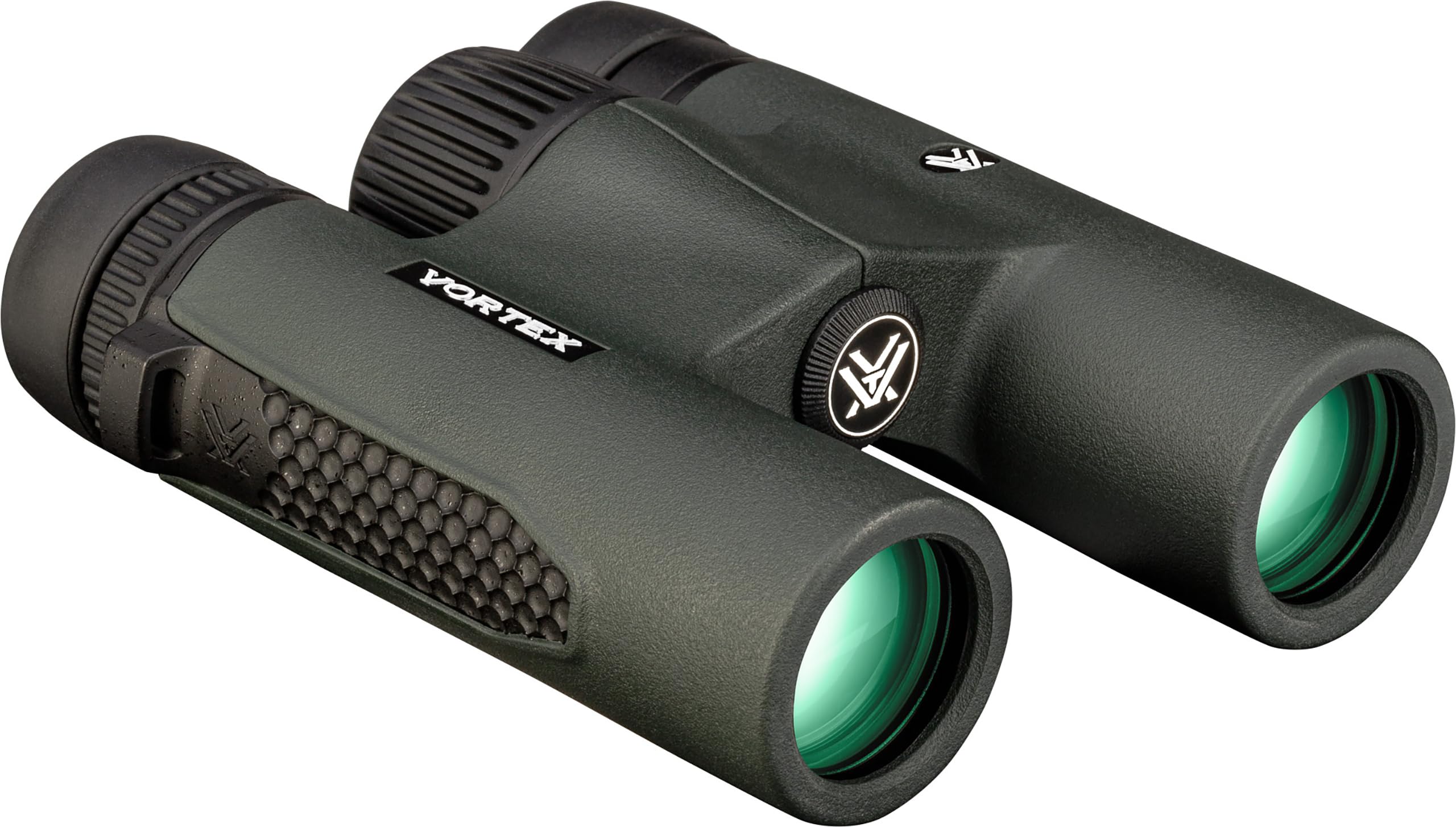


Best for All-Around Travel
Hontry 10×25 Compact
Key Features
- Magnification: 10x
- Objective Lens: 25mm
- Weight: 0.6 lbs
- Eye Relief: 10mm
- Waterproof & Fogproof: Waterproof
- Price: Budget
The Hontry 10×25 Compact rewards the eye with crisp, contrasty daytime images across a generous 362-foot field of view. That wide-angle perspective, paired with 10x magnification, sidesteps the hand shake that plagues many 12x pocket binoculars, letting you hold subjects steady—from a soaring hawk to a concert performer—without arm fatigue. Optical sharpness rivals models selling for twice as much, making these a genuine value leader.
At just 0.6 pounds, the binoculars feel substantial enough to inspire confidence yet remain light enough for a child to carry on a hike. The focus wheel spins with smooth, predictable resistance, and the diopter adjustment locks into place, so once you set the focus for your eyes, the image stays crisp without drifting. The rubber-armored body shrugs off bumps and provides a secure grip, even with damp hands.
A waterproof seal shrugs off unexpected rain or splashes near a lake, while the compact 25mm objectives gather enough light for sunny to partly cloudy days. As twilight approaches, the small exit pupil will start to dim the view—these are not the tool for low-light enthusiasts—but for bird walks, stadium seats, and daytime exploring, the brightness holds up well.
The Hontry squarely targets outdoor goers who do not wear glasses. Its 10mm eye relief means that anyone with spectacles will experience a narrow, vignetted circle instead of the full panoramic view. In this lineup, the Occer 12×25 steps in with generous 20mm eye relief for glasses wearers, but at the cost of added hand shake at higher magnification. Families, travelers, and casual observers who value a steady, fatigue-free image and can use the binoculars without glasses will find the Hontry to be the sharpest, most hassle-free choice in its price tier.
Pros
- Exceptional build quality and clear optics rival pricier compacts, giving you a premium viewing feel for a budget outlay.
- Outstanding value with high satisfaction across a vast user base—sharp images and sturdy housing without the premium markup.
- Lightweight 0.6-pound body and easy focus make it a favorite for kids and adults alike, disappearing into a daypack or cargo pocket.
- Consistently sharp, easy-to-achieve focus means you spend less time fiddling and more time enjoying the view. A true grab-and-go performer.
Cons
- 10mm eye relief causes vignetting and an unusable view for eyeglass wearers—the eyecups cannot accommodate spectacles.
For travelers and families who don’t wear glasses, the Hontry 10×25 Compact is a sharp, sturdy, and affordable companion that leaves little to be desired at this price. Glasses wearers should consider the Occer 12×25 for its generous eye relief, accepting the trade of added hand shake.
Best for Eyeglass Wearers
Occer 12×25 Compact
Key Features
- Magnification: 12x
- Objective Lens: 25mm
- Weight: 0.86 lbs
- Eye Relief: 20mm
- Waterproof & Fogproof: Waterproof
- Price: Budget
Where the top pick prioritizes 10x stability at the cost of eye relief, the Occer 12×25 puts glasses wearers first with a full 20mm of eye relief and large eyepieces. The 12x magnification pulls in distant detail noticeably closer than 8x or 10x alternatives, but that extra power amplifies hand tremors — steady viewing may require bracing elbows on a railing or pressing the binoculars against a window frame.
Daylight image clarity exceeds expectations for a budget 12×25, delivering crisp central resolution and enough contrast to distinguish plumage or stage details. The waterproof body shrugs off rain and humidity without internal fogging, while its 0.86-lb weight remains comfortable for extended handheld sessions in a stadium seat or on a nature walk.
Travelers, concertgoers, and casual birders who wear glasses will appreciate the rare combination of long eye relief and higher magnification at this price. Those who can steady the binoculars on a surface gain the most. Buyers who need a vibration-free image without support, or who are sensitive to occasional unit-level optical misalignment, are better served by a 10x model with proven consistency.
Pros
- Budget-friendly price delivers waterproofing and long eye relief that typically cost more.
- Compact 12×25 design slips easily into a daypack or jacket pocket for travel and events.
- Under 1 lb weight makes prolonged handheld viewing comfortable without arm fatigue.
- Clear, bright images in daylight conditions, suitable for casual bird watching and outdoor concerts.
Cons
- Hand-holding 12x magnification can introduce noticeable image shake, so stable views often require bracing or a support.
- Double vision from collimation misalignment can occur in some units, forcing one-eye viewing or an exchange.
For glasses wearers who value magnification over hand-held steadiness, the Occer 12×25 offers a combination hard to find near this price — long eye relief, waterproofing, and strong daytime clarity. Those who can brace the binoculars will appreciate the detail; those who need a vibration-free image out of the box should choose the 10x top pick.
Best for Premium Birding
Vortex Diamondback HD 10×28
Key Features
- Magnification: 10x
- Objective Lens: 28mm
- Weight: 13.3 oz
- Eye Relief: 16mm
- Waterproof & Fogproof: Waterproof, Argon Purged
- Price: Premium
The Vortex Diamondback HD 10×28 produces the sharpest, most contrast-rich image among compact binoculars in this group, thanks to its HD optical system and fully multi-coated lenses. Where the budget-friendly Vortex Crossfire HD delivers good clarity at a lower price, the Diamondback HD elevates brightness and color fidelity to a level that discerning eyes will appreciate immediately. Its argon-purged chassis seals out moisture and internal fog, ensuring the view stays crisp in rain or high humidity.
Low-light performance defies the compact objective: images remain bright and usable during dawn and dusk, which is critical for wildlife watching. The magnesium chassis and rubber armor feel substantial in hand, and the focus wheel turns with deliberate smoothness — no slop or stiffness. Eye relief of 16mm accommodates most eyeglass wearers without vignetting, making extended viewing comfortable.
This binocular suits birders and outdoor enthusiasts who refuse to compromise on optical quality in a travel-sized package. It’s built for years of regular use in damp, dusty conditions. At 13.3 ounces, it carries more heft than featherweight 25mm pocket binoculars, and the 5.1° field of view is tighter than wide-angle alternatives — something to consider if you frequently scan open terrain. For those who can accept the extra ounces and narrower view, the image fidelity and lifetime warranty make it a rewarding long-term choice.
Pros
- Crystal-clear, bright image that rivals larger binoculars — sharp edge-to-edge.
- Armored, rugged housing with a solid, premium feel that withstands hard outdoor use.
- Remarkable low-light performance for a 28mm objective, usable well into dusk.
- Unconditional lifetime warranty covers accidental damage, making it a one-time investment.
Cons
- At 13.3 ounces, it’s heavier than many 25mm compacts, adding bulk to a daypack.
- 5.1° field of view can feel restrictive when tracking fast-moving birds or scanning wide landscapes.
If you’re willing to carry a few extra ounces for uncompromising clarity and a warranty that covers you for life, the Diamondback HD is the compact to own. Light packers and wide-field enthusiasts, however, have better-matched alternatives in this lineup.
Best for Hiking & Rain
Vortex Triumph HD 10×28
Key Features
- Magnification: 10x
- Objective Lens: 28mm
- Weight: 12.8 oz
- Eye Relief: 15mm
- Waterproof & Fogproof: Waterproof, Fogproof
- Price: Mid-Range
Fully weatherproof and built around an HD optical system, the Triumph HD 10×28 delivers sharp, bright images that elevate it above budget compacts. The fully multi-coated lenses pull in generous light for a 28mm objective, and the waterproof, fogproof, shockproof build shrugs off rain, humidity, and the occasional fumble on the trail.
This model slots in as the accessible entry to Vortex’s no-questions-asked lifetime warranty and HD glass, costing a noticeable step less than the premium Diamondback HD 10×28 that sets the compact reference standard. It prioritizes long-term ownership confidence and ruggedness over absolute optical perfection, giving you 90% of the view quality with a warranty that outlasts the binocular.
Travelers and outdoor enthusiasts who need a compact they can trust in wet, dusty, or unpredictable conditions will find the Triumph HD a solid fit. The tradeoffs are minor but real: in high-contrast scenes, a hint of color fringing may creep in at the frame edges, and the 273-foot field of view at 1000 yards is narrower than many 10×25 competitors, so scanning wide landscapes requires more deliberate panning. These concessions fade into the background when the unconditional lifetime guarantee is factored in.
At 12.8 ounces, the body sits securely in hand without feeling heavy, and the 15mm eye relief with twist-up eyecups works comfortably for most glasses wearers. The tripod socket adds stability for extended glassing sessions, and the fully sealed construction means you won’t be second-guessing the forecast.
Pros
- HD glass and fully multi-coated lenses produce crisp, bright views that rival pricier compact binoculars.
- Unconditional lifetime warranty covers any damage or defect, no receipt and no questions asked.
- Mid-range price delivers a premium build, HD optics, and long-term support that outclasses budget compacts.
- Waterproof, fogproof, and shockproof construction handles rain, humidity, and accidental drops without fuss.
Cons
- In high-contrast scenes, minor chromatic aberration (color fringing) can appear at the frame periphery.
- The 5.2° field of view is narrower than many 10×25 compacts, so surveying large open areas demands extra panning.
For travelers who refuse to compromise on build toughness and after-sales support, the Triumph HD is the sweet spot — Vortex’s HD glass and legendary warranty in a mid-range package, trading a few degrees of field width for all-weather reliability that never quits.
Best for Ultra-Light Travel
Nikon TRAVELITE EX 8×25
Key Features
- Magnification: 8x
- Objective Lens: 25mm
- Weight: 8.5 oz
- Eye Relief: 11.1mm
- Waterproof & Fogproof: Waterproof, Fogproof
- Price: Premium
At just 8.5 ounces with an 8.2° field of view, the Nikon TRAVELITE EX delivers a wide, stable viewing experience that heavier 10x models can’t match. Its compact size slips into a jacket pocket or daypack, making it a natural fit for hikers, concertgoers, and travelers who prioritize minimal weight. The multilayer-coated optics produce crisp images with good contrast and color fidelity, especially in daylight conditions. Waterproof and fogproof construction adds confidence for outdoor use.
Where the Nikon falls short is for glasses wearers: the 11.1mm eye relief means you’ll need to hold the binoculars slightly away or remove glasses to see the full field. The 8x magnification provides a steady, fatigue-free view but lacks the reach of 10x or 12x compacts – it’s better suited for scanning landscapes, wildlife in the near-to-mid range, and stadium events rather than distant detail. Given the premium pricing, it’s a deliberate tradeoff for the sake of extreme lightness.
Pros
- Extremely lightweight construction – easy to carry on long hikes or pack in a small bag.
- Crisp, sharp optics with good contrast and color accuracy for daytime use.
- Excellent portability for group tours and hiking – slips into a pocket without adding bulk.
Cons
- Short eye relief (11.1mm) may cut off the field of view for glasses wearers – better for contact lens users or those who don’t wear glasses.
- 8x magnification offers a wide, steady view but less reach than 10x or 12x models – those wanting to zoom in on distant subjects may feel limited.
For the traveler who values ounces over power and doesn’t wear glasses, the Nikon TRAVELITE EX is a lightweight champion – but if you need closer views or wear glasses, look at the Hontry 10×25 or the Occer 12×25 with longer eye relief.
Best for Maximum Zoom
OPAITA 20×32
Key Features
- Magnification: 20x
- Objective Lens: 32mm
- Weight: 13.97 oz
- Eye Relief: 13mm
- Waterproof & Fogproof: Waterproof
- Price: Mid-Range
The OPAITA 20×32 delivers the highest magnification available in a compact binocular under 40mm objective, and surprisingly, the daytime image holds clarity and contrast at a level that makes the extreme zoom usable. The optics are sharp enough to read distant signage or identify bird species at range, and the build quality feels solid for the weight.
That 20x reach comes with two unavoidable realities: the 1.6mm exit pupil dims the view noticeably in anything but full daylight, and the magnification amplifies every hand tremor to the point where handheld viewing is shaky enough to defeat the purpose. A steady surface or tripod adapter transforms the experience into a genuinely useful spotting tool.
This binocular suits travelers who already carry a lightweight tripod or monopod and need maximum reach in a packable form. It is not for low-light hikes, birding at dusk, or anyone who expects to hold it steady without support. Glasses wearers will find the 13mm eye relief tight for full field of view, but without glasses the eyecups work well.
Pros
- 20x magnification in a compact design that actually produces sharp daytime views
- Build quality and included accessories feel good for the mid-range price
- Lightweight for a 32mm objective, easy to pack and carry
Cons
- Small 1.6mm exit pupil makes the image dim in anything but full daylight
- Hand-holding at 20x introduces enough shake to impair detail — requires a support
For travelers who pack a tripod and prioritize extreme daytime reach over universal hand-held convenience, this is a unique compact option that delivers on magnification without sacrificing clarity.
Best for Hunting & Backcountry
Leupold BX-1 Rogue 10×25
Key Features
- Magnification: 10x
- Objective Lens: 25mm
- Weight: 12.7 oz
- Eye Relief: 15mm
- Waterproof & Fogproof: Waterproof
- Price: Mid-Range
Leupold’s aluminum-armored chassis and O-ring sealed waterproofing give the Rogue a substantial, backcountry-ready feel absent from the polymer-bodied ultralights in this comparison. Where some featherweight rivals sacrifice structural rigidity to hit low weights, the Rogue keeps a dense, balanced heft that helps steady the 10x view without tiring the hands.
Anti-reflective lens coatings and phase-corrected prisms pull in a bright image for a 25mm objective, with satisfying snap to focus that stays put once set. The twist-up eyecups have firm detents, so your eye position won’t wander during glassing sessions. In full daylight, contrast and color fidelity are strong enough to pick out a mule deer’s ear flick at 200 yards.
Hunters, backpackers, and field techs who treat gear roughly will feel at home with the Rogue. It’s compact enough to slip into a jacket pocket yet armored against everything from granite scrapes to sudden downpours. The tradeoff: at dawn or dusk, the small objective forces you to accept less light than a 42mm binocular, so extended low-light identification isn’t its arena. If your outings happen primarily in broad daylight and reliability matters more than ultimate twilight performance, this Leupold slots in neatly.
Pros
- Solid aluminum body with bright, clear optics—noticeably sharp for a compact binocular.
- Compact and lightweight design with a reassuring premium feel.
- Lifetime warranty backed by Leupold’s optical reputation.
- Waterproof and fogproof construction for all-weather use.
Cons
- Image brightness and clarity can’t match full-sized binoculars—a physical limit of the 25mm objective.
If a compact binocular that can survive the bottom of a pack and still deliver sharp daytime views is the priority, the Rogue earns its keep. Just leave the dim-light spotting to larger glass.
Best for Family Adventures
Aurosports 10×25

Key Features
- Magnification: 10x
- Objective Lens: 25mm
- Weight: 0.55 lbs
- Eye Relief: 14.8mm
- Waterproof & Fogproof: Water Resistant
- Price: Budget
The Aurosports 10×25 delivers a clean, bright daytime image in a lightweight package that won’t weigh down a daypack. The 10x magnification provides a useful reach for birdwatching or sightseeing, and the entry-level price makes it an easy choice for families or first-time binocular buyers.
However, the binoculars are slightly larger than product photos suggest, which may surprise those expecting a truly pocket-sized unit. The water resistance handles light mist but not full immersion, so this model works best in fair-weather settings rather than rainy hikes or kayaking trips. These tradeoffs keep the cost low, but adventurous users should look at fully sealed options.
Pros
- Excellent value and clear images for the price
- Compact and lightweight design ideal for hiking and travel
Cons
- Size may be slightly larger than expected from product photography
- Only water-resistant, not fully waterproof — limits use in heavy rain or submersion
The Aurosports 10×25 fits casual daytime outings, family vacations, and glovebox duty where waterproof sealing isn’t required and a slightly broader profile is acceptable.
Best for Youth & Stability
Vortex Bantam HD 6.5×32

Key Features
- Magnification: 6.5x
- Objective Lens: 32mm
- Weight: 0.99 lbs
- Eye Relief: 18.7mm
- Waterproof & Fogproof: Waterproof, Fogproof
- Price: Mid-Range
The Bantam HD’s 6.5x magnification produces an exceptionally stable image and, with its 32mm objective, a bright 400-foot field of view that’s forgiving for shaky hands. Generous 18.7mm eye relief and a lightweight, rubber-armored body make it comfortable for kids and glasses-wearers alike. The Vortex VIP lifetime warranty adds long-term peace of mind. However, that same optical formula sacrifices pocketability: at 0.99 pounds and with a bridge-hinge design, it won’t slip into a jacket pocket like a compact 8×25. And 6.5x power falls short for identifying distant birds or game, making it a close-to-medium-range specialist.
Pros
- Ultra-wide 7.6° field of view and bright 32mm lenses make it ideal for scanning woods and open fields.
- Long 18.7mm eye relief and sub-one-pound weight suits both youth and adults who wear glasses.
- Vortex’s unconditional lifetime warranty covers accidental damage or defects, no receipt needed.
Cons
- Larger 32mm objective and 0.99-lb weight keep it out of the pocket-compact class.
- 6.5x magnification lacks the reach to pick out fine details at longer distances.
The Bantam HD is a durable, low-power binocular purpose-built for young explorers and anyone who prioritizes a shake-free view over maximum reach. It’s not the travel-friendly pocket optic some compact shoppers seek.
Best for Concerts & Theater
VULNESS 8×21 Mini

Key Features
- Magnification: 8x
- Objective Lens: 21mm
- Weight: 5.6 oz
- Waterproof & Fogproof: Waterproof
- Price: Budget
At 5.6 ounces and roughly the size of a deck of cards, this binocular disappears into any pocket or small bag. Its 8x magnification provides steady, comfortable viewing at theater or concert distances, and the waterproof build handles splashes. The focus wheel requires deliberate, patient turning to lock in a clear image, and the 21mm lenses don’t hold fine detail beyond short-to-medium range. For a pocketable companion at indoor events, on a cruise ship, or in a travel daypack, it’s a practical if unremarkable choice—just don’t expect it to double as a birding binocular.
Pros
- Extremely compact profile slips into a clutch, jeans pocket, or daypack without bulk
- Lightweight at 5.6 oz, making it effortless to carry for hours during travel or events
Cons
- Focusing wheel can be stiff and imprecise, slowing down sharp focus
- Small 21mm objective lenses lose clarity and brightness at longer distances, limiting suitability for birding or landscapes
For concert-goers, theater fans, or cruise travelers who need the smallest possible binocular that practically vanishes in a pocket, the VULNESS 8×21 Mini fits the bill—as long as long-range viewing isn’t on the agenda.
Best for Wide-Field Views
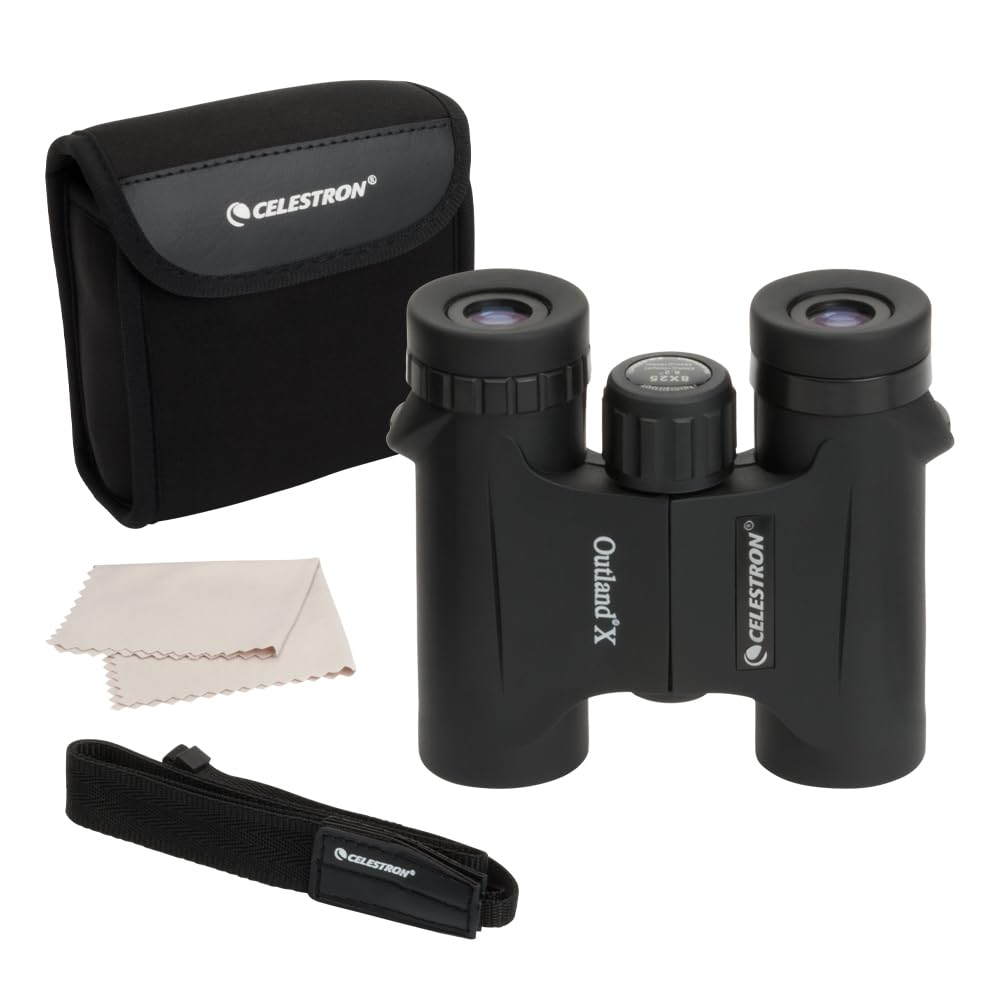
Celestron Outland X 8×25
Key Features
- Magnification: 8x
- Objective Lens: 25mm
- Weight: 1 lb
- Eye Relief: 9.3mm
- Waterproof & Fogproof: Waterproof, Fogproof
- Price: Mid-Range
With an 8.2° field of view and fully sealed waterproof body, the Outland X 8×25 prioritizes wide panoramas and weather resistance for hikers who don’t wear glasses. That last point is non-negotiable: the 9.3mm eye relief cuts off the view sharply for eyeglass wearers, leaving a frustrating vignette. Fogproof claims don’t fully hold up either — internal fogging can appear in humid conditions, making it less dependable than some competitors in truly wet environments. For glasses-free outdoor users in dry to moderate humidity, the combination of good optical clarity and solid build makes it a viable mid-range compact.
Pros
- Wide 8.2° field of view reveals expansive scenery, ideal for ridge-walking.
- Solid, weather-sealed body holds up to rain and rough treatment.
- Weighs just 1 lb, adding minimal burden to a pack.
Cons
- Very short 9.3mm eye relief cuts off the view for eyeglass wearers.
- Internal fogging can occur in humid environments despite the fogproof construction.
If you never wear glasses and hike in dry or moderate humidity, this Celestron delivers wide, weatherproof views at a mid-range price. Glasses wearers and those in consistently damp climates should consider alternatives.
How to Choose
The magnification you choose determines whether your compact binoculars become a travel essential or a shaky disappointment.
Magnification: Stability Over Zoom
Higher magnification magnifies hand shake, turning a 12x or 20x view into a jittery mess unless you use a tripod. Even 12x compacts can be hard to hold still for more than a few seconds.
An 8x or 10x magnification gives you enough reach for a concert, cruise, or trail while keeping the image comfortably steady. Unless you plan to always brace against a tree or railing, choose 8x or 10x.
Objective Lens: Light and Bulk
A larger front lens gathers more light, but adds weight. The compact sweet spot is 25mm—it slips into a daypack and still works in daylight. A 28mm or 32mm lens brings a touch more brightness, useful at dawn or dusk, but makes the binocular noticeably heavier.
Weight: How It Feels After an Hour
Every ounce matters when you’re holding binoculars for a long concert or scanning a landscape. A 0.6-lb pair stays comfortable; a 1-lb pair causes arm fatigue faster than you’d expect.
Eye Relief: The Glasses-Wearer’s Hidden Spec
Eye relief is the distance your eye can be from the eyepiece and still see the full image. If you wear glasses, you need at least 14mm—ideally 16mm or more. Anything below 14mm forces you to remove your glasses or accept dark rings around the view.
Weatherproofing That Works
Waterproof and fogproof ratings promise protection, but real-world use reveals a gap. A binocular sealed with O-rings and purged with nitrogen or argon is far less likely to fog internally when you move from an air-conditioned cabin to humid outdoors.
Budget models labeled "water-resistant" can survive a drizzle but may still fog inside during rapid temperature swings. If you hike or cruise in unpredictable weather, look for a fully waterproof, gas-purged design.
FAQ
Why are my compact binoculars blurry when I try to focus them?
Blur that won’t clear is often a diopter misadjustment, not a broken binocular. Set the diopter ring (usually on the right eyepiece) to zero, focus on a distant object with the main wheel, then fine-tune the diopter for your right eye. If the image is still blurry or doubled, the binocular may have a collimation defect—exchange it.
Can I use compact binoculars with glasses without removing them?
Yes, if the binoculars have at least 14mm of eye relief and twist-up eyecups that retract fully. Models with 10mm or less will force you to remove your glasses or accept a narrow, vignetted view. Check the spec before buying; many high-value compacts sacrifice eye relief.
Is 12x magnification too much for small binoculars?
For hand-held use, 12x is the upper limit and often introduces visible shake that tires your eyes quickly. If you don’t intend to mount them on a tripod or brace against a solid surface, 8x or 10x will give you a far more relaxed, enjoyable experience, especially for travel and events.
How do I prevent my travel binoculars from fogging up inside when going from cold to warm environments?
Internal fogging happens when warm, humid air contacts cold glass. Minimize it by keeping the binoculars in their case during the first 10–15 minutes after moving into a warm space, letting them acclimate gradually. If fogging persists inside the sealed body, the nitrogen or argon purge has failed and the unit needs warranty repair.