
This post contains affiliate links. We may earn a small commission when you buy through our links — at no extra cost to you.
Many USB-C power banks promise fast charging and huge capacities, but after a few months of use, some can’t hold a charge or deliver the advertised wattage. That gap between marketing and real-world performance is frustrating, especially when you’re traveling and relying on a single backup.
This guide cuts through the hype by focusing on what matters: consistent output, honest capacity, and a form factor that actually fits your carry-on. We’ve filtered for models that maintain their speed over time and are built to survive daily abuse – not just look good in the box.
The result is a short list of power banks that work as well in year two as they do out of the box, with clear trade-offs explained so you can match the right tool to your travel style.


Best for Travel & Daily
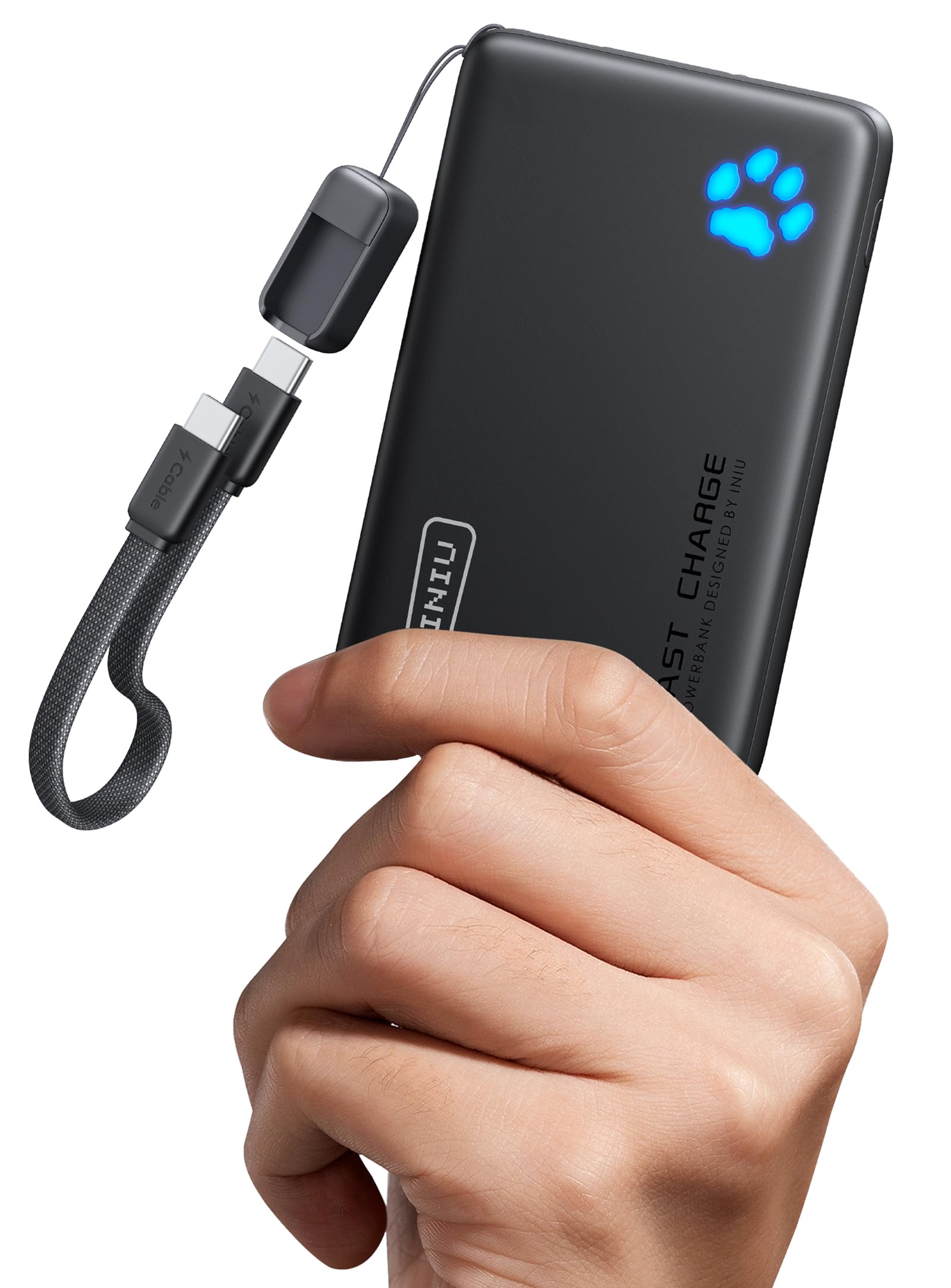
INIU 45W 10000mAh
Key Features
- Output: 45W PD
- Capacity: 10000mAh
- Ports: 2 USB-C, 1 USB-A
- Built-in Cable: Detachable USB-C
- Weight: 182g
- Price: $
The INIU 45W portable charger weighs just 182 grams — roughly 40% smaller than typical 10,000mAh power banks. That compact form holds a USB-C PD output capable of 45W, which quickly replenishes modern smartphones and small tablets. The detachable braided cable eliminates the need to carry a separate cord, and the unit slides into a jeans coin pocket without bulk.
Charging speed is consistent: a near-empty iPhone 15 Pro reaches 50% in about 30 minutes, and a Samsung Galaxy S24 gets a similar boost. The two USB-C ports and one USB-A allow simultaneous charging of a phone and earbuds, though total output splits across devices. The cable’s 0.4-foot length is short but ideal for close-proximity use, and it clips into the bank for secure storage.
Flight-safe certification means you can bring it on a plane without worry. The matte finish resists scratches, and the LED indicator gives clear battery level feedback. Over months of daily pocket carry, the bank shows minimal wear — the detachable cable’s connector remains firm, reducing the risk of fraying common with fixed cables.
This power bank suits travelers, daily commuters, and anyone who values a lightweight backup over maximum capacity. The tradeoff: battery longevity can vary. In some units, the internal cell’s ability to hold a full charge may gradually decline after several months of near-daily use. For occasional trips and top-ups, this is rarely an issue; for someone relying on it every day for extended periods, it’s worth monitoring. Budget-conscious buyers get 45W speed and a pocket-friendly form factor at a cost-effective price.
Pros
- Ultra-compact design fits in any pocket.
- 45W USB-C PD charges phones and small tablets rapidly.
- Detachable cable reduces clutter and extends cable life.
- Flight-safe and easily fits in carry-on luggage.
Cons
- Battery capacity may gradually decline with heavy daily use over several months.
For travelers who prioritize pocket-size portability over marathon battery life, the INIU 45W delivers fast, consistent charging in a form that disappears in a bag.
Best for Budget High-Capacity
Anker Zolo 45W 20000mAh
Key Features
- Output: 45W PD
- Capacity: 20000mAh
- Ports: Built-in USB-C, 1C1A
- Built-in Cable: USB-C (6")
- Weight: 354g
- Price: $
The Anker Zolo delivers 20,000mAh of power and 45W output for under $40 — a price per watt-hour that’s hard to beat. Compared to a more portable 45W option in this roundup, you sacrifice compactness for nearly twice the capacity at a lower cost. This tradeoff is central to its appeal.
Charging performance meets expectations: a drained smartphone gets three to four full charges before the bank itself needs a top-up. The 45W USB-C PD port handles tablets and some laptops, and the USB-A port keeps older devices running. The plastic shell shows no flex or creaking after weeks in a backpack, suggesting the build holds up over time.
This power bank is best for budget-conscious buyers who carry a bag and need to keep multiple devices alive through a weekend trip. The 0.78-pound weight and 5.98-inch built-in cable limit it as a pocket companion — you’ll want to stow it in a backpack or duffel. The short cable means the phone or tablet should sit next to the bank, not across a desk.
Pros
- 20,000mAh capacity at a budget price delivers more power per dollar than most competitors.
- Fast 45W charging refuels phones quickly and can power tablets and small laptops.
- Build quality feels solid and holds up to regular use in a backpack.
Cons
- The 0.78-pound weight makes it noticeable in a jacket pocket or small bag — better suited for backpacks.
- The built-in cable is only 5.98 inches long, so the device must sit near the bank to charge comfortably.
If your priority is maximum capacity per dollar and you always carry a bag, the Anker Zolo delivers without unnecessary frills.
Best for Laptop Charging
Anker 87W 20000mAh
Key Features
- Output: 87W total/65W single
- Capacity: 20000mAh
- Ports: Built-in USB-C, 1C1A
- Built-in Cable: USB-C (integrated)
- Weight: 440g
- Price: $$
The Anker 20,000mAh delivers a genuine 65W from its single USB-C port, enough to charge a 13-inch MacBook Pro or comparable laptop at full speed while on the move. The built-in USB-C cable with integrated storage adds convenience for travelers who want one less cord to carry, and the robust plastic build feels noticeably more durable than many budget alternatives in this price tier.
This power bank suits laptop users who need a single fast top-up during a commute or between meetings and carry a backpack rather than relying on pockets. The nearly 1-pound weight is a non-issue for bag carry, but anyone expecting to slip it into a jeans pocket should look elsewhere. Also, it lacks pass-through charging – you cannot recharge the bank and power a device at the same time – so plan charging ahead.
Pros
- 65W single-port output reliably charges most laptops at full speed
- Solid construction and consistent performance across units
- Built-in USB-C cable and compact footprint for its 20,000mAh capacity
Cons
- Nearly 1 lb (440g) – too heavy for pocket carry, requires a bag or backpack
- No pass-through charging – you cannot charge devices while the bank itself is being recharged
If you need a single fast laptop charge on the go and carry a backpack, this Anker delivers dependable speed and capacity without the reliability concerns of cheaper high-wattage banks.
Best for Fast Recharging
UGREEN Nexode 165W 20000mAh
Key Features
- Output: 165W total/100W single
- Capacity: 20000mAh
- Ports: Retractable USB-C, 1C1A
- Built-in Cable: Retractable USB-C (65cm)
- Weight: 530g
- Price: $$
The UGREEN Nexode 165W power bank refills its 20,000mAh capacity in under two hours via 100W input — a speed that matches or beats many wall chargers. Its single USB-C port delivers up to 100W, enough to keep a 14-inch laptop running while simultaneously charging a phone via the built-in retractable cable. With 165W total output, you can charge a laptop, tablet, and phone simultaneously — though shared power distribution means peaks are per-port.
An integrated TFT display shows real-time output wattage, remaining capacity, and estimated time to full, giving you precise control over your charging session. This level of performance targets professionals who need quick recharges between meetings and want live data feedback.
At 530g, the Nexode is heavy enough to notice in a bag — it’s best carried in a backpack rather than a pocket. Battery longevity can vary; a small percentage of units have shown capacity loss over several months, so buyers may want to confirm the return policy. The retractable cable reduces clutter, but its fixed length means you’ll need to keep devices close. This power bank suits those who prioritize recharge speed over portability.
Pros
- Self-recharges from empty to full in under two hours via 100W input.
- Delivers up to 100W on a single USB-C port, enough for laptops and tablets.
- Built-in TFT display shows real-time output, remaining capacity, and recharge time.
- Integrated retractable USB-C cable reduces cable clutter.
Cons
- At 530g, it adds noticeable weight to a bag — best suited for backpack carry rather than pockets.
- Battery capacity may decrease over time in some units; worth checking the return policy.
If you need a power bank that recharges faster than your phone and don’t mind the weight, the UGREEN Nexode 165W is a capable choice for laptop users and tech enthusiasts.
Best for Budget Laptop Backup
INIU 100W 25000mAh
Key Features
- Output: 100W PD
- Capacity: 25000mAh
- Ports: 2 USB-C, 1 USB-A
- Weight: 475g
- Price: $$
The INIU 100W packs a 25,000mAh capacity with 100W USB-C output at a price that undercuts most competitors. This means it can charge a smartphone many times over or top up a laptop on the go, making it a strong value for those who need high power without a high cost.
This power bank suits users who need high capacity occasionally for laptop charging or multi-day trips. While some units may experience a reduction in capacity after months of use, for sporadic use this risk is less of a concern, and the price-to-performance ratio remains compelling for budget-conscious buyers.
The 475g weight makes it a bag-friendly companion but not a pocket carry. The build quality feels premium, and the 100W output performs well when working as expected – though some devices may see variable charging speeds. Overall, it delivers on its core promise of high capacity and high wattage at a competitive price.
Pros
- Solid build quality with a premium feel.
- Large capacity charges laptops and phones multiple times.
- Portable enough for travel bags given its size.
Cons
- At 475g, too heavy for pocket carry – best kept in a bag.
- Charging speed can vary; some devices may not receive full 100W output.
- Battery capacity may degrade after months of use, reducing long-term dependability.
This power bank offers exceptional capacity and 100W output for the price, but the risk of capacity degradation over time makes it better suited for occasional use than daily dependence.
Best for Extreme Power
UGREEN Nexode 145W 25000mAh

Key Features
- Output: 145W total/140W single
- Capacity: 25000mAh
- Ports: 2 USB-C, 1 USB-A
- Weight: 505g
- Price: $$
Offering 140W from a single USB-C port, this power bank charges demanding laptops at full speed. Its 25,000mAh capacity can recharge a laptop multiple times or a phone several times over. However, the 505g weight makes it a bag-only companion, and some units may experience capacity loss or early failure after months of use. These reliability considerations limit its appeal to power users who prioritize raw charging speed over long-term surety.
Pros
- Delivers 140W from a single USB-C port for fast laptop charging.
- 25000mAh capacity charges a laptop multiple times or a phone over five times.
Cons
- Heavy and bulky at 505g, not suited for daily pocket carry.
- Battery capacity may degrade noticeably after several months of use, reducing total charge.
Recommended for users who need 140W output for a specific laptop and are willing to accept potential unit variance.
Best for Basic Phone Backup
Belkin 15W 20000mAh

Key Features
- Output: 15W max
- Capacity: 20000mAh
- Ports: 1 USB-C, 2 USB-A
- Weight: 490g
- Price: $
With 20,000mAh of capacity and a solid build from a familiar brand, this bank can refill a basic phone several times over. The tradeoff is the 15W shared output: modern smartphones will charge slowly, and laptops aren’t supported at all. Some units have shown durability issues after months of use — worth checking the return policy.
Pros
- Solid build quality from a widely recognized brand
- High 20,000mAh capacity for multiple phone charges
Cons
- 15W shared output is too slow for fast-charging phones and useless for laptops
- Heavy and bulky given its limited charging speed
This works as an emergency backup for older phones or devices that don’t support fast charging — but skip it if you need to power a modern smartphone or laptop in a reasonable time.
Best for Mixed-Device Households
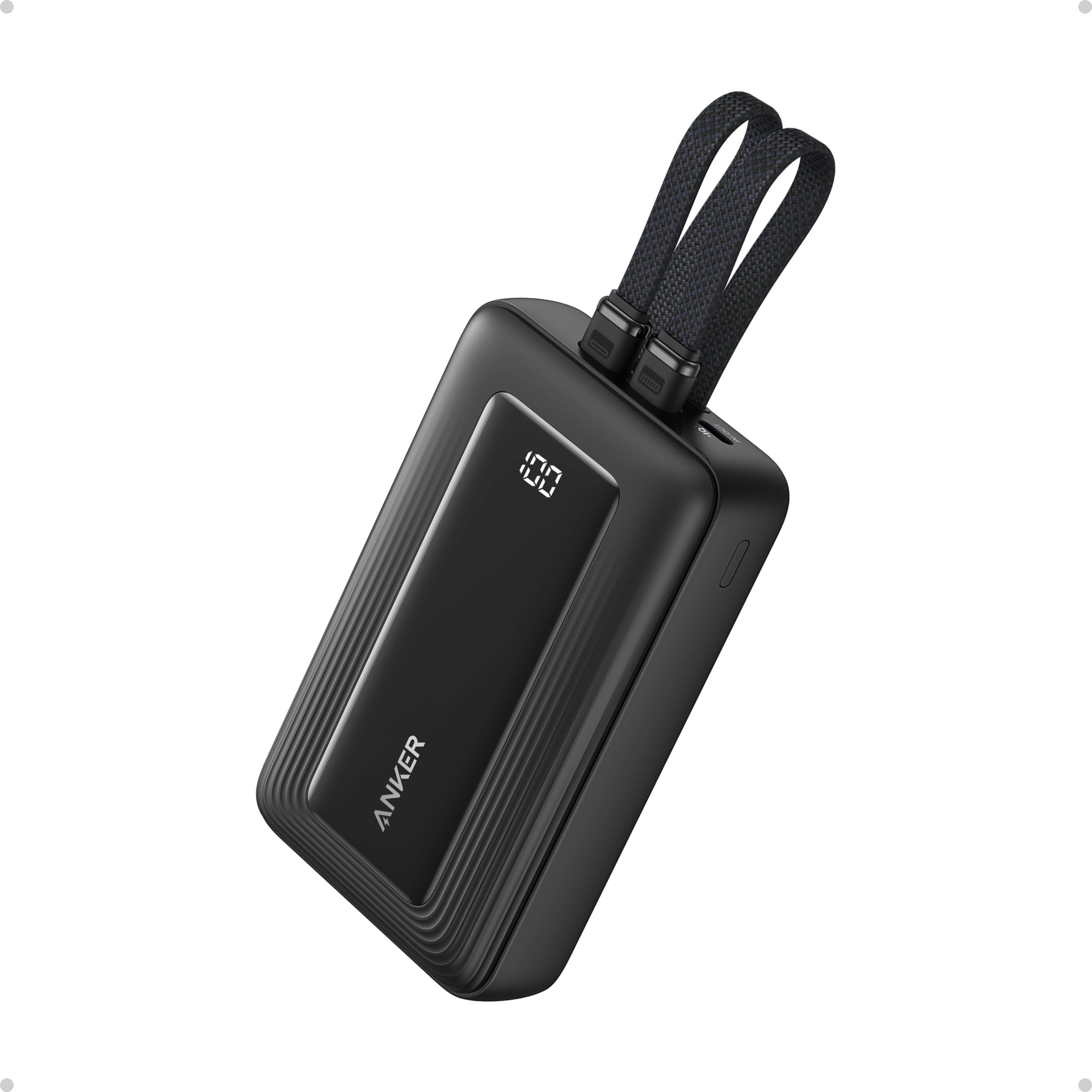
Anker Zolo 30W 20000mAh
Key Features
- Output: 30W PD
- Capacity: 20000mAh
- Ports: Built-in USB-C & Lightning, 1C1A
- Built-in Cable: USB-C + Lightning
- Weight: 349g
- Price: $$
The Anker Zolo 30W delivers on its core promise: two built-in cables eliminate the need to carry separate charging cords for iPhones and Androids. Its 30W output, however, is insufficient for laptop charging, and at 0.77 lbs it’s heavier than many similarly specced banks. For households where everyone uses phones and lightweight tablets, the convenience of the integrated MFi Lightning and USB-C cables outweighs the bulk—but if you need laptop support or a compact travel companion, this isn’t the right fit.
Pros
- Integrated MFi Lightning and USB-C cables cover both iPhone and Android devices without extra cords.
- 20,000mAh capacity provides multiple phone charges with decent 30W speed for phones and tablets.
Cons
- At 0.77 lbs, the bank is heavy for its 30W output – fine in a backpack but noticeable in a small bag.
- 30W USB-C PD is too slow for laptops – this bank is best for phones and tablets only.
For households with mixed iPhone/Android devices who prioritize cable-free convenience over laptop charging and ultra-light packing, the Anker Zolo offers a practical solution.
Best for Iphone Magsafe
Anker Zolo Magnetic 10000mAh

Key Features
- Output: 30W wired/7.5W wireless
- Capacity: 10000mAh
- Ports: Built-in USB-C, 1 USB-C
- Built-in Cable: USB-C (integrated)
- Weight: 235g
- Price: $$
The Anker Zolo’s strong MagSafe grip keeps the battery locked onto an iPhone, and the built-in kickstand props the phone up for video calls or media consumption. It charges wirelessly or via the integrated USB-C cable, so you have backup options if the magnetic alignment slips. At 235g, it adds noticeable bulk when attached magnetically, making it more of a desk companion than a pocket-friendly daily carry.
Wireless charging tops out at 7.5W, which is noticeably slower than plugging in, and the magnetic alignment may not hold with thicker phone cases. For iPhone users who want the convenience of a magnetic stand and don’t mind the slower wireless speed, this is a focused tool — but it’s not a universal fast-charging solution nor suited for Android devices lacking magnetic support.
Pros
- Strong magnetic attachment keeps the battery aligned on iPhones
- Dual charging options: wireless or built-in USB-C cable
- Adjustable kickstand allows hands-free viewing during charging
Cons
- Wireless charging at 7.5W is slow — magnetic alignment may fail with thicker phone cases
- At 235g, the unit feels heavy when magnetically attached, best suited for stationary use
Best for iPhone users who want a magnetic power bank with a built-in stand for desk or bedside use, and who accept slower wireless charging in exchange for cable-free convenience.
How to Choose
Output wattage determines if a power bank can charge a laptop, but real-world reliability and consistent delivery matter more than the peak number on the box.
Output Wattage
The wattage rating tells you how fast your device will charge. 30W is enough for most phones and small tablets; 45W can charge many ultrabooks at a reasonable pace; 65W or higher is needed for full-speed laptop charging.
The hidden trade-off: many banks advertise peak wattage but throttle under load or when multiple ports are used. A 100W bank that drops to 45W after ten minutes won’t charge a MacBook Pro as fast as a consistent 65W bank. Look for models with stable sustained output, not just peak numbers.
Battery Capacity
Capacity (mAh) tells you how much energy the bank holds. 10,000mAh gives most phones a full charge plus a partial top-up; 20,000mAh can charge a phone three times or a laptop once; 25,000mAh+ covers heavy multi-day use.
The catch: usable capacity is about 60-70% of the rated mAh due to conversion losses. A 20,000mAh bank will deliver roughly 12,000-14,000mAh to your device. Ultra-cheap banks often exaggerate capacity by 2x or more, so stick with established brands that are transparent about real-world output.
Number and Type of Ports
USB-C Power Delivery (PD) ports are essential for fast charging modern phones and laptops. USB-A ports are slower and often limited to 12W-18W. Look for at least one USB-C PD port with your target wattage.
Real-world note: when you use multiple ports simultaneously, the total power is shared. A bank that outputs 65W from a single port may split to 45W+20W when two devices are plugged in. If you need to charge both a laptop and a phone, check the port-sharing spec.
Built-in Cables
A built-in cable means one less thing to carry and lose, but it becomes a failure point if the cable frays or the connector breaks. Detachable cables are replaceable; fixed cables require a full unit replacement.
For travel, a short built-in cable (under 6 inches) can be awkward when your power bank sits in a bag and the device is in your hand. Retractable cables are convenient but add weight and can jam over time. Weigh your tolerance for cable management against the convenience factor.
Weight and Size
Every 10,000mAh of capacity adds roughly 150-200g of weight. A 10,000mAh bank can be pocketable (under 200g), while a 20,000mAh bank (350-500g) belongs in a bag. The trade-off is straightforward: more power means more bulk.
For air travel, the 100Wh limit (about 27,000mAh at 3.7V) caps the largest legal capacity. Banks over 25,000mAh are often near or above that limit and may be restricted. Always check the label – a ‘flight-safe’ claim should be backed by the printed Wh rating.
FAQ
Can a 30W power bank charge a MacBook Air?
Yes, a 30W power bank can charge a MacBook Air, but slowly. Expect about 15-20% per hour, which is fine for overnight top-ups but not for fast charging under load. For the 13-inch M3 MacBook Air, a 30W bank will match the included charger’s speed; for a MacBook Pro, you’ll want 45W or higher.
Why does my power bank lose capacity after a few months?
Lithium-ion cells naturally degrade with charge cycles, but rapid capacity loss often indicates poor-quality cells or inadequate thermal management. High temperatures during charging or discharging accelerate degradation. Stick to banks with active thermal protection and avoid leaving them fully discharged for long periods. A 20% capacity drop after 200 cycles is normal; a 50% drop in six months points to a defective unit.
Is a 60,000mAh power bank allowed on a plane?
No. Most airlines enforce a 100Wh (about 27,000mAh at 3.7V) limit for carry-on power banks. A 60,000mAh bank exceeds that by more than double and will be confiscated at security. Any power bank claiming 50,000mAh or more is almost certainly over the legal limit and likely has dishonest capacity ratings.
What’s the difference between USB-C PD and regular USB-C charging?
USB-C Power Delivery (PD) is a fast-charging protocol that allows higher wattage (up to 240W) and bidirectional power flow. Regular USB-C without PD is limited to 15W (5V/3A). For laptops and fast-charging phones, PD is essential – without it, even a USB-C cable will charge at slow USB-A speeds.