
This post contains affiliate links. We may earn a small commission when you buy through our links — at no extra cost to you.
A hiking sandal that feels great on pavement can turn painful by mile three of a rocky trail. Many women find that open-toe designs trade protection for breathability, while closed-toe options promise safety but often run so narrow that sizing becomes a guessing game. The truth is that the arch support, strap adjustability, and tread you need depend far more on your terrain and foot shape than on the brand name.
This guide cuts through that noise by matching specific sandals to specific use cases—from supportive arches that soothe plantar fasciitis to lightweight models that shrug off river crossings. Instead of a one-size-fits-all pick, you’ll find clear trade-offs and a sizing strategy that prevents the most common mistake: ordering your normal size and ending up with blisters or black toenails.



Best for Water & Trail
KEEN Whisper
Key Features
- Open vs Closed Toe: Closed
- Arch Support: Metatomical footbed
- Strap Adjustability: Bungee lacing, adjustable toggle
- Traction on Wet Rocks: Multi-directional lugs
- Weight & Packability: Lightweight
- Price: $$$
The Whisper’s metatomical footbed and multi-directional lugs deliver solid grip on wet rock and loose dirt, with a fit that avoids blister irritation even on long days. The closed-toe shell shields toes from stubs and roots, making this a practical alternative to boots for stream crossings and rocky trails.
The tradeoff is sizing: this sandal runs small and narrow, so ordering a half size up is recommended. In hot conditions the fabric can trap some moisture, but for hikers prioritizing toe protection and arch support over open-toe breathability, the Whisper offers a lightweight, comfortable package that handles both water and trail.
Pros
- All-day comfort with no blister break-in needed.
- Sturdy build that withstands wet and rocky terrain.
- Closed-toe shell prevents stubs and protects toes on trails.
Cons
- In high heat, the fabric can trap moisture and feel warm.
- Sizing runs small and narrow; some buyers may need to order a half size up for a proper fit.
The KEEN Whisper is worth the premium for hikers who need closed-toe protection and all-day comfort on trails and in water — just confirm your size before buying.
Best for Arch Support
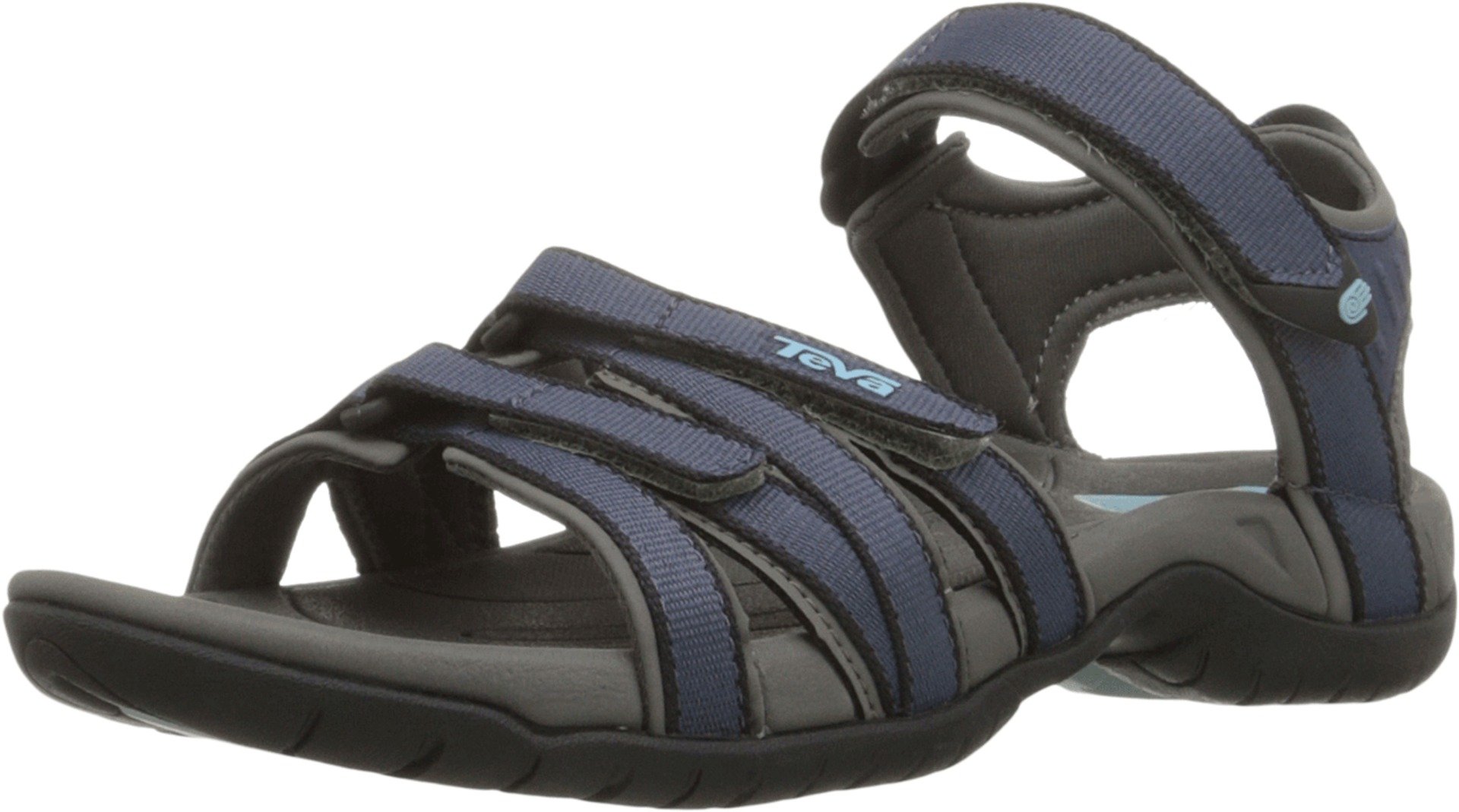
Teva Tirra
Key Features
- Open vs Closed Toe: Open
- Arch Support: Deep heel cup, sculpted arch
- Strap Adjustability: Three-point adjustable straps
- Weight & Packability: Moderate
- Price: $$
A shock-absorbing midsole and a deep, contoured footbed set the Tirra apart from sandals that prioritize toe protection. The multi-strap design locks the heel in place, reducing slippage on uneven terrain while handling dry trails and water crossings without missing a step.
This makes it a strong choice for hikers managing plantar fasciitis or high arches who are willing to trade toe coverage for substantial underfoot support. Sizing can differ between colorways — checking fit across pairs is advisable.
Pros
- Deep heel cup and contoured footbed relieve plantar fasciitis pain
- Strong arch support keeps feet comfortable over miles of trails
- Long-lasting construction stands up to water, dirt, and daily wear
Cons
- Sizing can vary between color options, with some pairs running a half size smaller
For hikers with foot pain or high arches, the Tirra’s support is compelling — just verify fit across colorways to lock in the right size.
Best for Custom Fit
Viakix Sport
Key Features
- Open vs Closed Toe: Open
- Arch Support: EVA midsole, arch support
- Strap Adjustability: Three-point Velcro straps
- Weight & Packability: Lightweight
- Price: $$
Three-point strap adjustability sets the Viakix Sport apart from the softer, slip-on styles. Each forefoot, midfoot, and heel strap adjusts independently, creating a bespoke hold that stays locked during long walks on dry dirt, pavement, or packed gravel. The cushioned EVA midsole feels broken-in out of the box, making these an instant favorite for hikers who struggle with standard sandal widths. This precision comes with a trade-off: the rubber outsole can lose grip on wet, smooth rock, so the Viakix is best reserved for dry trails and city travel — not technical creek crossings. Those who prioritize a customizable, secure fit over aggressive wet traction will find these an ideal alternative to bulkier sport sandals.
Pros
- Extremely comfortable with no break-in period.
- Fully adjustable three-point strap system accommodates bunions, wide forefeet, and narrow heels.
- Great for all-day walking and light hiking on dry terrain.
Cons
- Wet traction can be slippery on smooth rocks, making creek crossings risky.
For hikers whose primary need is a perfectly tailored fit over any other feature, the Viakix Sport offers customization that no other sandal in this set matches — just keep it away from slick river crossings.
Best for Soft Comfort
Merrell Terran Post II
Key Features
- Open vs Closed Toe: Open
- Arch Support: M Select GRIP arch
- Strap Adjustability: Adjustable heel strap
- Traction on Wet Rocks: Sticky rubber outsole
- Weight & Packability: Lightweight
- Price: $$
The EVA midsole and M Select GRIP arch cup the foot like a slipper, delivering a plush, shock-absorbing ride that wide-footed hikers will appreciate. The open-toe, toe-loop design stays put on casual strolls, and the build holds up to daily wear. For hikers who prioritize pillowy cushion and arch relief over a locked-down feel, this is a standout. This generous fit works beautifully for wide feet, but those with narrow or medium-width feet may find the heel strap alone insufficient to prevent slipping on uneven ground. Best suited to everyday summer wear and light trail use, where comfort and arch support matter more than aggressive stability.
Pros
- Plush out-of-the-box comfort thanks to the soft EVA midsole and cushioned footbed
- Excellent arch support that can alleviate foot fatigue and pain
- Durable construction and stylish design hold up to frequent daily wear over multiple seasons
Cons
- The wide fit and heel strap alone may not secure narrow heels, limiting stability on uneven terrain
Works best for wide-footed hikers wanting a soft, supportive sandal for casual trails and daily wear. Those with narrow feet will find a more secure fit in a closed-toe sandal with multi-strap adjustment.
Best for Durable Luxury
ECCO Yucatan
Key Features
- Open vs Closed Toe: Open
- Arch Support: PU sole, high arch support
- Strap Adjustability: Three adjustable Velcro straps
- Weight & Packability: Moderate
- Price: $$$$
The PU sole absorbs shock mile after mile without flattening—this is the core of the Yucatan’s multi-year durability. Where the top-pick KEEN Whisper protects toes with a closed-cap design, the ECCO Yucatan prioritizes a resilient, supportive base for hikers who want an open platform. The deep arch cups the midfoot securely, and three adjustable straps lock the heel in place. The fixed toe strap, however, is non-adjustable, so wide feet or bunions can feel concentrated pressure at the front. It’s a sandal for narrow-to-normal-width hikers with high arches who value foot health and are willing to pay for lasting construction.
Pros
- Excellent shock absorption mile after mile, so feet stay fresh even on long descents.
- Stands up to years of heavy trail use with minimal wear.
- Deep arch support that prevents strain during steep ascents.
Cons
- The fixed toe strap offers no adjustability; it can press uncomfortably on wide feet or bunions.
For narrow-footed hikers who want a sandal that will outlast several pairs of lesser sandals, the ECCO Yucatan justifies its premium price with enduring support and shock absorption.
Best for Ultralight Travel
Plaka Explore
Key Features
- Open vs Closed Toe: Open
- Arch Support: Contoured footbed
- Strap Adjustability: Adjustable buckle straps
- Weight & Packability: Super lightweight
- Price: $
The Plaka Explore carves a niche for hikers who count ounces. The contoured footbed delivers genuine arch support in a sandal that weighs almost nothing and folds flat in a carry-on. Paracord straps bring a clean, vacation-ready look that moves from trail to town without a wardrobe change. On well-maintained paths and sidewalks, the cushioning holds up for long walks. The tradeoff is sole longevity: wear appears sooner than on heavier-duty hiking sandals, so this isn’t built for rocky off-trail scrambling. It slots in perfectly for minimalists and warm-weather travelers who prioritize packability and style over multi-season durability.
Pros
- Feather-light construction packs flat and stays comfortable across long travel days.
- Contoured footbed provides real arch support, uncommon in a sandal this light.
- Paracord straps give a chic, travel-friendly silhouette that works for dinner or a boardwalk.
Cons
- Strap around the big toe may rub, and the design doesn’t allow fine-tuning at that spot.
- Sole wear appears sooner than on rugged hiking sandals, limiting lifespan on abrasive surfaces.
Minimalist travelers and casual summer hikers get a featherlight, arch-supporting sandal that stows easily; those who need multi-season durability on rough trails should look to the top pick’s closed-toe build.
Best for Budget Cushioning
DREAM PAIRS Hiking

Key Features
- Open vs Closed Toe: Open
- Arch Support: Cushioned arch support
- Strap Adjustability: Hook-and-loop straps
- Weight & Packability: Lightweight
- Price: $
The Dream Pairs Hiking sandal pairs a cushioned EVA sole with a grippy outsole, keeping casual walkers comfortable on light trails and pavement. Adjustable straps and a lightweight build make it a practical travel spare. Sizing can be inconsistent, however, with some pairs running long or narrow—so a quick exchange may be necessary.
Pros
- Cushioned EVA sole absorbs shock for all-day walking comfort on packed trails and pavement.
- Rubber outsole provides dependable traction on dry and wet surfaces for light trail use.
Cons
If you want a lightweight, budget-friendly sandal for casual walks and you’re okay with a possible size exchange, this covers the basics.
Best for Wide Closed-Toe
Dannto Closed Toe

Key Features
- Open vs Closed Toe: Closed
- Arch Support: Cushioned arch
- Strap Adjustability: Bungee lacing with toggle
- Traction on Wet Rocks: Non-slip rubber outsole
- Weight & Packability: Lightweight
- Price: $
The Dannto Closed Toe delivers a wide toe box, immediate out-of-box comfort, and closed-toe coverage for a fraction of Keen’s price. The outsole can feel less secure on wet, slick surfaces, so it’s a better fit for dry trails and water park outings than technical stream crossings.
Pros
- Comfortable right out of the box with no break-in period.
- Impressive quality and value for a closed-toe sandal — costs a fraction of comparable Keens.
Cons
- Traction can feel less secure on wet rocks and slick surfaces.
If you have wide feet and need closed-toe coverage for light hiking and water play, this is a budget-friendly pick — but skip technical terrain and wet-rock scrambling.
Best for Plush Casual
Viakix Walking

Key Features
- Open vs Closed Toe: Open
- Arch Support: EVA footbed, arch support
- Strap Adjustability: Stretchy straps, heel strap
- Traction on Wet Rocks: Non-slip outsole
- Weight & Packability: Lightweight
- Price: $$
The super-soft straps and cushioned footbed deliver immediate out-of-the-box comfort, and the arch support stands up to miles of pavement. On steep descents, the stretchy straps can let the foot slide forward — stick to city streets and groomed park trails, not rocky terrain.
Pros
- Super-soft straps and a plush footbed eliminate break-in time and blisters.
- Arch support stays comfortable through long walks and travel days.
Cons
- Stretchy straps can allow the foot to slide forward during steep descents.
A stylish, plush sandal for travel, casual walks, and flat trails — choose the more adjustable Velcro-strap model if you need a locked-in feel on uneven ground.
Best for Adventure Grip
Teva Hurricane XLT2

Key Features
- Open vs Closed Toe: Open
- Arch Support: Good arch support
- Strap Adjustability: Three adjustable straps
- Traction on Wet Rocks: Durabrasion Rubber outsole
- Weight & Packability: Lightweight
- Price: $$$
The Durabrasion outsole bites into wet rock and loose dirt, while three adjustable straps lock down wide feet securely. Sole separation has been noted over time, and the generous fit leaves narrow-footed hikers without enough hold.
Pros
- Excellent grip on wet rocks and loose dirt
- Highly adjustable straps for a personalized, secure fit
Cons
- Sole separation can occur after moderate use, reducing long-term value
For wide-footed hikers who prioritize grip over multi-year durability, the Hurricane XLT2 delivers on the trail — but narrow feet and longevity seekers should look elsewhere.
Best for Water Sports
KEEN Newport H2

Key Features
- Open vs Closed Toe: Closed
- Arch Support: Metatomical footbed
- Strap Adjustability: Bungee lacing, cord lock
- Traction on Wet Rocks: Razor siped outsole
- Weight & Packability: Heavier
- Price: $$$
The razor-siped outsole bites into slick rocks during river crossings, and the closed-toe shell deflects submerged obstacles. The dense build adds heft, and the bungee entry can be a struggle for high insteps — a fair tradeoff for paddlers and wet-hikers, but overkill for dry, maintained trails.
Pros
- Closed-toe bumpers shield feet from rocks and roots during water crossings.
- Metatomical footbed provides strong arch support, keeping feet stable on uneven ground.
Cons
- Bungee lacing system can be stubborn to get on with high insteps, despite a roomy fit once seated.
If your adventures involve frequent river wading or kayaking across rocky riverbeds, the Newport H2’s protection and traction justify its weight and tricky entry. Casual trail walkers will find the top pick’s lighter build more agreeable.
How to Choose
The fit of a hiking sandal is rarely as simple as ordering your usual size—closed-toe models almost always need sizing up, and arch support quality can make or break a multi-mile hike.
Open vs. Closed Toe
Open-toe sandals breathe better and feel lighter, but leave your toes exposed to stubs and sharp rocks. Closed-toe designs wrap a protective bumper around the forefoot, which adds confidence on technical trails and in water—at the cost of added weight and slower drying.
If your hikes involve frequent stream crossings or rocky scrambles, a closed-toe sandal prevents the jarring stop when a submerged rock meets bare skin. For well-groomed dirt paths or travel days where ventilation matters more, an open-toe model keeps feet cooler.
Arch Support & Cushioning
A footbed that looks contoured on a shelf can collapse after a few weeks if the foam isn’t dense enough. The real test is whether the sandal holds its shape under your full body weight during a downhill pitch—losing arch support mid-hike sends shock up your knees and invites plantar fasciitis flare-ups.
Look for sandals that use deep heel cups, sculpted EVA or PU midsoles, and metatomical shapes that follow the natural arch. If you have a history of foot pain, prioritize models reviewers specifically praise for plantar fasciitis relief; a generic “cushioned” label often hides a flat interior.
Strap Adjustability
A hiking sandal’s fit is only as secure as its strap system. Heel straps lock the foot in place on descents, while toe and midfoot straps fine-tune width. Adjustable Velcro or buckle systems let you dial in pressure around bunions, high insteps, or narrow heels—a fixed-length toe strap, by contrast, can dig in or flap loose.
Multiple independent adjustment points matter more than the total number of straps. Sandals with stretchy, non-adjustable bands may feel plush at first but allow your foot to slide forward on steep terrain, rubbing toes raw.
Traction on Wet Rocks
Rubber compound and tread pattern determine whether a sandal grips on slick granite or turns into a skate. Razor-siped outsoles slice through water film to contact rock directly, while deep multi-directional lugs bite into loose soil.
If you cross streams or hike coastal trails, prioritize a siped or sticky-rubber outsole with an aggressive lug pattern. For dry desert or park paths, a simpler tread with a non-marking compound will suffice and save weight.
Weight & Packability
A sandal’s weight adds up second by second on long hikes; a heavier model can feel like ankle weights after a few miles. But shaving too much bulk often means thinner soles and softer materials that wear out faster.
If the sandal lives in your carry-on for warm-weather trips, prioritize ultralight, flexible designs that pack flat. For dedicated hiking where durability trumps grams, a moderately heavier sandal with a robust PU sole will outlast several lightweight alternatives.
FAQ
Why do my Keen hiking sandals feel too tight even in my usual size?
Keen’s closed-toe models run consistently small and narrow through the toe box. The protective bumper reduces internal volume, so your normal size presses against the front. Order a half size up—or a full size if you have wide feet—and expect to exchange until the fit feels roomy without your heel lifting.
Can open-toe hiking sandals provide enough grip for rocky trails?
Yes, if they have a deep lug pattern, a heel strap, and a sticky outsole compound. However, open-toe designs leave your forefoot exposed to stubs and can let loose debris sneak in. On technical terrain with sharp rocks, a closed-toe sandal adds safety without meaningfully reducing traction.
How do I prevent blisters from the toe strap on my sport sandals?
Blisters usually come from a toe loop or thong-style strap that’s either too tight or made of stiff material that rubs during the push-off phase. Look for adjustable toe straps you can loosen, or apply a thin layer of anti-chafe balm to the strap before it breaks in. If the strap can’t be adjusted and still rubs after a few wears, the sandal’s geometry doesn’t match your foot shape.
What’s the difference between Keen Whisper and Newport H2 for hiking?
The Whisper is lighter and more breathable, with a bungee-lace closure that feels less bulky on dry trails. The Newport H2 is burlier, with a heavier build and razor-siped outsole optimized for wet grip; it’s the better choice for kayaking or river crossings, but overkill for day hikes where reduced weight matters. Both run small and need sizing up.