
This post contains affiliate links. We may earn a small commission when you buy through our links — at no extra cost to you.
Many duck boots marketed as waterproof fail at the seam where rubber meets fabric. The result is wet feet after walking through a puddle — not what you paid for. This guide cuts through the marketing to find boots that actually seal and stay dry.
Traction and durability are equally easy to overlook. A boot that feels warm in the store may become slippery on wet pavement or crack after a few months of use. We match each boot to a specific use case — from city commutes to farm chores — so you know which trade-offs matter for your routine.
Sizing is another hidden variable: most duck boots run large, and a poor fit ruins insulation and comfort. Knowing how a brand fits saves you the hassle of returns.


Best for Rain & Mild Weather
Sperry Saltwater Seasonal
Key Features
- Waterproof Construction: Rubber lower, leather upper
- Warmth Rating: Light insulation for mild winters
- Traction: Waffle sole, slippery when wet
- Shaft Height & Ease: Mid-calf lace-up
- Fit Consistency: True to size with thick socks
- Price: Budget
The Sperry Saltwater Seasonal delivers consistent waterproofing and warmth for rain and light snow, with a water-resistant rubber lower and lined upper that handle damp conditions without soaking through. The fit runs true to size with room for thick socks, making it comfortable for all-day wear.
Where this boot shows its boundaries is on wet, smooth surfaces — the sole offers limited grip on tile, polished concrete, or wet leaves. Over time, the stitching at the rubber-to-fabric seam and the laces can show wear, especially if the boot is used for heavy chores or frequent outdoor work.
This boot suits women who need a budget-friendly duck boot for everyday city errands, commuting, and light outdoor walks in wet or mildly cold weather. It won’t replace a farm boot for mud or an insulated winter boot for deep snow, but for its price, it covers the most common wet-weather scenarios with minimal fuss.
Pros
- Fits true to size with room for thick socks, making winter layering easy.
- Water-resistant upper and lining keep feet dry through puddles and light snow.
- Great value for a waterproof duck boot, especially when found on sale.
- Classic duck boot silhouette that pairs well with casual and outdoor outfits.
Cons
- On wet, smooth surfaces like tile or wet leaves, the sole can feel slippery — best for grass, dirt, and typical pavement.
- Stitching at the rubber-to-fabric seam and laces may show wear or separate after extended use.
For everyday wet-weather wear — city walking, errands, light snow — the Sperry Saltwater Seasonal offers dependable waterproofing and warmth at a budget-friendly price, provided you’re not relying on it for heavy traction or extreme durability.
Best for Farm & Garden Work
Muck Muckster II
Key Features
- Waterproof Construction: Rubber shell, pull-on design
- Warmth Rating: Insulated for cold mud
- Traction: Lug sole for mud and grass
- Shaft Height & Ease: Pull-on, tall shaft
- Fit Consistency: Runs large, size down
- Price: Mid-Range
The Muck Muckster II is built around a simple, no-lace pull-on design and a rubber lower that resists mud and muck—a purpose-specific choice for outdoor chores rather than city sidewalks. Where the top-pick Sperry Saltwater uses laces and a more traditional leather upper for everyday rain wear, the Muckster II’s all-rubber construction makes it easier to hose off after barn work.
This boot suits women who spend hours in wet, muddy conditions and want to slip in and out quickly without fussing with laces. The roomy fit accommodates thick socks comfortably, but anyone with narrow feet or who wears standard socks should plan to size down, as the boot runs large. Some users have noted the sole wearing sooner than expected under heavy use, so if you’re working on concrete or gravel daily, factor in replacement within a couple of seasons.
Pros
- Very cushioned footbed supports long hours on your feet in barn or garden.
- Pull-on style with no laces makes quick changes between tasks simple.
- Insulated rubber shell keeps feet warm and dry through wet grass and mud.
Cons
- Size down from your usual if you plan to wear standard socks; the boot is generously cut.
- Heel and sole wear may show up sooner than expected with regular use on hard surfaces.
If your days involve mucking out stalls or working in wet garden beds, the Muckster II offers a comfortable, fuss-free option—just plan to adjust sizing and keep an eye on sole wear for heavy use.
Best for Cold Wet Winters
London Fog Ashford
Key Features
- Waterproof Construction: Rubber lower, insulated upper
- Warmth Rating: Rated to 15°F
- Traction: Lug sole, decent grip
- Shaft Height & Ease: Laced, mid-calf
- Fit Consistency: Runs large, size down
- Price: Budget
The London Fog Ashford stands out among budget duck boots for its insulation – it keeps feet warm in temperatures down to 15°F, backed by strong buyer feedback. This boot delivers on its core promise of warmth and waterproofing at a price well below competitors like the top-rated Sperry Saltwater, making it a smart choice for cold, wet conditions.
This boot is best suited for men who need a functional cold-weather boot for wet, muddy ground and aren’t concerned with a tailored fit. The generous sizing accommodates thicker socks, but those with narrow feet may find the boot too loose even after sizing down. The heel pull tab is a known weak point that can separate with repeated use – treat it gently. For buyers prioritizing warmth and value over precise fit, the Ashford is a strong option.
Pros
- Warmth holds steady in cold weather down to 15°F
- Good quality materials for the price point
- Solid value for a fully insulated waterproof boot
Cons
- Sizing runs large – may require ordering a full size down
- Heel pull tab can detach with normal use
This boot delivers exceptional warmth for the price, but only if you’re willing to manage the oversized fit and treat the pull tab with care.
Best for Commuting & Casual
Sperry Avenue Duck
Key Features
- Waterproof Construction: Rubber lower, leather upper
- Warmth Rating: Moderate insulation for commuting
- Traction: Waffle sole, low wet traction
- Shaft Height & Ease: Laced, low shaft
- Fit Consistency: Inconsistent, try sizes
- Price: Mid-Range
The Avenue Duck stands out with premium leather and rubber construction that gives it a polished, urban look. Its silhouette works well with casual commuter outfits, and the build quality feels above its price point.
This boot suits buyers who value appearance and occasional light-rain use. However, the rubber-to-fabric seam may let water through in heavy puddles, and sizing varies enough that some with wider feet will find the toe box cramped. It’s a trade-off for the cleaner design — best for fair-weather commutes, not muddy trails.
Pros
- Leather and rubber build has a premium feel for the price
- Clean silhouette that pairs well with casual and commuter wear
- Often found at a discount, adding to its value
Cons
- Finding the right size may require trying multiple sizes – the toe box can feel snug for wider feet
- In heavy rain or standing puddles, water can seep through the seam where rubber meets fabric
Best for style-focused commuters who treat duck boots as a fashion piece for light rain, not as a waterproof workhorse.
Best for Occasional Light Rain
ALEADER Men’s Duck Boot
Key Features
- Waterproof Construction: Rubber lower, faux fur lining
- Warmth Rating: Down to ~40°F
- Traction: Waffle sole, average grip
- Shaft Height & Ease: Laced, mid-calf
- Fit Consistency: Generally true to size
- Price: Budget
The ALEADER Men’s Duck Boot nails the traditional silhouette at a price that undercuts most competitors, making it an easy choice for someone who wants the look without the investment. For light snow or dry cold days, the fur lining and insulation keep feet comfortable down to around 40°F.
This boot suits casual, occasional use — think a quick walk to the car or a short errand in drizzle. The waterproofing is not a sure thing: some pairs let moisture in on first wear, and the sole or heel area may show wear after a few months. That’s a reasonable trade-off if you’re not relying on it for heavy wet weather, but worth knowing before ordering.
Pros
- Good warmth and comfort for mild winter conditions
- Strong value for the price
- Classic duck boot appearance at a budget price
Cons
- Sole and heel durability can degrade after a few months of use
- Water resistance varies between units — some pairs let moisture in on first wear
This boot is a decent pick if you need a good-looking duck boot for occasional light snow and don’t expect it to hold up in steady wet conditions.
Best for Quick Wet Trips
HISEA Duck Chelsea
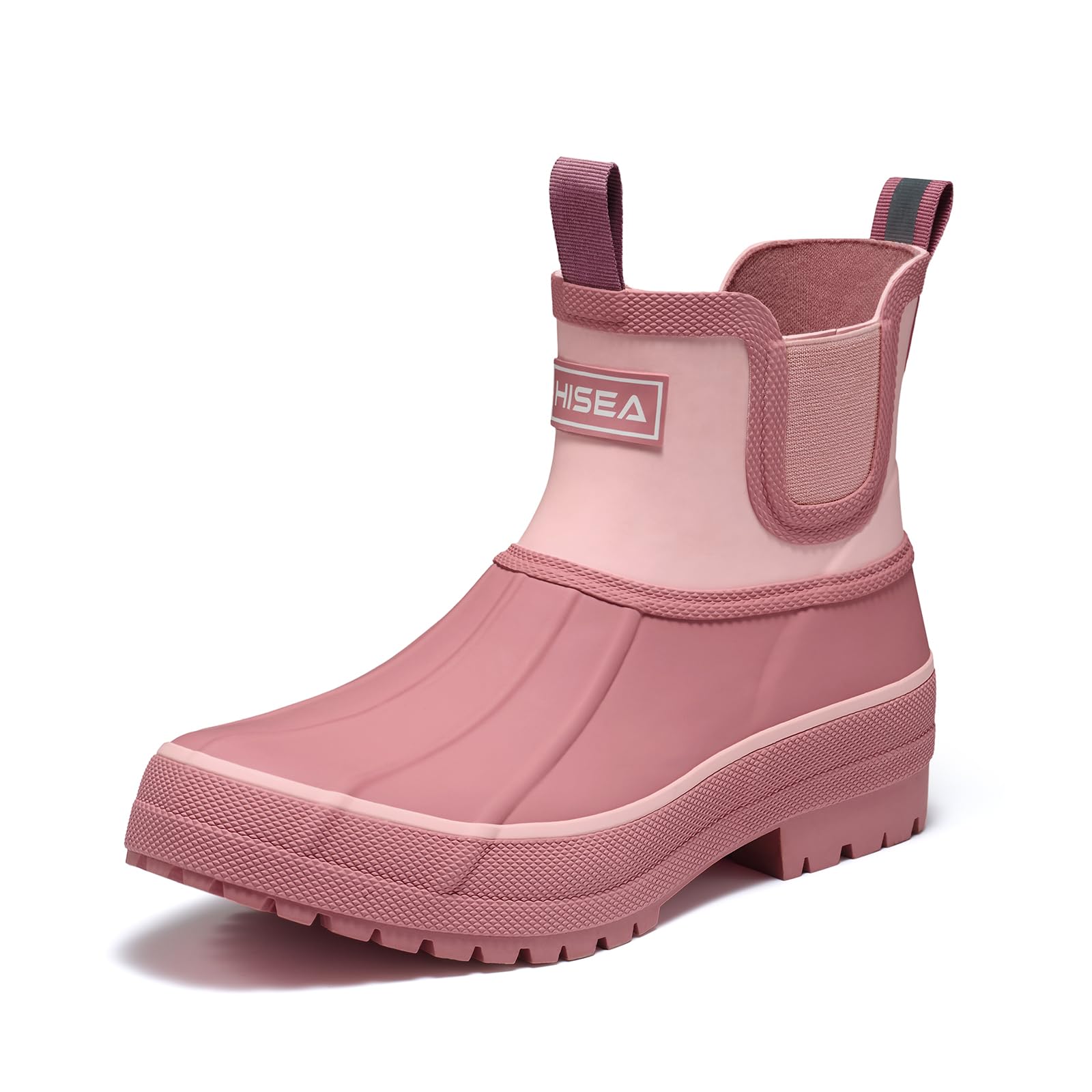
Key Features
- Waterproof Construction: Rubber Chelsea, waterproof lining
- Warmth Rating: Fur lined, mild cold
- Traction: Chelsea sole, basic tread
- Shaft Height & Ease: Chelsea ankle height, pull-on
- Fit Consistency: Runs small and narrow
- Price: Budget
This Chelsea rain boot combines a cute silhouette with easy slip-on access and solid waterproofing at a low price. The fit can run small and narrow, which may require sizing up for comfort, and occasional splitting at the back seam has been noted with regular use. For women who need an affordable, casual boot for quick trips in wet grass and can accommodate the sizing, this is a suitable entry-level option.
Pros
- Comfortable arch support with no chafing during wear
- Fully waterproof shell that rinses clean easily
Cons
- Fit runs small and narrow, especially in the toe area
- Back seam may separate after a few weeks of use
Best suited for occasional wet-weather use where style and slip-on convenience matter more than rugged longevity.
Best for Occasional Rain Use
Chooka Duck Chelsea

Key Features
- Waterproof Construction: Rubber Chelsea, fleece lining
- Warmth Rating: Fur lined, mild cold
- Traction: Flat sole, low traction
- Shaft Height & Ease: Chelsea ankle height, pull-on
- Fit Consistency: Runs large, size down
- Price: Budget
The Chooka Duck Chelsea offers a warm fur-lined interior and effortless slip-on design at a remarkably low price — ideal for quick trips out in light rain or slush. However, the tradeoff comes in fit consistency (runs large enough that many need to size down) and long-term durability, with some units showing sole separation after a few months. This boot works best as a seasonal, occasional wear option rather than a daily or multi-year boot.
Pros
- Soft, cozy fleece lining keeps feet warm in cold weather.
- Pull-on design makes it quick to get into and out of.
Cons
- Sizing runs large — may require a half-size down or thick socks for a snug fit.
- Sole can crack or leak after a few months of use in some cases.
A practical choice for anyone who needs an affordable, warm rain boot for occasional wet weather and isn’t expecting more than one season of regular use.
Best for Dry Snow Use
Nautica Channing

Key Features
- Waterproof Construction: Rubber lower, synthetic upper
- Warmth Rating: Insulated, warm for snow
- Traction: Waffle sole, clogs with snow
- Shaft Height & Ease: Laced, mid-calf
- Fit Consistency: Runs small, size up
- Price: Budget
For men needing a warm boot for dry snow, the Nautica Channing delivers solid insulation and comfort at a budget-friendly price. However, the sole lacks grip on wet or icy surfaces, and snow packs into the tread, making it a poor choice for conditions where traction matters. This boot works well for occasional use on cold, dry days but not for icy commutes or slush.
Pros
- Keeps feet warm in cold, dry conditions
- Budget-friendly price for a Nautica duck boot
Cons
- Sole slips on ice and wet pavement
- Snow packs into the tread, reducing traction
Best for men who need a warm boot for dry snow and cold weather, provided they can avoid icy surfaces and size up half a size.
How to Choose
The biggest mistake in duck boots is assuming ‘waterproof’ means sealed at the seam — most leaks happen where rubber meets fabric.
Waterproof Construction
A rubber lower is standard, but the real weak point is the seam where it’s stitched to the fabric upper. Budget boots often skip seam taping, letting water seep in after a few puddles. Look for models with a high rubber shaft or taped seams to avoid this failure.
Materials also matter: a full rubber shell (like Muck’s) eliminates the seam entirely, while leather and fabric uppers rely on sealants that can degrade over time. Choose based on how often you’ll be in standing water.
Warmth Rating
Insulation is typically synthetic fleece or shearling. Thicker lining isn’t always better if the boot is too roomy — loosely fit feet lose heat faster due to air circulation. A snug fit with moderate insulation often feels warmer than a loose boot with thick lining.
For stationary use (watching sports, outdoor chores) you need more insulation than for active walking, which generates heat. London Fog’s 15°F rating suits cold-weather standing, while a lighter boot like Sperry works for rainy commutes.
Traction
Waffle soles are common on duck boots, but they clog with snow and become slick on wet pavement. A deeper lug pattern handles mud better, while soft rubber compounds provide more grip on wet concrete. City commuters should prioritize wet traction; farmers need mud clearance.
Cheap soles are often hard plastic that hardens in cold, reducing grip. Check for ‘non-slip’ claims and look at user feedback on ice — Nautica’s boot, for example, is notoriously slippery despite looking rugged.
Shaft Height & Ease
Lace-up boots offer a snug, customizable fit but take time to put on and take off. Pull-on designs (like Muck’s) are faster but can be loose at the calf if you have narrow legs. Chelsea-style ankle boots are easiest for quick errands but provide less coverage against deep puddles.
Consider your daily routine: a farmer who needs to kick off boots quickly will value pull-on, while a commuter may prefer lace-up for a secure feel when walking.
Fit Consistency
Many duck boots run large, especially budget models. A loose fit causes heels to slip, reduces insulation efficiency, and can lead to blisters. Always try boots with the socks you’ll actually wear — thick wool socks add half a size.
Brands like Muck and London Fog often require sizing down, while HISEA runs small. Read reviews for specific sizing advice before ordering, as returns are common.
FAQ
Why do my duck boots leak at the seam between rubber and fabric?
That seam is the most common failure point. Most manufacturers use a stitch to join the rubber lower to the fabric upper, but without seam tape or a rubber overlay, water seeps through the needle holes. To avoid this, look for boots with a high rubber shaft that covers the seam, or models that specifically mention sealed or taped seams. If your boots already leak, a seam sealer can help temporarily.
Are cheap duck boots worth it or do they fall apart quickly?
Cheap duck boots under $40 often compromise on sole durability and seam sealing. Users report soles cracking and heels tearing within a few months. However, if you only need them for occasional light rain, a budget pair like ALEADER or Chooka can be adequate. Expect to replace them within a year if used regularly. For consistent wet weather, spending more on a brand like Sperry or London Fog yields better longevity.
How should duck boots fit – should I size up for thick socks?
Most duck boots run large, so sizing up is unnecessary. In fact, many reviewers need to size down half a size even with thick socks. A boot that’s too loose allows your foot to slide, reducing warmth and causing blisters. Try boots with your preferred sock thickness; if you’re between sizes, choose the smaller size for a snug fit. Always check brand-specific sizing feedback.
Can duck boots handle snow and ice or are they just for rain?
It depends on the boot’s insulation and outsole. Duck boots with a mild lining (like Sperry’s) work for light, soft snow but lack traction on ice. Insulated models like London Fog Ashford handle cold down to 15°F but still struggle on ice if the sole is cheap rubber. For icy conditions, look for boots with aggressive lugs and a soft rubber compound; avoid waffle soles that clog with snow. In general, duck boots are best for wet, muddy conditions — not for ice.