
This post contains affiliate links. We may earn a small commission when you buy through our links — at no extra cost to you.
Heated ski socks promise warmth for hours on the mountain, but the gap between advertised runtime and real-world performance is wide. Many skiers find their socks barely warm through a half-day chairlift run, or the batteries die after a few outings.
The real challenge isn’t finding heat—it’s finding socks that hold up to daily use, fit snugly inside ski boots, and deliver consistent warmth without unexpected shutdowns. This guide focuses on socks that earn their keep with reliable heating, durable batteries, and a fit that doesn’t fight your boots.
We’ve prioritized models with strong warmth evidence and honest runtime figures, so you can focus on your turns instead of your toes.



Best for Skiers & Outdoor
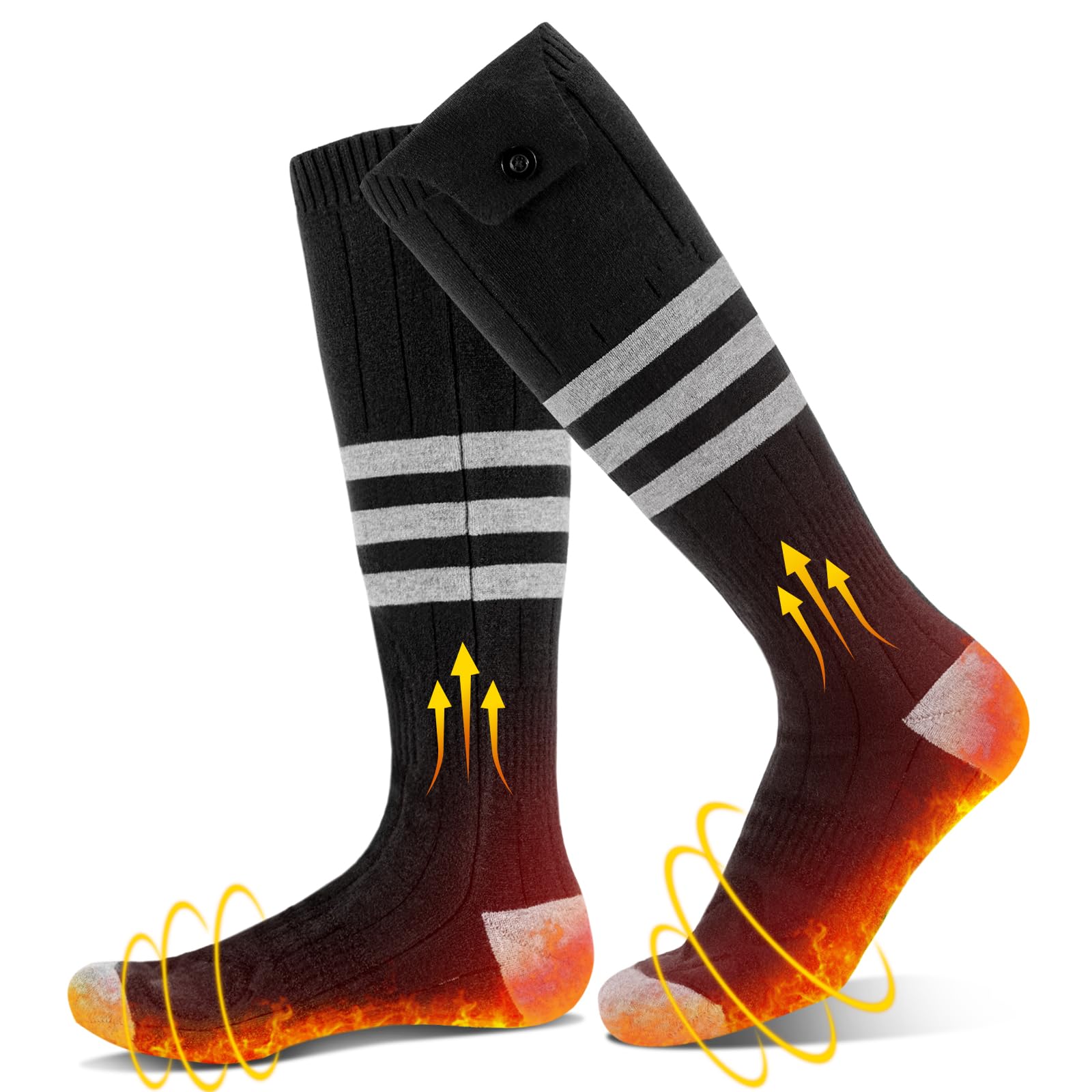
ZUOYI Heated Socks
The ZUOYI heated socks deliver even heat across the entire foot, so no cold spots when standing still on a ski lift or walking through snow. Four heat levels let you dial in warmth from gentle to intense, and the material is soft and breathable, reducing sweat buildup. The battery pack stays secure inside the calf pocket without slipping.
These are a strong match for skiers, ice fishers, and hikers who need reliable warmth for a few hours of high heat or a full day on the low setting. On low, the 5000mAh battery runs the full 8 hours advertised. On high, runtime drops to 3–4 hours – enough for a lift-accessed ski morning but not a full shift without a recharge. The wire across the top of the foot can leave a red mark for some wearers, so checking sensitivity beforehand is wise. The calf fit runs snug for wider legs.
Pros
- Even heat distribution eliminates cold spots across the foot.
- Durable construction and comfortable fabric for all-day wear.
- Lasts a full day on the low heat setting.
Cons
- Wire across the top of the foot can create a red mark for those with sensitive feet.
- On the highest setting, runtime is 3–4 hours rather than the advertised 8.
If you need consistent heat for skiing, hiking, or outdoor work, these socks deliver where it counts – just plan for shorter runtime on high and check your calf fit.
Best for Skiing & Hiking
Wequsky Heated Socks
The Wequsky socks reach 150°F within seconds, with even heat across the foot and toe area that holds well during active skiing or hiking. Battery life on the highest setting runs 3–4 hours — enough for a half-day on the slopes but not a full shift if you keep the heat maxed. Stepping down to medium extends runtime to 5–6 hours, which suits most recreational skiers. The fit is roomier than some competitors, accommodating thicker calves without pressure points, and the fabric feels durable after repeated wear.
This is a cost-effective alternative to the top pick (ZUOYI) for buyers who don’t need the absolute longest battery life or highest user rating. If you micro-manage heat levels or limit high heat to short bursts, the Wequsky delivers nearly identical warmth and comfort at a slightly lower price point. It’s best suited for half-day outings or users comfortable adjusting settings to stretch battery life.
Pros
- Heats up quickly to 150°F with consistent warmth across the foot
- Comfortable fit with good calf room and durable fabric
Cons
- On high heat, battery lasts 3–4 hours — may not cover a full ski shift if kept at max
For skiers who can manage heat levels to maximize runtime, these deliver performance close to the top pick at a slightly lower price.
Best for Cold Weather Activities
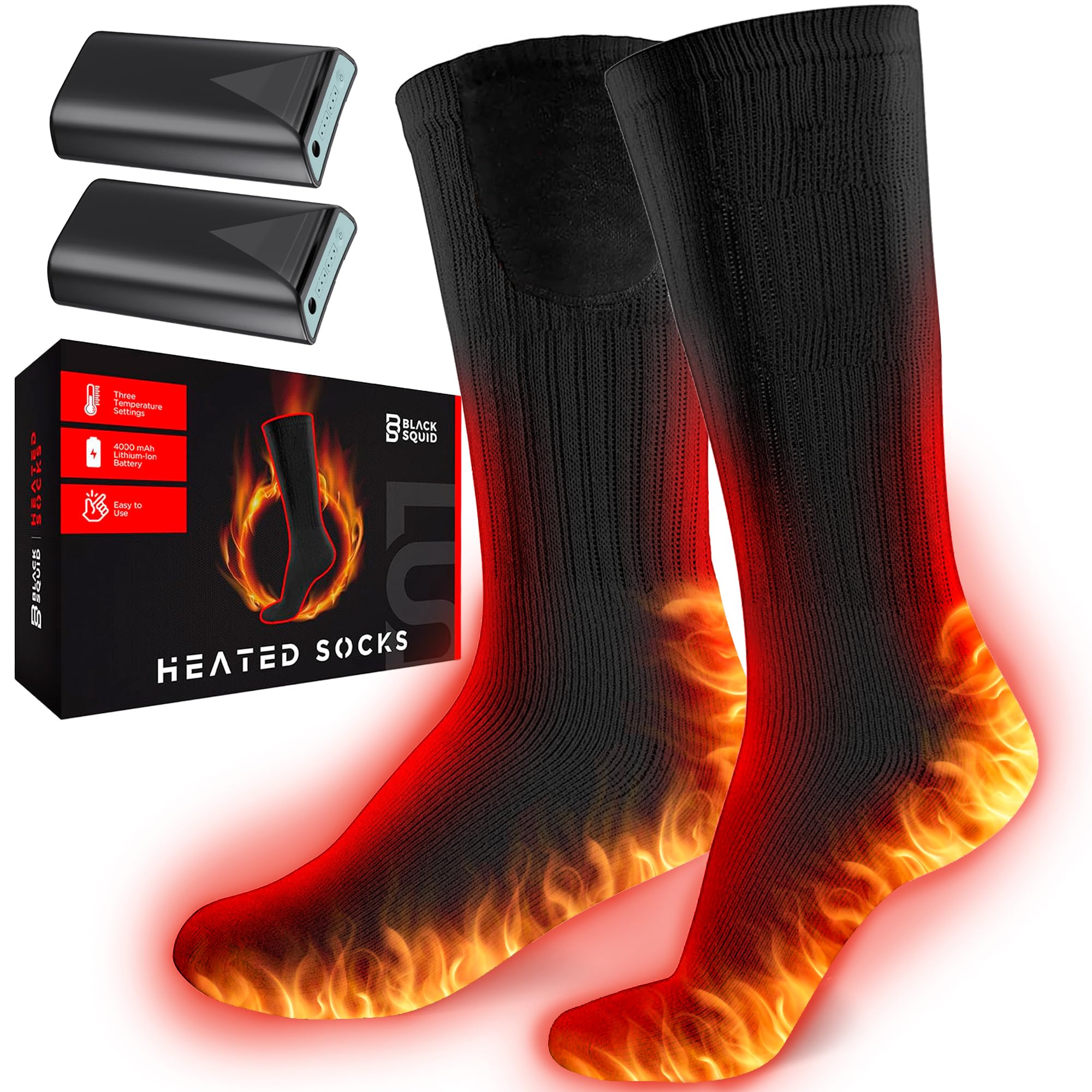
Black Squid Heated Socks
While the top pick offers slightly more heat output, Black Squid matches it on warmth consistency and battery stamina—key for a full day on the slopes. The 4000mAh battery keeps toes warm through a half-day session on high or an entire work shift on low. The calf area runs snug, so those with wider calves should consider sizing up; the 140°F max temp is fine for most winter conditions but won’t cut it in extreme cold (-20°F or below). This is a solid option for skiers and hikers with slim to average legs who prioritize reliable warmth over added features.
Pros
- Heat stays even across the foot during active use.
- Battery holds up for a full ski outing on medium setting.
- Soft interior and flexible heating wires don’t bunch under socks.
Cons
- Calf fit can be tight for muscular or larger legs.
- Max temperature may feel insufficient in extreme cold environments.
If your calves are on the slimmer side and you don’t need arctic-grade heat, this is a dependable mid-range heated sock that won’t let you down on a cold day outdoors.
Best for Tech-Savvy Skiers
Savior Heat APP Heated Socks
Key Features
- Battery: 7.4V 2200mAh
- Max Temp: 150°F
- Heat Levels: 3
- Price: $$$
The Savior Heat socks warm up fast and hold temperature well, with a battery that lasts a full day on low settings—a solid performer for tech-focused skiers. The app allows on-the-fly heat adjustment without reaching for pockets, a clear advantage over button-only models. However, the calf fit runs snug, so skiers with larger or athletic legs may find it restrictive. The premium price also puts it above what most budget-conscious buyers would consider.
This sock suits skiers with slim calves who want app-based convenience and strong warmth. If your legs are on the thicker side or you’re looking for a lower-cost option, the top pick in this set offers a similar warmth profile in a more accommodating fit.
Pros
- Heats up rapidly and maintains even warmth across the foot.
- Battery life on low setting covers a full day of skiing without recharging.
- App control lets you adjust heat levels hands-free during activity.
Cons
- Calf area may feel tight for those with larger or athletic legs.
- Some units have shown battery performance changes after extended use.
A capable app-enabled sock that delivers on warmth and battery life—best suited for skiers with slim calves who prioritize remote control over cost savings.
Best for Budget Outdoor Use
Baowenqier Heated Socks
The Baowenqier Heated Socks deliver respectable warmth at a budget-friendly price, with four heat settings that let you dial in comfort for chilly chairlifts or quick runs. For shorter outdoor sessions in mild to moderate cold, they keep feet cozy without breaking the bank.
Where this pair falls short is endurance. On high heat, battery life drops to around 3–4 hours rather than the advertised 8, making it better suited for half-day outings than all-day skiing. The fit also runs snug for larger feet, so if you wear above a size 10–11, the toe box may feel tight.
Pros
- Comfortable warmth for the price with four temperature levels
- Affordable entry point for heated ski socks
- Heat settings offer flexibility from mild to warm
Cons
- If you have larger feet, the fit may be snug
- For longer ski sessions, battery life runs 3–4 hours instead of the advertised 8
A smart cost-saving option for skiers who only need warmth for short runs or moderate cold. Just plan for a mid-day battery swap if you’re out longer.
Best for Occasional Light Use
Netraty Heated Socks

At a budget-friendly price, these socks include app-controlled heating and four levels of warmth. However, the heating can be inconsistent and may not be intense enough for skiing or extended time in cold conditions. Battery life also varies, making them better suited for casual, mild-weather use rather than demanding outdoor activities.
Pros
- Exceptional value at a low cost
- App-controlled heating offers convenient adjustment
Cons
- Heating may be inconsistent and insufficient for skiing or prolonged cold exposure
Best for occasional light use in mild cold where budget is the top priority and full warmth isn’t required.
Best for Enthusiasts High Heat
LVTFTAD Heated Socks
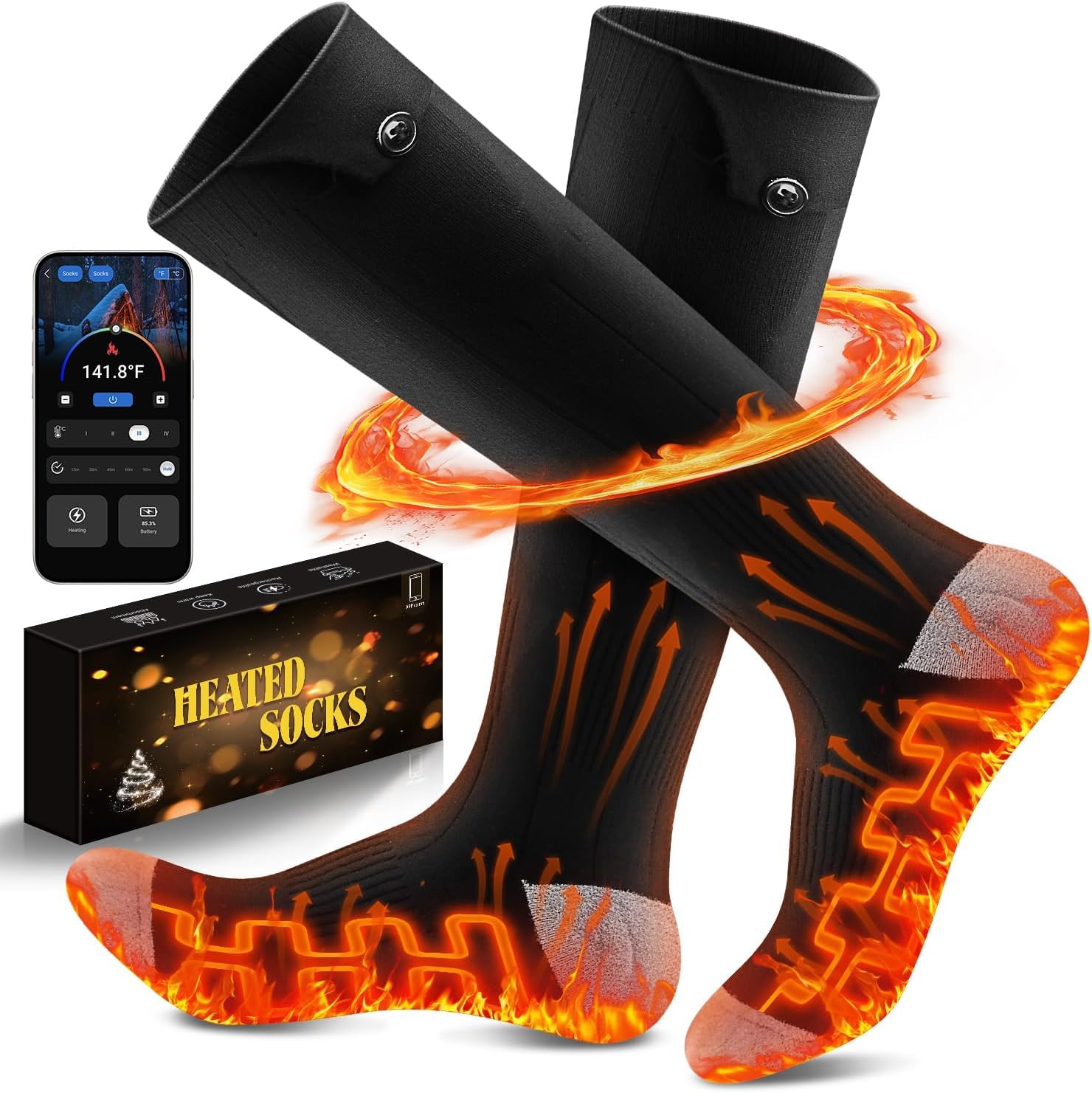
These socks deliver impressive warmth—the heating elements cover a large area and the fabric is comfortable for active use. However, the battery system has a notable quirk: the power may not fully shut off, causing continuous drain even when the switch is off. Bluetooth pairing can also drop unexpectedly during movement. This makes them better suited for tech-friendly users who don’t mind managing battery pull and occasional reconnects, rather than those wanting reliable set-and-forget heating during a full ski day.
Pros
- High heat output with wide coverage across the foot and toe.
- Comfortable fit for extended wear during cold-weather activities.
Cons
- Batteries may not power off completely, draining continuously after use—requires manually unplugging the battery pack.
A solid option for those who want maximum warmth and don’t mind babysitting the battery and Bluetooth—pass on it if you need trouble‑free operation all day.
Best for Traditional Ski Sock
Savior Heat Heated Socks

Key Features
- Battery: 7.4V 2200mAh
- Max Temp: 150°F
- Heat Levels: 3
- Price: $$$
The SAVIOR HEAT Heated Socks warm the toes effectively on the slopes with an easy button control — no app fuss. They suit average calves and skiers who want straightforward heat without Bluetooth. However, battery life can be shorter than expected, and the calf area may feel tight for some; occasional units have been noted to stop working. This is a decent option for occasional ski days if fit works, but not a long-haul investment.
Pros
- Focused toe heating works well for skiing.
- Solid option for snow sports like skiing and hunting.
Cons
- Battery can run low sooner than hoped, and some units may stop working.
Worth considering if you need simple toe heat for occasional ski outings and have average calves, but pass if reliability or all-day battery matter most.
Best for Slim Leg Users
Sun Will Heated Socks

Key Features
- Battery: 7.4V 2200mAh
- Max Temp: 150°F
- Heat Levels: 3
- Price: $$$
This sock heats up fast and feels well-made, with quality materials that should hold up through a season of skiing. The tradeoff is a fit that runs narrow through the calf — fine if your legs are slim, but restrictive otherwise. Battery life can also be inconsistent, and the price feels steep when more accommodating options exist for less.
Pros
- Heats up quickly and delivers consistent warmth.
- Well-constructed with durable materials.
Cons
- Calf area may feel too tight for those with larger calves.
Best suited for slim-legged skiers who prioritize quick warmth and build quality, and are willing to pay a premium for a snug fit.
Best for Occasional Use
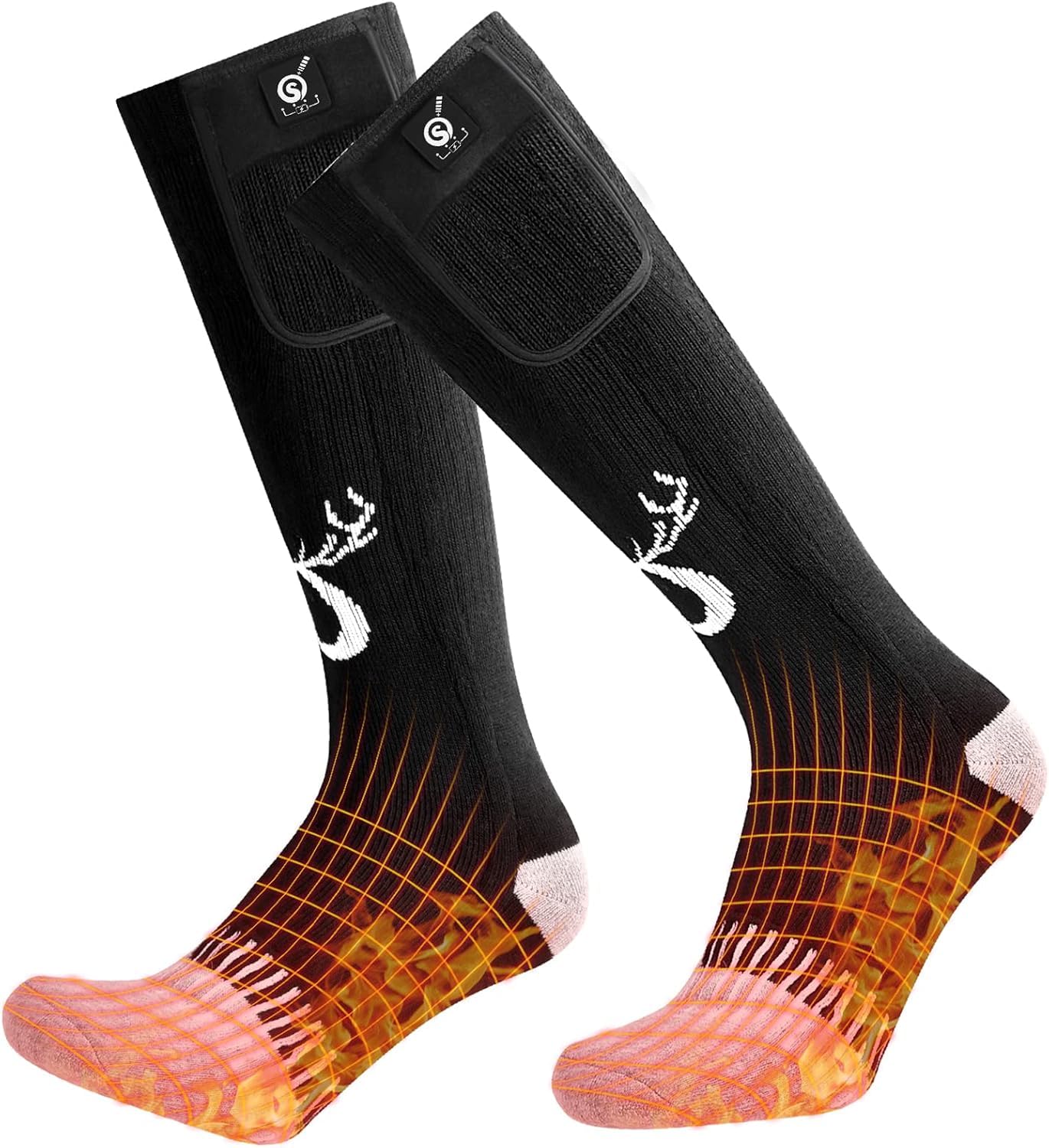
Snow Deer Heated Socks (New)
Key Features
- Battery: 7.4V 2200mAh
- Max Temp: 131°F
- Heat Levels: 3
- Price: $$$
This Snow Deer iteration delivers effective warmth and quality materials. However, the calf fit runs snug for some. Best suited for occasional cold-weather use where a trim calf profile is manageable.
Pros
- Effective warmth for cold weather
- High quality materials
Cons
- Battery capacity may diminish over time
A quality-built heated sock for occasional use.
How to Choose
The single most important spec is real-world runtime on high heat—most brands overstate it by 30–50%, and your toes will feel the difference mid-morning.
Battery Capacity and Voltage
Higher mAh numbers sound better, but voltage matters more. A 7.4V 2200mAh battery stores more energy than a 5V 5000mAh pack because voltage multiplies capacity. Look for 7.4V or dual-battery setups if you need consistent heat for a full ski day.
In practice, a 7.4V 2200mAh sock on high lasts about 3–4 hours, while a 5V 5000mAh pack may only last 2–3 hours on high despite the larger number. Skiiers on all-day trips should carry spare batteries.
Max Temperature and Heat Levels
Max temperature (130–160°F) gets the headlines, but heat levels determine versatility. Three to four levels let you dial back during active runs and crank up on chairlifts. A sock that only has a single high setting will either be too warm or not warm enough.
Socks that top out at 140°F feel noticeably cooler than 150°F models in sub-zero wind. But hitting 158°F often comes at the cost of battery life—every 10°F increase can cut runtime by 20–30%.
Real-World Runtime
Advertised runtimes (e.g., ‘up to 10 hours’) are measured on low heat in still air. On high heat, the same sock might last 3–4 hours. That gap is the single biggest buyer trap in this category.
Check user reports for runtime on high setting. If you ski a full 6-hour day in 20°F temps, look for socks that deliver at least 4 hours on high or plan to recharge over lunch.
Fit and Sizing
Heated socks must fit snugly inside ski boots without bunching. A tight calf is the most common complaint—many socks use one-size-fits-all elastic that can cut circulation. Measure your calf circumference and choose a model with multiple size options.
Socks that are too long or too short will shift the heating element away from your toes. Look for socks that specify maximum foot length and calf width, and avoid generic S/M/L sizing.
Additional Features: App Control and Washability
App control lets you adjust heat without removing gloves or bending down, but Bluetooth reliability varies. In cold, phone batteries drain faster and connectivity can drop. Simple button controls are more dependable but less convenient.
Washability is non-negotiable—look for socks that allow the battery to be removed and the sock machine-washed. Washing a non-removable battery will destroy it. Most quality models include a laundry bag for the wires.
FAQ
Why do my heated socks stop heating after a few months?
The batteries are the weakest link. Most heated socks use lithium-ion cells that degrade quickly under frequent charge cycles. If the socks stop warming, the batteries likely need replacement. Buy models with easily replaceable batteries and consider ordering spares upfront.
Can heated socks be worn inside ski boots without adding bulk?
Yes, if you choose the right fit. Look for socks labeled ‘ski boot compatible’ or with a thin thermal layer. Avoid overstuffed designs. The heating wires are thin and lie flat against the foot—they won’t cause pressure points if the sock is snug but not tight.
How long do heated socks actually last on the highest setting?
Real-world high heat runtime is typically 2–4 hours, not the 6–10 hours often advertised. A 7.4V 2200mAh battery on high gives about 3–4 hours. For a full day on the slopes, carry a spare set of batteries or recharge over lunch.
Do Bluetooth heated socks work reliably in cold weather?
Bluetooth can drop in extreme cold, especially if your phone is in a jacket pocket. App-controlled socks are convenient for fine-tuning, but the button controls on the battery itself will always work. If you ski in sub-zero conditions, prioritize socks with tactile buttons.