
This post contains affiliate links. We may earn a small commission when you buy through our links — at no extra cost to you.
Most travel-sized carbon monoxide detectors are simply repurposed home alarms. They trigger at standard thresholds (~70 ppm) – fine for a hotel room but dangerously slow for a vehicle where exhaust leaks can spike CO levels in minutes. Travelers often assume any portable detector will work, only to discover it never alarms until symptoms set in.
The right choice depends entirely on where you’ll use it: hotels, RVs, tents, or daily driving. Low-level alarms (9 ppm) exist for vehicles, but they come with reliability trade-offs. This guide breaks down the real-world differences so you match the detector to your travel setup, not the other way around.


Best for Hotels & Home
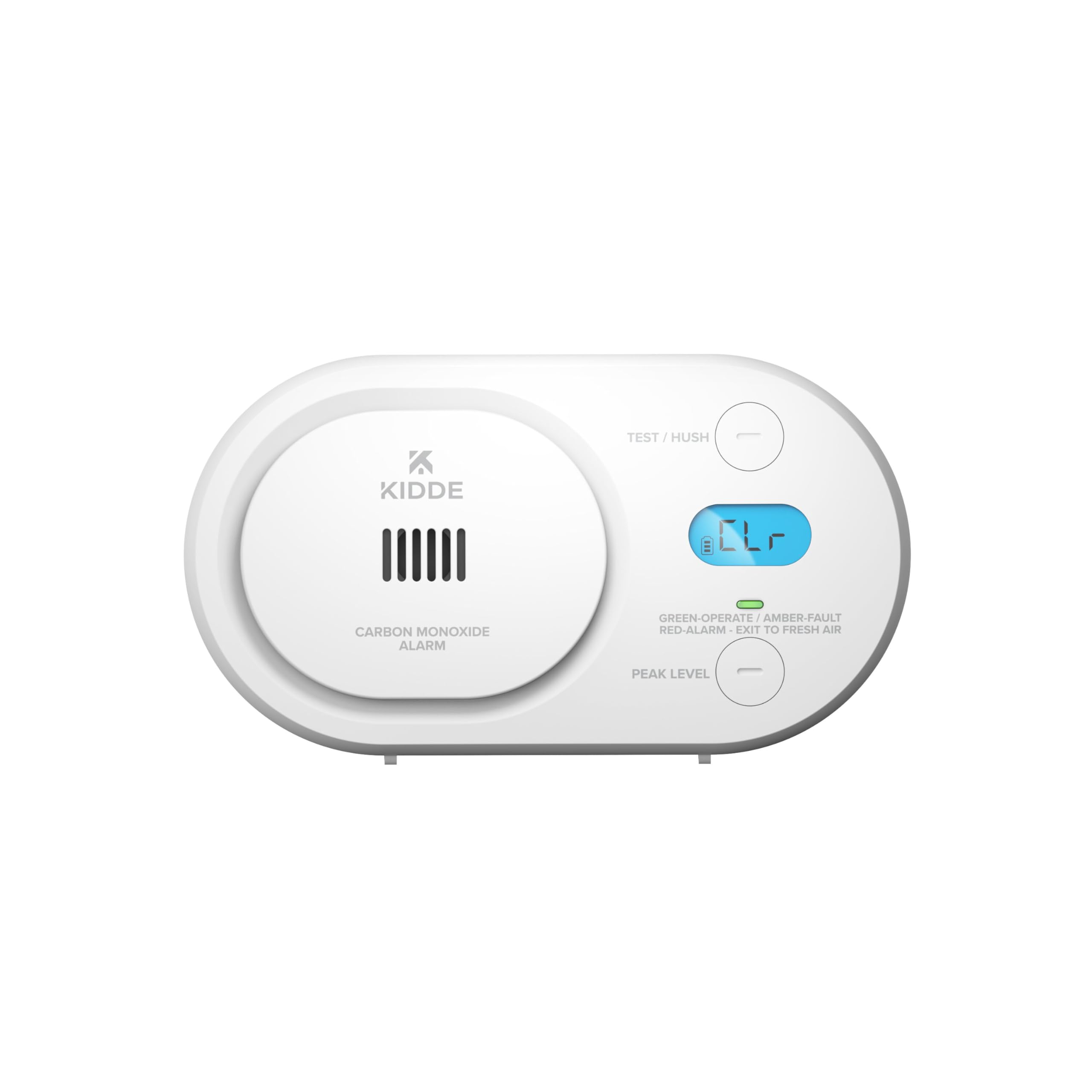
Kidde COBD
Key Features
- Power Source: AA batteries
- Alarm Threshold: Standard 70ppm
- Display Type: Digital LCD
- Size / Weight: 5.9 oz
- Extra Detection: CO only
- Price: $
The Kidde COBD delivers consistent electrochemical sensing and a clear backlit digital readout, so you see CO levels at a glance. Setting it on a nightstand or mounting it on a wall takes seconds, and the front button lets you test or silence low-level alerts without confusion.
This detector triggers at around 70ppm, which meets home and hotel safety standards but may not catch low-level CO buildup in a car or RV as early as specialized models. It’s a good match for travelers staying in hotels or vacation rentals, and for homeowners wanting an affordable battery-powered backup with a visible reading. Avoid using it as the sole CO monitor in a vehicle or damp outdoor area.
Pros
- Consistent performance with minimal false alarms over long-term use.
- Easy to install and use – tabletop or wall mount with intuitive button.
- Digital display shows real-time CO levels for peace of mind.
Cons
- Standard 70ppm trigger may not detect low-level CO in vehicle cabins early enough – better suited for home or hotel use.
- Not designed for wet or rugged environments; moisture can affect the sensor.
A practical, no-frills detector for budget-conscious travelers and homeowners who want a visual CO reading – just don’t rely on it for early vehicle leak detection.
Best for Minimalist Travel
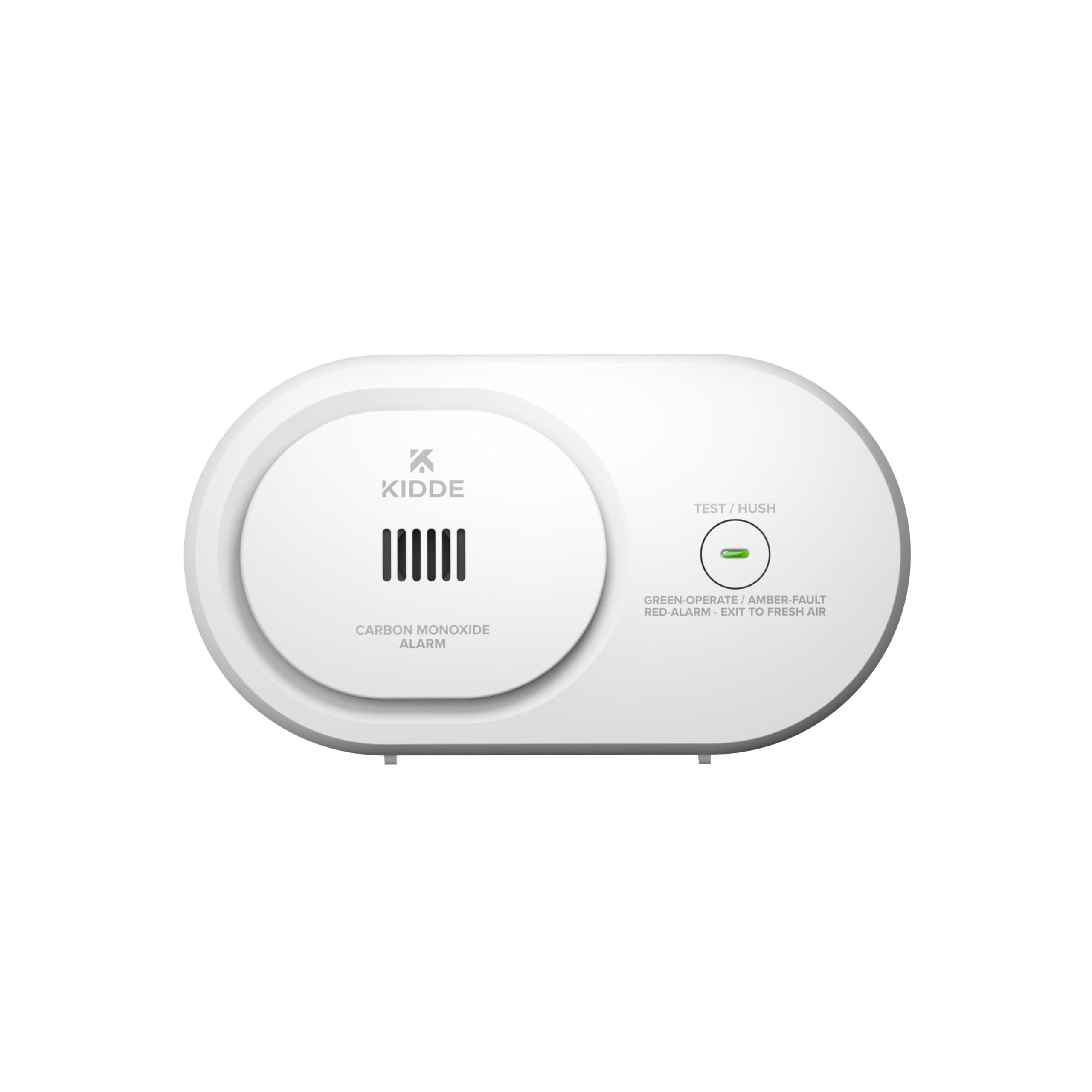
Kidde COB
Key Features
- Power Source: AA batteries
- Alarm Threshold: Standard 70ppm
- Display Type: LED indicator
- Size / Weight: 5.9 oz
- Extra Detection: CO only
- Price: $
This Kidde detector skips the digital readout entirely, focusing on one job: sounding an 85 dB alarm when carbon monoxide reaches dangerous levels. It installs in seconds with included AA batteries and feels solid for its size. For hotel stays, rentals, or replacing an expired home unit, this is the most budget-friendly way to get UL-listed protection. What you trade off is any visibility into the exact CO concentration — you get alarm or silence, nothing in between. And the standard alarm threshold (around 70 ppm) means it’s not designed to catch low-level exhaust buildup in a vehicle cabin before occupants feel symptoms.
Best for travelers who want the cheapest reliable alarm without checking numbers, or for anyone refreshing old detectors on a tight budget. Not for drivers or campers who need early low-level CO detection in vehicles.
Pros
- Reliable detection without false alarms
- Setup takes seconds – just insert batteries
Cons
- No digital display – you won’t see the CO level, only hear the alarm
- Standard alarm threshold may not catch low-level vehicle exhaust before symptoms appear
If you only need a pass/fail alarm for home or hotel use and want to spend the least, this Kidde delivers. Skip it if you need a display or plan to rely on it in a vehicle.
Best for Vehicle Exhaust Detection
Forensics FD-CAR001
Key Features
- Power Source: 2× batteries
- Alarm Threshold: Low 9ppm
- Display Type: LED indicator
- Size / Weight: 2 oz
- Extra Detection: CO only
- Price: $$$
The Forensics FD-CAR001 triggers at 9ppm – lower than standard home alarms – making it sensitive to vehicle exhaust leaks before they pose a risk. The compact metal body and stick-on mount install discreetly in cars, RVs, or aircraft. However, quality control can be uneven; some units stop alarming unexpectedly or consume batteries faster than expected. This detector suits pilots, fleet managers, and drivers who need early warning and are willing to check device status regularly – it works best as a supplementary monitor rather than a set-and-forget safety tool.
Pros
- Alarms at 9ppm – catches exhaust leaks earlier than typical home detectors.
- Weighs 2 oz with a metal housing; fits in a glovebox or mounts discreetly.
- Simple one-button operation and adhesive mount for quick setup.
Cons
- Battery life can vary – some units may need replacement within a couple of months.
- Some units may stop working prematurely; periodic testing is recommended.
A useful early-warning supplement for vehicle owners who want low-level detection, but not a primary safety device you can ignore.
Best for Professional Outdoor Use
Sensorcon Inspector
Key Features
- Power Source: Lithium (2yr life)
- Alarm Threshold: Low 35ppm
- Display Type: Digital readout
- Size / Weight: 3.84 oz
- Extra Detection: CO only
- Price: $$$
The Sensorcon Inspector delivers professional-grade accuracy in a rugged, IP67-rated package that withstands water, drops, and extreme environments. Its 2-year battery life and clip-on design make it a go-to for frequent travelers in RVs, boats, or campers who need a detector that won’t quit. The premium price reflects this durability — for occasional hotel stays, a simpler model covers the same ground at half the cost.
Pros
- IP67 waterproof and shock-resistant for harsh environments
- Accurate CO readings from 1–1999 ppm, used by pilots and inspectors
- Compact size with belt clip and 2-year battery life
Cons
- For occasional hotel use, the higher cost is hard to justify compared to basic travel alarms
For pilots, inspectors, and anyone who needs a detector that survives real abuse, the Sensorcon is a long-term investment. For casual travel, a budget-friendly option works fine.
Best for Tech-Savvy Travel
TOPTES CT-580
Key Features
- Power Source: USB-C rechargeable
- Alarm Threshold: Standard
- Display Type: TFT color
- Extra Detection: Flashlight
- Price: $$
The TOPTES CT-580 stands out for its USB-C rechargeable design, eliminating battery swaps, and a bright TFT color display that shows CO levels at a glance even outdoors. The three alarm modes — sound, flash, and vibration — give you flexible alerts, with the silent vibration option especially handy in noisy environments like a campsite or workshop. Build quality feels solid, more like a pro tool than a travel accessory.
This detector is best suited for tech-savvy travelers who want a feature-rich spot-check tool rather than a set-and-forget safety device. Accuracy can vary between units — some users report false readings or zero readings at low levels — so it’s a capable secondary monitor for hotel rooms, RVs, or workshops, but not a primary alarm for life-dependent situations. The rechargeable battery lasts a few days, making it easy to top up via USB-C between trips.
Pros
- USB-C rechargeable — no batteries to replace and easy to keep topped up on the go.
- Color TFT display is clear and readable in direct sunlight.
- Vibration alarm works well in loud environments for discreet monitoring.
Cons
- Sensor accuracy can be inconsistent; some units may show false zero or off readings at low concentrations.
If you want a travel CO detector with modern conveniences and can treat it as a secondary spot-check tool rather than your only lifeline, the TOPTES CT-580 delivers value without forcing you to carry spare batteries.
Best for Families & Rvs
Marcala 3-Pack
Key Features
- Power Source: Plug-in + battery backup
- Alarm Threshold: Standard
- Display Type: LED indicator
- Size / Weight: 0.3 lb each
- Extra Detection: CO, gas, temp, humidity
- Price: $
This three-pack bundles CO and natural gas detection in each unit, making it a practical choice for multiple rooms or RV propane monitoring. Unlike the simpler digital-display top pick, the Marcala adds gas and air quality sensing, but trades full portability for plug-in operation.
Best suited for families who want detectors in several locations or RV owners needing propane leak detection alongside CO. The battery backup keeps it active during outages, but it won’t work in tents or places without AC power.
Pros
- Covers CO and natural gas in one compact detector
- Three-pack covers multiple rooms or travel spares at a low per-unit cost
- Plug-and-play with battery backup for power cuts
Cons
- Requires an AC outlet; the battery backup only supports short outages, not extended off-grid use
Best for families and RV owners who have access to AC power and want multi-gas protection at a low cost per detector.
How to Choose
The most important factor in choosing a travel CO detector is the alarm threshold: standard models (~70 ppm) are fine for hotels but can be dangerously slow in vehicles where exhaust leaks spike CO levels rapidly.
Power Source
AA battery models are simple to maintain – you can replace batteries anywhere. Rechargeable units (USB-C) save on disposables but need frequent charging, often lasting only 3-4 days. Long-life lithium batteries (up to 2 years) offer set-and-forget convenience but add cost.
If you’re on a multi-week road trip without steady access to USB power, a rechargeable detector that dies in three days becomes a liability. For most travelers, AA-powered detectors strike the most practical balance.
Alarm Threshold
Standard detectors are designed for home use where CO accumulates slowly. In a vehicle, exhaust leaks can push CO to dangerous levels in minutes. A detector that only alarms at 70 ppm may not sound until you’re already feeling symptoms.
Low-level alarms (9 ppm) provide earlier warning but may also trigger from minor, nonhazardous sources like a cold engine start. For vehicle use, low-level detection is a safety necessity; for hotel-only use, standard thresholds are sufficient.
Display Type
A digital display shows real-time CO levels, letting you monitor trends and spot-check. A simple LED indicator only lights up when the alarm threshold is reached – you get no advance notice. For travelers who want to verify air quality before bedtime, a display adds peace of mind.
However, digital displays consume more power and cost more. If you only need a binary alarm (safe / not safe), an LED-only detector is lighter on batteries and cheaper.
Size and Weight
Weight matters when packing. A 2-ounce detector clips to a backpack or glovebox with no bulk. Heavier units (around 6 oz) still fit in a pocket but add up in a carry-on. The trade-off is portability vs. ruggedness – lighter units often sacrifice durability.
For rough environments like RVs or boats, a slightly heavier, waterproof model (like the Sensorcon Inspector) withstands drops and moisture better than a featherlight plastic unit.
Extra Detection
Some detectors also sense natural gas, temperature, and humidity. That’s useful for RVs with propane appliances or for monitoring indoor air quality. But added sensors increase complexity and battery drain.
If you only need CO monitoring, a single-purpose detector is simpler and more reliable. Multi-gas detection is a bonus only if you actually use the additional features.
FAQ
Why does my portable CO detector show 0 ppm even when I know there is exhaust in the car?
Many detectors have a minimum sensitivity threshold (often 10-30 ppm) and won’t register anything below that. Additionally, sensor response time can lag behind rapid CO spikes. If you suspect a leak, use a detector rated for low-level detection (9 ppm) or test with a known source like a propane torch.
Can I use a home carbon monoxide detector in my tent or camper van?
Yes, but only if it’s battery-powered and placed near your sleeping area. Standard home detectors alarm at about 70 ppm, which may not sound early enough if you’re sleeping and CO builds up from a stove or heater. For enclosed sleeping spaces, a low-level alarm (9-35 ppm) provides much earlier warning.
How low should a CO alarm be for safe driving in a vehicle?
For vehicle or aircraft use, an alarm that triggers at 9 ppm is ideal – it detects exhaust leaks before symptoms like headache or dizziness appear. Most home detectors alarm at 70 ppm, which is far too late. The Forensics FD-CAR001 is one of the few portable models with a 9 ppm threshold.
Do all travel carbon monoxide detectors meet the same safety standards?
No. Look for UL or CSA certification – many budget portables lack these, meaning their accuracy and reliability are unverified. Stick with recognized brands like Kidde, Sensorcon, or Forensics that list certifications. Uncertified detectors may fail to alarm or give false readings.