
This post contains affiliate links. We may earn a small commission when you buy through our links — at no extra cost to you.
Finding a winter jacket that packs down small for travel yet keeps you warm in cold weather is a constant trade-off. Many lightweight puffers skimp on insulation, while heavy parkas eat up luggage space. On top of that, budget jackets often come with fit inconsistencies and zipper failures that only show up after a few wears.
This guide focuses on jackets that solve that balance—ones that deliver real warmth without weighing you down. We’ve prioritized models that pack easily, fit consistently, and hold up to regular use. Whether you need a packable layer for a city trip or a rugged coat for harsh winters, the picks here are built for real-world travel and everyday wear.



Best for Packable Travel
Amazon Essentials Packable Puffer
Key Features
- Warmth & Insulation: Synthetic puffer
- Weight & Packability: Lightweight, packable
- Water Resistance: Water-resistant
- Fit Consistency: Inconsistent
- Price: $
This puffer folds into a compact pouch smaller than a water bottle, making it a non-issue for packing space. Despite its light weight, the synthetic fill holds heat well in mild to moderate cold, and the water-resistant shell handles light rain or snow. At a budget-friendly price, it competes with jackets costing twice as much.
Best for travelers who need an extra layer that won’t crowd a suitcase, or for everyday commuters in climates where winter temperatures rarely drop below freezing. The fit inconsistency means you should check recent reviews for sizing guidance — some buyers size down, others size up depending on their build.
Pros
- Packs into its own pocket, ideal for carry-on and day trips
- Warmth-to-weight ratio that keeps you comfortable in 30-50°F without bulk
- Budget-friendly price that undercuts most competitors
Cons
- In some cases, the fit runs large or small depending on body type — worth checking recent fit reviews before ordering
For the price, you get a genuinely packable, warm jacket that handles travel and moderate cold — just confirm your size before checkout.
Best for Women Travel
Outdoor Ventures Packable Puffer
Key Features
- Warmth & Insulation: Synthetic puffer
- Weight & Packability: Packable, folds into pocket
- Water Resistance: Water-repellent
- Fit Consistency: Runs large
- Price: $
This puffer compresses into a small pouch, making it a natural fit for packing cubes and carry-ons. Buyers consistently find it warm enough for fall and early winter outings in the 30–50°F range, and the lightweight build allows all-day comfort without restrictive bulk. The main tradeoff is sizing—some find the jacket runs large, so checking recent reviews for your size before ordering is recommended. Best suited for women who need a compressible layer for moderate cold and value packability over sub-freezing warmth.
Pros
- Compresses into its own pocket, freeing up luggage space for other items.
- Lightweight warmth that handles 30–40°F without feeling heavy or restrictive.
- Well-constructed materials for the price, with a water-repellent finish.
Cons
- Fit can be loose on some frames; sizing down may be needed for a trim silhouette.
A practical travel companion for fall and early winter trips, especially for those needing a compressible layer that maintains warmth without bulk.
Best for Outdoor Workers
Carhartt Washed Duck Bartlett
Key Features
- Warmth & Insulation: Fleece lined, heavy cotton
- Weight & Packability: Heavy (4.65 lbs)
- Water Resistance: Wind-resistant, water-repellent
- Fit Consistency: Runs large
- Price: $$
This jacket is built like a tank — thick duck cotton that sheds wind and water, paired with a soft fleece interior. Unlike lightweight packable puffers, it’s designed for jobsites and below-freezing commutes, not suitcase storage. It suits tradespeople and outdoor workers who value longevity over portability. The weight and bulk make it a poor match for travel or active wear.
Pros
- Rugged duck canvas withstands years of abuse
- Fleece lining and roomy cut allow layering for sub-zero temps
- Comfortable range of motion despite heavy materials
Cons
- Side pockets may be too shallow for larger phones or gloves
- Fit can run large; sizing down is often necessary
If you need a winter coat that outlasts the job site and keeps you warm in single digits, this is the one. For packable travel convenience, the top pick is a better fit.
Best for Budget Skiing
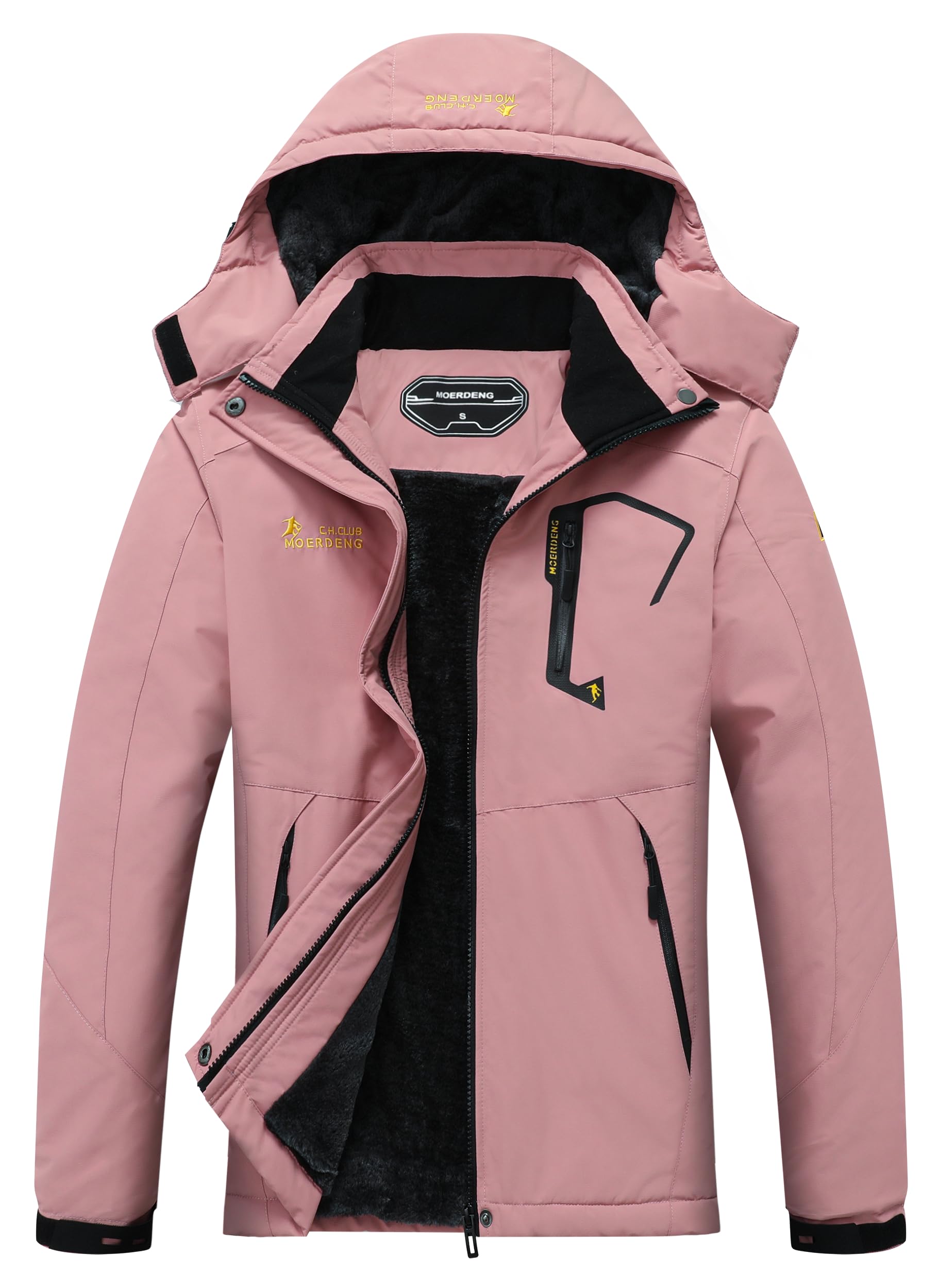
MOERDENG Ski Jacket
Key Features
- Warmth & Insulation: Fleece lined, insulated
- Weight & Packability: Standard weight
- Water Resistance: Waterproof shell
- Fit Consistency: Unpredictable
- Price: $
This ski jacket delivers exceptional warmth and weather resistance, rivaling coats that cost significantly more. The main catch is sizing: the jacket can run either large or small, so you may need to try multiple sizes to find a proper fit. It’s ideal for budget-conscious skiers and snowboarders who are willing to put up with size uncertainty in exchange for serious cold-weather performance.
Pros
- Exceptional warmth for cold-weather activities
- Good waterproofing and wind resistance keeps you dry
- Great value compared to premium ski jackets
Cons
- Sizing is inconsistent — you may need to exchange for a different size
A smart budget pick for winter sports if you can handle the sizing guesswork.
Best for Extreme Cold
Orolay Thickened Down Jacket
Key Features
- Warmth & Insulation: Thickened down
- Weight & Packability: Mid-weight
- Fit Consistency: Runs small
- Price: $$
Thickened down fill keeps wearers warm in single-digit temperatures without requiring multiple layers, a standout feature for subfreezing commutes. The flattering silhouette and premium-looking fabric belie the mid-range price. Unlike travel-focused puffers, this coat prioritizes maximum insulation and style over packability. Multiple pockets, including side zippers for expansion, add everyday utility. Sleeve length runs short for taller builds, and the zipper can snag when rushed. Best for women who want a stylish daily coat for extreme cold and don’t mind checking the zipper before heading out.
Pros
- Keeps wearers warm in single-digit temperatures without heavy layering.
- Flattering cut and premium fabric give an expensive look for a mid-range price.
- Multiple useful pockets, including side zippers that allow extra room when layering.
Cons
- Zipper can snag or feel stiff, especially when wearing gloves – not ideal for quick on/off.
For women in very cold climates who don’t need perfect sleeve length, this parka offers impressive warmth and style at a mid-range price.
Best for Lightweight Long
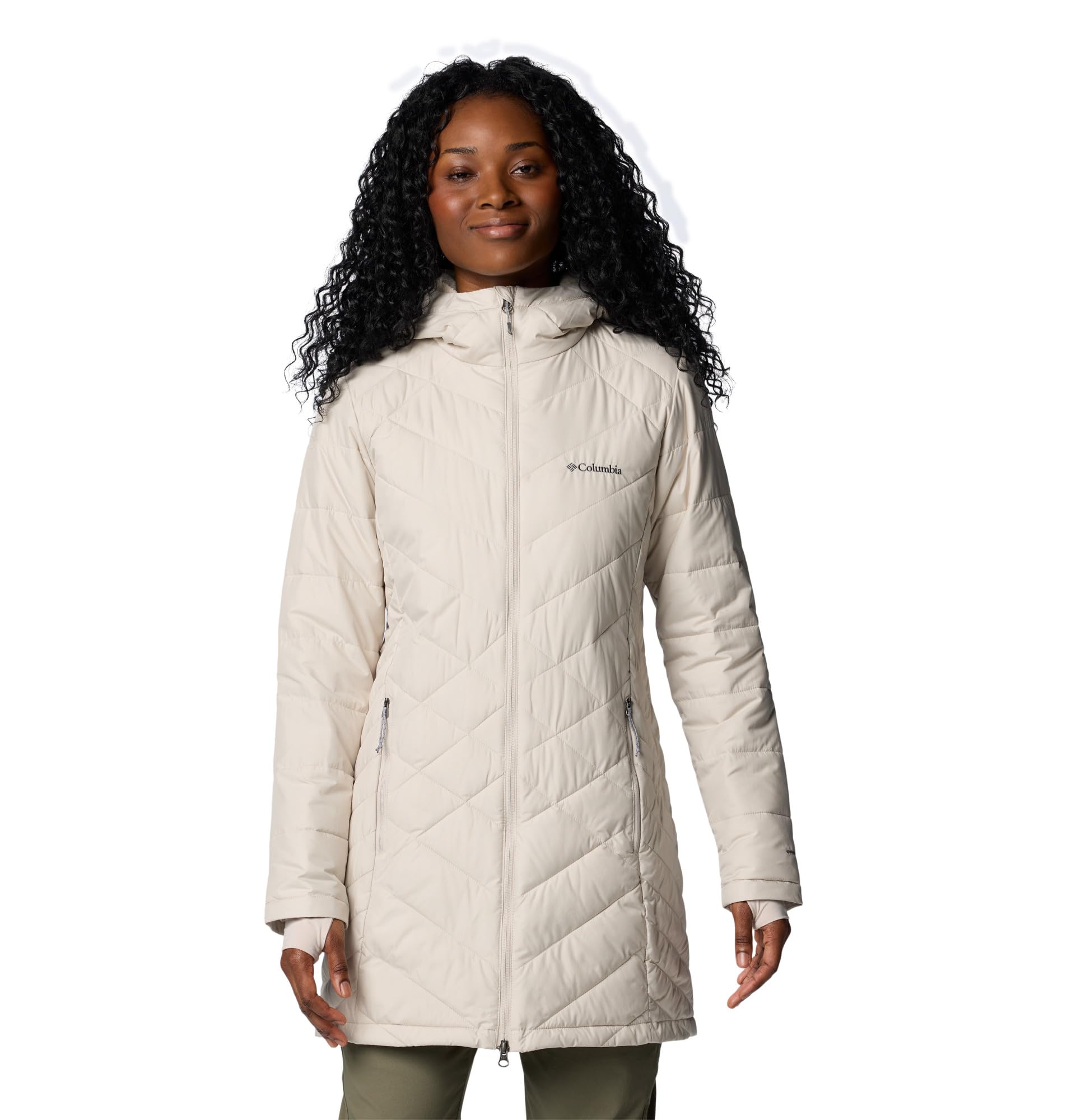
Columbia Heavenly Long Jacket
Key Features
- Warmth & Insulation: Synthetic down (Thermarator)
- Weight & Packability: Lightweight
- Fit Consistency: Runs small
- Price: $$
Columbia’s Thermarator synthetic down provides warmth without bulk, making this long jacket a practical travel companion for moderate cold. The fit flatters with a feminine silhouette, and the soft hood lining adds comfort. Build quality from a well-known brand holds up to regular use. However, the double zipper can catch, and the cut runs small — sizing up is recommended for layering.
Pros
- Very lightweight yet warm – great for active use and travel
- Flattering fit with a feminine silhouette
- Comfortable with a soft hood lining and warm cuffs
Cons
- Zipper can be difficult to operate – double-zipper design may catch
- Fit may run tight – consider sizing up for comfortable layering
Columbia’s lightweight jacket delivers warmth and style for moderate cold, but the fussy zipper and snug fit require attention to sizing and operation.
Best for Budget Winter
TDYPCI Lightweight Puffer

Key Features
- Warmth & Insulation: Synthetic puffer
- Weight & Packability: Lightweight
- Water Resistance: Water-resistant
- Fit Consistency: Flattering fit
- Price: $
This lightweight puffer delivers unexpected warmth for mild winters and layers comfortably under a heavier shell. The fit is flattering without being restrictive. The main hiccup: the actual color may differ from online photos, so expect some shade variation. For the price, the quality is hard to beat, making it a practical backup or travel coat.
Pros
- Surprisingly warm and breathable for its light weight
- Excellent value – high-quality feel at a very low price
Cons
- Color shade may differ from listing photos – worth checking if exact match matters
A solid budget option for mild winter days, especially as a travel layer or spare coat.
Best for Brand Casual
Tommy Hilfiger Down Puffer

Key Features
- Warmth & Insulation: Down alternative puffer
- Weight & Packability: Lightweight
- Fit Consistency: Tight shoulders
- Price: $$
Tommy Hilfiger’s puffer offers reliable warmth for 30-40°F conditions and a recognizable style suitable for casual commutes. The down alternative fill is lightweight and comfortable for all-day wear. However, the color on some models differs from online photos, and the shoulders can feel tight for broader frames—worth checking sizing carefully.
Pros
- Stylish hooded puffer with Tommy Hilfiger branding for everyday casual wear.
- Lightweight and comfortable for all-day use in moderate cold.
Cons
- Color can differ from website photos, making exact matching tricky.
Best for buyers who prioritize brand style over color precision and have a standard build that fits the shoulder cut.
Best for Oversized Fit
Wantdo Puffer Coat

Key Features
- Warmth & Insulation: Synthetic down quilted
- Weight & Packability: Mid-weight
- Fit Consistency: Runs large
- Price: $
This Wantdo puffer offers impressive warmth and a high-quality look for a budget price, with a generous cut that emphasizes comfort. However, the oversized fit means those preferring a slim silhouette will need to order a size down — making it best for shoppers who appreciate a roomy, relaxed coat.
Pros
- Impressive warmth for the price.
- Looks and feels more expensive than it is.
Cons
- Generous cut may be too roomy for those wanting a tailored fit; sizing down helps.
Best for budget-conscious shoppers who enjoy an oversized fit and moderate winter climates, but those seeking a precise fit should plan to size down.
Best for Budget Waterproof
MAGCOMSEN Winter Jacket

Key Features
- Warmth & Insulation: Fleece lined
- Weight & Packability: Standard
- Water Resistance: Water-resistant
- Price: $
This jacket delivers solid warmth thanks to its fleece interior and holds up well against light rain and wind, making it a practical option for casual winter wear. The reversed zipper orientation (women’s style) on some units can be awkward for right-handed users—this is the main reason it sits below the top pick rather than being the default recommendation for most buyers.
Pros
- Very warm with a soft fleece interior, comfortable in cold weather.
- Good water and wind resistance for light precipitation.
Cons
- Zipper may be reversed (women’s orientation) on some units, making it awkward for right-handed users to operate.
A solid budget choice for average winter days if the reversed zipper isn’t a dealbreaker.
Best for Affordable Heavy
TACVASEN Winter Parka

Key Features
- Warmth & Insulation: Thick synthetic fill, fleece lining
- Weight & Packability: Heavy
- Water Resistance: Water-repellent
- Fit Consistency: Runs small
- Price: $
This parka delivers impressive warmth and a comfortable fleece lining at a budget-friendly price. The cut can run small, so checking the size guide or ordering up is wise. While it handles cold weather well, inconsistent sizing keeps it from matching the consistency of top picks.
Pros
- Thick insulation keeps you warm in subfreezing temperatures
- Well-constructed with quality stitching and materials
Cons
- Sizing can run small, so ordering a size up may be necessary
For those who prioritize warmth and value and are willing to size up, this parka is a cost-effective choice for everyday winter wear.
Best for Harsh Winters
BINACL Thicken Parka

Key Features
- Warmth & Insulation: Thickened synthetic fill
- Weight & Packability: Heavy
- Fit Consistency: Runs small
- Price: $$
The BINACL Thicken Parka delivers serious warmth with its synthetic fill and long coverage, ideal for bitter cold commutes. The construction feels premium and the design is office-appropriate. However, the fit runs small through the chest and arms, so ordering a size up is necessary for comfortable layering. This makes it less convenient for those who prefer true-to-size coats.
Pros
- Extremely warm and cozy for single-digit temperatures.
- Premium build with a professional, flattering cut.
Cons
- Chest and arms can be snug when layering over bulky sweaters – sizing up resolves the issue.
Choose this parka if you need extreme cold protection and are comfortable ordering one size larger than usual.
Best for Occasional Ski
GEMYSE Ski Jacket

Key Features
- Warmth & Insulation: Fleece lined
- Weight & Packability: Lightweight
- Water Resistance: Waterproof shell
- Price: $
This jacket delivers solid warmth and a stylish look for occasional ski trips or sledding days. The fleece lining and waterproof shell handle moderate cold well, and the build quality feels reasonable given the price. However, the zippers can become unreliable after a few weeks, and the seam stitching may give way under regular use. This is a short-term buy best suited for light, infrequent outings rather than daily winter wear.
Pros
- Very warm and comfortable for winter sports and cold days.
- Great value – comparable to name-brand jackets at a fraction of the cost.
Cons
- Zippers may fail and seams can tear after limited use, so this is best reserved for occasional wear.
For a handful of winter outings per season where budget matters most, this jacket works fine – just don’t expect it to survive daily commutes or multiple years.
How to Choose
The right winter jacket for travel balances warmth, weight, and packability—sacrifice too much of one and the jacket becomes a burden instead of a tool.
Warmth & Insulation
Down and synthetic fills handle cold differently. Down offers the highest warmth-to-weight ratio but loses insulation when wet. Synthetics like fleece or polyester fill retain heat even damp, making them better for wet winter conditions.
For travel, synthetic puffer jackets provide reliable warmth in the 30–50°F range without the bulk of a heavy parka. If you plan to face sub-20°F temperatures, look for thickened down or multiple synthetic layers—but know that packability will suffer.
Weight & Packability
Every extra ounce in your jacket is an ounce you carry through airports, cities, and day trips. Packable jackets compress into their own pocket or a small pouch, freeing luggage space for other essentials.
The trade-off: ultra-light models rarely offer the same insulation as heavier coats. For moderate winter trips, a 10–15 ounce packable puffer is enough. For extreme cold, you’ll need a heavier, bulkier jacket that doesn’t pack flat.
Water Resistance
Water resistance ranges from a DWR coating (light rain/snow) to a fully waterproof shell. For travel, a water-repellent finish handles most urban winter conditions, while a waterproof shell is essential for skiing or sustained wet snow.
Beware: many budget jackets claim water resistance but lose effectiveness after a few washes. Look for sealed seams and a durable water repellent (DWR) finish if you expect consistent wet weather.
Fit Consistency
Sizing inconsistency is the most frequent complaint across winter jackets, especially in budget models. Running large or small by a full size is common, and arm length often varies by brand.
Always check recent user reviews for fit notes rather than relying on the brand’s size chart. If you’re between sizes, the safer bet is to size up for layering, but for packable jackets, a snugger fit retains heat better.
FAQ
Why do my winter jacket zippers keep breaking after a few months?
Budget jackets often use lightweight plastic zippers that aren’t built for repeated use, especially in cold or wet conditions. The teeth can separate or the slider can jam. For lasting reliability, choose a jacket with a metal or branded YKK zipper—this is a clear durability marker.
Should I size up when buying a budget puffer jacket?
Many budget puffers run small in the arms and chest, so sizing up is often recommended if you plan to layer underneath. However, some models run large—check recent reviews for the specific jacket. If you’re between sizes, order two and return the one that doesn’t fit.
Are packable winter jackets warm enough for a trip to Alaska?
No, most packable jackets are designed for 30–50°F and lack the insulation for subzero temperatures. For Alaska, you need a heavy down parka or a 3-in-1 system with a thick mid-layer. Packable puffers work well as a layering piece but can’t serve as the primary coat.
What’s the difference between a ski jacket and a regular winter coat?
Ski jackets have waterproof membranes, powder skirts, and ventilation zippers to handle intense activity and snow exposure. Regular winter coats prioritize warmth and style over breathability and waterproofing. For casual winter wear, a regular coat is fine; for skiing or snowboarding, a dedicated ski jacket prevents moisture buildup.