
This post contains affiliate links. We may earn a small commission when you buy through our links — at no extra cost to you.
Many sleeping bags boast temperatures they can’t deliver — a 20°F bag often feels cold at 40°F. Zipper failures are the top complaint, turning a trip into a restless night. The right bag matches your real needs, not just the label.
Choosing between a lightweight mummy for backpacking and a roomy rectangular bag for car camping means trading packability for warmth and space. This guide highlights bags that earn their ratings and hold up over time, so you pick the one that fits your actual trips.



Best for Backpacking
TETON 20°F Mummy
Key Features
- Temperature Rating: 20°F survival / 40°F comfort
- Weight: 2.9 lbs
- Shape: Mummy
- Fill: Microfiber synthetic
- Dimensions: 87" x 32"
- Price: Mid-Range
At 2.9 pounds and compact enough to fit in a mid-size stuff sack, the TETON Sports 20°F Mummy hits a sweet spot for anyone who has to carry their shelter. The synthetic microfiber fill and thoughtful details like a draft collar and insulated footbox mean you get reliable warmth without the bulk of cheaper rectangular bags. That combination of weight and packability is what makes this a go-to for weekend hikes and mild-weather trips where every ounce counts.
Real-world temperatures tell a different story than the label. The 20°F rating is a survival limit — comfortable use, with proper base layers, sits closer to 40°F. Below that, most people will need a liner or extra insulation. That’s consistent with how most budget sleeping bags work, and the TETON handles the 30–50°F range well for anyone who sleeps warm or layers up. The mummy shape cuts heat escape but also cuts shoulder room.
This bag suits backpackers who weigh under 180 pounds and stand under 6 feet, especially those who don’t need extra room for broad shoulders or restless sleep. The narrow cut saves weight and keeps warmth close, but it can feel restrictive for side sleepers or larger users. If you’re car camping or want space to roll over, the TETON’s slim profile will be a daily annoyance — it’s built for efficiency, not sprawl.
Pros
- Lightweight and compressible enough for overnight backpacking trips
- Good warmth-to-weight ratio for 3-season conditions with proper layering
- Excellent value among packable mummy bags under $60
- Draft tube and insulated footbox add real comfort on cooler nights
Cons
- Narrow cut can feel restrictive for side sleepers or users over 200 lbs
- Comfort temperature is closer to 40°F than the advertised 20°F
For slim-to-average backpackers who value portability over sprawl, the TETON 20°F Mummy delivers dependable 3-season warmth at a price that leaves room for a good sleeping pad.
Best for Cold Car Camping
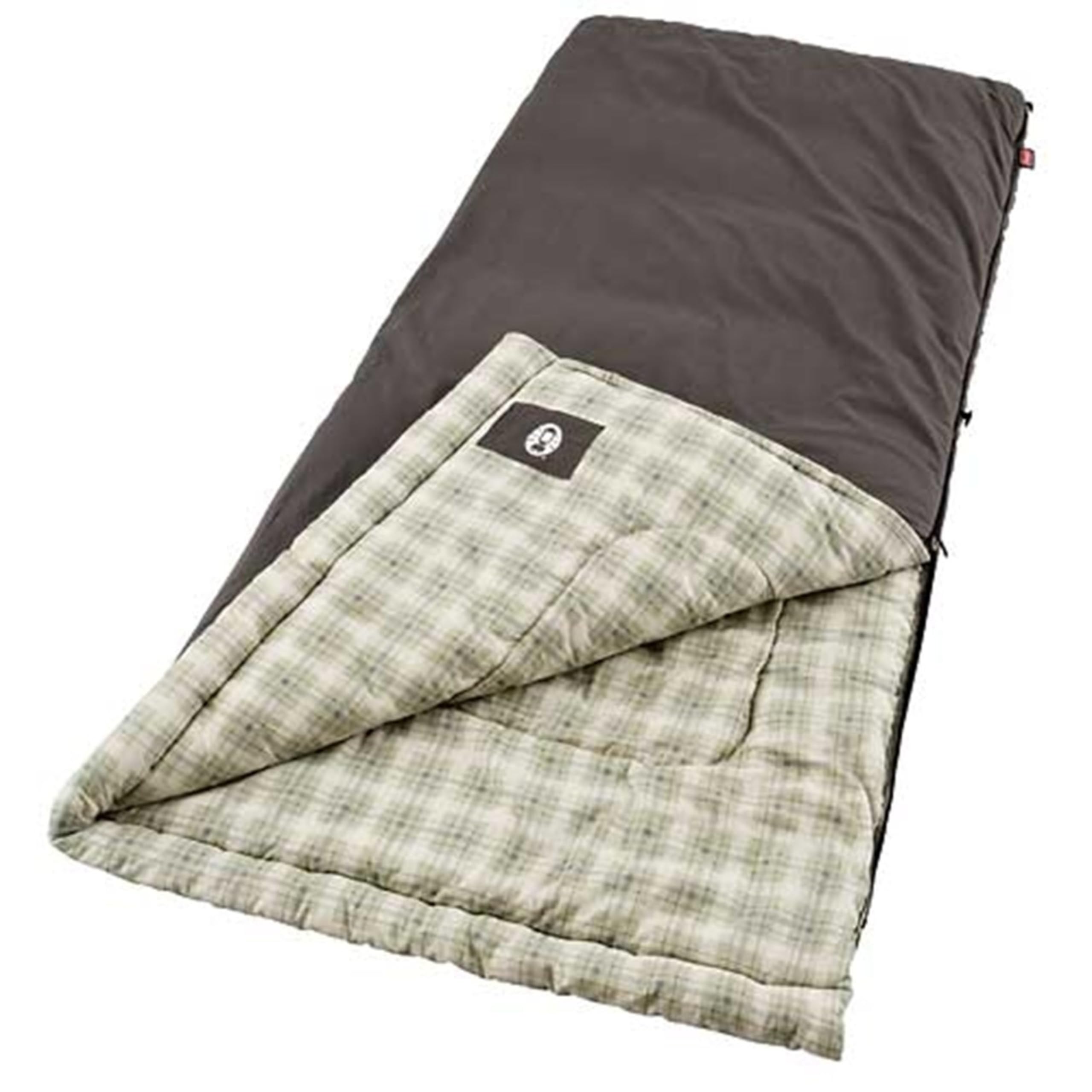
Coleman Big & Tall 10°F
Key Features
- Temperature Rating: 10°F survival / 30°F comfort
- Weight: 8.9 lbs
- Shape: Rectangular XL
- Fill: Holofill 808 synthetic
- Dimensions: 84" x 40"
- Price: Mid-Range
While the TETON Sports Mummy is lighter and more packable for backpacking, the Coleman Heritage Big & Tall prioritizes room and cold-weather comfort. Its 40-inch width accommodates broad shoulders and users up to 6’7", and the flannel lining delivers noticeable warmth that holds well into the low 30s — backed by strong zipper and shell construction.
This bag is built for tall, larger campers who drive to the site and want a spacious, cozy sleep system for sub-freezing nights. The 8.9-pound weight and large packed size make it impractical for carrying to a backcountry site, so treat it as a car-camping-only option. Also, a subset of buyers note the inner lining feels more like printed polyester than 100% cotton flannel — worth checking in person if pure cotton is a priority.
The thick cotton/flannel shell and robust zipper contribute to a bag that withstands repeated car-camping weekends. Draft protection is adequate for its temperature rating, and the rectangular shape allows easy in-and-out movement — a plus for restless sleepers.
Pros
- Warmth holds comfortably down to about 30°F, with a cozy flannel interior.
- Extra-wide 40-inch cut fits broad shoulders and sleepers up to 6’7".
- Durable construction with thick shell and smooth zipper that lasts.
Cons
- For anyone packing gear on foot, the 8.9-pound weight and large packed size make this bag impractical for backpacking.
- Those expecting 100% cotton flannel may find the inner lining feels like printed polyester rather than woven cotton.
The Coleman Big & Tall is the go-to bag for tall, broad-shouldered car campers who need consistent warmth in sub-freezing temperatures and don’t mind the weight penalty.
Best for Warm Weather Families
MalloMe 3-Season Bag
Key Features
- Temperature Rating: 50–80°F comfort
- Weight: 2.9 lbs
- Shape: Rectangular
- Fill: Synthetic fiber
- Dimensions: 86.6" x 31.5"
- Price: Budget
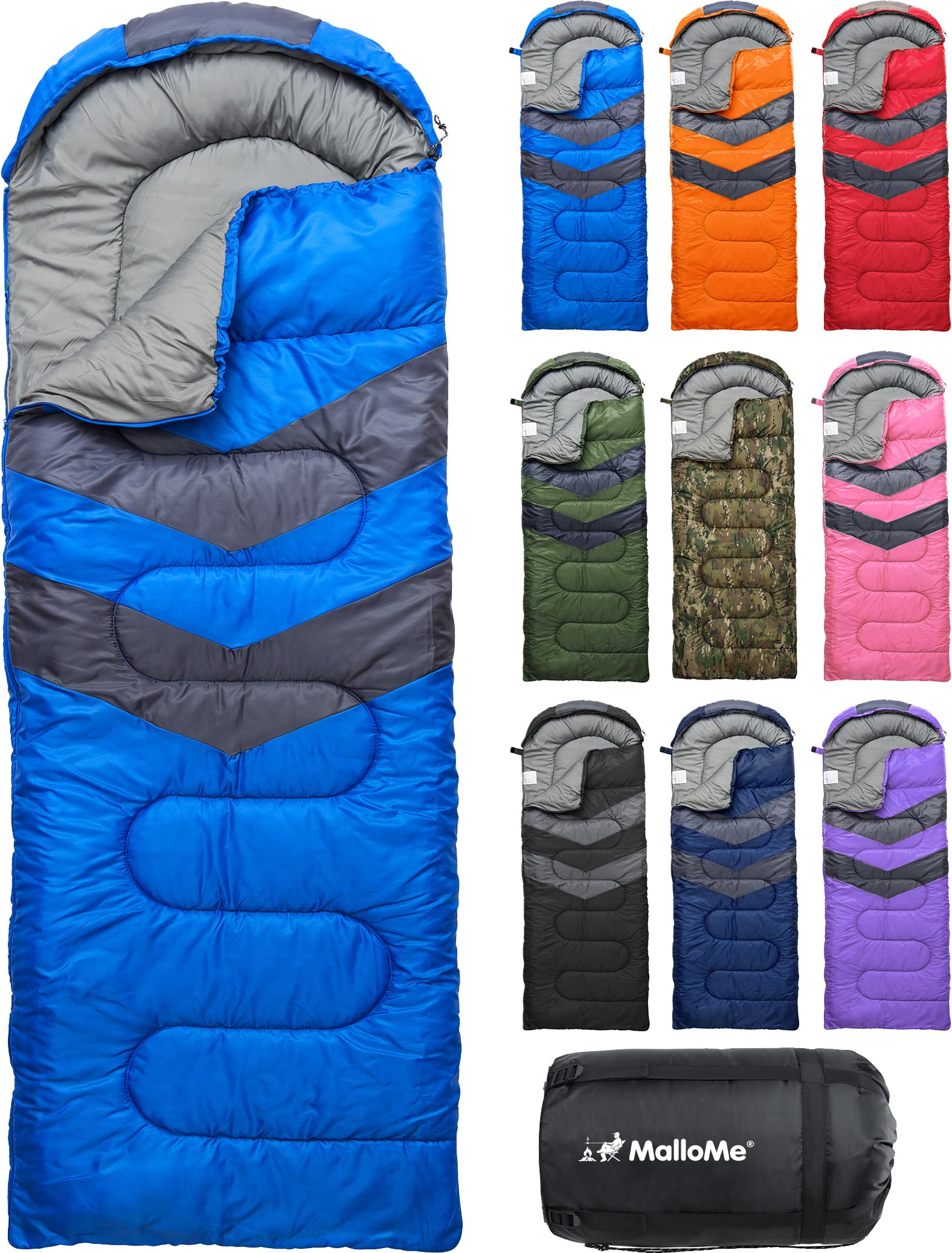
At a budget-friendly price, the MalloMe Sleeping Bag delivers strong value for fair-weather trips. It weighs under 3 lbs, packs down small, and users consistently report restful sleep when nighttime lows stay above 60°F. That combination makes it the cheapest reliably rated bag in this guide for warm-weather car camping or indoor sleepovers — a clear contrast to the top pick’s colder-weather focus.
This bag is best suited for children, smaller adults under 5’9", and families who need an affordable second set of bags for occasional use. The rectangular shape offers decent room for its price, but the 31.5-inch width and 86.6-inch length won’t accommodate broader shoulders or taller sleepers. Its synthetic insulation is comfortable down to about 50°F; below that, warmth drops off quickly. If your trips dip into cool nights or you’re over six feet, this bag isn’t the right fit — the top pick or a larger model would serve better.
Portability is a real plus: at 2.9 lbs, it’s light enough to carry from car to campsite or store in a closet without hassle. The soft polyester shell and lining feel pleasant against skin in warmer weather, and zippered storage pocket adds a small convenience. For its intended use — mild nights and small statures — the MalloMe holds up as a practical, no-fuss solution.
Pros
- Cost-effective for mild-weather trips or sleepovers
- Lightweight and packs small for car camping or storage
- Comfortable for warm conditions above 60°F
Cons
- Zipper can catch on fabric during opening or closing
For budget-conscious families or smaller adults who only camp in fair weather, this bag offers genuine value — just keep expectations realistic about temperature and size.
Best for Serious Backpackers
Kelty Cosmic 20 Down
Key Features
- Temperature Rating: 20°F EN comfort ~30°F
- Weight: 3 lbs
- Shape: Mummy
- Fill: 550 fill DriDown
- Price: Premium
The Kelty Cosmic 20 Down stands out for its compressibility — the 550-fill DriDown packs smaller than any synthetic bag at this temperature rating, making it a strong pick for backpackers who need to save space. Compared to the top-rated TETON Sports mummy, this bag trades a bit of room for notably lighter weight and tighter pack size.
This bag suits slim to average-built backpackers who prioritize weight savings over interior space. The mummy cut creates a snug shoulder area that can feel restrictive for broader-chested individuals — worth trying before buying if you have a larger frame. It’s a premium-priced specialist tool, not a one-size-fits-all camping bag.
For three-season backpacking, the Cosmic 20 delivers consistent warmth at a 3-pound carry weight. The wide footbox adds comfort for side sleepers, a detail often missing in mummy designs. While the price is higher than many synthetic competitors, the payoff in packability and thermal efficiency is clear for those who hike miles to camp.
Pros
- Lightweight down fill packs small and retains warmth well for backpacking.
- Sturdy build and quality materials hold up to regular use.
- Wide footbox allows side sleepers to move feet without constraint.
Cons
- For campers with broad shoulders or larger builds, the mummy cut can feel restrictive in the upper body.
Best for slim-to-average hikers who value pack weight over interior space — the Kelty Cosmic 20 Down is a focused tool for weight-conscious three-season backpacking.
Best for Couples Car Camping
AGEMORE Double Bag
Key Features
- Temperature Rating: 41–59°F comfort
- Weight: 6.6 lbs
- Shape: Rectangular double
- Fill: Cotton flannel
- Dimensions: 86.6" x 59"
- Price: Mid-Range
The AGEMORE double bag is a queen-sized cotton flannel rectangle that zips apart into two separate bags or lays flat as a blanket. That dual-zipper design gives it a versatility most double bags lack — couples can share or sleep individually, and the soft flannel lining feels like home bedding on mild nights.
This bag is best for couples car camping in spring, summer, or fall when overnight temperatures stay above 40°F. Families also use it for sleepovers or tent sharing because of the generous 86×59-inch floor. The tradeoff is weight: at 6.6 lbs it’s too heavy for backpacking, and the cotton flannel absorbs moisture if you pack it damp. Zipper quality has been inconsistent — some units develop snagging or misalignment after repeated use, so gentle handling matters.
Inside that warmth range, the flannel and fill are genuinely cozy for two adults, and the ability to zip both sides closed or open as a blanket adds real camping comfort. If cold-weather camping or long carries are on your list, a single mummy bag like the Coleman Big & Tall (30°F rated) will handle those conditions better — but for relaxed car camping with a partner, the AGEMORE is a spacious and pleasant option.
Pros
- Queen-size interior comfortably fits two adults with room to move.
- Soft cotton flannel lining feels like bedding and breathes on warm nights.
- Dual zippers allow use as two single bags or a blanket for flexibility.
- Affordable price for a spacious double bag with flannel lining.
Cons
- Not warm enough for nights below 40°F — comfort zone is 41–59°F.
- Zipper may snag or misalign after repeated use, requiring careful handling.
- Heavy and bulky at 6.6 lbs — unsuitable for backpacking or carrying any distance.
If you car camp with a partner in mild weather and want a shared bag that also works as two singles, the AGEMORE delivers spacious flannel comfort — but it’s not the bag for cold nights or trail hikes.
Best for Extreme Cold Car Camping
HiZYNICE 0°F XXL

Key Features
- Temperature Rating: 0°F extreme / 30°F comfort
- Weight: 7 lbs
- Shape: Rectangular XXL
- Fill: Cotton
- Dimensions: 90" x 39"
- Price: Mid-Range
The HiZYNICE 0°F XXL delivers exceptional warmth in sub-freezing conditions, with a generous cut that accommodates tall and broad sleepers. Its 7-pound weight and bulky build make it a car-camping-only bag, not for backpacking. The cotton flannel lining is soft and comfortable, but the zipper can snag or stick in some units. For campers who drive to a site and face temperatures well below freezing, this bag offers a level of warmth and space that few competitors match.
Pros
- Exceptional warmth for sub-freezing car camping
- Generous XXL dimensions accommodate tall and broad users up to 6’7"
Cons
- At 7 lbs, too heavy for backpacking or long carries
- Zipper may snag or become stuck in some units
If you car camp in extreme cold and need space for a tall frame, the HiZYNICE delivers warmth that few bags can match, though the design demands a vehicle and patience with the zipper.
Best for Flannel Car Camping
REDCAMP Cotton Flannel

Key Features
- Temperature Rating: Varies by fill – 2lb: 50–77°F, 4lb: 32–59°F
- Weight: 4–6 lbs
- Shape: Envelope
- Fill: Cotton/flannel
- Dimensions: 75" x 33"
- Price: Mid-Range
The REDCAMP Cotton Flannel bag delivers the home-bedding feel that synthetic shells lack. The soft interior and good value make it appealing for casual car camping in mild weather (40–60°F). However, the 75-inch length is best suited for users under 6 feet, and the zipper can snag or separate after repeated use. These limitations keep it behind more durable options, but for car campers who prioritize comfort and breathability over long-term reliability, it remains a worthwhile choice.
Pros
- Soft flannel interior mimics home bedding for a cozy sleep
- Good warmth for moderate camping between 40–60°F
Cons
- Zipper can snag or separate after repeated use – worth checking before each trip
- 75-inch length restricts use to campers under 6 feet
Best for car campers under 6 feet who want a soft, breathable bag for mild nights and are willing to accept occasional zipper quirks.
Best for Budget Cold Camping
Kanyak 32°F Bag

Key Features
- Temperature Rating: 32°F limit / 41°F comfort
- Weight: 4.2 lbs
- Shape: Semi-rectangular
- Fill: Polyester
- Dimensions: 86.6" x 32.5"
- Price: Mid-Range
This bag provides genuine warmth for overnight temperatures in the 30–40°F range without requiring a big investment. The soft interior lining makes it pleasant to sleep in, and the semi-rectangular shape offers more room than a mummy cut. At 4.2 lb, it’s too heavy for backpacking and best left in the car. The zipper can catch fabric when closing, and the 32.5-inch width may feel restrictive for broader frames. It’s best suited for youth or smaller adults who prioritize comfort over portability for occasional camping trips.
Pros
- Warmth holds up on nights down to 30°F without overspending
- Soft interior adds a cozy feel that stands out at this price point
- Stitching and materials are adequate for moderate use throughout a season
Cons
- Zipper can catch on fabric during operation, requiring careful handling
- Width may be narrow for those with a larger build or who sleep on their side
Worth a look if you need a budget bag for cool-weather car camping and don’t mind a heavier pack and occasional zipper fuss — best for smaller-framed campers.
Best for Tall Campers Summer
PTEROMY 3 Season Bag
Key Features
- Temperature Rating: 50–80°F
- Weight: 3.5 lbs
- Shape: Rectangular
- Fill: Hollow fiber cotton
- Dimensions: 87" x 31"
- Price: Budget
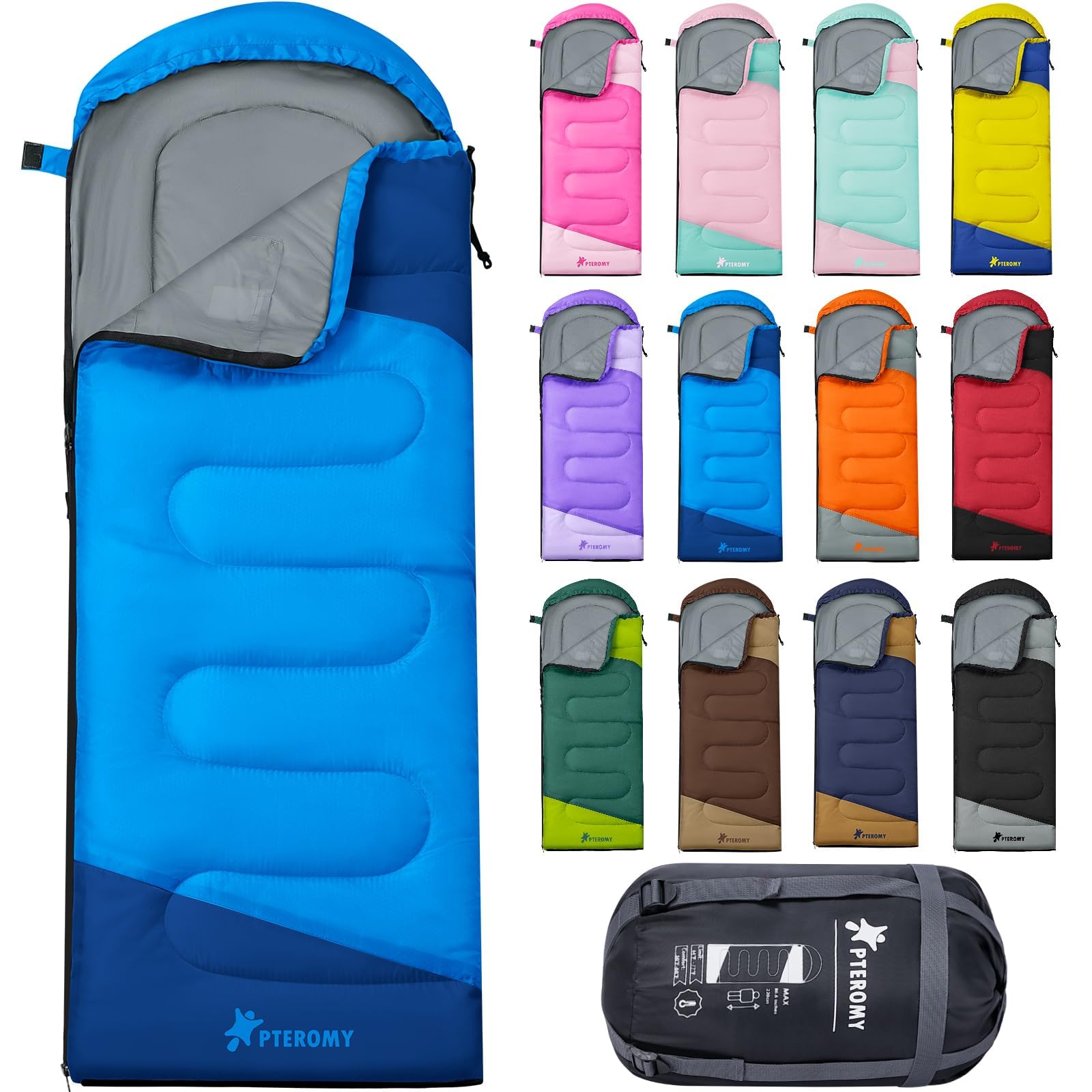
The PTEROMY 3 Season bag fits tall campers up to 7 feet at the lowest price in this roundup, and its machine-washable construction simplifies cleanup. The hollow fiber cotton fill keeps you comfortable on mild summer nights above 60°F, but the insulation is thin — below 50°F you’ll feel the cold. This makes it a good choice for warm-weather car camping, indoor sleepovers, or kids’ use rather than three-season or cold-weather trips.
Pros
- Affordable and machine washable for easy care
- Extra-long 87-inch design accommodates campers up to 7 feet
Cons
Best for tall campers who need a cheap summer bag for occasional use; not suitable for cold-weather or frequent camping.
Best for Kids Summer Camping
JEAOUIA 3 Season Bag

Key Features
- Temperature Rating: 50–68°F
- Weight: 3.3 lbs
- Shape: Rectangular
- Fill: Hollow cotton
- Dimensions: 86.6" x 31.5"
- Price: Budget
This bag delivers good value for children and smaller adults on warm-weather camping trips or indoor sleepovers. It’s lightweight, easy to pack, and comfortable in the 50–70°F range. However, the zipper can separate or break after limited use, and the 86.6-inch length may not suit anyone over 5’10". Compared to the similar MalloMe, this bag has more size complaints, so spending a few dollars more on that model is often the better choice for adults.
Pros
- Good value for casual and occasional use
- Lightweight for easy packing and carrying
- Comfortable in mild temperatures (50–70°F)
Cons
- Zipper can separate or break after limited use
- Short length for adults over 5’10"
Best for occasional sleepovers or summer car camping for kids, but for tall adults or regular use, consider the MalloMe for a few dollars more.
How to Choose
The most important rule: treat a sleeping bag’s temperature rating as a survival limit, not a comfort level — plan for 15°F warmer than the label.
Temperature Ratings: Comfort vs. Survival
Manufacturers often list a survival limit (the lowest temperature you won’t freeze at) rather than a comfort limit. Most people sleep cold, so a bag rated 20°F typically keeps you comfortable only down to about 35–40°F. Always add a 15°F buffer above your expected low temperature when choosing.
For example, if you expect 30°F nights, look for a bag rated 15°F or lower. Check user reviews for real-world comfort notes — they are more reliable than the tag.
Weight and Packability
A bag’s weight directly determines whether you can carry it into a campsite or need to drive it. Every extra pound adds noticeable fatigue on a multi-mile hike. For backpacking, aim for 3 lbs or less; for car camping, weight is largely irrelevant as long as the bag is warm enough.
Compressibility matters too: a bulky bag that won’t fit in your pack forces you to strap it outside, risking snags and wetness. Down bags pack smallest, synthetic bags are bulkier. Always check the packed size, not just the weight.
Shape: Mummy vs. Rectangular
Mummy bags taper at the feet and hug your body, trapping heat efficiently with less fabric. They are warmer for their weight but restrict movement — a poor fit for broad shoulders or side sleepers. Rectangular bags offer more room to roll over but leak heat through the extra space and are heavier for the same warmth rating.
Semi-rectangular designs (like the Kanyak) split the difference: roomier than a mummy but more thermally efficient than a full rectangle. Try the shape that matches your sleep style: if you toss and turn, lean toward a wider cut; if you sleep still, a mummy saves weight.
Fill Material: Synthetic vs. Down
Synthetic fill (polyester, microfiber) retains insulation when wet, dries fast, and is cheaper — ideal for damp climates or casual campers. Its main drawback: it loses loft over time and is bulkier to pack. Down fill (goose or duck) offers superior warmth-to-weight ratio and compressibility, but becomes useless when wet and costs more.
For 3-season backpacking in dry conditions, down is the clear winner. For car camping or wet trips, synthetic is more practical. Some down bags now come with water-resistant treatments (like Kelty’s DriDown) that help in light moisture but still fail if submerged.
Zipper Quality and Anti-Snag Design
Zipper failures are the #1 source of buyer regret in sleeping bags. Cheap zippers catch fabric, separate from the track, or break sliders after a few uses. A good zipper has a draft tube (a fabric flap that prevents heat loss and keeps fabric away from teeth) and a large, easy-to-grip pull.
Look for bags with a two-way zipper that allows ventilation from the foot end. Higher-priced bags often use YKK zippers, which are far more reliable than generic alternatives. If you’re on a budget, read recent reviews specifically about zipper performance — one bad batch can sink a model.
FAQ
Why does my 20°F sleeping bag feel cold at 35°F?
The 20°F rating is typically a survival limit, not a comfort level. Most people need a bag rated 15°F lower than the actual temperature to sleep comfortably. The insulation also compresses under your body weight, reducing effectiveness. Add a sleeping pad with a high R-value and use a liner to gain back warmth.
Can I use a mummy sleeping bag if I’m a side sleeper?
Yes, but choose a mummy with a roomy footbox and a zipper that allows you to stick a foot out for ventilation. Many side sleepers find mummy bags too restrictive in the shoulders. A semi-rectangular bag or a wide-cut mummy (like the Kelty Cosmic with its generous footbox) offers better freedom while keeping weight low.
How do I fix a sleeping bag zipper that keeps snagging?
Snagging usually happens when fabric gets caught between the zipper teeth. Rub a bar of soap or a wax candle along the zipper track to lubricate it. If the slider is misaligned, gently squeeze it with pliers to tighten the grip. For persistent issues, check if the draft tube is sewn too close — a seam ripper can free the fabric. If the zipper separates, it likely needs replacement.
What’s the best way to pack a sleeping bag back into its stuff sack?
Start by stuffing the foot end first, then work your way up, pushing air out as you go. Lay the bag flat and fold it into thirds lengthwise, then roll tightly from the foot, sitting on the roll to expel air. Avoid stuffing the bag in random handfuls — that creates uneven lumps. For synthetic bags, a compression sack helps reduce volume.