
This post contains affiliate links. We may earn a small commission when you buy through our links — at no extra cost to you.
At first glance, toy aisles overflow with creative promise — rock painting kits that glow in the dark, cherry-scented slime, and beading sets boasting thousands of charms. Yet too often, those bright boxes hide letdowns: glow paints that barely illuminate, scents that vanish in minutes, and strings that snap the moment a bracelet is tied. The gap between what’s on the package and what actually works can turn a big birthday moment into quiet disappointment.
This guide steers clear of the hype, highlighting gifts that perform as promised. The picks that follow include STEM kits with picture-clear instructions, puzzles that ramp up in difficulty without overwhelming, and craft sets made from sturdy materials that won’t disintegrate on day one. Each one has proven it can keep a 9-year-old engaged well past the first play session, so you can give with confidence.


Best for Curious Builders
Snap Circuits Jr. SC-100
Key Features
- No. of Projects: 100+ projects
- Instructions & Supervision: Picture-based, minimal help
- Materials & Durability: Snap modules, durable
- Age & Skill Match: 8+ (perfect for 9)
- STEM or Creative Focus: STEM: circuitry
- Price: $$
The color-coded snap modules connect with satisfying tactile feedback, making it easy for a 9-year-old to build working circuits from a simple light switch to a siren. The picture-based manual guides each step of the 100+ projects without requiring reading skills, keeping kids moving independently through the early experiments. Durability stands out — the components survive repeated assembly and disassembly, so the kit stays functional through years of use.
This suits curious kids who prefer constructing over crafting and parents looking for a screen-free way to introduce electronics. The projects progress from basic connections to more complex setups, so a child who enjoys following clear step-by-step instructions will stay engaged for hours. Some later projects can trip up absolute beginners, particularly younger 9-year-olds, and may benefit from an adult sitting alongside.
Pros
- Hands-on introduction to circuitry that builds real understanding of how electricity flows.
- Durable, color-coded snap pieces that small hands can connect and disconnect easily.
- Wide variety of projects keeps children constructing for hours, with visible results each time.
Cons
- Later projects can be tricky for younger kids without adult guidance, though the picture-based instructions keep early steps frustration-free.
A meaningful gift for a 9-year-old who loves building and experimenting, delivering screen-free engagement and a reusable STEM foundation that outlasts disposable craft kits.
Best for Artsy Kids
Rock Painting Kit
Key Features
- No. of Projects: Up to 10 rocks
- Instructions & Supervision: Simple steps, adult help
- Materials & Durability: Paints, rocks; size varies
- Age & Skill Match: 6-12
- STEM or Creative Focus: Creative: painting
- Price: $
Unlike STEM kits that require patience, this rock painting set lets kids start painting within minutes. The paints, glitter glue, and googly eyes produce immediate results. However, the included rocks can be smaller than some children expect, and the glow-in-the-dark paint may need strong light exposure to work well. Best for artsy 9-year-olds who enjoy decorating and giving handmade gifts, or as a low-mess group activity for parties.
Pros
- Fun, creative activity that keeps kids engaged for hours.
- Good quality materials at a budget-friendly price.
- Easy for kids to use with minimal mess.
Cons
- Rocks may be smaller than expected – some packs contain fewer than 10.
- Glow-in-the-dark effect can be inconsistent and requires bright charging to work well.
For families who value the craft process over glow-in-the-dark novelty, this kit offers solid value as a creative gift.
Best for Solo Thinkers
Gravity Maze
Key Features
- No. of Projects: 60 challenges
- Instructions & Supervision: Cards, adult for hard levels
- Materials & Durability: Plastic towers, durable
- Age & Skill Match: 8+
- STEM or Creative Focus: STEM: logic
- Price: $$
Unlike abstract magnetic fidget puzzles, Gravity Maze makes logic tangible with nine colorful towers, three steel marbles, and a gridded board. The 60 challenge cards start with simple setups and gradually introduce multi-step problem-solving that mimics basic engineering principles.
The ramp from beginner to expert can feel steep, and some kids will need a hint or two through the harder levels. This makes it a strong fit for a 9-year-old who enjoys solo puzzle-solving and won’t mind the occasional stumble. It’s a gift that grows with the child, from guided early play to independent expert challenges.
Pros
- Builds spatial reasoning and engineering thinking through hands-on marble runs.
- 60 challenges from beginner to expert keep the game fresh for years.
- Durable components withstand repeated play, even from enthusiastic hands.
Cons
- The difficulty gap between mid and hard levels can frustrate some kids, requiring adult hints to persist.
For a 9-year-old who gravitates toward logic puzzles and enjoys working through challenges on their own, Gravity Maze delivers lasting, screen-free engagement that justifies its mid-range price.
Best for Vintage Fans
LEGO Retro Camera
Key Features
- No. of Projects: 3 models
- Instructions & Supervision: Clear booklets, ages 8+
- Materials & Durability: LEGO bricks, high quality
- Age & Skill Match: 8+
- STEM or Creative Focus: Creative: building
- Price: $$
The LEGO Retro Camera captures the charm of vintage photography with a detailed model that includes a movable lens, loading film strip, and adjustable strap. Once built, it sits on a shelf rather than getting knocked around — ideal for kids who enjoy a thoughtful build and proudly displaying the result, but less suited for those expecting ongoing play scenarios after assembly.
Pros
- Detailed retro design with movable lens and film-loading feature.
- Three builds in one set — camera, video camera, or TV — extend creative value.
- Clear instructions and separate booklets make building accessible.
Cons
- After assembly, the model is designed for display rather than interactive play.
A satisfying build for young photography enthusiasts or collectors, but choose this for the creative assembly experience and shelf appeal, not for long-term toy action.
Best for Puzzle Lovers
Shashibo Cube
Key Features
- No. of Projects: Over 100 shapes
- Instructions & Supervision: No instructions needed
- Materials & Durability: Plastic, stickers may peel
- Age & Skill Match: 8+
- STEM or Creative Focus: STEM: spatial puzzle
- Price: $$$
Unlike tabletop logic games like Gravity Maze, the Shashibo Cube fits in a pocket and operates silently, making it a go-to for car rides, waiting rooms, or classroom fidgeting. It’s best for kids who crave a tactile, screen-free puzzle they can manipulate one-handed. Over time, the surface stickers may peel from frequent handling, and the price may feel high for a plastic cube — so it’s less suitable for buyers expecting a pristine appearance or a budget-friendly option.
Pros
- Addictive fidget puzzle morphs into 100+ shapes with a satisfying magnetic click.
- Solid magnet system ensures smooth, quiet transformations — great for travel.
- Screen-free brain teaser works as a compact activity for waiting rooms or long rides.
Cons
For quiet fidgeting on the go, this magnetic shape-shifter delivers hands-on focus — provided sticker wear isn’t a dealbreaker.
Best for Crafty Tweens
Clay Bead Bracelet Kit
Key Features
- No. of Projects: Unlimited beads
- Instructions & Supervision: Knotting needs adult help
- Materials & Durability: Clay beads, weak string
- Age & Skill Match: 6+
- STEM or Creative Focus: Creative: jewelry
- Price: $
With thousands of flat clay beads in 18 colors and hundreds of letter and charm accents, this kit offers far more design variety than a single-project craft set like the rock-painting alternative. Kids who love making personalized jewelry, friendship bracelets for Taylor Swift fans, and group crafting sessions will get hours of use. The included elastic string is notoriously difficult to knot securely, so plan to buy a better cord to prevent bracelets from unraveling.
Pros
- Wide variety of vibrant colors and charms for creative jewelry.
- Great value for the enormous number of beads included.
- Keeps kids engaged for hours making bracelets, necklaces, and keychains.
Cons
- Some beads may arrive without holes or with minor defects.
- The included elastic string is difficult to tie securely, and bracelets can come apart.
For a low-cost, high-volume craft activity that occupies a child for hours, this kit delivers — just add quality elastic cord.
Best for Active Flyers
Klutz Paper Airplanes
Key Features
- No. of Projects: 10 designs
- Instructions & Supervision: Step-by-step folds, some precision help
- Materials & Durability: Paper sheets, may tear over time
- Age & Skill Match: 7+
- STEM or Creative Focus: STEM: physics, flight
- Price: $
The Klutz Paper Airplanes kit delivers reliably aerodynamic designs — from simple gliders to stunt planes — that actually fly well, not just look good on paper. Clear difficulty ratings let kids choose their challenge level, and the 40 pre-printed sheets eliminate the need for extra supplies. It’s a low-cost, portable activity that turns into outdoor competition or quiet solo folding. Best for active kids who want to fold, test, and compete. The advanced models require precise folding, so younger 9-year-olds or those with less patience may need a patient adult’s help — a reasonable trade-off for the flight performance.
Pros
- Clear difficulty-rated instructions make folding easy for beginners.
- Planes fly exceptionally well across all 10 designs — gliders, loops, and long-distance.
- Budget-friendly and screen-free with hours of repeat play for siblings or friends.
Cons
- Some advanced folds require fine motor skills and patience — may frustrate kids who prefer instant results.
The Klutz Paper Airplanes kit is a reliable, screen-free gift that gets kids folding and flying — just be ready to help with the trickier models if your 9-year-old’s patience runs thin.
Best for Magic & Science
NG Magic Chemistry Set

Key Features
- No. of Projects: 10 experiments
- Instructions & Supervision: Clear, minimal help
- Materials & Durability: Some parts may be missing
- Age & Skill Match: 8+
- STEM or Creative Focus: STEM: chemistry
- Price: $$
Ten experiments that play like magic tricks — complete with a wand, gloves, and wow-factor reactions such as color-changing liquids and instant snow. It’s designed for a kid who loves to perform. The trade-off: with only 10 projects, play is finite, and kits can arrive missing a component; worth checking the box before giving. For a magic-themed show-and-tell or a gift that values presentation over volume, it fits.
Pros
- Exciting, educational experiments that feel like magic shows.
- Clear instructions suitable for independent play.
Cons
- Kits can arrive with a missing piece, preventing certain experiments.
For a stage-loving kid who wants to wow an audience with chemistry-based magic, this kit provides a memorable afternoon — but check that all pieces are present before wrapping.
Best for Decor Lovers
LEGO Heart Ornament

Key Features
- No. of Projects: 1 display model
- Instructions & Supervision: LEGO instructions easy
- Materials & Durability: Standard LEGO quality
- Age & Skill Match: 9+
- STEM or Creative Focus: Creative: decor
- Price: $
This 254-piece set builds a heart decoration with extra pieces for custom touches — a charming gift for Valentine’s or a bedroom. It’s a build-and-display project, not an action-packed playset, and suits kids who enjoy making and showing off personal keepsakes.
Pros
- Personalizable design with spare pieces lets kids add their own creative touch.
- A thoughtful, long-lasting gift idea for Valentine’s Day or bedroom decor.
Cons
- The final heart is 7 inches across — might feel petite for the piece count, making it more of a shelf accent.
This ornament fits crafty 9-year-olds who enjoy a calm, creative build and displaying a personal keepsake — not for those seeking a large-scale project or active play.
Wearable Blanket Hoodie
Wearable Blanket Hoodie

This sherpa hoodie wraps kids in soft warmth with an oversized pocket big enough for snacks and tablets. It’s a beloved lounging item, not a toy or activity — so it sits outside typical gift guides for 9-year-olds. White fleece lining can shed some lint at first, but a quick wash handles it.
Pros
- Soft sherpa fleece keeps kids warm during movie marathons and lazy mornings.
- Oversized front pocket holds snacks, a tablet, or even a small pet.
Cons
- White fleece lining can shed lint when first removed from packaging; washing before use resolves it.
When the gift pile is already full of building sets and board games, this hoodie offers a surprise hug — a cozy lounging staple for reading, movie nights, and lazy weekends.
Best for Young Gardeners
Paint & Plant Flower Kit

Key Features
- No. of Projects: 3 seed types, one planter
- Instructions & Supervision: Simple, adult may help planting
- Materials & Durability: Tin planter, soil, seeds
- Age & Skill Match: 5-12
- STEM or Creative Focus: Creative + science
- Price: $$
Kids paint the tin planter with the included paints and markers, then plant marigold, cosmos, and zinnia seeds. Watching sprouts emerge can be genuinely exciting. Some planters never bloom, so the payoff depends on a bit of horticultural luck and patience.
Pros
- Lets kids personalize the planter with paints and markers, then plant real flower seeds.
- Teaches responsibility and the plant lifecycle through hands-on gardening.
Cons
- Seed germination can be unpredictable; some planters may never produce flowers, which can disappoint young gardeners.
For a patient 9-year-old who loves crafts and the magic of potential growth, this kit provides a memorable two-part activity — just manage expectations that blooms aren’t guaranteed.
Best for Patient Artists
Spirograph Deluxe Set

Key Features
- No. of Projects: Unlimited designs
- Instructions & Supervision: Guide included, adhesive putty fails
- Materials & Durability: Plastic rings, putty adhesive
- Age & Skill Match: 8+
- STEM or Creative Focus: Creative: geometry
- Price: $$
The Deluxe Set brings the classic spiral art experience with 19 wheels, 2 rings, and pens. The kit stores in a portable case that doubles as a work surface. The adhesive putty can slip, causing rings to shift and misalign patterns. This suits patient artists or nostalgic adults who don’t mind taping down the rings.
Pros
- Produces intricate geometric designs that spark creative experimentation.
- Encourages understanding of symmetry and pattern through hands-on drawing.
Cons
- The adhesive putty may not hold rings steady, leading to slipped designs.
This set works for nostalgic adults or patient kids who enjoy the ritual of geometric art and are ready to secure rings with tape when the putty doesn’t hold.
Best for Engineering Fans
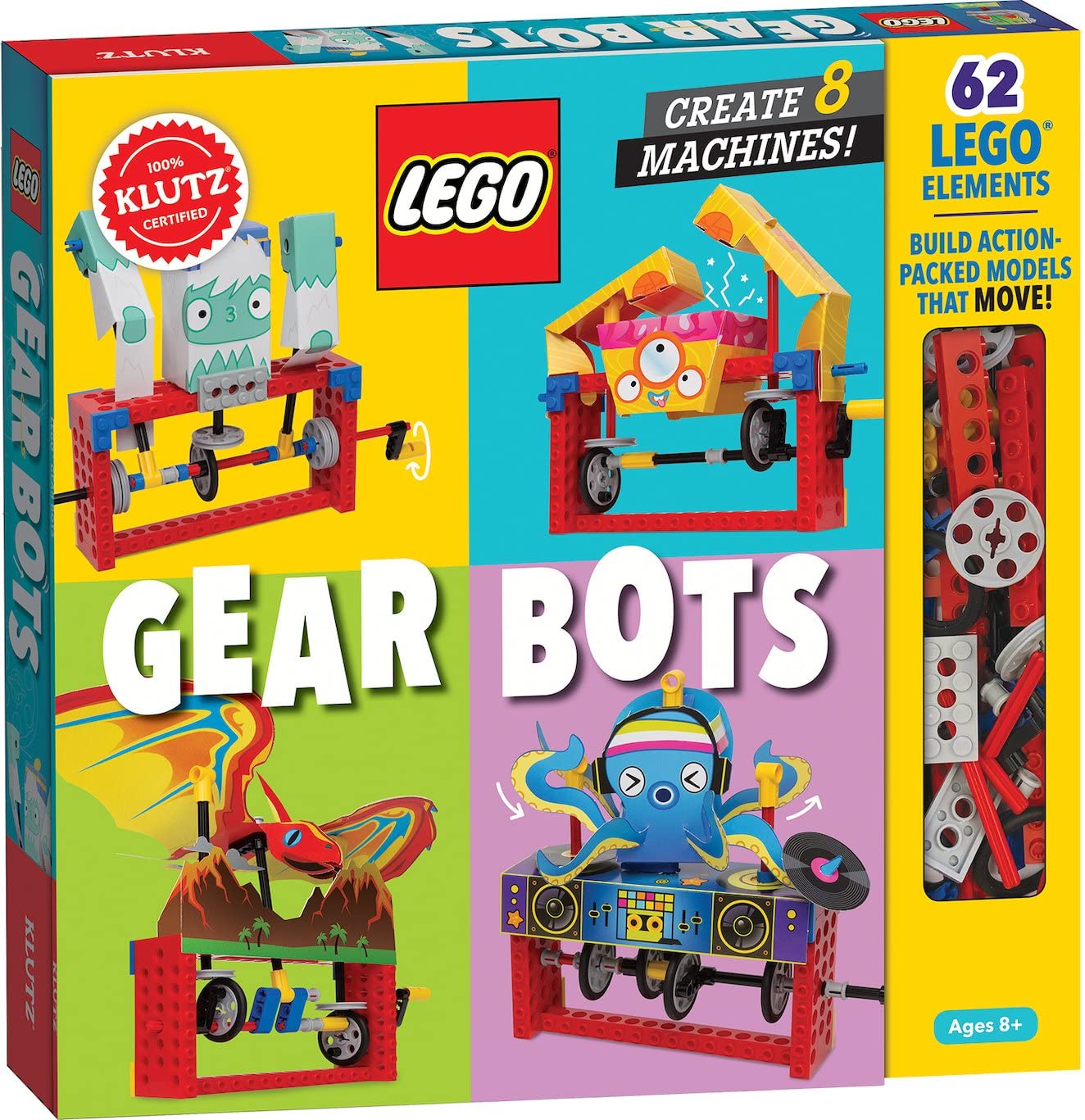
Klutz LEGO Gear Bots
Key Features
- No. of Projects: 8 models
- Instructions & Supervision: Vague, adult needed
- Materials & Durability: LEGO + paper, fragile
- Age & Skill Match: 8-12
- STEM or Creative Focus: STEM: mechanics
- Price: $$
This kit blends LEGO Technic elements with papercraft to build eight moving creatures that demonstrate axles, cams, and cranks. The thin paper components can tear, and the instructions are less explicit than typical LEGO booklets — it rewards kids who embrace trial-and-error and have the patience for delicate assembly.
Pros
- Innovative STEM concept teaches axles, cams, and cranks through hands-on building.
- Makes a wonderful gift for LEGO-loving kids who enjoy building and learning.
Cons
- Papercraft elements are thin and may tear; the instruction booklet lacks the step-by-step precision of standard LEGO sets.
This kit fits a 9-year-old LEGO enthusiast who enjoys mechanical tinkering and can handle fragile papercraft — less suited for those expecting a frustration-free build.
How to Choose
The most reliable gifts for 9-year-olds share a common thread: sturdy materials, crystal-clear instructions, and projects that stay interesting past the first session.
Number of Projects & Reusability
A kit with 100 projects keeps momentum going far longer than a one-and-done craft. Look for sets that let kids recombine parts, not just follow a single scripted build. Open-ended systems like snap circuits or building bricks reward repeated play, while one-time painting or planting projects can gather dust after a weekend.
Beware of kits that count every bead or sticker as a separate project — the real metric is how many distinct, engaging activities the core materials support.
Instruction Clarity & Adult Involvement
At age 9, most kids want independence, but instructions that rely on tiny text or assume prior knowledge can erase that confidence. Picture-based steps or visual diagrams reduce frustration, while poorly written booklets often force an adult to step in. A well-designed kit should let a child tackle 80% alone, with grown-ups only jumping in for the trickiest challenges.
If you’re shopping for a gift that will be used during travel or quiet afternoons, prioritize sets that have been praised for “figure-it-out” clarity — it’s the difference between a hands-off win and a constant cry for help.
Material Quality & Durability
Flaking stickers, snapped elastic, and putty that won’t stick are the silent killers of crafty joy. For construction toys, check that snapping parts hold together firmly even after dozens of sessions. For craft kits, the adhesive medium matters: double-sided tape or proper glue pens outperform watery squeeze bottles.
In categories like rock painting or slime, the raw ingredients (paints, scents, glowing agents) often degrade faster than the packaging suggests. If a product’s headline feature is a sensory payoff — glowing, scent, color-changing — read buyer impressions to confirm it actually materializes.
Age & Skill Level Match
Manufacturers’ age labels are a starting point, not gospel. A kit labeled “8+” might involve fine motor skills (like knotting tiny cords) that still flummox a 9-year-old, or complex spatial reasoning that expects a preteen attention span. Match the gift’s physical and mental demands to the child’s temperament, not just their birthday.
For a child who gets easily frustrated, a puzzle with a gentle learning curve and built-in hints often works better than a steep difficulty spike. Conversely, a rapid learner will breeze past a challenge that’s too easy and lose interest.
STEM vs. Creative Focus
Nine is a sweet spot where logic and imagination collide. Gifts that blend both — like a LEGO set that teaches mechanics or a science kit with a storytelling angle — often hold attention longest. Strictly STEM toys may feel like schoolwork to a child craving color and self-expression, while open-ended art supplies can lack the structure some kids need to get started.
If you’re unsure, observe what they gravitate toward in free time: do they tinker, or do they doodle? Let that be your compass.
FAQ
Do glow in the dark rock painting kits actually glow?
Most don’t glow as brightly as the box suggests. The paints need direct, powerful light charging for at least 30 minutes, and even then the effect is often faint and short-lived. If glowing is the main draw, consider buying a separate high-quality glow pigment and mixing it in, or treat the kit purely as a regular painting activity.
Why won’t my Spirograph wheels stay in place?
The modern deluxe set uses a putty-based adhesive instead of the original pin system, which often fails to hold the rings steady. Applying high-tack poster putty or carefully taping down the outer ring can solve the slipping, but expect some trial and error.
How to fix string that won’t stay tied in bead bracelet kits?
The included elastic cord is often too stretchy or slick to hold secure knots. Swapping in a stronger, round elastic string (0.8–1.0 mm) and using a surgeon’s knot tied twice works far better. A dot of clear nail polish or super glue on the knot can also prevent unraveling without ruining the bracelet.
Is Snap Circuits Jr. enough to get a 9-year-old started with electronics?
Absolutely. It introduces real circuitry concepts like resistance and parallel paths without soldering or jargon, and the 100+ projects cover sensors, alarms, and flying fans. Most kids can handle the later challenges with occasional adult guidance, and the system is compatible with expansion sets if their curiosity grows.