
This post contains affiliate links. We may earn a small commission when you buy through our links — at no extra cost to you.
Portable chargers promise power on the go, but the reality is often a trade-off: bigger batteries weigh you down, while tiny ones leave you hunting for an outlet by mid-afternoon. The gap between marketing specs and real-world performance is wider here than in most gadget categories.
Fast charging above 30W, built-in cables, and compact designs all sound great on paper, but each feature carries a hidden cost. A retractable cable might break after a dozen pulls. A 50,000mAh brick takes all night to recharge itself. The goal isn’t the biggest number on the box—it’s the charger that matches your actual daily load.
This guide cuts through the spec fatigue and focuses on the models that deliver consistent speed in a package you’ll actually carry. Whether you need a quick top-up for a flight or a weekender for camping, the right choice comes down to how you use it, not how many mAh it claims.



Best for Budget-Conscious Travelers
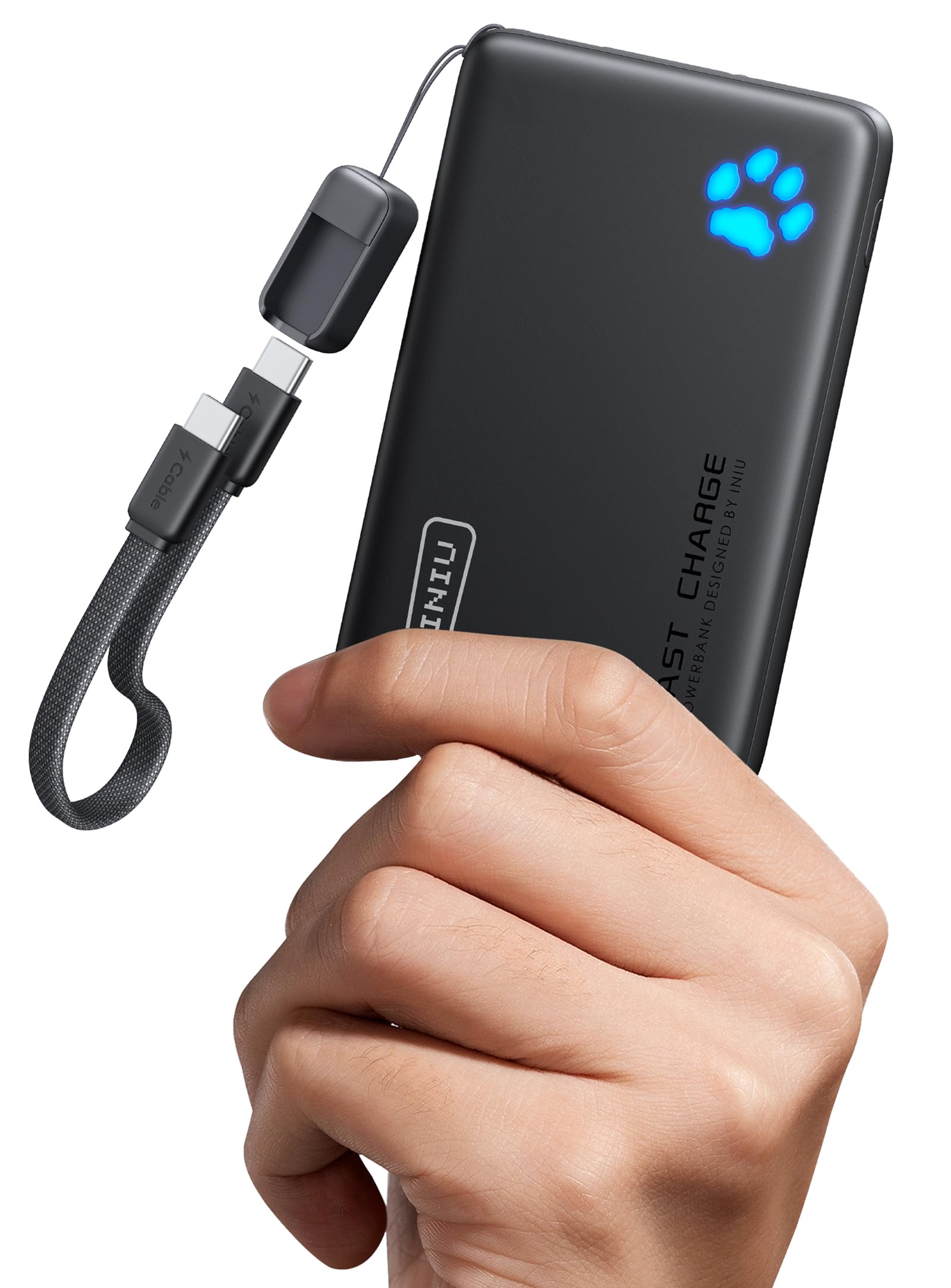
INIU 45W 10000mAh
Key Features
- Capacity: 10000mAh
- Max Output: 45W
- Ports: USB-C*2 + USB-A*1
- Weight: 182g
- Special Features: Detachable built-in cable
- Price: $
The INIU 45W delivers 45W output from a package that is 40% smaller than the average 10000mAh power bank. It charges an iPhone to 76% in 30 minutes, matching the speed of many wall chargers. The 182g weight and 0.5-inch thickness let it slide into a coin pocket without bulging.
The built-in detachable USB-C cable eliminates the need to carry a separate cord, and the 182g weight makes it unnoticeable in a pocket. While the 10000mAh capacity provides about two full charges for most phones, some users may need more for extended trips. The compact size suits short commutes and day trips.
This power bank is best for budget-conscious travelers who prioritize pocketability and fast top-ups over multiple recharges. It is TSA-friendly and fits easily in a front pocket. A minority of units may experience gradual capacity loss over months of heavy use; the 3-year warranty covers this possibility, providing a safety net.
Pros
- Charges an iPhone to 76% in 30 minutes
- 40% smaller than typical 10000mAh power banks
- Detachable USB-C cable replaces the need for a separate cord
- Lightweight at 182g, suitable for travel and daily carry
Cons
- Battery capacity may gradually decline with heavy long-term use
For anyone needing fast charging in the most compact form factor at a budget price, the INIU 45W is the straightforward pick.
Best for Everyday Carry
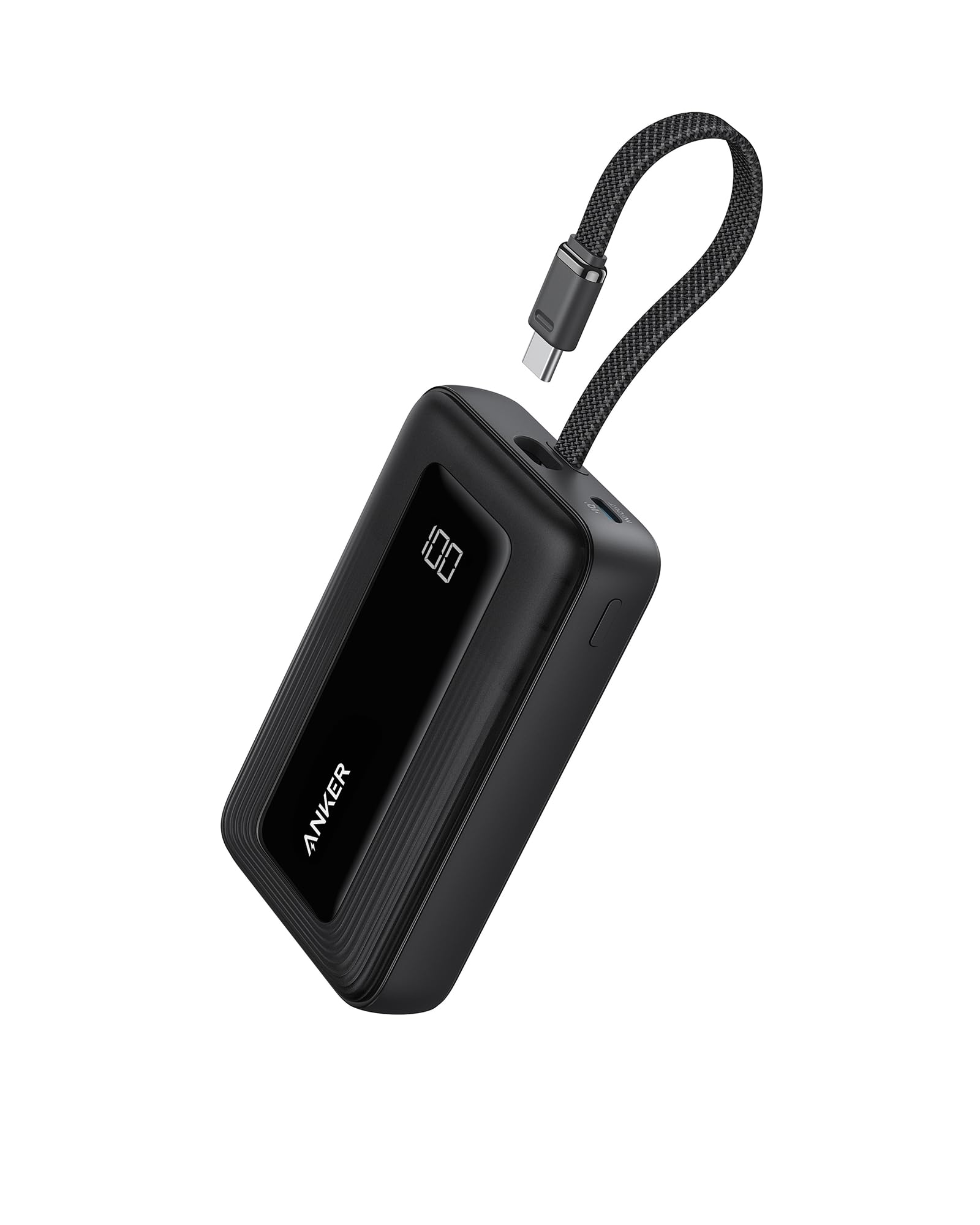
Anker Zolo 10K 30W
Key Features
- Capacity: 10000mAh
- Max Output: 30W
- Ports: Built-in USB-C + 1C1A
- Weight: 223g
- Special Features: Built-in cable acts as strap
- Price: $$
Anker’s 18-month warranty and track record of consistent performance set this 30W power bank apart from many alternatives. The built-in USB-C cable doubles as a carrying strap, reducing clutter. At 223g, it’s not the lightest option — the slimmer 45W competitor is 40g lighter — but the weight is manageable for jacket pockets or bags.
This power bank suits travelers and daily users who value long-term dependability over absolute portability. The extra weight is noticeable in lightweight shorts, but it’s a minor tradeoff for those who prioritize Anker’s warranty and consistent performance over the lightest possible carry.
Charging an iPhone 16 Pro Max to 50% takes about 27 minutes, matching the company’s claim. The integrated cable provides enough length for typical use and keeps the unit tangle-free. The 10,000mAh capacity provides roughly two full charges for most phones.
Pros
- Fast 30W charging tops up phones quickly
- Built-in USB-C cable simplifies carrying and reduces cable clutter
- Durable construction with a strong 18-month warranty from a well-known brand
Cons
- At 223g, it’s heavier than some competitors; noticeable in lightweight clothing
- Occasional reports of capacity reduction after months of use
For buyers who value consistent build quality and a long warranty, this Anker power bank delivers dependable daily charging.
Best for Minimalist Travelers
Anker Nano 3-in-1 10K
Key Features
- Capacity: 10000mAh
- Max Output: 30W
- Ports: Built-in USB-C + 1 USB-C
- Weight: 250g
- Special Features: Foldable wall plug, built-in cable
- Price: $$$
The Anker Nano 3-in-1 folds a 30W wall charger and a USB-C cable into a 10,000mAh power bank. At 250g it slips into a pocket or small bag, and the built-in cable means you’re never hunting for a cord. Recharging the bank itself is as simple as plugging the foldable prongs into a wall outlet – no separate brick required.
Charging speed is solid: an iPhone 15 Pro reaches 50% in about 25 minutes via the built-in cable. The extra USB-C port lets you charge a second device simultaneously, but that’s the limit – no Lightning or Micro-USB ports, and no wireless. The design prioritizes simplicity over flexibility.
This is for travelers who want one item to handle overnight hotel charging and daytime top-ups, and who rarely need to power more than a phone and maybe earbuds at once. The premium price reflects the all-in-one convenience, but a small number of units may develop cable or battery issues within months – worth checking warranty terms if you plan to rely on it heavily.
Pros
- All-in-one design combines wall plug, cable, and power bank
- Fast charging at 30W fills an iPhone 15 Pro to 50% in 25 minutes
- Compact and light at 250g – fits in pockets or small bags
Cons
- Cable or battery can cease to function after several months in a minority of units
- Only two devices can charge at once – no additional ports for a third
If carrying one brick, cable, and bank together frustrates you, the Nano 3-in-1 solves that neatly – just be aware it maxes out at two devices and carries a premium price.
Best for Multi-Device Households
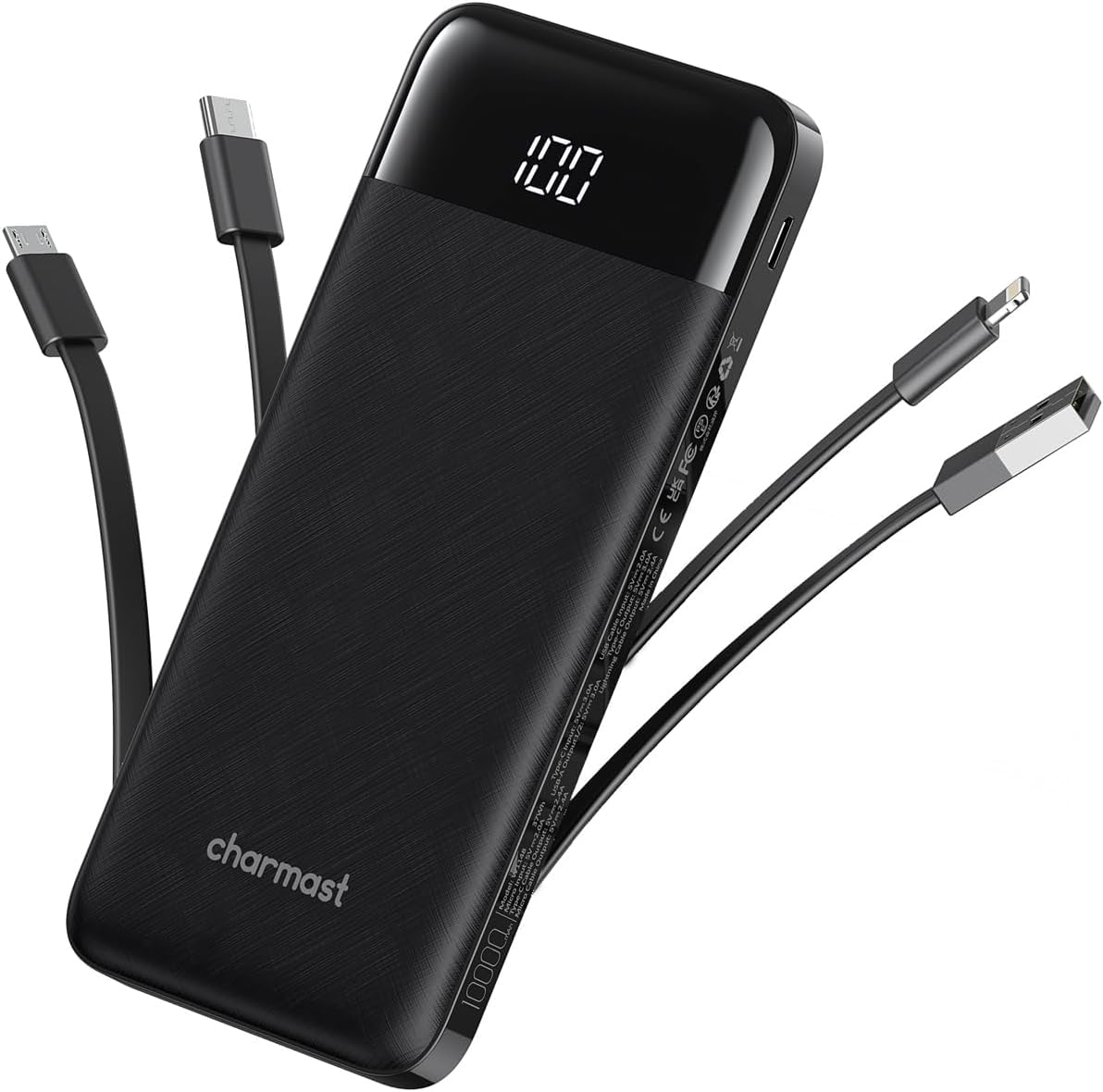
charmast 10K Built-in Cables
Key Features
- Capacity: 10000mAh
- Max Output: 15W (shared)
- Ports: 6 outputs (3 built-in + 3 ports)
- Weight: 240g
- Special Features: Lightning, USB-C, Micro cables
- Price: $$
The charmast portable charger’s main draw is its three permanently attached cables: Lightning for iPhones, USB-C for newer Androids and laptops, and Micro-USB for older devices. That means no hunting for the right cord or carrying extras. It also offers three additional USB ports, bringing the total to six outputs — enough to top up a phone, earbuds, and a tablet at the same time.
This convenience comes with a tradeoff: shared 15W maximum output means charging slows when multiple devices are plugged in. If you need to quickly refuel a phone alone, a 45W power bank like the top pick will finish faster. The 10,000mAh capacity is typical for the size — enough for about two full phone charges — but some units may show reduced capacity after months of regular use.
For travelers who want to leave extra cables at home, or households juggling iPhone, Android, and older gadgets, this bank solves the right problem. Its slim 240g frame slides into a purse or small bag. Just don’t expect speed when charging several devices at once — this is a utility tool, not a racehorse.
Pros
- Built-in Lightning, USB-C, and Micro-USB cables cover nearly every device without extras.
- Slim and lightweight design at 240g — fits in a purse or small bag.
- Six outputs let you charge multiple devices at the same time.
Cons
- When multiple devices are connected, each charges slower than a dedicated fast charger would.
- Battery capacity may degrade after several months of regular use, reducing effective runtime.
If cable clutter is your biggest frustration, this bank solves it neatly — but if fast charging is a priority, look at the top pick’s 45W output.
Best for Budget-Conscious Travelers
HELLEE 15K Built-in Cables
Key Features
- Capacity: 15000mAh
- Max Output: 22.5W
- Ports: 4 built-in cables + 2 ports
- Weight: 200g
- Special Features: Lightning, USB-C, Micro, USB-A cables
- Price: $
HELLEE’s 15K power bank includes built-in Lightning, USB-C, and Micro cables plus two extra ports, covering every device without requiring separate cords — a convenience the slimmer 45W top pick lacks. At 200 grams and 4.57 x 0.87 x 2.76 inches, it slips into a pocket or bag easily while still holding enough charge to refill a phone 3.5 times.
This bank is best for budget-conscious travelers, students, and commuters who want a full-capacity charger without carrying extra cables. The 22.5W output handles most phones at a reasonable pace, but if your device supports 45W charging, the top pick will refill it faster — a tradeoff worth weighing against the $20 price and all-in-one cable setup.
User reports consistently note that the HELLEE works reliably across various phones and tablets, and the built-in cables hold up to regular use. The only real limitation is the charging speed ceiling; for everyone else who just needs a dependable, portable power bank that doesn’t cost a lot, this one checks every box.
Pros
- Built-in Lightning, USB-C, and Micro cables eliminate the need to carry separate charging cords.
- 15,000mAh capacity refills most phones 3.5 times before needing a recharge.
- Only 200 grams — light enough for pocket or bag despite the large capacity.
- Six total outputs (4 built-in cables + 2 ports) let you charge multiple devices at once.
Cons
- 22.5W peak output — insufficient for phones that support 45W fast charging.
For budget-conscious buyers who want a full-capacity power bank with built-in cables and light weight, the HELLEE 15K delivers everything needed without demanding a premium price.
Best for Heavy Phone Users
INIU 20K 22.5W
Key Features
- Capacity: 20000mAh
- Max Output: 22.5W
- Ports: USB-C + 2 USB-A
- Weight: 320g
- Price: $
The INIU 20K delivers 20,000mAh capacity at a price that undercuts many 10,000mAh options, making it a clear value leader for extended days out. Its dimensions are noticeably smaller than other 20K banks, yet it still fits comfortably in a bag. For comparison, the slimmer 45W INIU top pick offers faster charging in a lighter package, but this model wins on sheer capacity per dollar.
This power bank targets budget travelers and heavy phone users who need multiple full charges and don’t mind carrying a bag. The 320g weight is a tradeoff — it’s not suited for pocket carry, but in a backpack or tote it’s unobtrusive. Camping, long commutes, and flights are where this shines. Those wanting ultra-portability or fast charging above 22.5W should look at the 45W top pick instead.
Pros
- High 20,000mAh capacity charges a phone 3–4 times
- Compact size for a 20K power bank – smaller than many competitors
- Dependable performance when charging multiple devices at once
Cons
- 320g weight is noticeable in clothing pockets; better suited for bag carry
For anyone needing a high-capacity battery backup without paying a premium, this INIU delivers — just plan to keep it in a bag.
Best for Off-Grid Adventures
OHOVIV 50K Built-in Cables

Key Features
- Capacity: 50000mAh
- Max Output: 22.5W
- Ports: 4 built-in cables + 3 ports
- Weight: 485g
- Special Features: Massive capacity
- Price: $$
This 50,000mAh pack charges a phone 10 times—enough to keep a group powered for days off-grid. Built-in Lightning, USB-C, Micro, and USB-A cables cover all devices without extra wires, and the build feels solid. The tradeoff: at 1.07 pounds and nearly 6 inches long, it’s too heavy for pocket or daily carry—designed for a backpack or car trunk. Self-recharging takes hours due to the large capacity, so plan ahead. This is a capable emergency or camping battery, not a grab-and-go power bank.
Pros
- Massive 50,000mAh capacity keeps phones running for days on camping trips
- Built-in Lightning, USB-C, Micro, and USB-A cables cover all device types
- Solid build quality holds up during travel and outdoor use
Cons
- At 485g and 5.8 inches long, this pack is too heavy for pocket carry – belongs in a bag
- 22.5W output is slower than modern 45W+ banks, so topping up takes longer
This is the pack to grab for multi-day camping trips or group outings where capacity outweighs portability. For everyday use or airline carry, look elsewhere.
Best for Extended Camping
YILANS 50K 22.5W

Key Features
- Capacity: 50000mAh
- Max Output: 22.5W
- Ports: 4 built-in cables + 3 ports
- Weight: 500g
- Special Features: Massive capacity
- Price: $$
The 50,000mAh capacity delivers enough power to charge a phone ten times over, and the built-in Lightning, USB-C, Micro, and USB-A cables mean you don’t need to carry separate cords for different devices. But that much battery comes in a 1.1-pound package that’s impractical for daily carry or a small bag. Recharging the bank itself also takes many hours due to its size. This places it alongside other massive banks like the OVOHIV, though the extra bulk and slow self-charge limit its appeal to anyone who isn’t heading off-grid for extended periods.
Pros
- Extremely high capacity – charges phones 10+ times for off-grid trips
- Built-in Lightning, USB-C, Micro, and USB-A cables cover all your devices
- Sturdy construction that holds up to rough packing
Cons
- At over a pound, carrying it in a pocket or small bag is not realistic
- Recharging the power bank itself takes many hours due to its large capacity
Best left in a camping kit or emergency bag where weight and slow self-charge won’t matter – it’s not for everyday carry.
Best for Tangle-Free Fans
Anker Nano 45W Retractable

Key Features
- Capacity: 10000mAh
- Max Output: 45W
- Ports: Retractable USB-C + 1C1A
- Weight: 232g
- Special Features: Retractable cable
- Price: $$$
The Anker Nano 45W Retractable packs 45W charging into a compact 10,000mAh bank with a built-in cable that retracts neatly – no more digging through bags for tangled wires. The tradeoff: it’s heavier than similarly sized non-retractable models (232g vs. ~180g from the slimmest options) and carries a premium price. This matters if you prioritize organization and hate cable mess; if weight or cost is your primary concern, the retractable feature may not justify the extra spend.
Pros
- Retractable USB-C cable eliminates cable tangling for convenient storage.
- 45W fast charging refuels an iPhone 16 Pro to 50% in just 27 minutes.
- Compact dimensions (16% smaller than standard) fit comfortably in pockets.
Cons
- Premium pricing compared to equivalent-capacity banks without retractable cable.
- Weight (232g) is noticeable for the size – heavier than many 10,000mAh alternatives.
Best for organization enthusiasts who value tidy cable management over the lightest possible carry – worth the premium if you consistently hate tangled wires.
Best for Iphone Cable-Free
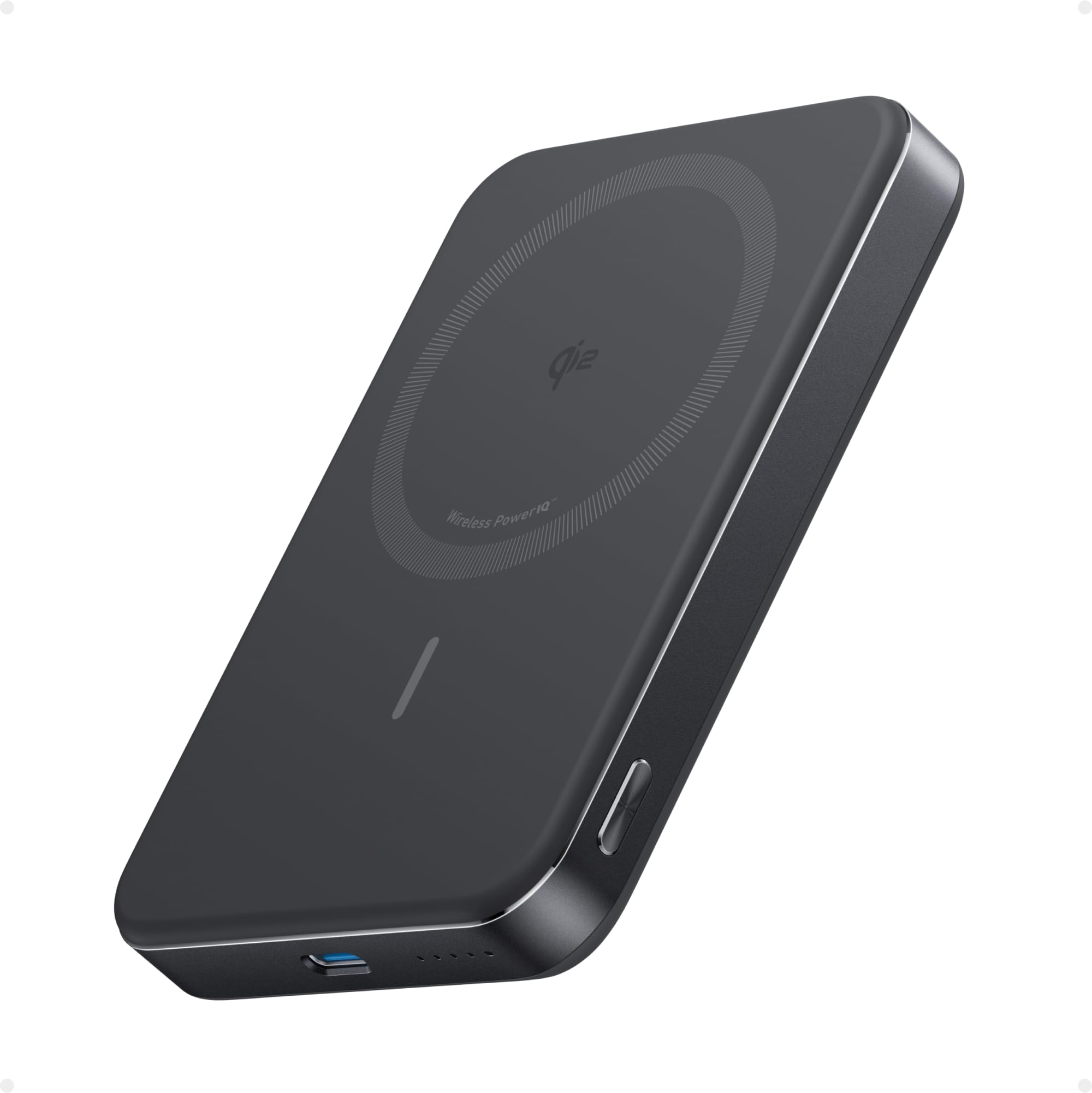
Anker MagGo 10K Magnetic
Key Features
- Capacity: 10000mAh
- Max Output: 30W wired / 15W wireless
- Ports: USB-C + wireless
- Weight: 216g
- Special Features: Qi2 magnetic wireless
- Price: $$$
The Anker MagGo attaches firmly to iPhones and its slim profile makes it easy to keep attached during short outings. The build quality feels premium, and the magnetic grip holds well even while walking. However, wireless charging can generate enough heat to slow the phone’s charging rate, and the actual throughput often falls short of the advertised 15W — wired alternatives offer faster and cooler charging for similar or lower prices. This power bank fits a narrow niche: iPhone users who value cable-free convenience above all else and are comfortable with the thermal and speed trade-offs.
Pros
- Strong magnetic grip holds iPhone securely during movement.
- Slim profile stays comfortable when attached to the phone.
- Build quality feels premium and consistent.
Cons
- In warm environments or during extended use, the bank can get uncomfortably hot and may cause the phone to throttle charging.
- For users expecting fast top-ups, the actual wireless output can be slower than the 15W rating, making wired charging a more reliable choice.
Best for iPhone users who want a magnetic attachment for short outings and are okay with slower, warmer charging — otherwise, a wired power bank delivers better value.
Best for Emergency Top-Ups
Anker Nano 5K Plug-in

Key Features
- Capacity: 5000mAh
- Max Output: 22.5W
- Ports: Built-in USB-C plug + 1 USB-C
- Weight: 99g
- Special Features: Direct plug, no cable
- Price: $
The Anker Nano weighs just 99 grams and clips onto your phone without a cable, making it ideal for a quick top-up when you’re out and want to travel light. That convenience comes with clear boundaries: the flip-out USB-C connector can become damaged under stress, and the 5,000mAh capacity may leave larger phones short of a full charge. Slower-than-advertised charging speeds add to the compromise. This is a backup for short outings or emergencies, not a daily companion — the fragile connector and low capacity keep it from being more.
Pros
- Ultra-light 99g design fits in a pocket or clings to the phone.
- Built-in USB-C plug removes the need for a separate cable.
- Handy for emergency top-ups when every gram counts.
Cons
- The flip-out USB-C connector can become damaged under stress, rendering the device unusable.
- 5,000mAh capacity may not fully recharge larger smartphones like Pro Max models.
Best as a backup for short outings when you want to travel without a cable, but not for daily reliance.
Best for Occasional Backup
Anker PowerCore 10K Slim
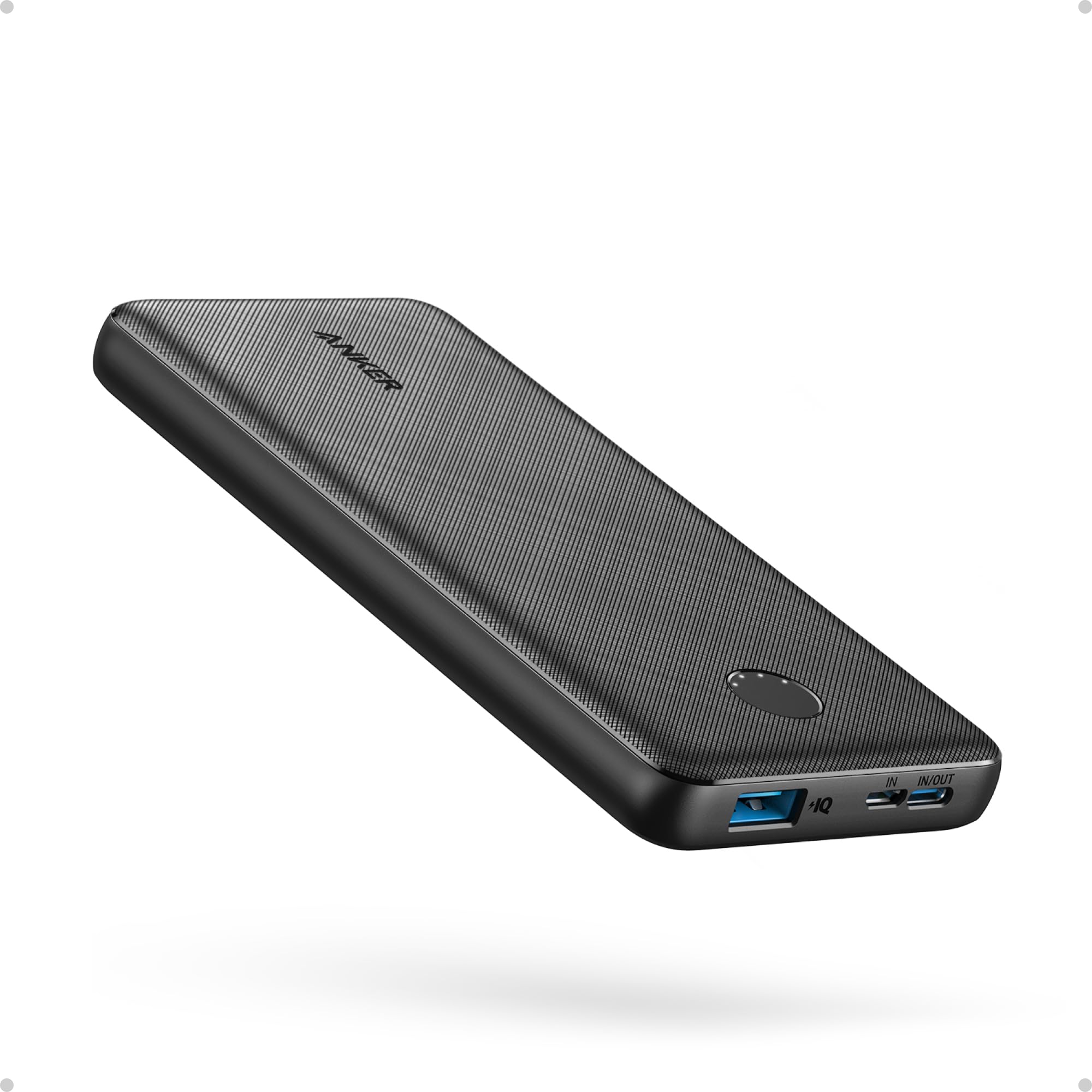
Key Features
- Capacity: 10000mAh
- Max Output: 15W
- Ports: USB-C + USB-A
- Weight: 240g
- Special Features: Slim design
- Price: $
The Anker PowerCore 10K combines a slim, travel-friendly profile with a price that undercuts many competitors. At 15W max output, charging a modern phone takes longer than with fast-charging alternatives, and some units may lose capacity over extended use. For anyone who needs a quick top-up or owns a fast-charging phone, a 45W option like the INIU delivers better value at a similar price.
Pros
- Slim, lightweight design fits easily in bags and is airline-friendly.
- Budget-friendly price for a 10,000mAh capacity from a known brand.
Cons
- At 15W, charging a modern phone takes noticeably longer than with fast-charging alternatives.
- Some units may show reduced capacity after months of use.
A decent emergency backup for users who prioritize low cost and portability over charging speed, but those with fast-charging phones should consider faster alternatives.
Best for Belkin Ecosystem
Belkin 20K 15W

Key Features
- Capacity: 20000mAh
- Max Output: 15W
- Ports: USB-C + 2 USB-A
- Weight: 490g
- Price: $$
Belkin’s 20,000mAh power bank delivers the solid build and consistent performance the brand is known for. However, its 490g weight limits it to backpack carry rather than pocket use, and the 15W shared output means significantly slower charging than 30W+ alternatives like the top value pick. A small number of units have been reported to stop working after a few weeks, so purchasing from a retailer with a generous return policy is wise. This bank is best suited for Belkin loyalists who prioritize brand cohesion and don’t mind the tradeoffs in speed and portability.
Pros
- Solid build quality with a durable feel — typical of Belkin’s construction.
- Large 20,000mAh capacity suits long flights or day trips when packed in a bag.
Cons
- 15W max output charges phones slowly — expect longer top-up times compared to 30W+ competitors.
- At 490g, it’s among the heaviest power banks in its capacity class, not pocket-friendly.
This Belkin bank is a reasonable choice only for brand loyalists who already trust Belkin’s ecosystem and are willing to accept slower charging and a heavier load in exchange for build consistency. Most buyers will get better value from a lighter, faster power bank.
How to Choose
A power bank’s real-world charging capacity is about 60-70% of its advertised mAh due to energy loss, so a 10,000mAh bank typically delivers two full phone charges, not three.
Battery Capacity
Capacity determines how many times you can recharge your phone. A 10,000mAh bank gives most phones 1.5–2 full charges after conversion losses, while 20,000mAh covers 3–4 charges and can handle a tablet.
Larger capacities add weight and size. A 50,000mAh bank weighs nearly a pound and takes over 10 hours to recharge itself with a standard charger. Match capacity to your longest day without power, not your backup fantasy.
Fast Charging Output
Output wattage controls how fast your phone charges. 15W is standard but slow—an iPhone 16 takes over 2 hours. 30W cuts that to about an hour. 45W charges an iPhone to 50% in under 30 minutes.
But fast charging only works if both the power bank and your phone support the same standard (USB PD for most modern devices). Some budget banks advertise high wattage but deliver less in real use—check for consistent user reports.
Ports and Built-in Cables
More ports let you charge multiple devices at once, but the total output is shared. A bank with two USB-C ports may split its 30W into 15W each. Built-in cables are convenient but often short (6–8 inches) and can be a failure point if the cable detaches or breaks.
For mixed households, built-in cables that include Lightning, USB-C, and Micro save you from carrying separate cords. But those cables are not replaceable on most models—once damaged, the bank loses that port.
Weight and Dimensions
A pocket-friendly power bank weighs under 7 oz (200g) and is under 1 inch thick. That fits in jeans or a small clutch. Heavier banks (over 10 oz) are better for bags or backpacks.
Weight is the single biggest reason people stop carrying a power bank. A 182g model disappears in a pocket; a 500g brick stays home after the first trip. Prioritize weight if you plan to carry it daily.
Special Features
Built-in wall plugs turn the power bank into a two-in-one device—handy for minimalists, but they add bulk and can fail. Retractable cables keep things tidy but are more complex and may wear out. Wireless charging (MagSafe, Qi2) lets you charge without plugging in, but generates heat that slows charging and can drain the bank faster.
Consider whether the convenience of a feature outweighs its real-world trade-offs. A magnetic wireless bank might be perfect for a dinner out, but terrible for a long travel day.
FAQ
Why does my portable charger take forever to recharge itself even though it claims fast charging?
The advertised fast charging is for output to your device, not for input to the battery. A power bank’s input speed is determined by its own charging circuit and the wall adapter you use. Many large-capacity banks (50,000mAh) only accept 15–18W input, so a full recharge can take 10+ hours. To speed it up, pair it with a wall adapter that matches the bank’s maximum input rate (usually printed near the port).
Can I take a 50,000mAh power bank on a plane?
Yes, but with restrictions. TSA allows power banks up to 100Wh (roughly 27,000mAh at 3.7V) in carry-on luggage without approval. A 50,000mAh bank exceeds that limit—it’s around 185Wh. You may be allowed to bring it with airline approval, but many security agents will confiscate it. For worry-free travel, stick to 20,000mAh (74Wh) or smaller.
Is a power bank with a built-in cable as durable as separate cables?
Generally no, because the cable is fixed and subject to the same bend stress every time you use it. A separate cable can be replaced when it frays; a built-in cable failure can render that port useless. However, some models (like the INIU 45W) use a detachable cable that can be swapped, solving the durability concern. For heavy travelers, detachable built-in cables are the sweet spot.
How many times can a 10,000mAh power bank actually charge an iPhone 16?
Roughly 1.8 full charges. The iPhone 16 Pro Max has a 4,500mAh battery, and power banks lose about 20–30% of their rated capacity due to voltage conversion and heat. So a 10,000mAh bank delivers about 7,000–8,000mAh usable. Expect 1.5–2 charges depending on phone model and usage during charging.