
This post contains affiliate links. We may earn a small commission when you buy through our links — at no extra cost to you.
Most budget travel tripods advertise camera compatibility but deliver shaky footage and unreliable remotes. The real challenge is finding a model that actually supports a mirrorless or DSLR without sacrificing portability.
Many tripods list a high vertical load capacity but can’t hold the same weight when tilted – that’s where most fall short. A stable platform at eye level matters more than a flashy spec sheet.
This guide focuses on tripods that hold steady in the field, with honest trade-offs – because a wobbly tripod is worse than no tripod at all.


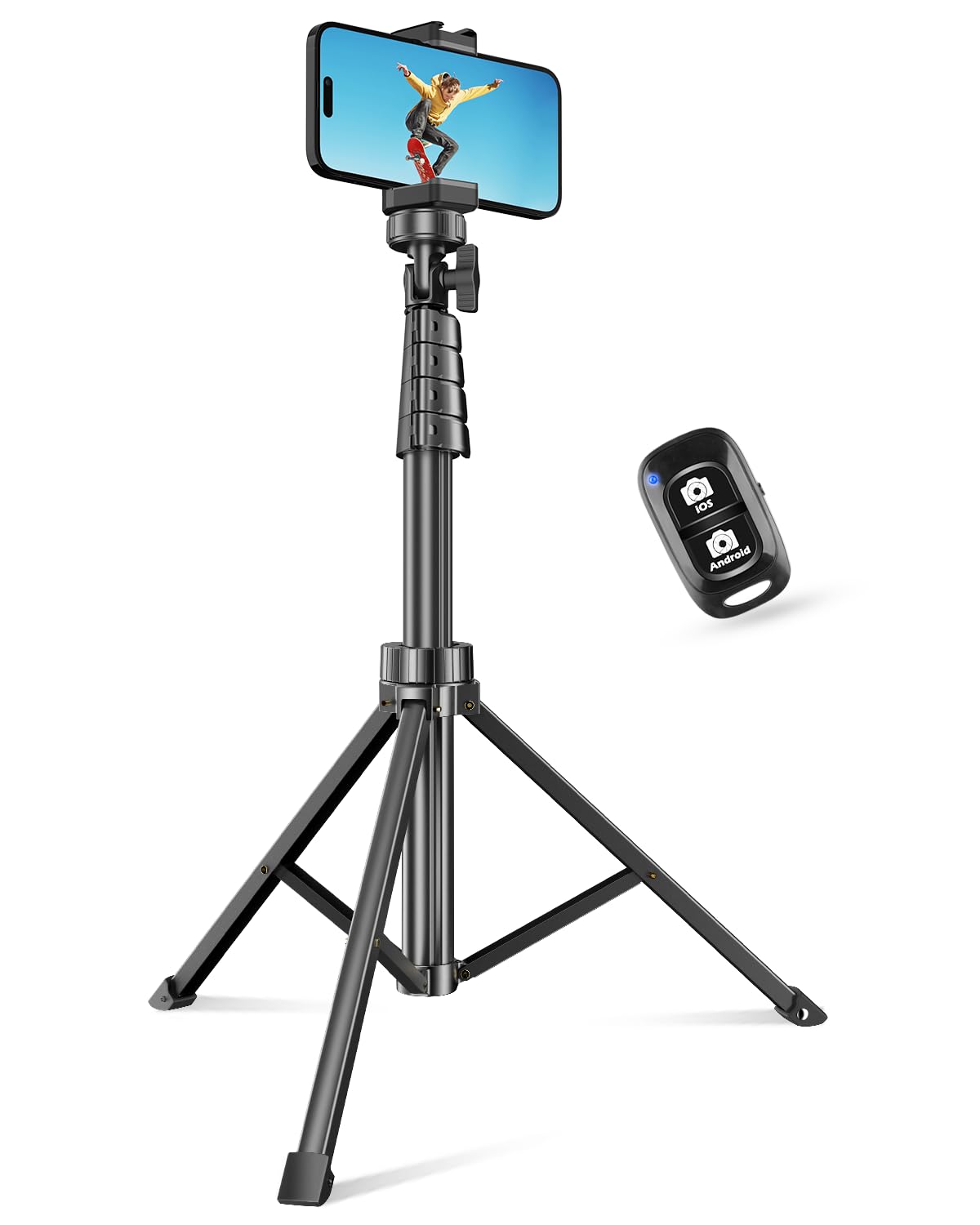


Best for Mirrorless/dslr Travel
K&F CONCEPT 64" Travel
Key Features
- Folded Length: 15.5 in
- Weight: 2.53 lbs
- Max Height: 64.1 in
- Load Capacity: 17.6 lbs
- Price: $$
The K&F CONCEPT 64” delivers a stronger balance of portability and capacity than most competitors near its price. At 2.5 pounds with a 15.5-inch folded length, it fits in a carry-on bag, yet extends to 64 inches and supports up to 17.6 pounds — enough for a mirrorless camera with a standard zoom. The 36mm ball head adjusts smoothly and locks securely for typical compositions.
The flip leg locks are quick to operate, though the plastic construction may not feel as reassuring as all-metal alternatives. With a compact mirrorless or entry-level DSLR, the tripod remains stable even in light wind. Attaching a heavy telephoto lens can introduce noticeable wobble, particularly when the center column is fully raised — a tradeoff common at this weight.
This tripod suits travel photographers who value portability over absolute rigidity. Vloggers get the included phone clip for fast smartphone swaps. For those carrying a full-frame DSLR with long glass, the plasticky leg locks and occasional wobble make it a less suitable choice — stick to lighter lenses and keep the center column low for best results.
Few travel tripods in its price range match the combination of height, load capacity, and weight. The K&F holds its own against models costing twice as much, provided you respect its design limits. The padded carrying bag adds convenience for daily packing.
Pros
- Steady support for mirrorless and compact DSLR kits at full height.
- Carrying bag and compact 15.5-inch fold make it easy to pack.
- Cost-effective – delivers features typical of tripods in a higher price bracket.
- Quick-release plate and flip locks speed up setup in the field.
Cons
- Plasticky leg locks can introduce wobble when heavy telephoto lenses are attached.
- No pan handle included, making smooth video pans more difficult.
For travel photographers with mirrorless or entry-level DSLR gear, this tripod offers a practical mix of portability, height, and stability at a mid-range price — just keep the lenses moderate.
Best for Phone & Camera
Liphisy 64" Tripod
Key Features
- Folded Length: 17.7 in
- Weight: 1.6 lbs
- Max Height: 64 in
- Price: $
The Liphisy tripod delivers real camera-grade stability at a fraction of the cost of typical travel tripods — a lightweight frame that holds compact cameras steady for static shots and slow pans, paired with a phone holder that doesn’t feel like an afterthought.
This is the tripod for travelers who shoot primarily with a phone or a lightweight mirrorless lens and want one affordable kit that packs small. The lightweight construction means a breeze above 10 mph can tip it over, so it’s better suited for indoor vlogs, tabletop work, or calm outdoor days. The included remote may require a second attempt to pair before each session — a wired remote or timer is a dependable backup.
Despite the budget price, the aluminum alloy body and stainless steel components feel solid in hand. The ball head offers enough range for portrait-to-landscape flips, and the legs adjust smoothly with flip locks for quick setup. At 1.6 lbs and a folded length under 18 inches, it slips into a carry-on without adding noticeable weight.
Pros
- Sturdy and stable for its weight – holds a compact camera without noticeable wobble.
- Build quality feels premium despite the budget price point.
- Works well with both phones and lightweight cameras – rare at this price.
Cons
- Lightweight build can be affected by moderate wind – best for indoor or calm outdoor use.
- Remote control pairing may be inconsistent, requiring a wired or timer alternative for dependable triggering.
A smart buy for casual vloggers and travelers who shoot with phones or compact cameras – just keep a wired remote handy and avoid exposed hillsides.
Best for Phone & Casual
SENSYNE 62" Tripod
Key Features
- Weight: 1.43 lbs
- Max Height: 62 in
- Load Capacity: 2.2 lbs
- Price: $
The SENSYNE 62” Tripod is one of the most popular phone tripods on the market. It sets up in seconds, weighs just 1.4 pounds, and includes a wireless remote. Where the top pick prioritizes camera stability, this model is built for smartphone use, with a phone holder that grips securely and a 1/4” screw for compact point-and-shoot cameras.
This tripod suits travelers and families who want an all-in-one solution for phone photography. The ball head allows basic angle adjustments, though it can be stiff to rotate, and the remote may occasionally need re-pairing. These tradeoffs are acceptable for casual use, but anyone needing precise framing or consistent remote reliability should consider the K&F Concept 64” instead.
The aluminum legs feel sturdy despite the low weight, and the twist locks engage cleanly. Users report the tripod holds a phone securely at full extension without tipping on level surfaces. The remote works for most shutter releases but may not connect on the first try – keeping it close to the phone during pairing helps.
Pros
- Sturdy aluminum legs with secure phone grip
- Quick-deploy legs and intuitive phone clamp
- Compatible with phones and compact cameras via included 1/4" adapter
Cons
- Ball head tilt/pan adjustment can be stiff or uneven
- Remote control may have pairing or functionality problems
For phone-focused users seeking a budget-friendly travel tripod, this model offers quick setup and solid build at an entry-level price. The remote and head quirks are manageable tradeoffs for casual use.
Best for Landscape Architecture Tall
K&F CONCEPT 90" Tripod
Key Features
- Folded Length: 21.3 in
- Weight: 4.5 lbs
- Max Height: 90 in
- Load Capacity: 22 lbs
- Price: $$$
The K&F CONCEPT 90" stands apart from the travel-tripod crowd by offering a fully extended height of 90 inches and legs that splay from 0 to 120 degrees, allowing you to shoot directly overhead or inches off the ground without a center-column gimmick. That range opens up compositions most tripods simply can’t reach, especially for architecture details or over-crowd shots.
This reach comes with a weight penalty: 4.5 pounds makes it one of the heavier options in a category that prizes portability. The leg-angle mechanism uses a twist-collar system that, while secure, requires a deliberate two-step process to toggle — not the set you’d grab for a fast-changing event. For photographers who prioritize height and creative angles over pack weight, the tradeoff is manageable; for anyone counting ounces or needing rapid deployment, the lighter 64-inch top pick is a better fit.
Build quality is solid for a tall tripod at this price. The metal ball head holds a full-frame DSLR with a 70-200mm lens without sag, and the detachable monopod adds another rigging option. The 22-pound load capacity is overkill for most mirrorless setups, but it gives margin for heavy gear without worrying about stability.
Pros
- Full 90-inch height with legs that spread to 120° for overhead and ground-level shots
- Stable platform for heavy camera rigs, with a load capacity of 22 lbs
- Detachable monopod adds flexibility for walk-around shots
Cons
- Leg-angle adjustment requires a careful two-step process, slow for quick setup
- At 4.5 lbs, it’s heavy for a travel tripod — less suited to backpacking
This tripod earns its place for the photographer who consistently needs extra height or odd angles and is willing to carry the extra poundage. If your typical bag is under 3 pounds, the top pick’s 64-inch model is the smarter choice.
Best for Heavy Dslr Monopod
NEEWER 77" Tripod Monopod
Key Features
- Folded Length: 19 in
- Weight: 3.53 lbs
- Max Height: 77 in
- Load Capacity: 34 lbs
- Price: $$
The NEEWER TP77 carries the highest vertical load capacity in this lineup (34 lbs) and a 2-axis center column that allows overhead and low-angle shooting without flipping the legs — a feature normally reserved for studio tripods. The detachable leg converts into a monopod, adding flexibility for event or wildlife shooters who need a walking stick that doubles as a support.
This tripod suits photographers using heavy DSLR rigs, long telephoto lenses, or those who want a backup monopod in one purchase. The tradeoff is weight: at 3.5 lbs and folding to 19 inches, it’s not a backpacking companion. Additionally, the ball head can develop looseness over time, requiring occasional tension adjustments — less of an issue for tripod-first shooters who don’t constantly reposition the head under load.
The flip locks and twist locks feel positive, though the overall build is aluminum alloy — sturdy enough for field use but not as light as carbon fiber options at this price. The included carry bag adds protection, and the Arca-type quick release plate is compatible with most L-brackets and clamps.
Pros
- Supports heavy DSLR and lens combos with a 34 lb vertical load
- Converts to a monopod for added versatility in the field
- 2-axis center column enables overhead and low-angle shots without leg splay
Cons
- Ball head may loosen with repeated use and require periodic tension adjustment
- Heavier than most travel tripods at 3.5 lbs, limiting carry-on convenience
For DSLR owners who need a tall, stable platform and don’t mind the extra weight, the NEEWER TP77 delivers studio-grade features at a mid-range price — with the understanding that the ball head may need occasional attention.
Best for Magsafe Iphone
TONEOF Magnetic Selfie Stick

Key Features
- Folded Length: 11 in
- Weight: 0.71 lbs
- Max Height: 68 in
- Price: $
The TONEOF magnetic selfie stick tripod eliminates clamp fumbling: the phone snaps onto the aluminum mount and stays put, with 360° rotation and a 200° tilt range. At 0.71 lbs and folding to 11 inches, it slips into a small bag for solo travel or group selfies.
This design works only with MagSafe iPhones or phones fitted with the included metal ring — there is no standard 1/4" screw for cameras. The remote control may sometimes fail to charge or pair, which matters for hands-free shots. Best for iPhone owners who want magnetic convenience over camera compatibility.
Pros
- Magnetic attachment is quick and secure for MagSafe iPhones.
- Folds to just 11 inches for easy packing in carry-on bags.
Cons
- Cannot mount traditional cameras or phones without MagSafe or the included metal ring.
- Remote control may fail to charge or pair on some units.
Worth the buy only if you own a MagSafe iPhone and value magnetic convenience over camera versatility.
Best for Webcams Point-And-Shoot
Amazon Basics 50" Tripod

Key Features
- Folded Length: 16.9 in
- Weight: 1.4 lbs
- Max Height: 50 in
- Load Capacity: 4.4 lbs
- Price: $
This budget tripod handles light indoor duty well: it sets up quickly, folds to 16.9 inches, and supports point-and-shoot cameras or webcams without a fuss. The 3-way head offers basic framing adjustments, and at 1.4 lbs it won’t weigh down a travel bag. However, stability drops at full height and plastic components can wear under normal use — conditions that rule out outdoor or heavier gear. If you need a stationary stand for a compact camera or webcam inside, the low price delivers functional value, but it cannot replace a sturdier travel tripod for mirrorless or DSLR photography.
Pros
- Great value for a basic camera tripod
- Lightweight and easy to carry
- Sufficient for lightweight cameras and point-and-shoots
Cons
- Stability can be limited at full height, especially with heavier cameras
- Plastic components may wear under normal use, affecting longevity
For a webcam or point-and-shoot that stays indoors, the low price makes this a reasonable stopgap — but it cannot handle outdoor conditions or heavier gear.
Best for Smartphone Indoor Vlog
VIMOSE 66" Phone Tripod
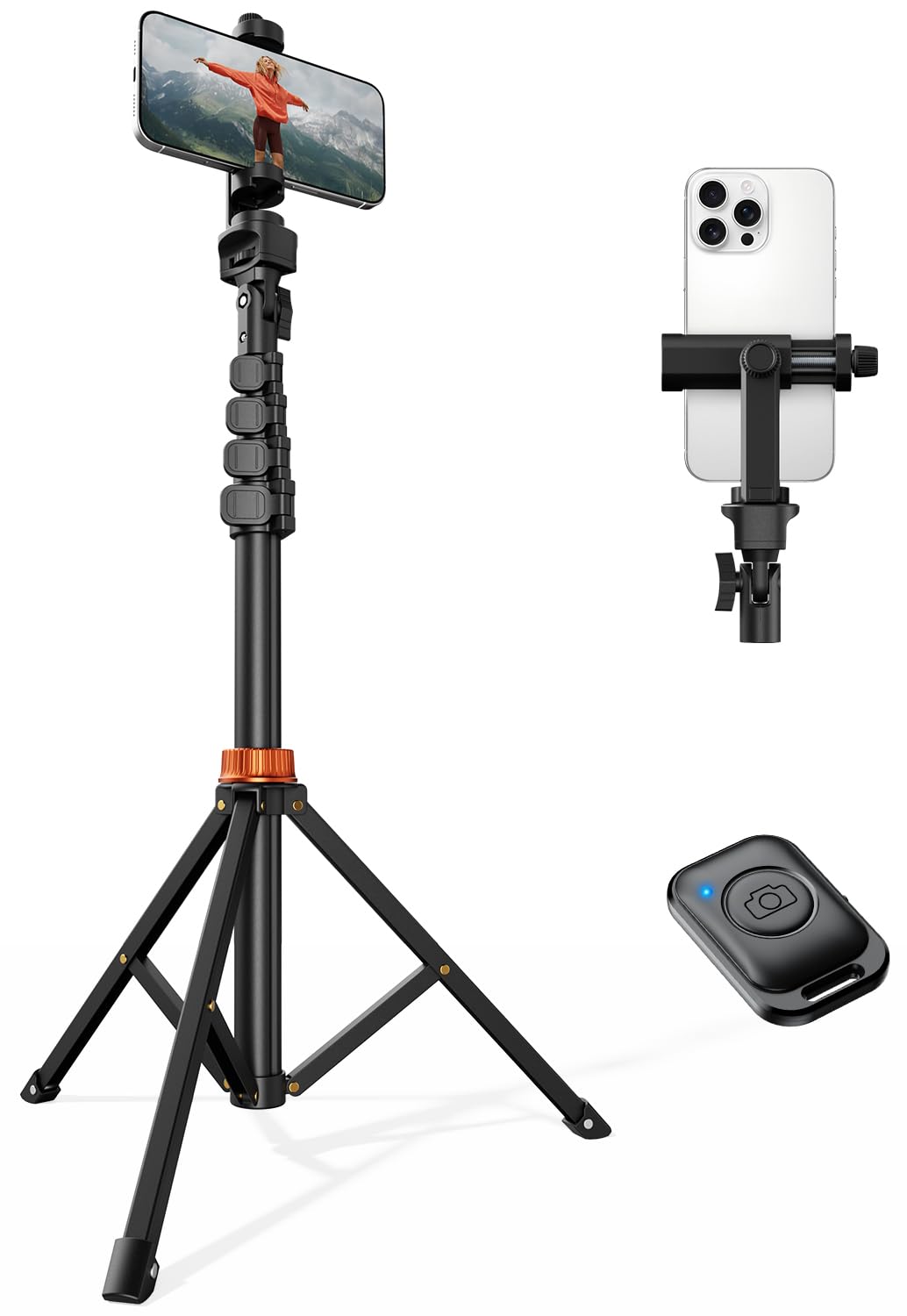
The VIMOSE 66" phone tripod offers a tall shooting height and a cold shoe mount for attaching an LED light or microphone, making it a convenient tool for indoor smartphone vlogging. The aluminum legs feel sturdy and the quick-release clamps adjust smoothly. However, this tripod is designed for phones only—there is no 1/4" screw for mounting a camera, and even the included phone clamp can leave some devices loose enough to wiggle during recording. The wireless remote has also been noted to work inconsistently or arrive non-functional in some packages. Buyers looking for a travel tripod capable of supporting a mirrorless or DSLR camera should look elsewhere; this one is best kept on a desk for static phone shots.
Pros
- Tall 66-inch maximum height for comfortable eye-level recording
- Cold shoe mount allows attaching external microphone or LED
Cons
- Phone clamp can be loose, causing wobble during use
- Remote connection may be unreliable or missing from some units
Best suited for indoor vloggers who need a tall phone stand with accessory mounting, but not a travel or camera tripod.
Best for Kids Parties Selfies
Liphisy 50" Selfie Stick
Key Features
- Folded Length: 10 in
- Weight: 0.5 lbs
- Max Height: 50 in
- Price: $
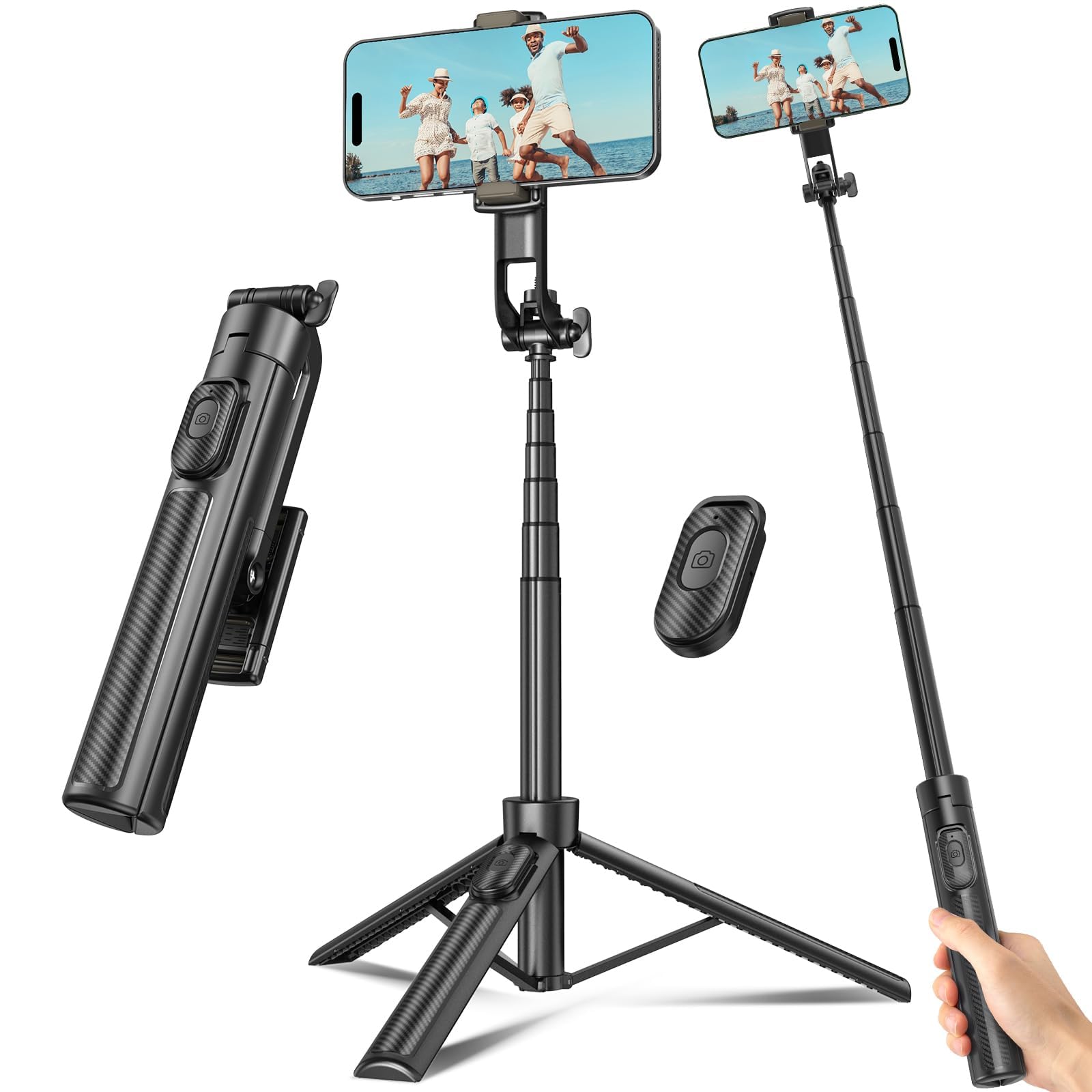
At $13 and 8 ounces, this is the lightest and cheapest option for capturing group selfies or propping up a phone for a video call. It doubles as a selfie stick and a small tabletop tripod, with a phone holder and a 1/4" screw mount for a compact camera. However, the legs are narrow and lightweight: at full 50-inch height the assembly tips over from a light bump or airflow, and the Bluetooth remote may stop pairing after a few uses. These tradeoffs limit it to stationary indoor use with phones only – even a small mirrorless camera would overwhelm the stability. For a similarly priced but more stable phone tripod, the K&F option adds a ball head and better leg spread for indoor shooting.
Pros
- Weighs only 8 oz and folds to roughly 10 inches for easy packing
- Works as a selfie stick, tripod, and includes a phone holder plus camera screw mount
- Rock-bottom price for a multi-purpose phone stand
Cons
- At full height the tripod can tip over from a light breeze or bump – best on flat, still surfaces indoors
- Bluetooth remote may disconnect or stop working after a few outings, treating it as a bonus rather than a core feature is wise
Suitable for kids’ parties, casual selfies, or as a lightweight backup tripod for indoor phone use where stability and remote reliability aren’t deal-breakers.
Best for Indoor Smartphone Selfies
EUCOS 62" Phone Tripod

Key Features
- Folded Length: 12 in
- Weight: 0.8 lbs
- Max Height: 62 in
- Load Capacity: 2.2 lbs
- Price: $
The EUCOS 62" feels well-built and extends quickly, making it a convenient indoor companion for selfies and video calls. However, its tripod base can tip at full height, and the remote pairing may be inconsistent — these limits make it unsuitable for outdoor use or mounting a camera. Stability and remote reliability are areas where this model falls short of earning a higher recommendation.
Pros
- Build quality feels sturdy despite the lightweight aluminum construction.
- Quick and tool-free extension from folded size to full height.
Cons
- Tripod base can tip when extended to full height, particularly on uneven ground.
- Remote control pairing may be inconsistent, and some units stop responding after limited use.
For indoor smartphone shooting on a level surface, this tripod delivers good value, but those needing outdoor or camera support should look elsewhere.
How to Choose
A travel tripod’s advertised load capacity is measured vertically; tilting the camera reduces safe load by as much as half, so always plan for your heaviest lens at an angle.
Folded Length
Folded length determines whether the tripod fits in a carry-on bag or daypack. A shorter fold usually means more leg sections, which can introduce wobble at full extension.
Look for a folded length under 16 inches for airline carry-on compatibility. Longer tripods (over 20 inches folded) may require checked luggage but often offer better stability.
Weight
Every pound you save in weight comes at the cost of stability. Sub-2-pound tripods are easy to carry but will shake in wind or with heavier cameras.
A weight of 2.5 to 3.5 pounds is the sweet spot for mirrorless kits: light enough for day hikes, heavy enough to resist gusts. For DSLR rigs, expect 4+ pounds.
Max Height
Maximum height determines whether you can shoot at eye level without hunching. Most travel tripods reach 60–65 inches, which works for average-height users.
Taller models (70+ inches) allow overhead angles but add weight and folded length. A center column can extend height but reduces stability—avoid extending it in wind.
Load Capacity
Load capacity is often listed as a vertical weight limit. When the camera is tilted for portrait shots, the effective capacity drops by roughly half due to lever forces.
For a mirrorless with a standard zoom (2–3 lbs), a 10 lb vertical rating is sufficient. For a full-frame DSLR with a telephoto (5–7 lbs), look for at least 20 lbs vertical.
Ball Head Quality
The ball head is the most common failure point. A cheap head may not lock tightly, causing the camera to drift after framing. A 36mm or larger ball head offers better grip.
Smooth panning requires a separate pan handle or a head with independent drag control. Budget tripods often omit this, making video pans jerky.
FAQ
Why does my travel tripod remote not work with my phone?
Most budget remotes use Bluetooth that can conflict with other paired devices or have weak batteries. First, unpair the remote from your phone’s Bluetooth list, then re-pair it fresh. If it still fails, the remote itself may be defective – many cheap units arrive dead. A wired shutter release is a more reliable alternative for remote shooting.
How much weight can a lightweight travel tripod actually hold safely?
The safe load depends on angle: vertical load ratings are often 2x what the tripod can handle when tilted. A tripod rated for 17 lbs vertical will hold a 4 lb camera and lens combo at a 45-degree tilt, but not a 10 lb rig. For outdoor stability, subtract half the vertical rating and never exceed that for angled shots.
Is a carbon fiber travel tripod worth the extra cost?
Carbon fiber saves weight but at a price. At budget price points (under $100), carbon fiber often sacrifices rigidity – twisted leg locks and shaky columns are common. A good aluminum tripod at the same price will be more stable and durable. Invest in carbon fiber only when you need weight savings under 2.5 lbs and are willing to spend $200+ for true quality.
Can I use a phone tripod for a DSLR camera?
Most phone tripods lack the load capacity and mount stability for DSLRs. The 1/4-inch screw is often plastic and the legs cannot handle the extra weight, leading to tipping or collapse. Only use phone tripods with compact point-and-shoot or very light mirrorless cameras (under 2 lbs total). For any DSLR, buy a dedicated camera tripod.