
This post contains affiliate links. We may earn a small commission when you buy through our links — at no extra cost to you.
Every compact umbrella claims to be windproof, yet the first gust turns many inside out. The gap between marketing and reality is wide: umbrellas that advertise 100 MPH survival often flip at a breezy 25 MPH. This leaves travelers and commuters soaked and frustrated, wondering why their supposedly rugged gear failed.
The right umbrella isn’t about the highest speed number on the tag — it’s about whether the canopy vents, how the ribs are reinforced, and how much weight you’re willing to pocket every day. A heavier, beefier model might feel invincible but becomes a burden on a long walk; a featherlight emergency option often snaps on its first outing.
This guide steers you to the umbrellas whose wind resistance is backed by real-world feedback, not just bold print. Whether you need a daily car stowaway, a night-safety workhorse, or an ultralight backup, you’ll find a pick that balances portability and genuine storm protection.

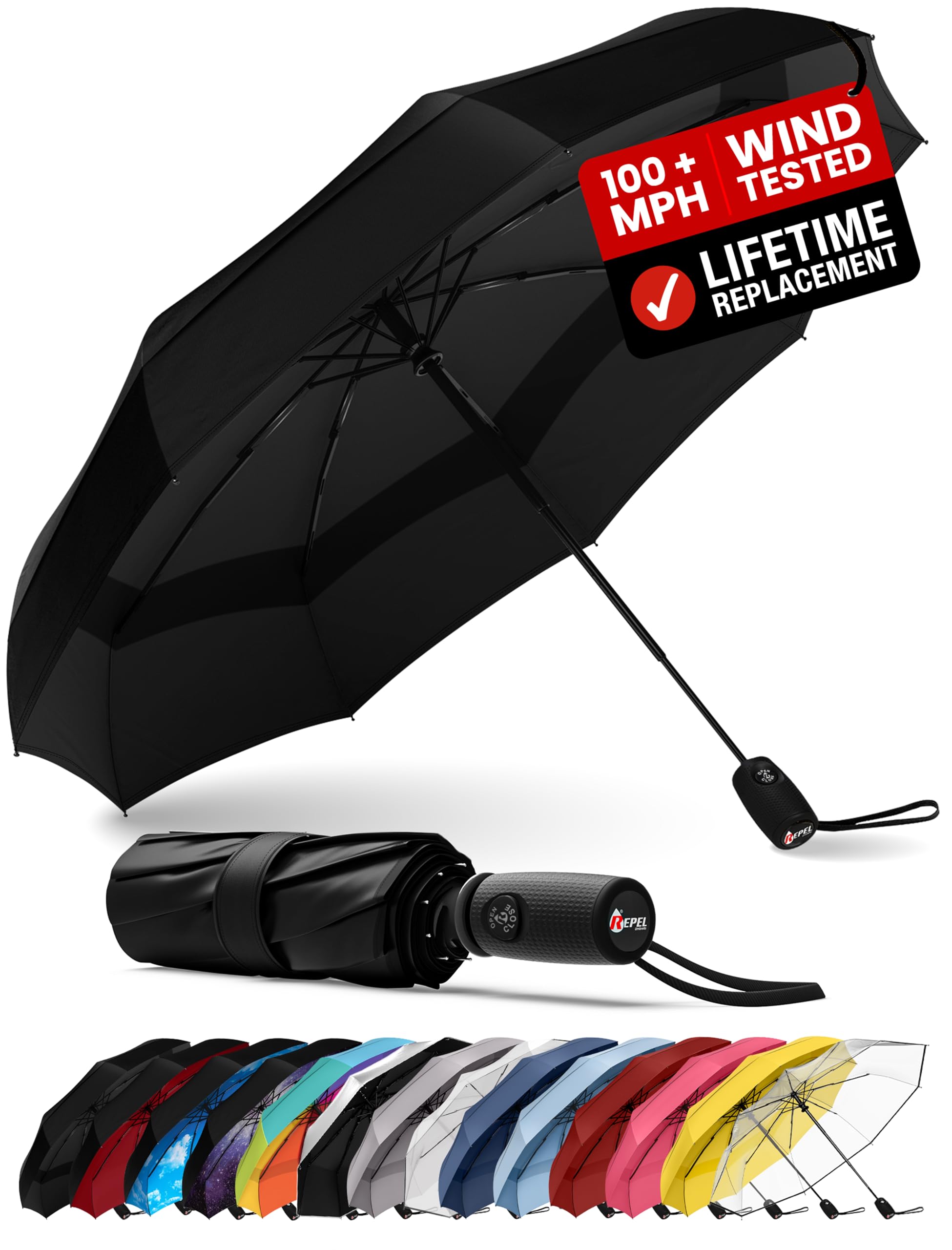


Best for Windy City Commutes
EEZ-Y Windproof Umbrella
Key Features
- Canopy Diameter: 42 in
- Folded Length & Weight: 11 in, —
- Wind Resistance: Vented double canopy, 55 MPH
- Auto Open/Close: Yes
- Inverted/Reverse Folding: No
- Price: Mid-Range
The vented double canopy lets gusts pass through rather than against, preventing the sudden inversion that plagues sealed umbrellas. Fiberglass ribs and a steel shaft keep the frame from bending in high wind, holding up to its rated 55 MPH without wobbling or collapsing. At 11 inches folded, it slips easily into a work bag or glovebox, and the auto-open button deploys the 42-inch canopy instantly. Build quality feels solid — no twisting or looseness, even after repeated use.
Commuters in blustery cities and travelers seeking wind protection without bulky heft will appreciate that it weighs less than many overbuilt rivals yet still resists gusts that knock out lighter umbrellas. The mid-range price sits above disposable emergency umbrellas but below premium heavyweights. The one requirement to be aware of is closing: the spring mechanism demands a firm, deliberate two-handed push to fully collapse. This rules it out for anyone with limited hand strength or arthritis, but for everyone else it’s an acceptable tradeoff for the windproofing.
Pros
- Vented double canopy prevents inversion by letting wind pass through, not fighting it.
- Fiberglass/steel frame resists bending and stays sturdy through repeated use.
- Folds to 11 inches for easy stashing in bags, gloveboxes, and carry-ons.
Cons
- Some units may experience mechanical failure after limited use, though this is not a universal experience.
- Closing requires a firm push; the stiff spring mechanism can be too demanding for users with low hand strength.
For commuters and travelers who face real wind and can manage a firm closing motion, the EEZ-Y provides genuine 55 MPH protection without the bulk of heavier rivals.
Best for Car Storage, Windy Days
Repel Windproof Umbrella
Key Features
- Folded Length & Weight: 11.77 in, 1.85 lbs
- Wind Resistance: 100 MPH claimed
- Auto Open/Close: Yes
- Inverted/Reverse Folding: No
- Price: Mid-Range
Unlike the top pick’s vented double canopy, the Repel uses a steel-reinforced frame and dense fabric to deliver a substantial, sturdy feel that thousands of owners appreciate. At 1.85 lbs, it’s heavier than most travel umbrellas, which makes it more comfortable stored in a car door pocket or backpack than carried for long walks.
The 100 MPH wind rating is aspirational — inversions can happen in moderate gusts — but for everyday intermittent wind, this umbrella remains dependable. Buyers who trust a brand with a massive following and prefer a reassuringly solid build over ultralight portability will find it a satisfying rain companion.
Pros
- Exceptional build quality and sturdiness that withstands everyday use.
- Compact folded size fits easily into backpacks, briefcases, and car door pockets.
- Provides sufficient canopy coverage for one person in steady rain.
Cons
- Weighs 1.85 lbs, which feels heavy for a travel umbrella during longer walks.
- Wind resistance doesn’t match the 100 MPH claim — inversions have been noted in moderate gusts.
If you value a solid, substantial umbrella and don’t need the lightest option for a daily commute, this is a dependable choice — just ignore the exaggerated wind rating.
Best for Style-Focused Daily Use
TUMELLA Windproof Umbrella
Key Features
- Canopy Diameter: ~41 in
- Wind Resistance: Wind-tested claimed
- Auto Open/Close: Yes
- Inverted/Reverse Folding: No
- Price: Mid-Range
Unlike vented double-canopy umbrellas that prioritize wind resistance, the TUMELLA focuses on build quality and striking design. The frame feels sturdy, the fabric quality is high, and a lifetime replacement promise backs the purchase. The compact size provides decent one-person coverage without adding bulk.
This is the umbrella for buyers who want an everyday rain shield that looks as good as it functions—for commutes in mild to moderate rain. In gusty conditions, the canopy can flip inside out, so it’s a mismatch for windy regions. The closing mechanism is a usability hurdle: it takes a firm hand and often both hands to collapse.
Pros
- Strong build quality and premium, eye-catching appearance
- Sturdy and durable for everyday use in moderate weather
- Compact folded size still offers good single-person coverage
Cons
- Wind resistance is intermittent; canopy may invert in gusty weather
- Closing mechanism requires noticeable hand strength and often two hands
For style-first everyday use in mild climates, the TUMELLA delivers with looks and build quality—just don’t expect it to shrug off strong gusts.
Best for Drivers & Commuters
LANBRELLA Reverse Umbrella
Key Features
- Canopy Diameter: 46 in
- Folded Length & Weight: —, 0.79 lbs
- Wind Resistance: Reverse folding, vented
- Auto Open/Close: Yes
- Inverted/Reverse Folding: Yes, water-trapping reverse fold
- Price: Mid-Range
The 46-inch canopy and reverse fold trap water inside when you collapse the umbrella, preventing drips onto car seats and floors. Compared to inverted umbrellas that add reflective trim or extra ribs, this model prioritizes coverage and wet-side containment without added weight. The trade-off: the closing mechanism demands a firm two-hand push, and the folding mechanism can develop inconsistencies over time. It’s a solid match for drivers and transit riders who value a dry interior above one-handed operation.
Pros
- 46-inch canopy covers a full adult, keeping you and your bag dry.
- Reverse folding design traps water inside so you don’t drip on floors or car seats.
- Lightweight at 0.79 lbs and folds compactly for bag or car storage.
Cons
- Closing requires significant hand strength; some may need both hands to compress fully.
- Folding mechanism can develop play or occasional sticking over repeated use.
For drivers and public-transit commuters who prioritize a dry interior, this inverted umbrella delivers where it counts, stiff close and all.
Best for Nighttime Safety
Bodyguard Inverted Umbrella
Key Features
- Canopy Diameter: 46 in
- Folded Length & Weight: —, 0.96 lbs
- Wind Resistance: 12 reinforced ribs
- Auto Open/Close: Yes
- Inverted/Reverse Folding: Yes, with reflective stripe
- Price: Mid-Range
With 12 reinforced ribs, a 46-inch canopy, and a reflective stripe, this inverted umbrella provides substantial coverage and standout nighttime safety. Unlike standard reverse-fold umbrellas, the high-visibility band makes it a clear choice for night commuters. Safety-conscious walkers and anyone who wants the drip-containing convenience of an inverted design will appreciate the large canopy. The closing action demands a firm hand — something to factor in if grip strength is a concern — and the handle clicker can lose its crispness with repeated use.
Pros
- Large canopy with 12 reinforced ribs holds up well in gusty winds.
- Reflective stripe boosts visibility for night walking and commuting.
- Inverted design keeps water contained when closing, minimizing drips.
Cons
- Closing the shaft requires a firm push — users with limited hand strength may find it exerting.
- Handle clicker may lose responsiveness over time, complicating the locking action.
This umbrella suits night commuters who want highly visible coverage and don’t mind the stiff close. For those with grip concerns, a push-button auto-close model may be friendlier.
Best for Heavy Rain Durability
LifeTek Premium Umbrella
Key Features
- Wind Resistance: Sturdy frame, Teflon canopy
- Auto Open/Close: Yes
- Inverted/Reverse Folding: No
- Price: Premium
Teflon coating makes water bead and run off the canopy faster than standard materials, so it’s dry before you shake it out. The frame’s sturdiness stands up to gusts that would invert flimsier umbrellas, making it a dependable shield in heavy downpours. However, this umbrella is noticeably heavier than most compact models, and the auto-close demands significant hand strength—often requiring both hands to collapse the shaft. It’s built for those who value staying dry in a downpour and long-term durability over featherweight portability and one-finger operation. If you pack light or have limited grip strength, this isn’t your match.
Pros
- Teflon fabric sheds water effectively, leaving the canopy nearly dry.
- Withstands strong urban gusts that flip lesser umbrellas.
- Solid build from high-quality materials feels durable for years.
Cons
- Heavier than typical compact umbrellas; carrying it in a purse or bag can feel bulky.
- Closure demands significant hand strength; some people may need both hands to collapse the shaft.
For those who prioritize staying bone-dry in a downpour over featherweight convenience, the LifeTek’s Teflon canopy and tank-like frame make it a standout choice—provided closing it with force isn’t a dealbreaker.
Best for Uv & Rain Budget
Seniny Windproof Umbrella

Key Features
- Wind Resistance: Claimed
- Auto Open/Close: Yes
- Inverted/Reverse Folding: No
- Price: Budget
This compact umbrella adds UV protection to rain coverage at a low price, folding small enough for a backpack or glove box. Build quality is not designed for frequent, heavy use — durability may fall short with daily reliance. It works best as an affordable backup or for students who need occasional sun-and-rain coverage.
Pros
- UV protection adds sun shielding to rain coverage, making it a dual-purpose carry.
- Lightweight design packs down small enough to fit in a purse or backpack pocket.
Cons
- Durability may not hold up under heavy daily use; occasional use is a wiser bet.
If you need a low-cost secondary umbrella for light, intermittent use with both sun and rain coverage, this is a sensible spare — just don’t expect it to hold up to daily commuting.
Best for Backpacking Clip
QWB Inverted Umbrella

Key Features
- Wind Resistance: Wind proof claimed, 10 ribs
- Auto Open/Close: Yes
- Inverted/Reverse Folding: Yes, carabiner handle
- Price: Mid-Range
The carabiner handle clips securely to bags and the 10-rib frame resists wind well for its size. However, early breakage can occur, making long-term durability uncertain. This umbrella is best treated as a convenient secondary option rather than a daily workhorse.
Pros
- Carabiner handle attaches securely to backpacks and bags, keeping hands free.
- 10-rib canopy holds up against gusty winds better than typical compact umbrellas.
Cons
- Closing mechanism requires a firm push; may be too stiff for users with limited hand strength.
If you need a clip-on umbrella for day hikes or festival stashing and can risk occasional early failure, the carabiner design adds genuine utility.
Best for Light Rain Fashion
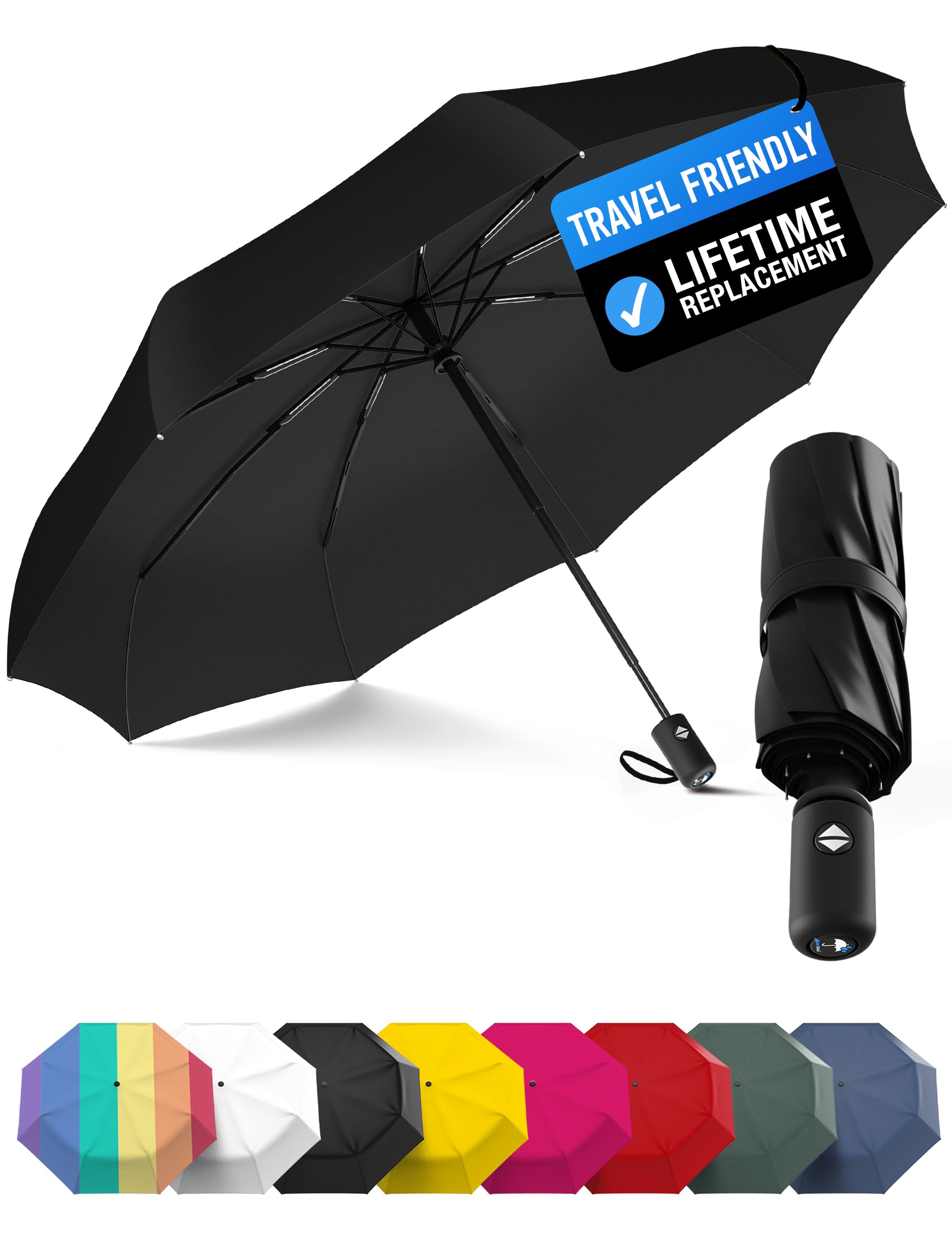
Rain-Mate Compact Umbrella
Key Features
- Folded Length & Weight: 12 in, 0.72 lbs
- Wind Resistance: Windproof claimed
- Auto Open/Close: Yes
- Inverted/Reverse Folding: No
- Price: Mid-Range
With good build quality, a lightweight 0.72 lb weight, and a compact 12-inch fold, it’s easy to stash in a work bag. Vibrant color options add a touch of style. However, its windproof promise is overstated — it may flip in moderate gusts, limiting it to calm-city rain protection.
Pros
- Lightweight and compact design slips easily into bags or pockets.
- Quality feel and stylish appearance stand out in a crowd.
Cons
- Occasional breakage means long-term durability can vary.
Fits best with calm-city commutes where light weight, style, and easy portability matter more than wind-battling toughness — if gusty days are the norm, the vented top pick is a safer bet.
Best for Urban Fashion
GORILLA GRIP Umbrella

Key Features
- Canopy Diameter: 42 in
- Folded Length & Weight: 11.5 in, 0.9 lbs
- Wind Resistance: Tested to 23 MPH
- Auto Open/Close: Yes
- Inverted/Reverse Folding: No
- Price: Mid-Range
The GORILLA GRIP umbrella delivers a sleek, lightweight design that packs down to 11.5 inches—ideal for tucking into a purse or glovebox. Its auto-open mechanism is handy, but wind resistance is low: the canopy can invert in gusts, so it’s suited for city strolls in light rain, not blustery downpours.
Pros
- Sleek, well-built design that looks sharp on city streets.
- Tucks easily into a purse, backpack, or car door pocket at just 11.5 inches folded.
Cons
- Can flip inside out in moderate breeze, despite a 23 MPH wind-resistance rating.
Choose this umbrella for calm, drizzly days when a sleek, pocketable design matters more than gusty weather performance.
Best for Occasional Backup
Amazon Basics Travel Umbrella

Key Features
- Canopy Diameter: 38.58 in
- Folded Length & Weight: 11 in, —
- Wind Resistance: Alloy steel frame
- Auto Open/Close: Yes
- Inverted/Reverse Folding: No
- Price: Budget
The Amazon Basics umbrella delivers an ultra-low price and a compact 11-inch fold that slips into bags and car door pockets. Closing demands firm hand strength and may need both hands, and durability can be inconsistent, so it works best as an occasional spare.
Pros
- Excellent value for money
- Compact folded size tucks into backpacks and handbags
Cons
- Closing requires significant hand strength and two-handed operation
A budget-priced spare for glove boxes or bags, where occasional use and a willingness to muscle the closure are acceptable tradeoffs for the minimal price.
How to Choose
The most critical factor in a compact umbrella is not the advertised wind-speed number, but whether a vented canopy and reinforced rib design actually prevent inversion in real gusts.
Canopy Diameter
A canopy between 38 and 46 inches covers one adult without excessive bulk. Smaller canopies shed weight and fold shorter, but they leave shoulders and backpacks exposed during downpours. Larger canopies catch more wind, so they must pair with a sturdy frame.
For most daily commutes, a 42-inch canopy strikes the balance — adequate coverage without turning into a sail in crosswinds.
Folded Length and Total Weight
Compact umbrellas fold to 11–12 inches, ideal for a backpack or glove box. Weight separates a true travel companion from a garage stowaway: umbrellas over one pound stay planted in gusts but feel heavy after 15 minutes of walking. Ultralight options below 0.8 lbs often sacrifice rib strength and snap in moderate wind.
If you carry the umbrella on foot daily, target the 0.8–1.0 lb range. If it lives in your car, a heavier 1.5 lb model adds durability without arm fatigue.
Wind Resistance Rating and Real-World Design
Marketing claims of 100 MPH rarely survive a 25 MPH gust. What matters physically is a vented double canopy — overlapping fabric layers that let air escape through slits, reducing upward lift. Fiberglass ribs flex instead of snapping, and reinforced joints prevent the spine from folding backward.
Look for umbrellas with a stated vented or double canopy design, not just a high speed number. Real-world feedback is plenty for these: models with a 55 MPH rating and those features outperform 100 MPH-labeled umbrellas that lack vents.
Auto Open/Close Mechanism
One-button open and close is standard, but the closing stroke is almost never effortless. The spring that opens the umbrella stores energy; you must compress that spring manually to collapse the shaft. This demands hand strength — some models require two hands and leaning your body weight onto the handle.
If you have limited grip or arthritis, test closing force before buying, or choose a manual umbrella that folds slowly without spring resistance.
Inverted/Reverse Folding
Inverted umbrellas fold upward, trapping the wet canopy inside when you step into a car or building. This keeps water off seats and floors. However, the reverse mechanism adds complexity: the closure often needs extra force, and the joints can experience more stress over time.
A reverse fold is worth it for frequent drivers and public transit riders, but expect a slightly stiffer close and a marginal durability trade-off.
FAQ
Why is my compact umbrella so hard to close?
Auto-close umbrellas use a strong spring to pop the canopy open. Closing requires compressing that spring manually, often against a telescopic shaft that resists sliding. If the mechanism feels too stiff, try bracing the handle against your hip while pushing the runner; if that’s still a struggle, look for models with a manual slider or those specifically noted for smooth closing in user feedback.
Can a travel umbrella really withstand 55 mph winds?
When equipped with a vented double canopy and fiberglass ribs, a 55 MPH rating often holds up in real storms. The vents let air pass through, preventing the upward lift that flips umbrellas inside out. Unvented umbrellas, even those claiming higher numbers, can invert at half that speed because trapped wind pushes against the solid canopy like a parachute.
Why did my windproof umbrella flip inside out?
Flipping occurs when wind pressure overcomes the canopy’s ability to shed air. Umbrellas without venting or with flexible ribs allow the wind to push the fabric upward. A vented double canopy and reinforced ribs solve this by channeling gusts out and resisting deformation. If your umbrella flipped in mild wind, it likely lacked these physical features regardless of its marketing label.
How much should a good compact umbrella weigh for travel?
A travel umbrella that balances portability and strength typically weighs between 0.8 and 1.0 pounds. Below 0.8 lbs, rib fragility becomes a risk; above 1.2 lbs, it starts to feel heavy in a bag. If the umbrella lives in a car door all year, up to 1.5 lbs is acceptable, but for daily carry and air travel, aim for the 0.9 lb sweet spot.