
This post contains affiliate links. We may earn a small commission when you buy through our links — at no extra cost to you.
Nearly every kids’ pair claims to be unbreakable, but flexible rubber means little when the lens pops out on the first slide down the playground. The same frames that pass the bend test can fail at the lens-frame junction once real toddlers get hold of them. This guide focuses on which models actually hold together while delivering UV protection and a consistent fit.
For parents navigating the toddler-to-tween years, the real frustration isn’t finding polarized lenses—it’s finding a pair that doesn’t slip off or scratch within days. The picks below center on models that prioritize secure straps for little faces, durable materials for active play, and fit ranges backed by thousands of buyers. You’ll spend less time adjusting and more time outdoors.


Best for Toddlers
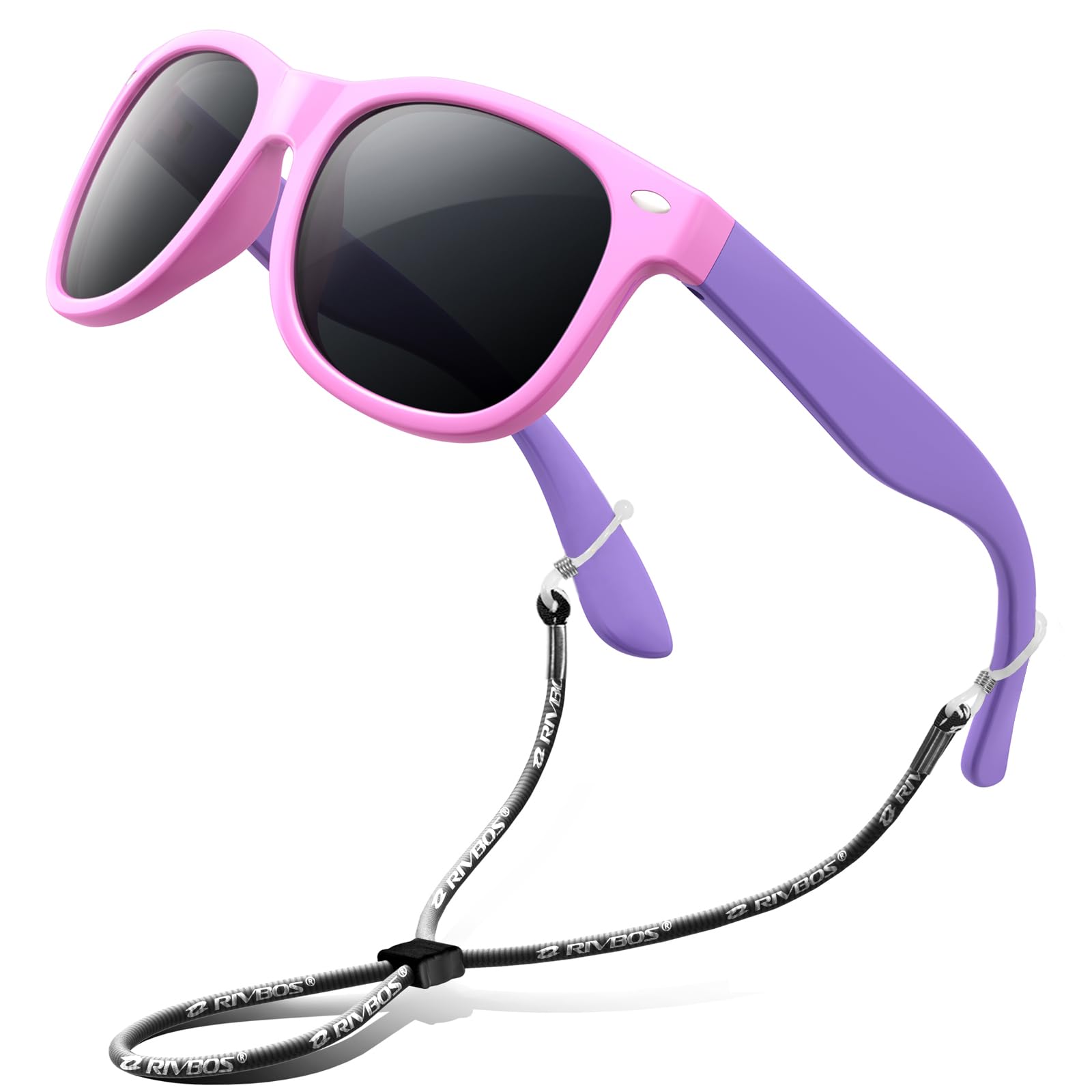
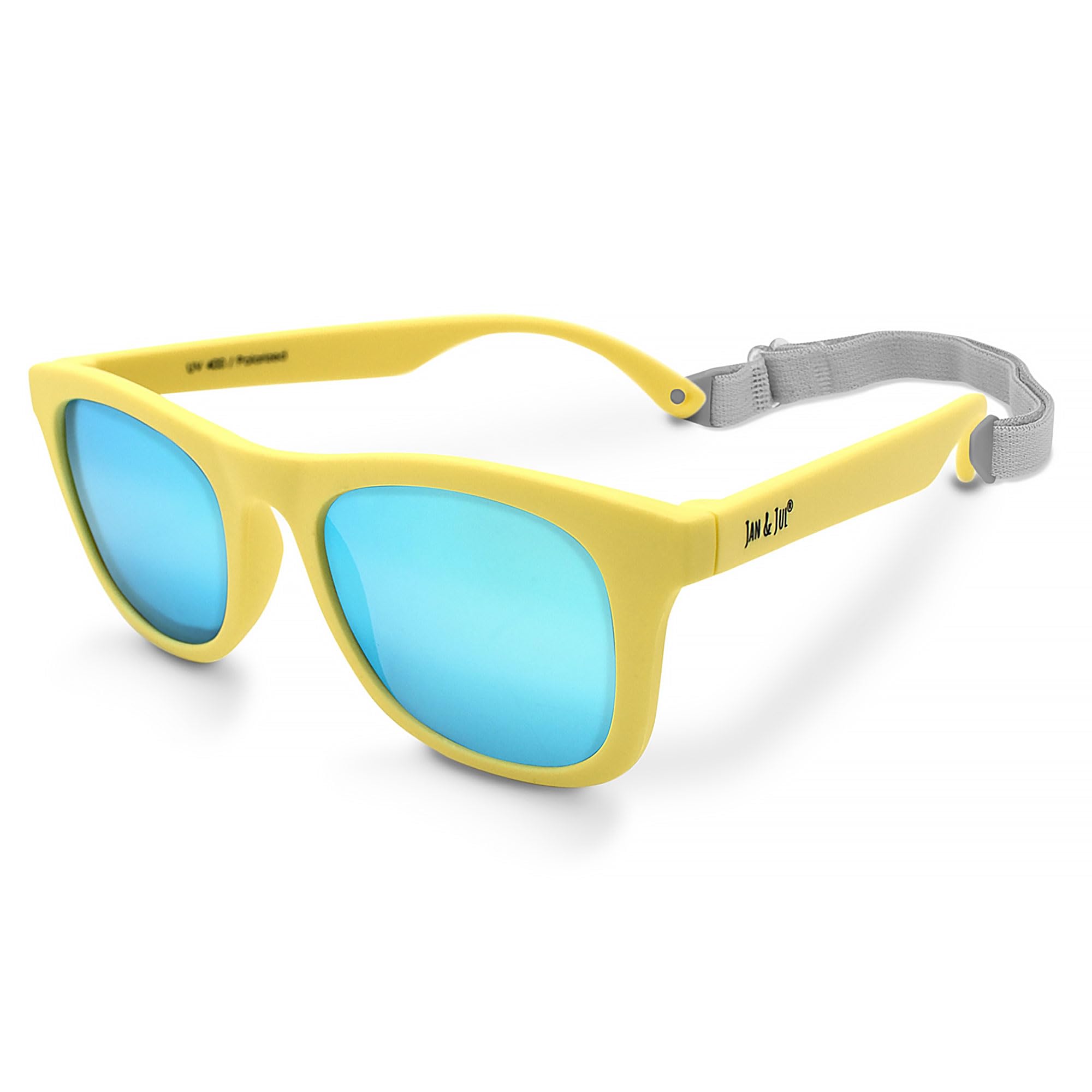
RIVBOS Polarized Kids RBK004
Key Features
- Polarized: Yes
- UV Protection: Yes
- Frame Material: Flexible Rubber
- Accessories: Strap
- Age Range: Toddlers 1-4
- Price: $
The RIVBOS RBK004 delivers polarized UV protection in a frame that bends without breaking, at a price that suits everyday use. The included strap helps keep glasses on active toddlers. Fit varies between units — some children find the frame too large, others too snug — and the lens-frame junction can separate during rough play, though this is not a widespread pattern.
This pair is best for budget-conscious parents of toddlers and preschoolers who need UV protection for casual daily wear. The flexible rubber frame and strap work well for kids up to about age 3, but older children or those who play very roughly may find the fit less consistent or the build less resilient than premium options.
Pros
- Highly flexible frame bends without breaking
- Great value for money with polarized lenses
- Well-liked by toddlers and preschoolers
Cons
- For smaller faces, the frame may sit loosely; for larger toddlers it can feel tight
- During active play, lenses can pop out of the flexible frame
A budget-friendly polarized option with a flexible frame and strap — ideal for toddlers whose parents want UV protection without spending much, as long as fit adjustments and occasional lens reseating are acceptable.
Best for Toddlers 18M-4
HXS Toddler 2-Pack
Key Features
- Polarized: Yes
- UV Protection: Yes
- Frame Material: Flexible Plastic
- Accessories: Strap
- Age Range: 18m – 4 yrs
- Price: $$
The HXS Toddler 2-Pack secures well on small faces thanks to the adjustable and removable strap, making it a strong match for toddlers 18 months to 4 years. While the flexible plastic frames handle typical drops, some pairs have been noted to break under rougher play — this is less of a concern for careful users or those needing backup pairs. If you need a softer frame for infants under 2, the premium flexible option is a better fit.
Pros
- Adjustable strap keeps sunglasses secure during active play.
- Adorable design at a budget-friendly price for a two-pack.
Cons
- For very active toddlers, the frames can break under rough handling.
A solid choice for parents who prioritize fit and style over extreme durability; the 2-pack offers good value for everyday use.
Best for Sports Ages 8-16
DUCO Sports Polarized DK268
Key Features
- Polarized: Yes
- UV Protection: 100% UV400
- Frame Material: TR90
- Accessories: Hard case
- Age Range: 8-16
- Price: $$
The DUCO DK268 prioritizes a secure, contoured fit for sports — the wraparound TR90 frame weighs only 22g and sits comfortably under baseball helmets and face masks. Polarized UV400 lenses cut glare on the field, and the included hard case keeps everything protected between games. This isn’t a casual daily pair: it’s built for the kid who needs sunglasses that won’t shift during a swing or a sprint. A tradeoff worth noting: lens coating can peel after several months of use, so this frame suits seasonal sports rotations better than year-round daily wear.
Pros
- Wraparound design stays secure under helmets and sports masks
- Lightweight TR90 frame with polarized UV400 lenses
Cons
- Lens coating may peel after extended use — less of a concern for seasonal sports than daily wear
Best for parents who need a sport-specific frame that won’t slide under a helmet – just accept that the coating likely won’t outlast multi-season use.
Best for Girls Cat-Eye
PolarSpex Cat Eye
Key Features
- Polarized: Yes
- UV Protection: Yes
- Frame Material: Bendable TR-90
- Age Range: 2-8
- Price: $$
The PolarSpex Cat Eye combines a fashionable cat-eye shape with a flexible TR-90 frame that bends under toddler twisting without breaking. Unlike the round budget option, this frame stays intact while the polarized lenses provide genuine UV protection, and the adjustable arms create a snug fit that holds during active play.
Best for parents of girls ages 2-8 who want a cute, durable pair over sporty styling. The lenses can develop scratches during rough use – the included storage case is worth making a habit of using.
Pros
- Adorable cat-eye design that kids enjoy wearing and parents find photogenic.
- Flexible TR-90 frame withstands bending and drops without breaking.
- Snug fit stays on most toddlers during active play.
Cons
- Lenses can show scratches over time, especially without the storage case.
If you value style and toughness for your daughter, this pair delivers both – just keep the case nearby to protect the lenses.
Best for Families, Budget
FANNYGO 3-Pack Polarized
Key Features
- Polarized: Yes
- UV Protection: Yes
- Frame Material: Plastic
- Age Range: 3-10
- Price: $
The FANNYGO 3-pack delivers polarized UV protection at a price that makes each pair effectively disposable. The flexible plastic frame fits children ages 3–10 and stays in place during calm activities. However, the lens-frame junction can separate under active play, so these are best reserved for occasional outings, car rides, or as backup pairs rather than rough daily wear.
Pros
- Affordable 3-pack with polarized lenses at a budget price.
- Flexible frame fits a range of children ages 3–10 and stays in place.
Cons
- Lenses can pop out or the frame may break during active play.
A cost-effective backup set for calm days and vacations where a lost or broken pair isn’t a big deal.
Best for Infants
JAN & JUL Flexible UV-400
Key Features
- Polarized: Yes
- UV Protection: UV400
- Frame Material: Flexible
- Accessories: Strap
- Age Range: 6m – 2 yrs
- Price: $$$
The JAN & JUL sunglasses use a soft, bendable frame with an adjustable elastic strap — a combination that keeps the glasses in place on small faces better than most toddler options. The polarized UV400 lenses provide needed sun protection, and the overall design is consistently described as cute.
This pair is best suited for babies and toddlers aged 6 months to 2 years who need a snug fit during stroller rides or quiet play. The premium price reflects the comfort and security, but expect two trade-offs: the lenses may scratch with normal handling, and some units have reported breakage within weeks of use.
Pros
- Adjustable strap keeps sunglasses securely on small heads
- Flexible frame and soft material comfortable for extended wear
Cons
- Lenses may scratch easily with daily handling
- Some pairs may break within weeks under active toddler use
Best for parents who want a secure strap fit and soft frame for their baby, but are aware that lens scratches and occasional early breakage are possible given the premium price.
Best for Ages 3-7
COASION Kids Polarized TPEE

Key Features
- Polarized: Yes
- UV Protection: Yes
- Frame Material: TPEE Rubber
- Accessories: Case
- Age Range: 3-9
- Price: $$
The COASION frames hold up well to active play and the included case is a nice bonus. At a mid-range price, it delivers comparable quality to the top pick, but the fit runs small for children near the upper age limit – better suited for kids 3-7. Its slightly higher price with similar performance keeps it behind the leader.
Pros
- Solid build quality that feels more premium than its price suggests.
- Flexible TPEE frame holds up under typical toddler handling.
Cons
- May fit snugly on children at the upper end of the age range, particularly those with wider faces.
A solid pick for families with younger preschoolers when a snugger fit is acceptable.
Best for Toddlers Budget
AZorb Kids Polarized TPEE
Key Features
- Polarized: Yes
- UV Protection: 100% UV
- Frame Material: TPEE Rubber
- Age Range: 3-8
- Price: $
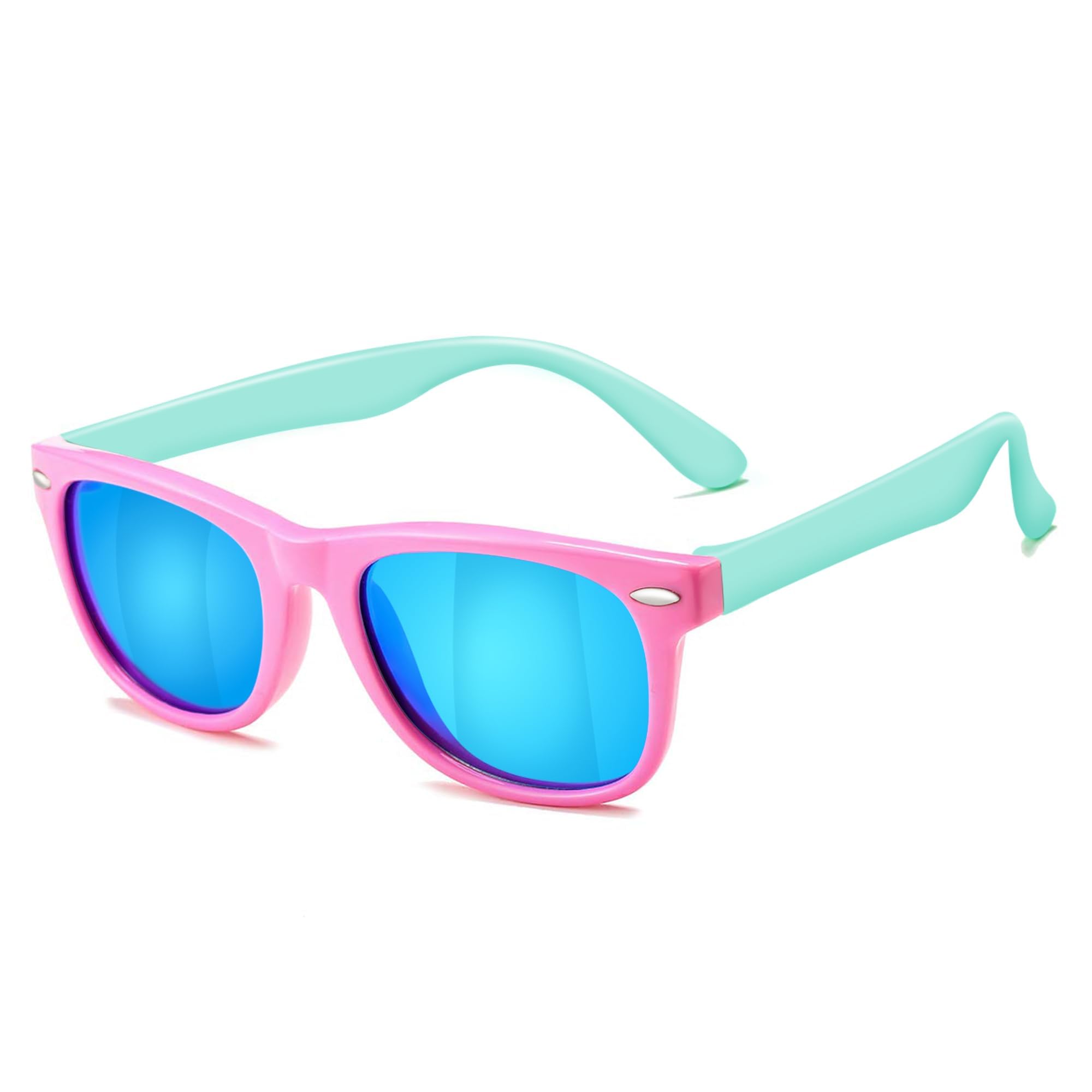
The AZorb Kids Polarized Sunglasses offer a durable TPEE frame that withstands toddler pulling and a stylish design that resembles mini Ray-Bans. However, the lens size is relatively small, which may leave gaps in eye coverage for children who need full protection — this pick suits toddlers with smaller faces best.
Pros
- Flexible TPEE frame holds up to pulling and bending from toddlers.
- Mini Ray-Ban style looks great on kids.
Cons
Best for parents seeking an affordable, durable pair of sunglasses for toddlers with smaller faces who don’t require full wrap-around coverage.
Best for Toddlers Style
SOJOS Round Polarized

Key Features
- Polarized: Yes
- UV Protection: UV400
- Frame Material: Plastic
- Age Range: Small faces
- Price: $
These round polarized sunglasses look adorable and cost very little. However, the frame runs small and the lenses can dislodge during active play. They suit young toddlers who wear them briefly for photos or calm outings rather than rough play.
Pros
- Cute round style that kids enjoy wearing.
- Good build quality for the low price point.
Cons
- Lenses can dislodge during active play – best for calm, supervised use.
Best as a photo-prop or occasional accessory for toddlers with small faces, not for everyday active wear.
Best for Kids 3-8
Pro Acme Flexible TPEE
Key Features
- Polarized: Yes
- UV Protection: Yes
- Frame Material: TPEE Rubber
- Accessories: Case
- Age Range: 3-12
- Price: $
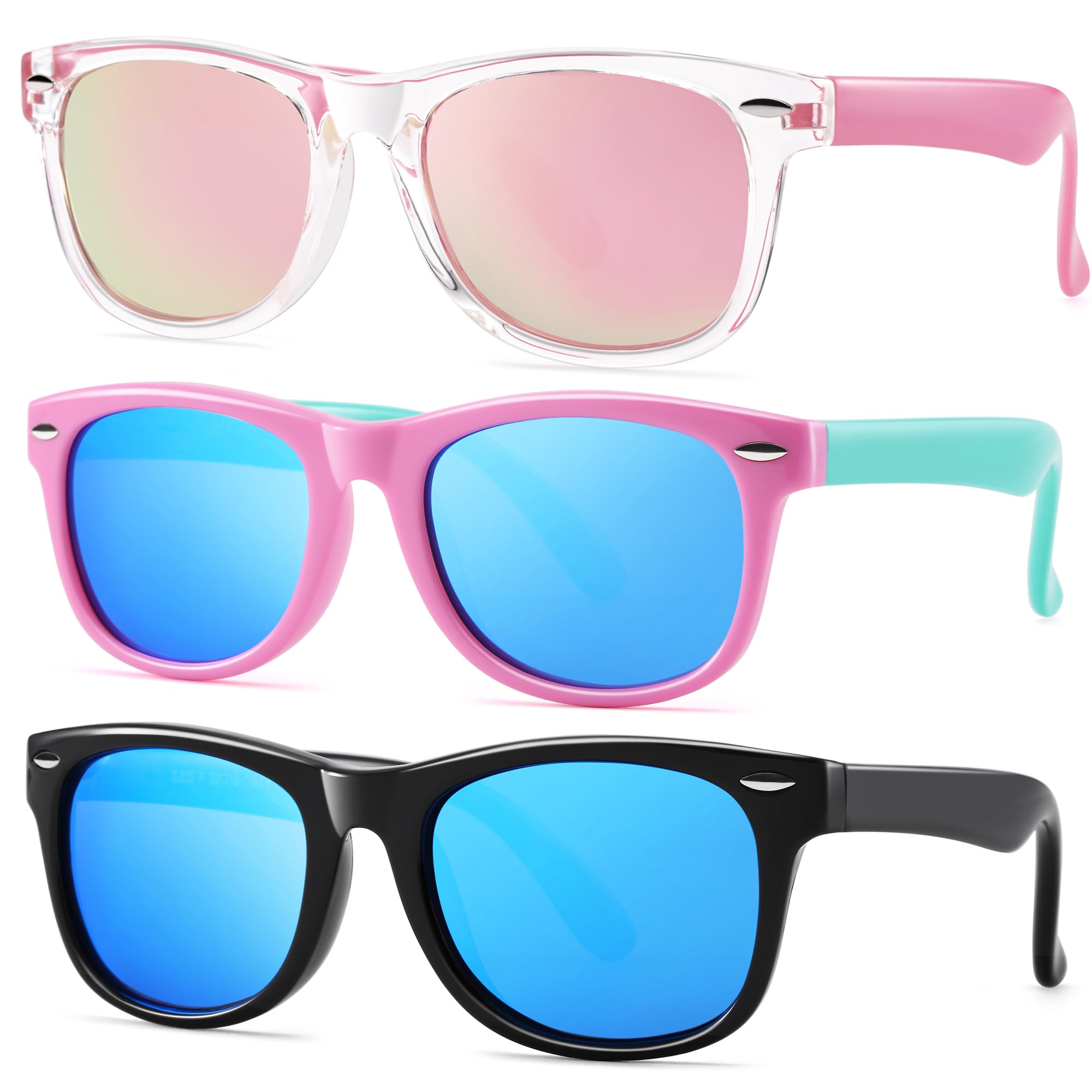
The Pro Acme Flexible TPEE stands out for its bendable frame that survives drops and rough handling, making it a durable everyday option for young kids. The included case adds convenience for storage. Fit consistency is the main catch — some sizes run large or small, so you may need to order a couple to find the right match. This is a solid budget alternative if the top pick’s sizing doesn’t work for your child, especially for ages 3–8 where the flexible frame really pays off.
Pros
- Bendable frame holds up to toddler drops and rough play.
- Includes a storage case, a nice add at this price.
Cons
- Sizing can be inconsistent — some units run large or small for the labeled age.
A durable, flexible option for kids 3–8 if you’re willing to trial the fit — it offers reliable protection and a case at a budget price.
Best for Older Careful Kids
Retro Rewind Classic

Key Features
- Polarized: No
- UV Protection: UV400
- Frame Material: Plastic
- Age Range: 3-12
- Price: $$
Retro Rewind’s sunglasses pair a retro look with UV400 protection and a comfortable fit for kids 3-12. Build quality is good, but the frame can crack under active play — the design favors style over durability, making it less ideal for rough kids.
Pros
- Classic retro style that stands out, with UV400 protection and a comfortable fit for ages 3-12.
- Well-constructed frame and lenses offer a polished feel for special occasions.
Cons
- Durability is limited — frame can crack during active play, so it’s not recommended for rough-and-tumble kids.
Best for older, careful children or dress-up occasions where style matters more than rough wear.
Best for Siblings, Backup
DYLB 3-Pack Polarized

Key Features
- Polarized: Yes
- UV Protection: Yes
- Frame Material: TPEE Rubber
- Age Range: 3-8
- Price: $
The DYLB 3-pack delivers solid value with three polarized pairs at a budget price, and the TPEE rubber frames hold up well to typical outdoor play. However, the fit can vary across pairs — some may run small for kids on the upper end of the age range, so it works best as a backup set rather than a single precise fit.
Pros
- Three polarized pairs at a budget price.
- Survives typical trips and outdoor play.
Cons
- Fit can vary between pairs; some may be too small for older children in the age range.
Best suited as a backup set or for households where multiple kids need their own pair — not a single-pair solution for a precise fit.
Best for Active Kids 3-8
Pro Acme Sports Strap

Key Features
- Polarized: Yes
- UV Protection: Yes
- Frame Material: Flexible
- Accessories: Strap
- Age Range: 3-12
- Price: $$
The Pro Acme Sports Strap offers solid build quality and a secure strap for active play, with polarized UV protection and a flexible frame. However, lens detachment can occur over time, and fit may be inconsistent. For dedicated sports use, consider the higher-rated DUCO alternative.
Pros
- Sturdy construction holds up to active outdoor use.
- Flexible frame bends without losing its shape.
Cons
- Lens may detach during rough play or over time.
A suitable option for active kids ages 3-8 who need a strap, but expect possible lens detachment and check fit before buying.
How to Choose
The biggest mistake parents make is buying based on age range alone — actual fit varies wildly, and a flexible frame that works for one toddler may slide off another.
Polarization
Polarized lenses cut glare from water, pavement, and sand, making outdoor play more comfortable. But not all polarization coatings are equal — cheaper ones can peel or delaminate after a few weeks of sun and sweat. For toddlers who wear glasses daily, look for models with solid lens-to-frame bonding in reviews rather than assuming the word ‘polarized’ guarantees longevity.
UV Protection
UV400 blocks 99–100% of UVA and UVB rays, which is the standard to aim for. Most kids’ glasses claim this, but the real test is whether the lens material itself degrades over time. Plastic lenses can become brittle and develop micro-cracks that reduce UV defense. Rubberized frames with polycarbonate or TPEE lenses maintain clarity longer, especially for active kids who drop their glasses regularly.
Frame Material
Flexible rubber frames (TPEE, TPE) bend without snapping, but flexibility comes with a trade-off: the lens-frame junction can pop open under stress. TR90 is a nylon-based material that stays lightweight and springs back to shape, better for sports. For toddlers, soft TPEE grips small faces but may stretch out of shape if left in a hot car. The material choice should match the child’s activity level — not just the marketing label.
Included Accessories
A strap or retention band is nearly essential for children under five — it keeps glasses on during bike rides, slides, or naptime. But strap attachment points are a common failure point: poorly sewn loops tear, or clip-on straps detach mid-run. A case prevents scratches and lens popping during storage. Prioritize models where the strap is integrated (loops sewn into the frame) rather than clipped on.
Age Range or Fit
Age ranges like ‘3–12’ are misleading — head circumference and nose bridge shape vary more than age suggests. A toddler with a narrow face may need glasses labeled for 2–5, while a 7-year-old with a wider face may outgrow the ‘8–16’ range. Look for reviews that mention specific head sizes or face shapes. Removable nose pads or adjustable temples can salvage a borderline fit.
FAQ
Why do my kid’s sunglasses lenses keep popping out?
The lens-frame junction is the weakest point on flexible rubber frames. When the frame bends repeatedly, the tension loosens the lens seat. Choose a model with a stiffer frame material (like TR90) or a snap-fit groove that holds the lens from both sides. Many budget TPEE frames rely on friction alone, which can fail during active play.
Are polarized sunglasses safe for toddlers?
Polarized lenses are safe for toddlers in the sense that they reduce glare, but they don’t add any extra UV protection — that’s from UV400 coating. The main concern is that cheap polarization films can peel and become a choking hazard if the child bites the lens. Stick with well-reviewed brands that mention bonded or molded lenses to avoid delamination.
How do I know if kids sunglasses fit properly?
Proper fit means the frame sits snugly on the nose bridge without pinching, the temples don’t dig in, and the lenses cover the eyebrows and the lower orbital bone. If your child can slide the glasses down their nose with a head shake, they’re too loose. Many parents use the ‘two fingers’ test: you should be able to slide one finger under the temple, not two.
What is the best material for kids sunglasses frames?
For toddlers (1–4), soft TPEE rubber provides the best grip and flexibility, but check that the lens retention is secure. For active kids ages 5+, TR90 nylon offers a good balance of lightweight durability and resistance to heat deformation. Avoid hard plastic frames for kids under 6 — they don’t bend and can break into sharp pieces. The material should match the child’s intensity level, not the price tag.