
This post contains affiliate links. We may earn a small commission when you buy through our links — at no extra cost to you.
Rain boots are the kind of gear you either wear until the sole splits or abandon in the back of the closet after two wet walks. The difference often comes down to a single decision: where you land on the budget vs. longevity trade-off. Most cheap pairs crack at the seams within months, and strong chemical odors have become a recurring complaint across popular brands.
The solution isn’t to spend $175 on a fashion label. Many mid-range boots—priced between $30 and $70—offer all-day comfort, reliable waterproofing, and a lifespan that actually justifies the investment. The trick is knowing which material properties and construction details separate a boot that dries out after a season from one that still feels solid on year three.
This guide focuses on five use-case-defined winners: the boot that handles garden mud, the one that looks polished on a rainy commute, the insulated pair for freezing mornings, the budget option that doesn’t self-destruct, and the short bootie for quick errands. Each pick earns its spot by matching a specific scenario better than the alternatives at its price.



Best for Gardening, Dog Walks
Sloggers Rain Garden Boot
Key Features
- Waterproof Type: Rubber with sealed seams
- Comfort & Support: Cushioned insole, soft interior
- Traction: Non-slip outsole
- Shaft Height: Ankle
- Price: $$
Owners describe these boots as super soft for all-day wear, with a cushioned insole that keeps feet comfortable even during long gardening sessions. The sealed seams and rubber construction maintain waterproofing after repeated exposure to wet grass and puddles, so feet stay dry through daily yard chores.
Durability is a standout—many report years of regular garden and farm work with no signs of cracking or sole separation. The ankle height is a tradeoff: it limits protection in deep puddles compared to taller boots, making them better suited for shallow puddles and wet grass than flooded driveways. A minority of buyers find the fit runs small or large, so checking the sizing chart or ordering a half size up may be necessary for some.
Pros
- Exceptional comfort for all-day wear
- Great water resistance keeps feet dry
- Durable construction lasts for years
Cons
- Fit may run small or large for some, requiring a size adjustment
- Ankle height offers less protection in deep puddles compared to taller boots
Ideal for gardeners and casual rain wearers who prioritize comfort and durability over deep puddle coverage.
Best for Light Rain, Budget
Fubotao Mid Calf Boot
Key Features
- Waterproof Type: Rubber
- Comfort & Support: Comfortable insole
- Shaft Height: Mid calf
- Price: $
For buyers who want a budget rain boot that doesn’t stink and fits as expected, the Fubotao is a clear step up from rock-bottom PVC options. It offers effective water resistance, a comfortable footbed, and mid-calf coverage for light rain and garden chores. The fit may run slightly large for some, which is easily addressed with thicker socks. This boot lacks insulation, so it’s best reserved for mild-weather errands rather than cold, wet days.
Pros
- Exceptional value for money – delivers solid performance at a budget price.
- Comfortable and true to size – suits daily wear for most foot shapes.
- Effective water resistance – keeps feet dry in rain and shallow puddles.
Cons
- In some cases, the boot fits slightly large, requiring thicker socks or a half-size down.
Ideal for budget-conscious shoppers who need a functional rain boot for casual, mild-weather use—no chemical odor and solid comfort at a low price.
Best for City Rain, Travel
Sperry Saltwater Boot
Key Features
- Waterproof Type: Rubber with leather upper
- Comfort & Support: Cushioned footbed
- Traction: Non-marking outsole
- Shaft Height: Mid calf
- Price: $$
The Sperry Saltwater Boot stands out for its fashionable design and leather accents — a boot that regularly gets compliments. With thick socks, the comfort holds up for all-day wear, making it a solid choice for rainy city commutes and travel. However, the seams and laces can show wear sooner than expected, so this boot is best reserved for casual urban use rather than regular outdoor chores.
Pros
- Very comfortable for all-day wear when paired with thick socks
- Stylish design that gets compliments in casual settings
- Effective water resistance keeps feet dry on rainy days
Cons
- Seams and laces can show wear after limited use in frequent wear
For the style-focused buyer who prioritizes looks and comfort over rugged longevity, the Sperry Saltwater is a fitting choice for light rain wear.
Best for Cold Wet Chores
HISEA Knee High Boot
Key Features
- Waterproof Type: Neoprene + rubber
- Comfort & Support: Cushioned insole
- Traction: Anti-slip outsole
- Shaft Height: Knee high
- Insulation: Fleece lining
- Price: $$
This boot’s neoprene-and-rubber construction keeps feet warm well below freezing, and the knee-high height keeps slush and mud out during outdoor chores in cold wet conditions. It’s a good fit for anyone spending hours in freezing rain or snow — but only if you size up, as the boot tends to run small. Some buyers note that seam and sole durability can be spotty over extended use, so this is best suited for seasonal cold-weather wear rather than daily workhorse duties.
Pros
- Keeps feet warm in below-freezing conditions
- Comfortable for all-day wear during farming or yard work
- Good overall build quality comparable to pricier brands
Cons
- Sizing runs small; ordering a size up is recommended
- Seam and sole durability may be inconsistent over months of use
For those who need knee-high protection and warmth in cold wet conditions and are okay with sizing up, this boot offers solid value.
Best for Mud, Farm Work
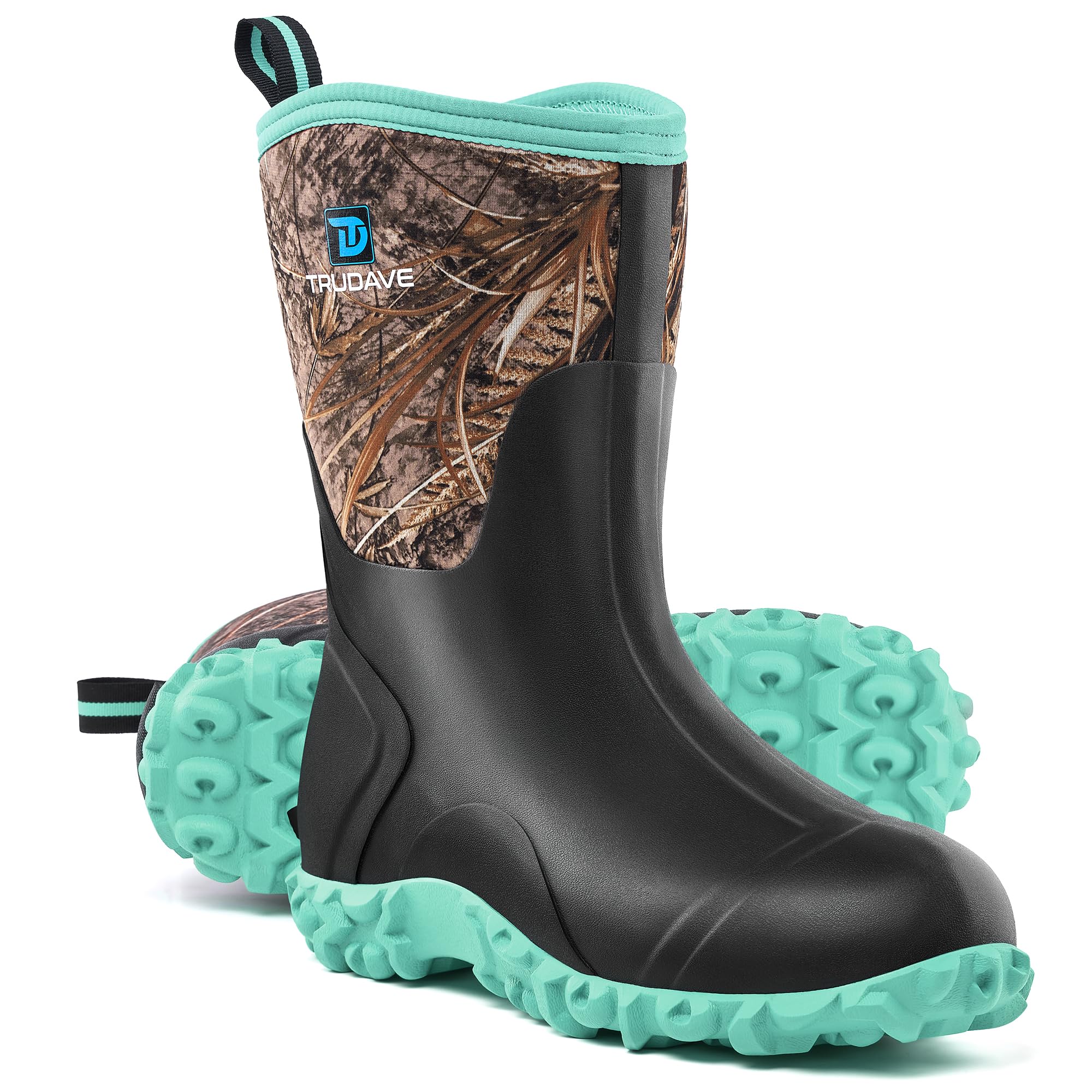
Trudave Steel Shank Boot
Key Features
- Waterproof Type: Rubber with neoprene
- Comfort & Support: Extra cushioning
- Traction: Deep non-sip sole
- Shaft Height: Mid calf
- Insulation: 6mm neoprene
- Price: $$
The Trudave boots focus on all-day comfort in slick, muddy conditions. The thick neoprene lining and cushioned insole keep feet warm and supported, while the deep tread provides stable footing on wet grass, snow, and barn floors. This is the boot to grab when you spend hours on your feet in wet fields rather than just walking through puddles on the way to the car.
Best suited for farm work and wet-weather chores where insulation and grip matter more than lightweight feel. One caveat: the title claims a steel shank, but some buyers report the boot lacks one — check your pair if you need that specific safety feature. The boot also runs slightly heavy, which is a non-issue for standing and walking but noticeable during longer treks.
Pros
- All-day foot comfort with thick foam cushioning that supports standing and walking.
- Effective warmth and waterproofing for cold, wet conditions like snow and mud.
- Deep tread gives reliable grip on slick, uneven surfaces.
Cons
- The steel shank listed in the title is disputed; some buyers found the boot lacks one.
If your priority is a comfortable, warm, and grippy boot for muddy outdoor work, this is a strong option — just don’t rely on the steel shank claim.
Best for Quick City Errands
Hunter Play Short Boot
Key Features
- Waterproof Type: Natural rubber
- Comfort & Support: Cushioned insole
- Shaft Height: Ankle
- Price: $$$
The Hunter Play Short Boot pairs a recognizable brand look with a slip-on ankle design that’s ideal for urban rain showers. It offers blister-free comfort straight from the box and keeps feet dry in typical wet conditions. Sizing can run roomy, so checking the fit is wise, and the ankle height won’t keep out deeper puddles or heavy slush. This boot suits city dwellers who need a lightweight, stylish option for quick trips where puddles stay shallow.
Pros
- Blister-free comfort straight from the box
- Recognizable style that draws compliments
- Waterproof for everyday rain conditions
Cons
- Sizing may be too roomy, requiring a half-size down for some
- Ankle height offers limited protection from deeper puddles
For city dwellers who prioritize style and comfort for quick errands, the Hunter Play Short Boot delivers—just keep it to shallow puddles and consider sizing down.
Best for Budget, Light Garden
Dunlop Chesapeake Boot

These boots keep feet dry in rain and mud, and the slip-on design makes them convenient for quick trips to the garden. The fit runs large, so thick socks or sizing down helps accommodate that, and the PVC material may crack in cold weather — better suited for mild-weather use rather than daily heavy work. Durability of the seams and soles can show wear with moderate use, but for occasional wear at this price the value is hard to beat.
Pros
- Impressive value for the price – sturdy construction at a budget-friendly cost.
- Dependable waterproofing keeps feet dry in wet conditions.
Cons
- Sizing can run large, often requiring a size down or thick socks.
Best for occasional rain wear and light gardening on a tight budget, where the low price outweighs the oversized fit and PVC durability limits.
Best for Budget, Cute Prints
Asgard Mid Calf Boot

Key Features
- Waterproof Type: Rubber
- Comfort & Support: Roomy toe box
- Shaft Height: Mid calf
- Price: $
Asgard’s mid-calf rain boots deliver fun prints and a comfortable, true-to-size fit with a roomy toe box—ideal for short walks or occasional garden use. However, a strong chemical odor can persist after opening, and long-term durability under regular wear is uncertain. These tradeoffs make them a budget option for casual, infrequent use rather than a daily workhorse.
Pros
- True-to-size fit with a roomy toe box
- Wide variety of attractive prints and colors
Cons
- Strong chemical odor that may linger and require airing out
Best for someone who prioritizes style and price over long-term durability and can tolerate a strong initial smell.
Best for Tall Budget Boot
DKSUKO Tall Boot

The DKSUKO Tall Boot delivers appealing looks and reliable rain protection at a budget price. However, a strong chemical odor has been noted that may persist, and the narrow fit can be problematic for wider feet. These limitations prevent it from being a universal option, but for narrow-footed shoppers needing a cheap tall boot for occasional rain, it fits the bill.
Pros
- Cute and stylish tall boot with multiple color options.
- Good water resistance for typical rainy conditions.
Cons
- Strong chemical odor that some find persistent.
Suitable for narrow-footed buyers who want a budget tall boot for occasional rain and can tolerate the rubber smell.
Best for Barn, Light Chores
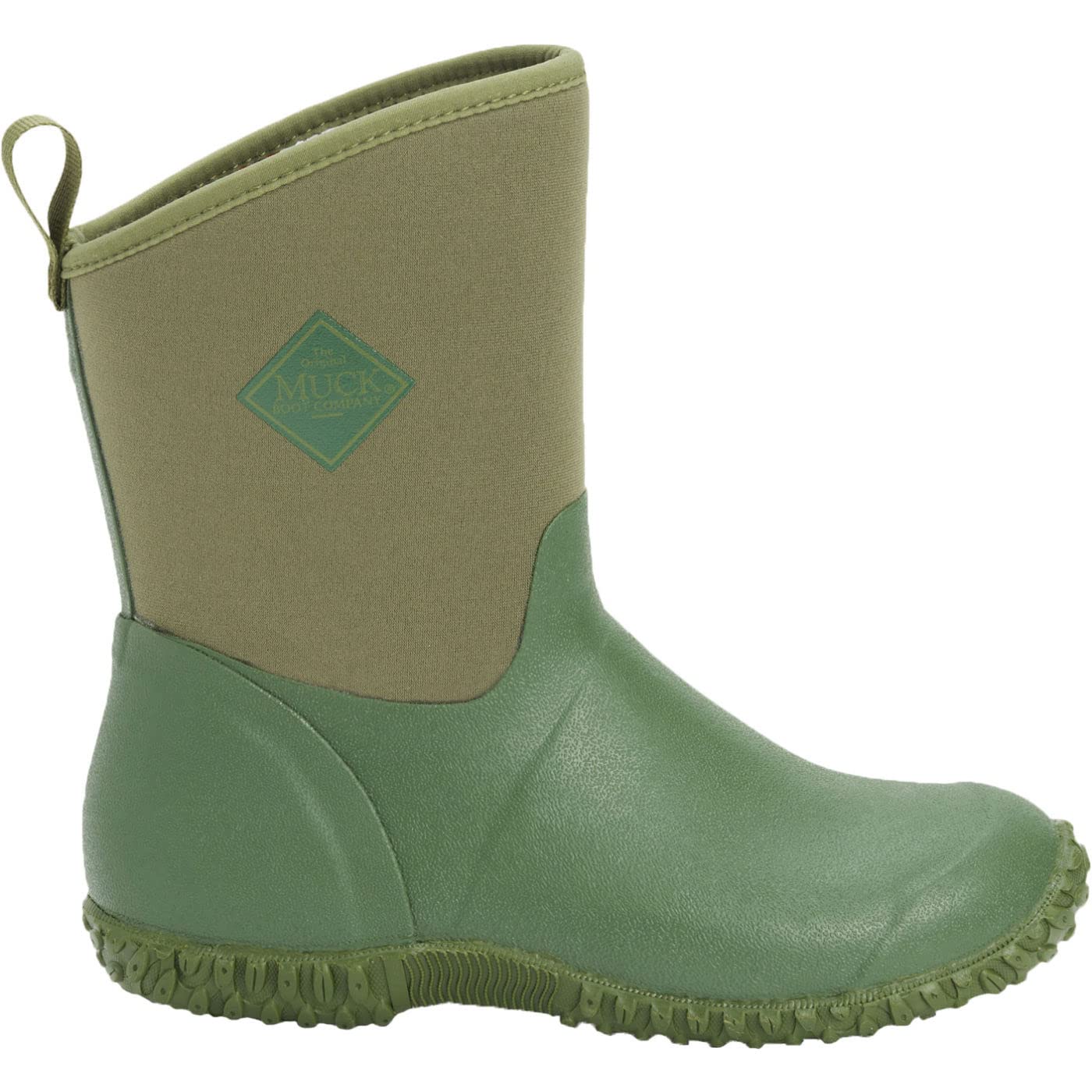
Muck Muckster II Mid
Key Features
- Waterproof Type: Neoprene + rubber
- Comfort & Support: Cushioned insole
- Shaft Height: Mid calf
- Insulation: Fleece lining
- Price: $$
The Muckster II Mid offers impressive warmth and all-day comfort with an easy slip-on design. However, sole and heel durability can weaken over several months of regular use, making this best for occasional wear rather than daily rugged work. The mid-range price may not hold up for those expecting years of service.
Pros
- Very comfortable for all-day wear – feet stay comfortable even during long barn shifts.
- Excellent warmth for cold weather – keeps feet toasty in snow and cold mud.
Cons
- Sole and heel durability can be an issue – separation or holes have been noted after several months of use.
Best for occasional cold-weather use where comfort and warmth matter more than long-term durability.
Best for Boating, Fishing
HUK Rogue Wave Boot

Key Features
- Waterproof Type: Rubber
- Comfort & Support: Cushioned insole
- Traction: Non-slip deck outsole
- Shaft Height: Ankle
- Price: $$$
This HUK deck boot delivers all-day comfort and a sharp look for boating or fishing, with waterproofing that handles wet decks well. The narrow fit means some will need to size up, and occasional color wear has been noted on certain pairs. At a premium price, it suits dedicated maritime use rather than everyday rain or gardening — a specialized option, not a universal one.
Pros
- Extremely comfortable for long hours standing on wet surfaces.
- Stylish design with multiple color options that get noticed.
Cons
- Narrow fit may require sizing up for many wearers.
Best for boaters or anglers who want a comfortable, fashionable deck boot and can work with the narrow fit — less suited for general rain-boot needs.
Best for Deck, Quick On/off
Xtratuf Ankle Deck Boot

Key Features
- Waterproof Type: Rubber
- Comfort & Support: Cushioned insole
- Shaft Height: Ankle
These ankle boots prioritize comfort and effortless on/off for long hours on deck. However, rubber can crack and soles may separate within a year, and sizing varies between batches. Best suited for boaters or casual rain wear where a season or two of use is acceptable.
Pros
- Extremely comfortable for long hours on feet
- Easy to slip on and off without using hands
Cons
- Rubber can crack and soles may separate within a year of use
For boaters or anyone needing a comfortable, quick-on deck boot who can accept replacement within a season or two, these work well.
How to Choose
The single most important decision when buying women’s rain boots isn’t style or brand—it’s whether the waterproof layer is bonded to a durable substrate that won’t crack when flexed in cold weather.
Waterproof Construction
True waterproof boots use sealed seams and either rubber or neoprene as the primary barrier. PVC is cheaper but stiffens in cold temperatures, leading to stress fractures where the boot flexes (around the ankle and ball of the foot). Rubber remains flexible down to freezing, while neoprene adds insulation at the cost of breathability and seam integrity over time.
Check whether interior seams are taped or glued—taped seams last longer because they don’t rely on adhesive alone. Many budget boots skip this step, which is why they leak within months.
Comfort and Arch Support
Most rain boots come with flat, thin insoles that feel fine for 30 minutes but cause foot fatigue after a full day of standing or walking. Look for boots with a removable, contoured insole—Sloggers, for example, use a cushioned footbed that many reviewers describe as ‘never hurt.’
Boots without removable insoles force your foot to conform to a flat surface. If you plan to wear them for gardening or long dog walks, budget for an aftermarket orthotic insole if the boot allows it.
Traction
The outsole pattern matters more than the material. Deep, widely spaced lugs shed mud and provide grip on wet grass, while shallow patterns are fine for pavement but slip on soft ground. Some boots (like Trudave) use aggressive treads that work well on ice and snow, though they track mud indoors.
For boating or slick decks, a non-marking outsole with siping (small slits) offers better surface contact. Avoid smooth rubber soles for any off-pavement use.
Shaft Height
Ankle-height boots (6–8 inches) are easy to slip on and pack small, but they offer no protection for puddles deeper than an inch. Mid-calf (10–14 inches) is the sweet spot for general rain use—they keep most splashes off while still being quick to take off. Knee-high boots (15+ inches) are overkill for city rain but essential for farm work or flooded yards.
The taller the boot, the more friction you’ll feel pulling it on and off. Neoprene panels in the shaft reduce that friction, but they also add bulk when packed for travel.
Insulation and Breathability
Insulated boots (fleece or neoprene lining) keep feet warm in near-freezing weather but trap sweat during warmer rain. Uninsulated boots are more breathable but leave toes cold when temperatures drop below 40°F. A removable liner is the best compromise—you can wash it and switch between seasons.
Neoprene insulation adds buoyancy and flexibility, but the material is prone to tearing at stress points where the shaft meets the foot. Budget insulated models often fail here first.
FAQ
Why do my rain boots smell like chemicals and how do I get rid of it?
That odor comes from volatile organic compounds (VOCs) in synthetic rubber, especially in budget boots under $30. Air the boots outside for 3–7 days before the first wear. If the smell persists, wipe the interior with a 50/50 vinegar-water mix or sprinkle baking soda inside overnight. The smell usually fades within two weeks. If it doesn’t after that, the rubber formulation is poor and the boots may be a return candidate.
How long should women’s rain boots last with regular wear?
With weekly use—say, dog walks and garden work—a mid-range boot ($30–$70) should last 2–3 years before the sole or seams give out. Budget boots under $30 often crack within one season because the rubber is thin and cold-sensitive. High-end boots like Hunter can last 5+ years if you avoid storing them in direct sunlight or extreme heat, which degrades natural rubber.
Are Hunter rain boots worth the high price for casual use?
Hunter boots deliver iconic style and good natural rubber waterproofing, but their value depends on use. If you wear rain boots only a few times a year for city puddles, the $175 price buys brand cachet and a boot that will last a decade if cared for. For weekly garden work, a $50 pair with better traction and cushioned insoles is more practical. Hunter’s lack of arch support and glossy finish (prone to scuffing) make them a fashion item first.
Do rain boots with steel shanks actually have them?
Some brands advertise steel shanks for puncture resistance but reviews contradict the claim—the Trudave boot’s ‘steel shank’ has been disputed by multiple buyers who say the boot is soft when bent. If you need certified puncture protection for farm work, look for ASTM F2413-11 rated boots rather than relying on product title claims. For general mud work, a thick rubber sole with deep tread provides adequate structural support without a shank.