
This post contains affiliate links. We may earn a small commission when you buy through our links — at no extra cost to you.
A hiking boot’s ‘waterproof’ label doesn’t always mean dry feet after a few months on the trail. Many women find their boots soak through sooner than expected, turning a pleasant hike into a soggy ordeal. The real challenge is finding a boot that delivers on its promise without costing a fortune.
This guide focuses on boots that have proven their waterproofing and comfort over thousands of miles of user feedback. Whether you’re a day hiker on well-maintained trails or a weekend traveler tackling moderate terrain, you’ll find a boot that matches your specific needs – from budget-friendly options that handle light rain to premium picks that stay dry in downpours.
The trade-off often comes down to durability and fit: some boots excel in comfort and support but fall short on long-term waterproofing. Others offer exceptional wet-weather performance but run narrow. Knowing which trade-off matters for your terrain is the key to a smart purchase.


Best for Day Hikes, Budget
Columbia Newton Ridge Plus
Key Features
- Waterproofing: Omni-Tech membrane
- Ankle Support: Mid, supportive
- Fit Options: Narrow to standard
- Weight: 1.5 lbs
- Price: $
The Newton Ridge Plus stands out among budget hiking boots by eliminating the typical break-in period entirely—cushioning and support feel settled from the first mile. Omni-Tech waterproofing remains dependable through puddles and light, steady rain, a claim many cheaper membranes cannot back up. Its price point undercuts competitors with similar capabilities, making it a value-first pick for hikers who refuse to sacrifice comfort for cost.
The mid-height collar offers ankle stability without stiffness, pairing well with a lug pattern that bites securely into packed dirt and gravel. Arch support is noticeably present, reducing fatigue on uneven terrain. The waterproof membrane holds up through shallow stream crossings and hours of drizzle, keeping feet dry in moderate wet conditions. Traction is sufficient for most maintained trails, though deep mud or loose rock will expose its limits.
Day hikers and budget-minded travelers will find the Newton Ridge ideal for occasional use on well-kept paths. The toe box runs slightly narrow, so those with wide feet or plans for thick socks should consider sizing up. While the sole stands up to regular light-to-moderate mileage, heavy, repeated stress—like loaded backpacking over rocky terrain—can cause adhesion failure within a year. For wet-weather hikers needing bulletproof waterproofing for the long haul, the Konos TRS’s OutDry construction offers a more robust alternative.
Pros
- Zero break-in required—cushioning feels broken-in from the first wear
- Omni-Tech membrane keeps feet dry through puddles and steady rain
- Ankle and arch support helps stabilize on uneven trails
- Competitive price for a waterproof boot with this level of out-of-box comfort
Cons
- Toe box can feel restrictive for hikers with wide feet or when wearing thick socks
- Sole adhesion may degrade under heavy, repeated use, leading to separation within a year
For recreational hikers prioritizing immediate comfort and dependable waterproofing without premium pricing, the Newton Ridge Plus is a practical, budget-conscious choice.
Best for Wet-Weather Hiking
Columbia Konos TRS
Key Features
- Waterproofing: OutDry membrane
- Ankle Support: Mid, supportive
- Fit Options: Runs large
- Weight: 1.2 lbs
- Price: $$$
The Konos TRS stands apart from lighter-duty waterproof boots like the Newton Ridge: Columbia’s bonded OutDry membrane keeps feet dry through rain and shallow stream crossings without the bulk of a traditional liner. At about 1.2 pounds per boot, the weight stays low enough for longer days on moderate trails, and the cushioning holds up well over several hours of walking.
This boot suits hikers who encounter regular wet conditions on maintained paths and want a light, comfortable step rather than maximum tread depth. The sizing can run large – ordering a half-size down often produces a more secure fit. On slick grass or loose gravel, the lug pattern offers less bite than deeper-treaded boots, so it’s best kept to dry or damp trails rather than steep, muddy terrain.
Pros
- OutDry membrane keeps feet dry during rain and stream crossings.
- All-day comfort with supportive cushioning for moderate hikes.
- Lightweight build reduces leg fatigue on longer walks.
Cons
- Sizing can run large – trying a half-size down helps achieve a secure fit.
- On slippery grass or loose gravel, the tread grips less confidently than deeper-lugged boots.
For hikers who prioritize waterproofing and light weight over aggressive traction and perfect fit, the Konos TRS delivers where it counts.
Best for Support & Traction
Merrell Moab 3 Mid
Key Features
- Waterproofing: M Select DRY
- Ankle Support: Mid, supportive
- Fit Options: Runs small
- Weight: 1.5 lbs
- Price: $$
The Moab 3 Mid steps up from its predecessor with noticeably better cushioning and a Vibram sole that bites into rock, mud, and gravel. Ankle and arch support feel stable on uneven terrain, and the boot requires virtually no break-in — a real time-saver for weekend hikers. For normal-width feet, the fit is secure without pinching, though those between sizes should plan to go up half a size.
This boot works best for hikers who value immediate comfort and traction over guaranteed waterproofing in wet climates. The M Select DRY membrane can lose effectiveness after months of consistent exposure to rain or puddles, and the narrower toe box won’t suit wide feet or those who need extra room. For drier trails, variable weather with light rain, or short trips where soggy socks aren’t a dealbreaker, it’s a capable choice.
Pros
- Minimal break-in needed; comfortable from the first hike
- Vibram sole provides strong grip on rock, mud, and icy patches
- Solid ankle and arch support improves stability on uneven ground
Cons
- In sustained wet conditions, the waterproof membrane may degrade within months
- Narrow fit at the toe may require sizing up for wider feet or thicker socks
If you prioritize comfort and traction over long-term waterproofing, the Moab 3 delivers strong mid-range value for dry or mildly wet trails.
Best for Wide Feet
KEEN Targhee 2 Mid
Key Features
- Waterproofing: KEEN.DRY membrane
- Ankle Support: Mid, supportive
- Fit Options: Roomy toe box
- Weight: 1.5 lbs
- Price: $$$
The Targhee 2’s wide toe box and KEEN.DRY membrane keep feet dry on rainy trails, a clear advantage over the slimmer-fitting Pyrenees in the same lineup. The mid-height collar provides ankle support without restricting movement, and the lugged outsole offers grip on wet rocks and loose terrain. Out of the box, the plush cushioning means no break-in period – a boon for day hikers who want to hit the trail immediately.
This boot suits hikers with wide feet who want immediate comfort and waterproofing without breaking in stiff leather. The tradeoff: sole separation can occur within weeks of regular use, so it’s best for those who prioritize fit and dryness over multi-season durability. For hikers who need a longer-lasting boot, a more affordable option like the Columbia Newton Ridge Plus offers similar waterproofing with a narrower fit and lower cost.
Pros
- Spacious toe box accommodates wide feet comfortably.
- Waterproof membrane keeps feet dry during rain and puddle crossings.
- Grippy rubber outsole provides traction on wet, slippery surfaces.
Cons
- Sole may detach from the boot within weeks of regular use.
- Premium pricing compared to similar waterproof hiking boots.
Choose the Targhee 2 if wide feet demand a roomy fit and you prioritize immediate waterproofing over long-term durability.
Best for Style & Travel
Foxelli Suede Hiker
Key Features
- Waterproofing: Branded membrane
- Ankle Support: Mid, supportive
- Fit Options: Narrow
- Weight: 1.3 lbs
- Price: $$
The Foxelli Suede Hiker stands apart with its attractive suede upper and notably light 1.3 lbs per boot — a design that favors travel and casual wear over technical trekking. The boot provides good ankle and arch support for moderate trails, and many find it comfortable straight from the box with no break-in needed. The branded waterproof membrane handles light rain, but the boot’s construction is not built for sustained wet conditions; dampness has been reported after repeated exposure to heavy moisture.
This boot suits day hikers and travelers who value style and easy packability over maximum waterproofing. It works well on dry, well-groomed paths and for occasional urban to trail transitions. Those with narrow to medium feet will find the fit agreeable, but the toe box may be snug for wider feet — a point worth checking before purchase. If your hikes regularly involve stream crossings or prolonged rain, a more waterproof design would be a better fit.
Pros
- Out-of-box comfort with no break-in period needed for most wearers.
- Good ankle and arch support for moderate trail conditions.
- Lightweight suede upper that looks good on and off the trail.
Cons
- Toe box may be snug for those with wide feet; size up or try before buying.
- Waterproofing is adequate for light rain but may not hold up in extended wet conditions.
A comfortable, stylish option for travelers and day hikers who stay on dry trails — but not the choice for wet or rugged conditions.
Best for Dry Trails
Columbia Crestwood

Key Features
- Waterproofing: None (non-waterproof)
- Ankle Support: Low-cut
- Weight: 1 lb
- Price: $
The Columbia Crestwood delivers sneaker-like comfort with no break-in period and reliable grip on dry rock and dirt. Its budget-friendly price makes it an attractive option for casual day hikes on well-maintained paths. However, the design lacks ankle support and waterproofing, limiting it to dry conditions and even terrain. This is a hiking shoe, not a boot — best for walkers who prioritize lightweight feel over rugged protection.
Pros
- Very comfortable with zero break-in required
- Good traction on dry surfaces like rock and dirt
Cons
A comfortable, budget-friendly choice for dry, well-maintained trails — not for wet or uneven terrain.
Best for Narrow Feet
Columbia Transverse

Key Features
- Waterproofing: Omni-Tech
- Ankle Support: Mid
- Fit Options: Narrow
- Weight: 1.4 lbs
- Price: $
The Columbia Transverse Hike delivers a snug, supportive fit with effective waterproofing for light rain. The ankle collar provides stability without bulk. However, the narrow toe box limits the audience — those with wider feet will find it uncomfortable. Durability feedback is limited, with early wear noted in some cases, so it’s best suited for occasional day hikes rather than heavy use.
Pros
- Supportive ankle collar with a stable feel on uneven terrain.
- Omni-Tech seal keeps feet dry in puddles and light rain.
Cons
- Narrow toe box may pinch wider feet or those needing extra toe room.
For women with narrow to medium-width feet who need an affordable waterproof boot for short hikes in mild weather, the Transverse is a suitable option — but it’s not a fit for wider feet or rugged terrain.
Best for Cold Weather
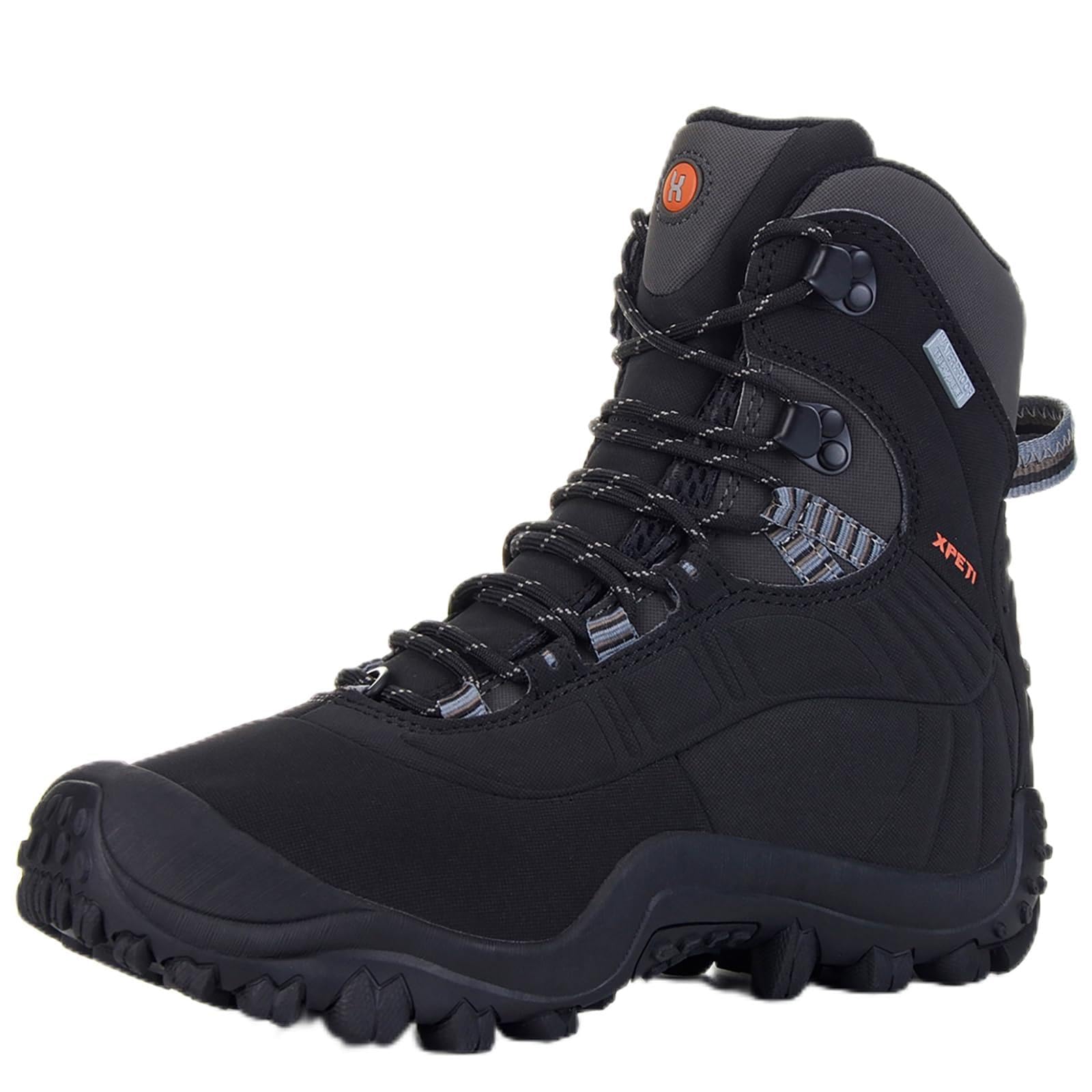
XPETI Thermator Mid
Key Features
- Waterproofing: Branded membrane
- Ankle Support: Mid
- Fit Options: Narrow
- Weight: 1.4 lbs
- Price: $
The XPETI Thermator Mid delivers effective warmth and waterproofing for cold-weather day hikes on groomed trails. The insulation and branded membrane keep feet dry and comfortable in snow and slush at a budget-friendly price. However, fit and durability compromises make it a risky choice for consistent trail use, limiting its appeal to light, occasional winter outings.
Pros
- Warm insulation keeps feet comfortable on cold-weather day hikes.
- Budget-friendly price for a boot with both insulation and waterproofing.
Cons
- Sizing can run small or narrow, especially for wider feet.
- Durability may be limited – sole separation or lining failure can occur within months.
This boot works for budget buyers who only need a warm, dry boot for occasional winter day hikes, but those hiking frequently should invest in a more robust option.
Best for Dry Climates
Ariat Terrain

Key Features
- Waterproofing: None (leather)
- Ankle Support: Mid, supportive
- Weight: 1.5 lbs
- Price: $$$
The Ariat Terrain delivers all-day comfort with supportive leather construction that suits long days on dry trails. However, it lacks waterproofing — the leather will soak through in rain without applied treatment — and durability can vary, with sole separation reported in some cases. The premium price further limits appeal for budget-conscious hikers.
Pros
- All-day comfort for long hikes and extended wear.
- High-quality leather build with durable construction.
Cons
- In wet conditions, the leather soaks through without treatment; not waterproof.
- Sole separation can occur after months of use; quality control varies.
A suitable choice for dry-weather hiking and casual wear, but the lack of waterproofing and occasional durability issues mean it’s best for those who accept these limitations.
Best for Ultra-Budget
NORTIV 8 Backpacker

Key Features
- Waterproofing: Branded membrane
- Ankle Support: Mid
- Fit Options: Roomy
- Weight: 1.2 lbs
- Price: $
The NORTIV 8 Backpacker is notably lightweight and offers a spacious toe box that fits wide feet comfortably. However, the waterproof membrane can lose effectiveness after a few weeks, and the boot’s construction may show signs of wear within a few months of regular hiking. This makes it a reasonable choice for very light, dry-weather use rather than a primary hiking boot.
Pros
- Roomy toe box and plush cushioning provide good comfort for wide feet.
- Lightweight build and low price make it an affordable option for short day hikes.
Cons
- For hiking in damp conditions, the waterproofing may let moisture in after a few weeks of use.
- Under frequent hiking, the boot’s soles and upper can separate or wear prematurely.
This boot fits best as an occasional, dry-weather companion for short hikes when budget is the top priority and long-term performance is not expected.
How to Choose
Fit is the most overlooked factor in hiking boots – a half-size up can save you from blisters on descents.
Waterproof Membrane vs. Coating
Waterproof membranes like Gore-Tex or OutDry create a physical barrier that stops liquid water while allowing vapor to escape. Spray-on coatings wear off after a few weeks and don’t reliably block puddles. A boot with a seamed-sealed membrane will keep feet dry in wet grass and light rain, but no membrane is fully breathable when you’re sweating uphill.
The trade-off: membranes add cost and can make boots warmer. If you hike in dry climates, a non-waterproof boot with a quick-drying upper might be more comfortable year-round.
Ankle Support Height and Stiffness
Mid-height boots (6–7 inches) support the ankle by limiting lateral roll, which matters on uneven terrain. Low-cut shoes offer less support but more freedom of movement and lighter weight. The stiffness of the cuff also affects how much leverage your calf muscles need – a stiffer boot provides more stability but can feel rigid on flat trails.
For day hikes with moderate rocks and roots, a flexible mid boot is a practical middle ground. Backpackers with heavy packs benefit from a stiffer, taller collar that transfers load over the ankle.
Traction Lug Depth and Rubber Compound
Lug depth directly affects bite into loose soil and mud – 4–5 mm lugs handle dirt and gravel well, while 3 mm lugs are better for rock slabs and pavement. Softer rubber compounds (like Vibram’s sticky blend) grip wet rock but wear faster on abrasive surfaces. Harder compounds last longer but slide on smooth rock.
For hikers who encounter mixed terrain – dirt, rock, and occasional mud – a moderate lug depth with a balanced rubber compound offers the best real-world grip without sacrificing durability.
Fit Width Options
Boots with a narrow toe box can cause toe jamming on descents and blisters on the little toe. Roomy toe boxes, like KEEN’s signature shape, allow toes to splay naturally and reduce pressure points. Many brands offer wide versions, but the actual width varies – always measure your foot’s width against the manufacturer’s sizing chart.
A boot that fits snugly in the heel but allows toe wiggle is ideal. If you plan to wear thick wool socks, size up half a length rather than going wider if the boot lacks a wide option.
Weight
Every extra ounce on your foot multiplies over a day of hiking – a 1.5-lb boot per foot adds roughly 10% more energy expenditure compared to a 1-lb boot. Lighter boots (under 1.3 lbs) reduce fatigue but often skimp on cushioning, ankle support, or durable soles. Heavier boots feel more stable under load but can lead to earlier leg fatigue on long descents.
For day hikes under 8 miles with light packs, a sub-1.3-lb boot is a smart choice. For multi-day trips with 30+ lb packs, a 1.5-lb boot’s support and durability justify the extra weight.
FAQ
How long do Merrell Moab waterproof hiking boots actually stay waterproof?
The M Select DRY membrane in Merrell Moab boots typically remains effective for 3–6 months of regular hiking. After that, reports of moisture intrusion rise, especially in wet conditions. If reliable waterproofing is your priority, consider boots with a branded membrane like OutDry or Gore-Tex.
Are Columbia Newton Ridge boots true to size for wide feet?
The Newton Ridge runs narrow in the toe box, so those with wide feet should order a half-size up and pair with thin socks. Even then, the boot may feel cramped for very wide feet. KEEN’s Targhee 2 is a better fit for wide feet.
Do NORTIV 8 hiking boots need a break-in period?
Most NORTIV 8 models are comfortable out of the box for short walks, but durability is a concern – many users report sole separation or upper tearing within months. For regular hiking, a brand like Columbia or Merrell offers better long-term value.
What’s the best women’s hiking boot for wet trails under $100?
The Columbia Newton Ridge Plus offers reliable waterproofing and comfort at around $70, making it the strongest option under $100. The Columbia Transverse is also waterproof but narrower. Avoid NORTIV 8 models for wet conditions; their waterproofing is inconsistent.