
This post contains affiliate links. We may earn a small commission when you buy through our links — at no extra cost to you.
It’s easy to think any shoe labeled "waterproof" will keep your feet dry through a puddle or wet grass. But the reality is that most budget options use only a surface coating that wears off quickly, leaving you with damp socks after the first few uses. The real distinction lies in whether the shoe integrates a sealed membrane like Gore-Tex or Outdry.
Even well-made waterproof shoes have a common Achilles’ heel: the adhesive that bonds the sole to the upper. Across dozens of popular models, sole separation is the most frequent long-term complaint. That doesn’t make them bad—it just means understanding the limits of construction helps you choose the right pair for how you actually use them.




Timberland Men’s White Ledge Mid Waterproof Hiking Boots
Timberland White Ledge
Key Features
- Membrane Type: Waterproof leather
- Weight: 1.1 lbs per boot
- Ankle Support: Mid
- Price: $$
Water resistance that holds up through rain and puddles, a soft cushion that requires little break-in, and a leather build that stays light on the foot—this boot covers the essentials for most day hikers without the usual stiffness or weight of traditional waterproof leather.
The White Ledge suits anyone looking for a capable, budget-friendly waterproof boot for moderate trails and everyday walks. The main tradeoff: the sole adhesive can separate after months of regular use, and occasional hardware defects (like a loose eyelet) may require a replacement pair. These issues are worth checking for, but they don’t prevent the boot from delivering solid performance for its price point.
Pros
- Keeps feet dry through rain and wet grass without feeling clammy
- Soft cushioning with almost no break-in period for long walks
- Balances name-brand quality with a cost that fits a mid-range budget
Cons
- Occasional hardware defects (broken eyelets, sizing variance) may arrive out of the box
- Sole adhesive can separate after months of use on rocky or uneven ground
For day hikers who want dry feet and immediate comfort without spending a premium, the White Ledge delivers consistently.
Huk Men’s Rogue Wave Shoe
HUK Rogue Wave
Key Features
- Membrane Type: Rubber/neoprene
- Weight: 2.7 lbs per pair
- Ankle Support: Ankle
- Price: $$
The HUK Rogue Wave delivers exceptional traction on slick boat decks and wet docks — the sticky rubber outsole inspires confidence where most shoes would slip. The neoprene/rubber construction keeps feet dry through puddles and rain, and the interior feels like a regular sneaker rather than a stiff boot. This is a purpose-built deck shoe, not a trail hiker: it lacks ankle support and the weight (~2.7 lbs) is noticeable on longer walks.
Ideal for fishermen, boaters, or anyone needing a comfortable, easy-on rain boot for yard work and wet pavement. Those with wider feet may find the toe box snug — sizing up one half size helps. Some units have developed cracks at the toe bend after a few months of regular use, so long-term durability on abrasive surfaces is worth watching.
Pros
- Outstanding grip on wet, slippery surfaces like boat decks and rocks.
- Keeps feet dry through rain and shallow puddles without leaks.
- All-day comfort — feels like a normal shoe, not a rubber boot.
Cons
- Sizing runs small, especially for wider feet — expect a snug fit on the top of the foot.
- Some shoes develop cracks at the toe bend after a few months of use.
Stick with this for dedicated boat or yard work where slip resistance matters most; for hiking or all-day walking, look to the top pick instead.
Nortiv 8 Armadillo
NORTIV 8 Armadillo
Key Features
- Membrane Type: Mesh/leather (DWR)
- Weight: Lightweight
- Ankle Support: Ankle
- Price: $
The NORTIV 8 Armadillo delivers plush, blister-free comfort and a light build that makes it easy to wear all day. Unlike the top pick’s dependable waterproofing, the Armadillo is best treated as a summer hiking sneaker – it handles light rain but can soak through on wet grass. It suits first-time hikers, those on a tight budget, or anyone needing a spare pair for light yard chores who value cushioning over guaranteed water resistance.
Pros
- Plush cushioning with minimal break-in – prevents blisters on short hikes.
- Lightweight, non-clunky feel good for all-day wear without foot fatigue.
- Budget-friendly price that undercuts most competitors with similar comfort.
Cons
- Waterproofing can be hit-or-miss – wet grass or steady drizzle may reach socks.
- Sole separation has been noted under repeated heavy use, limiting long-term lifespan.
A smart buy for occasional dry-trail hikers who prioritize comfort and price over waterproof protection.
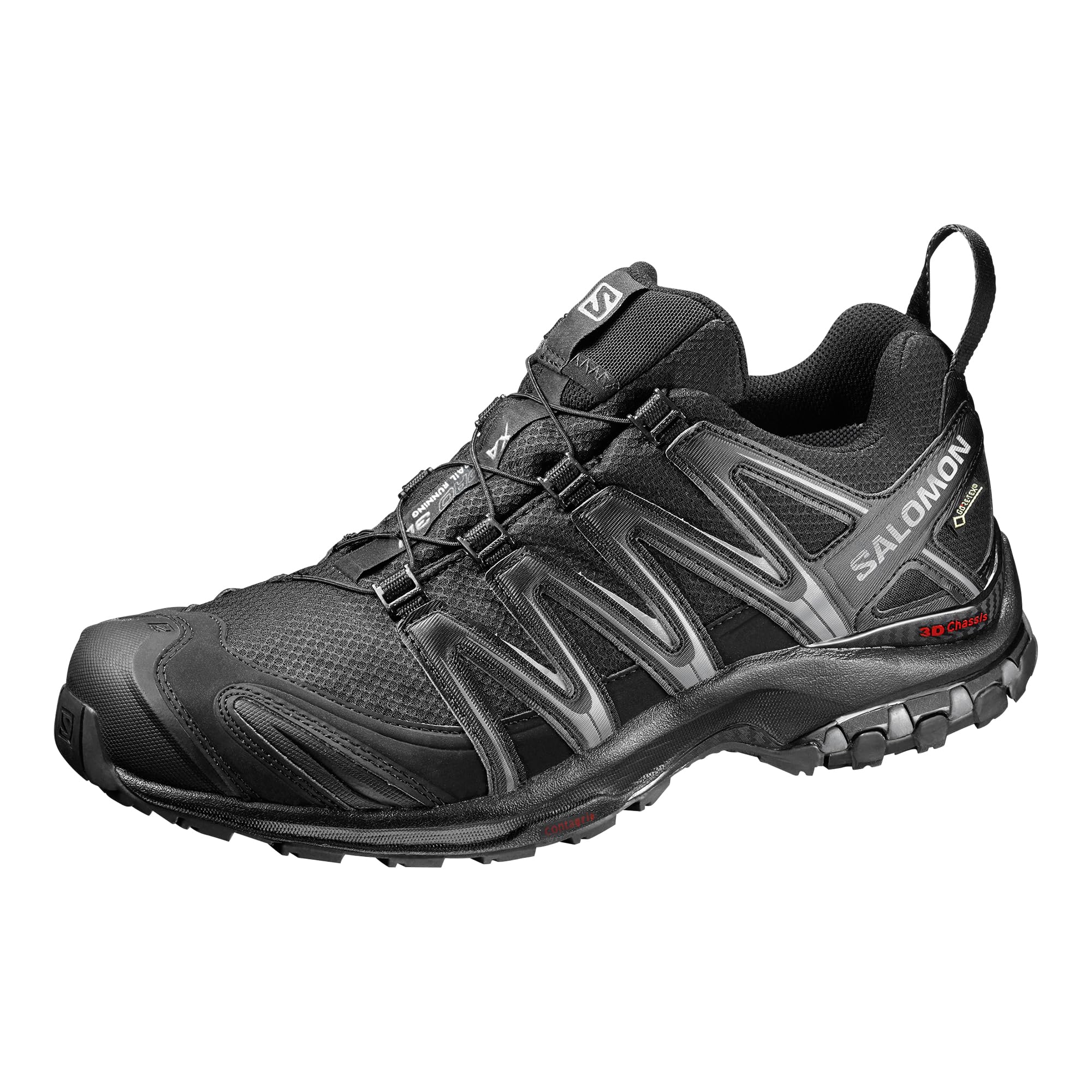
Salomon Xa Pro 3D Gtx
Salomon XA PRO 3D GTX
Key Features
- Membrane Type: Gore-Tex
- Weight: 13 oz per shoe
- Ankle Support: Low
- Price: $$$
The Salomon XA PRO 3D GTX pairs a Gore-Tex membrane with a grippy Contagrip outsole that holds on wet rock and loose trail — ideal for runners moving fast over technical terrain. The Quicklace system cinches securely with one pull, saving time during transitions. The narrow toe box limits this shoe to men with slender feet; those with wide feet should size up or look elsewhere. The lace mechanism, while convenient, can jam or snap under repeated use — a known tradeoff for the speed it provides. Best suited for trail runners and speed hikers who value quick fit and waterproofing over long-term lace durability.
Pros
- Gore-Tex membrane keeps feet dry in rain and stream crossings.
- Contagrip outsole provides strong traction on mud, loose rock, and wet surfaces.
Cons
- Quicklace mechanism can jam or snap under repeated use.
- Narrow toe box restricts fit for men with wide feet or bunions.
Best for trail runners with narrow feet who want speedy adjustments and waterproofing; the lacing tradeoff means it fits those who cycle gear or carry a backup.
Keen Targhee 3 Low
KEEN Targhee 3 Low
Key Features
- Membrane Type: Waterproof membrane
- Weight: 2.1 lbs per pair
- Ankle Support: Low
- Price: $$$
The Targhee 3 Low’s roomy toe box sets it apart from slimmer options like the top pick, making it a strong choice for hikers who need extra forefoot space. The waterproof membrane handles rain and snow well, and the materials give a quality feel. However, sole separation has been reported after months of use, particularly on uneven trails. Additionally, the fit runs narrower than previous Targhee models, so those with wide feet may want to size up. This tradeoff makes it best for day hikers who prioritize comfort and toe room over long-term durability.
Pros
- Roomy toe box reduces foot fatigue on long hikes.
- Waterproof membrane keeps feet dry in rain and snow.
- Materials feel well-constructed for daily use.
Cons
- Fit can be narrower than expected; some find it less roomy than earlier Targhee models.
- Sole adhesion may separate after months of use on rocky terrain.
For hikers who value toe room and waterproof comfort over extended durability, the Targhee 3 Low delivers — but expect to monitor sole integrity.
Columbia Men’s Peakfreak Ii Outdry Trail Shoes
Columbia Peakfreak II
Key Features
- Membrane Type: Outdry
- Weight: Very lightweight
- Ankle Support: Low
- Price: $$
The Outdry membrane is the standout feature here – it seals out moisture completely while letting heat escape, so feet stay dry without overheating. Combined with an extremely flexible mesh upper and cushioned midsole, these shoes require no break-in and move like a sneaker on the trail.
This design targets day hikers and trail runners who prioritize waterproofing and a light, agile feel over ankle support. The low cut is fine on smooth terrain but offers little stability for uneven ground or heavy packs. The outsole compound can also wear sooner on abrasive surfaces, so keep these to well-maintained trails.
Pros
- Outdry membrane keeps feet dry without trapping excess heat.
- Zero break-in required – flexible and comfortable from the first wear.
Cons
- Low profile provides minimal ankle support – better for smooth trails than rocky or uneven terrain.
- Sole compound may wear faster on sharp or gritty surfaces.
For hikers who value dry feet and lightweight agility more than ankle stability, this is a capable trail shoe for day trips on moderate terrain.
Timberland Mt. Maddsen
Timberland Mt. Maddsen

Key Features
- Membrane Type: Leather & mesh
- Weight: 3 lbs per pair
- Ankle Support: Mid
- Price: $$
The anti-fatigue sole delivers noticeable comfort for all-day wear right out of the box, and the waterproofing handles rain and shallow streams without issue. However, the fit runs large — sizing down is worth checking — and the stitching and sole adhesion durability aligns with the White Ledge, making this a more suitable choice for casual daily use than for heavy backpacking or demanding terrain.
Pros
- Comfort right out of the box with anti-fatigue sole that needs no break-in.
- Water resistance holds up in rain and light streams, keeping feet dry.
Cons
- Sizing runs large; ordering a half to full size down may be needed for a secure fit.
A comfortable choice for daily wear and light hikes, particularly if you prefer a roomier fit and prioritize cushioning over long-term durability.
Columbia Men’s Transverse Hike Waterproof
Columbia Transverse Hike

Key Features
- Membrane Type: Omni-Tech
- Weight: Lightweight
- Ankle Support: Low
- Price: $$
Columbia’s Transverse Hike uses Omni-Tech waterproofing to keep feet dry in wet grass and rain, and the roomy toe box and lightweight feel make it comfortable for day hikes on maintained trails. However, the low ankle height offers minimal support for uneven terrain, and it’s less suited for backpacking or wet-weather versatility compared to higher-rated options.
Pros
- Strong waterproofing keeps socks dry in wet grass and rain.
- Roomy toe box and cushioning prevent blisters on long walks.
Cons
- Low ankle height provides minimal support on uneven terrain – best suited for maintained trails and pavement.
A practical choice for day hikes on maintained trails and wet-weather commuting, provided you don’t need ankle support for rough ground.
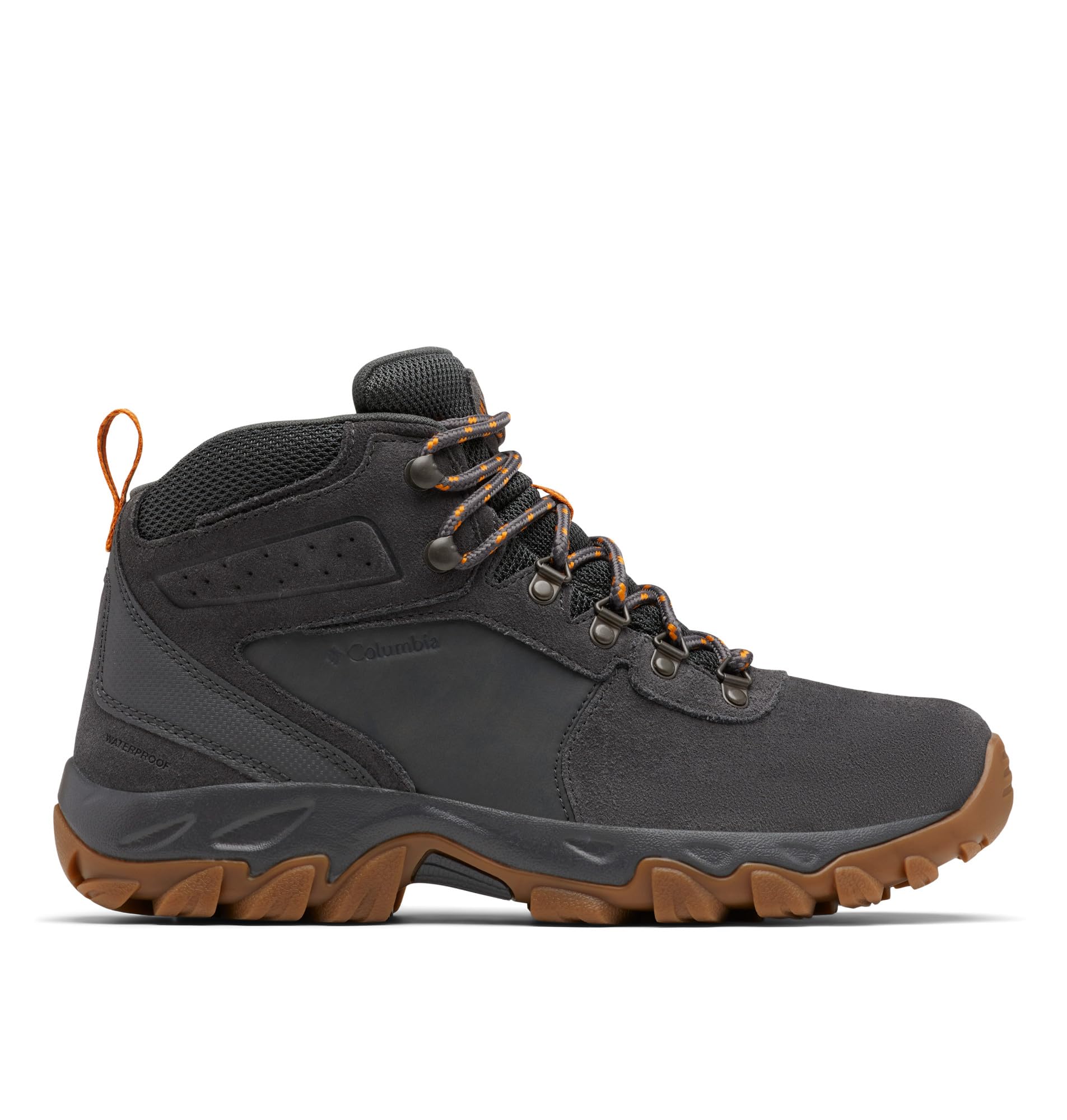
Columbia Newt Ii Suede
Columbia Newt II Suede
Key Features
- Membrane Type: Omni-Tech
- Weight: Lightweight
- Ankle Support: Mid
- Price: $$
Suede construction elevates the appearance and hides trail dirt well, backed by the same soft interior and Omni-Tech waterproofing found in the standard Newton Ridge. The fit is narrow, especially in the toe area, and the lace hardware can show wear sooner than some hikers expect. This pair suits those who prioritize aesthetics on light day hikes and don’t need extra toe room or heavy-duty lacing.
Pros
- Comfortable soft interior that keeps feet warm on cooler days
- Suede upper resists showing dirt and gives a more refined look than standard hiking boots
Cons
- Can feel snug in the toe area for those with wider feet
Fits best if you want a suede look for dry day hikes and don’t need a wide toe box or heavy-duty lace hardware.
Dunlop Chesapeake
Dunlop Chesapeake

Key Features
- Membrane Type: PVC
- Weight: 3.5 lbs per pair
- Ankle Support: Knee-high
- Price: $
Fully waterproof PVC construction at a budget-friendly price makes this boot effective for short trips in mud or puddles. But the stiff sole and lack of arch support rule it out for walking or hiking. Durability is adequate for occasional use, though seams may crack over time.
Pros
- Very affordable price for a rain boot
- Fully waterproof – feet stay dry in wet conditions
Cons
- Limited comfort for extended walking – stiff sole and no arch support
Works well for short trips to the garden or boat dock, but not a substitute for a hiking shoe or all-day walking boot.
Furuian Men’s Deck Boots
Furuian Deck Boots

Key Features
- Membrane Type: Neoprene/rubber
- Weight: Light
- Ankle Support: Ankle
- Price: $
The Furuian Deck Boots offer a soft, comfortable neoprene upper at roughly half the price of similar HUK models, making them a budget-friendly option for casual wet-weather use. However, the outsole traction can be insufficient on wet boat decks, docks, or smooth concrete, which limits their usefulness to drier settings. For gardening or light fishing on grass or dirt, they work well; just don’t rely on them where slip resistance matters.
Pros
- Soft neoprene and rubber construction for all-day comfort without irritation.
- Comparable waterproof performance to HUK at a fraction of the price.
Cons
- Traction may be insufficient on wet boat decks or slick surfaces, increasing slip risk.
Best suited for gardeners or light fishing where wet traction isn’t critical; avoid for boating or wet concrete.
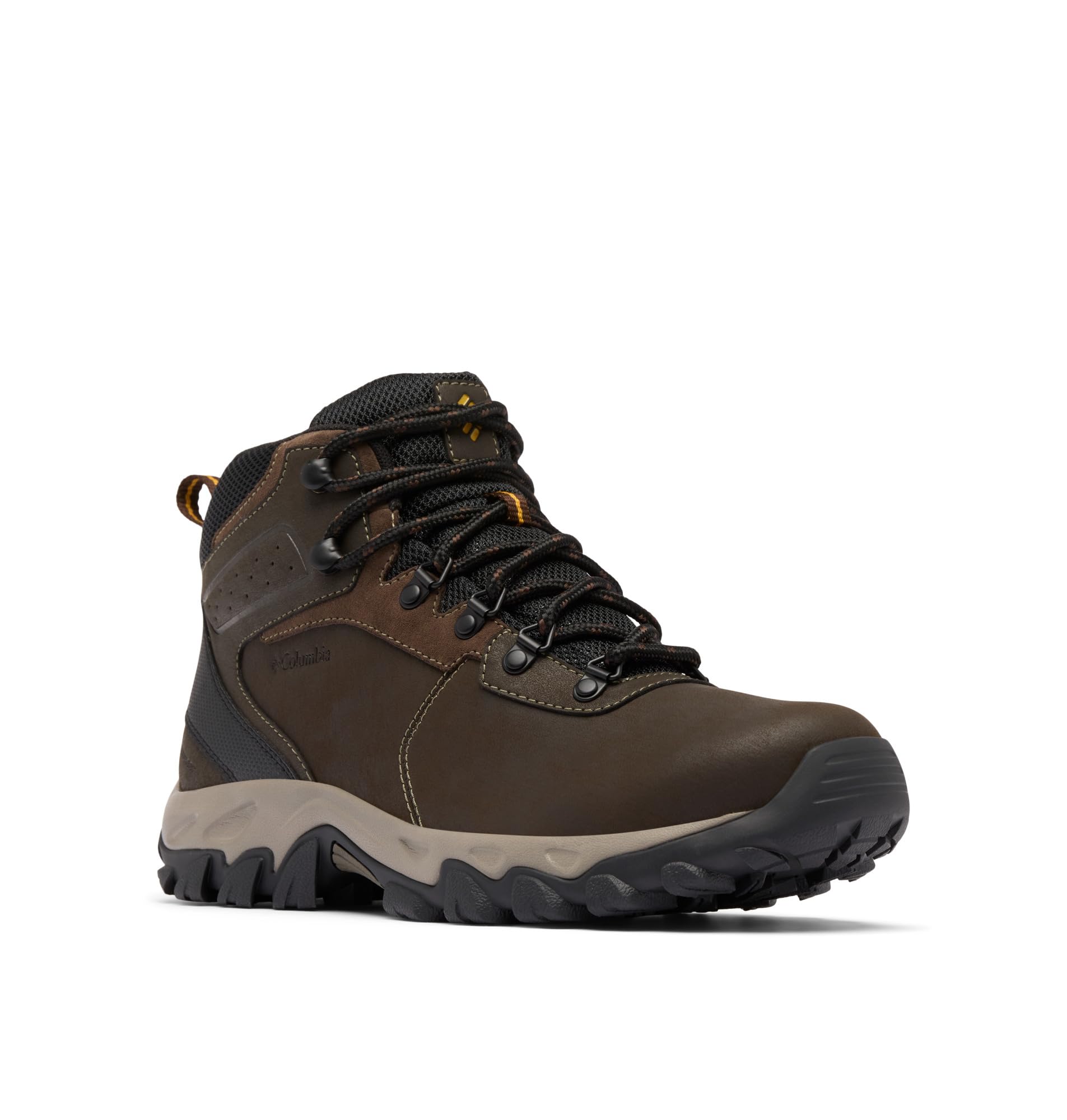
Columbia Newt Ridge Ii
Columbia Newt Ridge II
Key Features
- Membrane Type: Omni-Tech
- Weight: Lightweight
- Ankle Support: Mid
- Price: $$
The Columbia Newton Ridge Plus II offers effective waterproofing for rain and puddles, along with lightweight comfort for well-maintained trails. Its narrow fit restricts practicality for wider feet, and eyelets and soles can show average wear under consistent use – limiting its appeal against the broader-fitting top pick in this price range.
Pros
- Omni-Tech waterproofing keeps feet dry in rain and shallow puddles.
- Lightweight and comfortable for all-day hiking without fatigue.
Cons
- Narrow fit may be too tight for men with wide feet.
Best suited for day hikers with narrow to medium feet who want lightweight waterproofing and are willing to accept average durability.
Nortiv 8 Paladin
NORTIV 8 Paladin

Key Features
- Membrane Type: Suede/mesh
- Weight: Lightweight
- Ankle Support: Mid
- Price: $
This lightweight hiking boot is budget-friendly and fits true-to-size with good cushioning, making it comfortable for casual walks. However, the waterproofing can be inconsistent in damp conditions — it’s not suited for wet grass or light rain. That’s why it sits below the nearly identical Armadillo, which has slightly more refined comfort for a similar price.
Pros
- Budget-friendly price for a lightweight hiking boot
- Comfortable, true-to-size fit with good cushioning
Cons
- Waterproofing can be inconsistent in damp conditions, limiting use to dry trails
Best for fair-weather day hikes and casual wear where puddles and damp grass are avoided.
Shulook Work Boots
SHULOOK Work Boots

Key Features
- Membrane Type: Leather/rubber
- Weight: Lightweight
- Ankle Support: Ankle
- Price: $
The SHULOOK boot delivers solid slip resistance on wet kitchen floors and all-day comfort at a budget price. Its waterproofing handles spills but won’t hold up on trails. Durability varies between pairs, and the low ankle design doesn’t suit uneven terrain – this boot belongs in a restaurant, not on a hike.
Pros
- Slip-resistant outsole grips well on greasy and wet indoor floors
- Cushioned insole keeps feet comfortable during long standing shifts
Cons
- Some pairs may show sole separation or other defects within weeks; construction consistency varies
Best for restaurant workers who need affordable slip protection on wet floors – skip this for hiking or outdoor use.
Shulook Hiking Boots
SHULOOK Hiking Boots

Key Features
- Membrane Type: Mesh/synthetic
- Weight: Lightweight
- Ankle Support: Mid
- Price: $
The SHULOOK Hiking Boots offer a very low price and sneaker-like comfort for dry trails, with decent traction on rocky terrain. However, the waterproofing is not trustworthy — moisture can seep through in damp conditions — and durability is limited, with reports of sole separation after a few months. These are best for light, occasional use in dry weather only.
Pros
- Very affordable price for hiking boots
- Lightweight and comfortable for long walks
Cons
- Waterproofing can be unreliable in damp conditions
Best for occasional dry-weather hikes on a tight budget — not suitable for wet conditions.
How to Choose
The single most important factor is whether the shoe uses a sealed waterproof membrane like Gore-Tex or Outdry, or relies on a surface DWR coating that wears off quickly.
Waterproof Membrane
Gore-Tex and Outdry are the most reliable waterproof membranes because they physically block water while allowing vapor to escape. Budget shoes often skip a membrane entirely and just spray a DWR coating on the outer fabric. That coating wears off after a few washes or months of abrasion, leaving the shoe no more waterproof than a regular sneaker.
If you need guaranteed dry feet in rain, puddles, or wet grass, look for a shoe that explicitly lists a membrane layer. If you only walk on dry pavement and occasional damp spots, a DWR-coated shoe may be enough—just know you’ll need to reapply the spray every few months.
Traction & Outsole
The outsole rubber compound and tread pattern are what prevent slips on wet rocks, boat decks, or muddy trails. Softer rubber compounds grip better on slick surfaces but wear faster on pavement. Harder compounds last longer but feel slippery on wet tile or metal.
For wet deck or dock work, look for shoes with a dedicated slip-resistant outsole (like those found on fishing or restaurant boots). For hiking, a multi-directional lug pattern with decent depth (4–5 mm) handles mud and loose gravel without sacrificing wet-road grip.
Weight & Flexibility
Heavier boots offer more protection and durability but can cause fatigue on long walks. Lighter shoes feel more like sneakers and are better for fast hiking or travel, though they typically trade ankle support and sole thickness. A good rule: under 2 lbs per pair is light, over 3 lbs is heavy for its class.
Flexibility matters for comfort. A stiff boot might feel stable for heavy backpacking but can cause blisters on mellow day hikes. A flexible shoe is better for walking on flat trails but won’t protect your feet from sharp rocks. Match the shoe’s stiffness to your typical terrain.
Toe Box Width & Fit
A tight toe box causes pinching and blisters, especially on downhill sections. Brands like KEEN are known for wide toe boxes, while Salomon and many Columbia models run narrow. If you have wide feet or bunions, prioritize brands that explicitly offer wide sizes or a roomy forefoot.
Sizing inconsistency is common. Many boots run large (Timberland Mt. Maddsen) or small (HUK Rogue Wave). Always check recent reviews for fit advice and consider ordering half a size up if you plan on thick socks. A shoe that fits snugly with thin socks may be too tight in winter.
Ankle Support
Low-cut shoes (ankle height) provide freedom of movement and are great for trail running or fast hiking on maintained trails, but they offer little lateral stability. If you carry a heavy pack or often hike on uneven, rocky terrain, a mid-height boot supports the ankle and reduces the risk of rolling.
High rain boots (knee-high) are best for wading through deep puddles or yard work but are cumbersome for walking any distance. Match ankle height to your activity: low for speed, mid for mixed terrain, high only for stationary wet work like gardening or fishing.
FAQ
Why do my waterproof hiking boots leak after a few months even though they were fine at first?
Two reasons: the DWR coating on the face fabric wears off, allowing the outer fabric to saturate and no longer breathe (so sweat builds up, making feet feel wet), or the waterproof membrane itself has developed micro-tears from stress. Most often it’s the DWR. Reapply a spray-on water repellent every season to restore performance. If that doesn’t work, the membrane may be compromised—a defect covered by warranty.
Are waterproof trail runners as good as hiking boots for keeping feet dry in heavy rain?
Yes, if they use a sealed membrane like Gore-Tex or Outdry. The waterproofing ability is the same—the difference is ankle coverage. Trail runners are low-cut, so heavy rain can run down your leg into the shoe. Hiking boots with a higher collar keep that water out longer. For light rain, trail runners are fine; for downpours, boots offer better splash protection.
How do I know if a budget waterproof shoe will actually keep my feet dry on wet grass?
Check the materials. If the shoe lists a membrane like Gore-Tex, Outdry, or Keen.Dry, it will likely hold up. If it only says "waterproof" without specifying a membrane, it’s probably just a DWR coating. Read reviews for terms like "wet socks after first use" or "leaked on wet grass"—that’s a red flag. In the under-$50 range, only a few models like the NORTIV 8 Armadillo have consistent enough DWR to handle casual dampness.
What’s the best waterproof shoe for men who need slip resistance on wet boat decks?
The HUK Rogue Wave is purpose-built for that. It uses a rubber/neoprene upper with a slip-resistant outsole that grips wet fiberglass and metal. The ankle-high design keeps water out without feeling like a heavy rain boot. For a cheaper alternative, the Furuian Deck Boots work for light boat use, but its traction is weaker and poses a slip hazard on very slick decks.