
This post contains affiliate links. We may earn a small commission when you buy through our links — at no extra cost to you.
Wool socks are a winter staple, but too many pairs end up with holes in the heel after a few months. That frustration often comes from treating all wool socks the same – the reality is that budget blends wear faster, and even premium ones can fit wrong if you ignore sizing quirks.
The key is matching the sock to how you actually use it. A $25 pair with a lifetime warranty makes sense for daily work boots, while a $15 three-pack works fine for occasional errands. This guide highlights the trade-offs in warmth, fit, and durability so you can pick the pair that matches your routine.


Best for Hiking & Daily
Darn Tough Hiker Midweight Crew
The Hiker Midweight Micro Crew uses a dense merino wool blend that resists pilling and retains shape through repeated wear. A lifetime replacement guarantee means any eventual wear-through is covered – no receipts or time limits to track.
The sock’s snug fit around the ankles and toe box provides secure hold inside boots, but those with wider feet or thicker calves may find the compression restrictive. This makes the sock best suited for moderate to narrow foot shapes and for activities where the sock stays in place – hiking, daily wear, and winter warmth. Budget-focused shoppers or those preferring a loose, relaxed fit will likely find better options elsewhere.
Pros
- High-density merino wool blend resists pilling and retains shape through heavy use.
- Soft, non-itchy feel against skin during extended wear.
- Lifetime replacement guarantee covers any wear or damage with no questions asked.
Cons
- Snug fit around ankles and toe box can feel restrictive for wider feet or thicker calves.
For most men seeking a durable wool sock that handles hiking boots, work shoes, and casual wear alike, the Darn Tough Hiker Midweight Micro Crew delivers with a warranty that removes the risk of early failure. Check the fit if you have wider feet.
Best for Serious Hikers
Darn Tough Hiker Full Cushion
Full cushion padding delivers substantial underfoot protection for rocky terrain and heavy boots. The merino wool blend keeps feet warm during cold hikes while remaining breathable for sustained activity.
Best for hikers and backpackers who value cushion over flexibility. The calf fit runs snug, so those with larger legs should consider a different cut. The lifetime warranty offsets the premium price for buyers who wear socks hard.
Pros
- Full cushion protects feet on rough terrain
- Merino wool blend retains warmth without overheating during active use
- Lifetime warranty removes replacement cost risk
Cons
- Calf may feel too snug for those with larger legs
- Premium pricing exceeds budget-friendly alternatives
For serious hikers and work boot users who want maximum cushion and long-term durability, this sock justifies its price through the lifetime guarantee.
Best for Budget Winter
Alvada Merino Wool Hiking 3-Pack
The Alvada 3-pack delivers genuine warmth and a non-itchy merino feel that many costlier socks aim for — making it a strong pick for cold-weather casual use or light trail days. Where it differs from a long-lasting option like Darn Tough is in heel durability: wear has been noted after moderate use, so this set suits rotation wear or occasional outings rather than daily work-boot duty.
Pros
- Very warm for cold weather wear
- Soft, non-itchy merino blend provides comfort against skin
- Good value for a three-pack of wool socks
Cons
- Fit may run small for some — those with larger feet may find them snug or short
- Heel holes have been reported after moderate use, limiting lifespan for heavy wear
A budget-friendly option for warmth and comfort — best for casual winter outings and light hiking, not for daily work boots.
Best for Outdoor Workers
Darn Tough Hiker Midweight 1403
The over-the-calf height and midweight cushion make these a natural match for work boots and winter hiking. The fit around the calf can be tight, particularly after washing — those with larger calves may find it restrictive. This sock is suited for daily boot wear, outdoor jobs, and cold-weather hikes where durability and a lifetime warranty add value over budget options.
Pros
- Superior durability and wear resistance for heavy boot use
- Comfortable merino blend that resists itching during long wear
- Provides consistent warmth without causing overheating during active use
Cons
- Premium per-pair price may deter budget-conscious buyers
- Calf fit can be too tight after washing, especially for those with larger calves
For boot wearers who accept a snug calf, this sock delivers lasting performance with a lifetime guarantee — a premium investment for heavy use.
Best for Light Winter
Time May Tell Hiking Cushion
These socks deliver genuine warmth and footbed cushioning for cold weather at a fraction of the cost of premium brands. The soft merino blend keeps feet comfortable on light hikes or around the house, though heel wear has been noted after repeated use — better suited for occasional winter outings than daily heavy wear.
Best for budget-conscious buyers who want affordable merino warmth for casual walks, light outdoor activities, or lounging. Those with larger feet (size 12+) should check fit, as some find the sizing snug. Accept the durability tradeoff, and these deliver solid value per pair.
Pros
- Warmth and cushion make cold days comfortable.
- Soft merino blend feels cozy against skin.
- Budget-friendly price for a multi-pack.
Cons
- Sizing runs small, which can be an issue for larger feet.
- Heel holes have been noted after moderate use, limiting longevity.
A cost-effective pick for light winter use, but not the choice if you need socks that survive daily heavy wear.
Best for Budget Shoppers
Buttons & Pleats Merino Winter
Under $10 per pack, the Buttons & Pleats Merino Winter socks deliver genuine warmth from a merino blend that feels soft and non-itchy. This undercuts even the COZIA budget pack in price, but the savings come with a shorter lifespan – wear tends to appear sooner than in slightly pricier alternatives.
These socks suit the occasional winter wearer who wants warmth without spending much – think lounging at home, quick errands, or short walks. For those needing socks for work boots or daily outdoor use, holes in the toes can appear within a few wears; this pair is not built for that pattern.
Pros
- Merino blend keeps feet warm in cold weather
- Soft and non-itchy against the skin
- Budget-friendly price for a three-pack
Cons
- Cuff can feel tight on larger calves, especially during longer wear
- Toe area may develop holes after relatively few wears
A wallet-friendly option for short-term indoor warmth, but not the pair to trust for regular outdoor use.
Best for Hikers & Outdoor
Darn Tough Hiker Quarter 1959

The Darn Tough Hiker Quarter (1959) pairs the brand’s durable Merino wool and lifetime warranty with a shorter cut for breathability on warm-weather hikes and runs. The midweight cushion offers good underfoot protection without bulk. Its snug ankle fit may not suit those wanting a looser feel, and it’s less ideal for cold or boot use than crew-height models.
Pros
- Merino wool construction backed by a lifetime warranty for longevity.
- Midweight cushion provides comfort and breathability for active use.
Cons
- Fit around ankle may feel constrictive for some wearers.
Best for warm-weather hikes and runs where breathability and a secure fit are priorities; not the choice for cold-weather or boot use.
Best for Casual Hikers
DANISH ENDURANCE Hiking 3-Pack
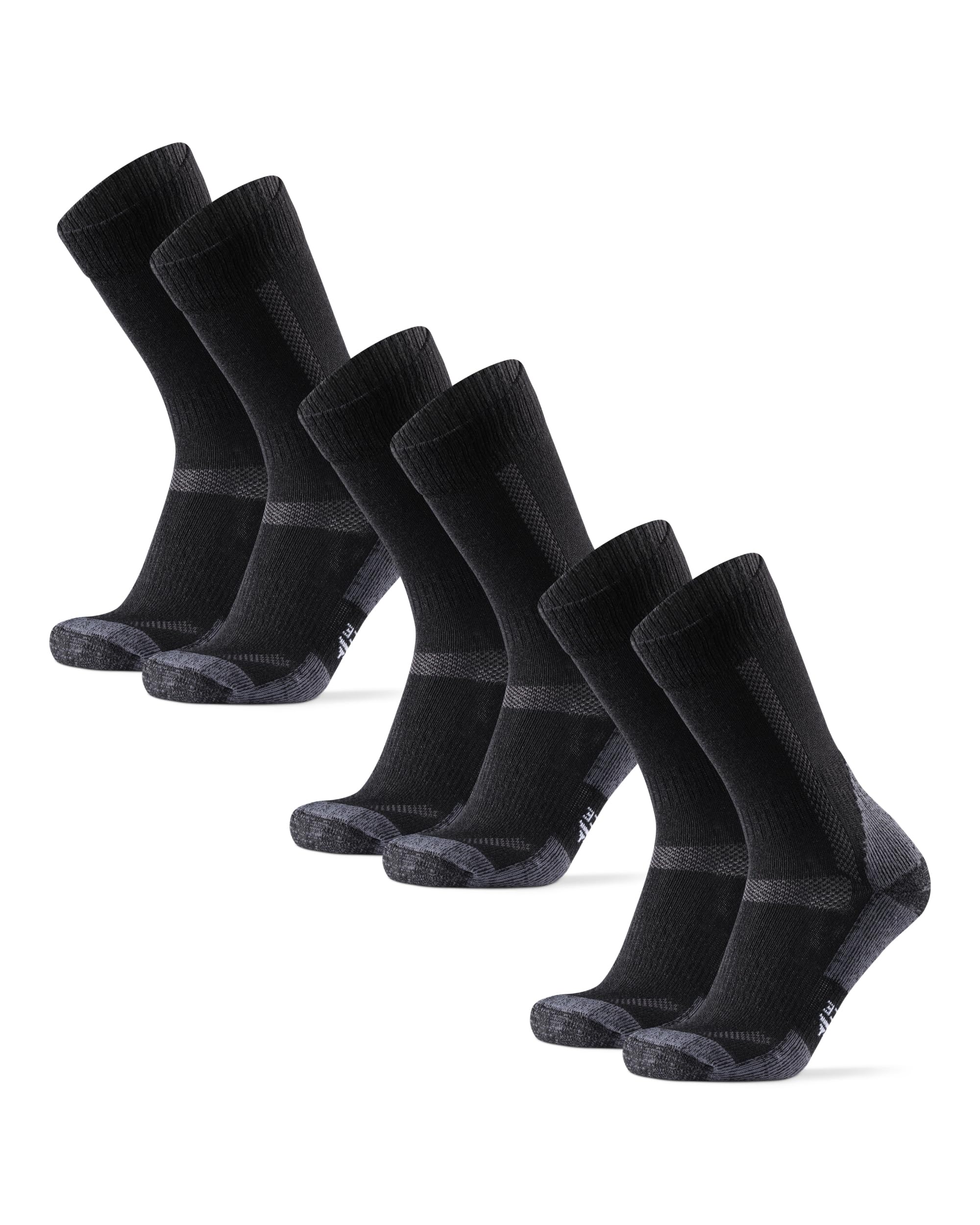
These merino wool socks deliver solid warmth and breathability for casual outdoor use. The main tradeoff is unit-to-unit variation: some pairs may be thinner or fit more snugly than others, which makes them less predictable for those needing a consistent feel.
Pros
- Warm and breathable merino wool for casual hikes.
- Comfortable merino blend with good quality feel.
Cons
- Thickness may vary between pairs, with some feeling too thin.
Best suited for casual day hikers who want decent merino quality in a three-pack and can accept some variation in feel.
Best for Budget Casual
COZIA Thermal Hiking 3-Pair

These COZIA socks deliver soft, warm comfort ideal for lounging or light outdoor errands. The merino blend feels plush and resists itchiness. Heel holes can appear after moderate wear, so these suit low-mileage use rather than daily hiking or work in boots.
Pros
- Soft, warm merino blend keeps feet comfortable in cold weather.
- Three pairs at a budget-friendly price for everyday use.
Cons
- Heel holes can develop after moderate use, limiting their lifespan for heavy wear.
A practical choice for casual winter lounging or short walks, not for sustained hiking or work boot use.
Best for Light Winter
EBMORE Super Thick Winter

These merino wool socks deliver exceptional warmth and softness at a budget price, making them a cozy choice for house socks or light winter errands. However, the extreme thickness makes them too bulky for most shoes, and some users report heel holes developing after limited use. For stationary warmth in extreme cold, they deliver – but not for daily hiking or work boots.
Pros
- Exceptionally warm with a thick, plush cushion for extreme cold.
- Soft and comfortable against the skin, suitable for lounging.
Cons
- Heel holes can develop after moderate use, limiting longevity for daily wear.
Best for budget-conscious buyers who want a warm, soft sock for lounging or light outdoor use in extreme cold – avoid for regular hiking or boot wear.
Best for Small-Medium Feet
SIMIYA 5-Pair Merino Crew

A bargain for buyers with smaller feet, this five-pack offers soft, non-itchy merino warmth at a price that beats most multi-packs. However, the socks run small – men above size 11 will struggle to fit – and the thin construction won’t survive a full winter of daily wear or heavy hiking. This set is a practical choice for light casual use or as backups, not for demanding outdoor use.
Pros
- Soft merino warmth for cold days
- Comfortable fit without itching
Cons
- Sizing runs small – not suitable for men with shoe size over 11
Best for buyers with smaller feet who need a budget-friendly multi-pack for light winter wear.
How to Choose
The most important insight: durability is the hidden cost – a cheap pair can cost more in replacements over a year than a premium pair with a lifetime warranty.
Warmth and Insulation
Warmth in wool socks comes from the thickness and the material’s ability to trap air. A thicker cushion provides more insulation, but also takes up more room in boots. For cold-weather hiking, a midweight or full cushion sock balances warmth with fit, while lightweight socks work best for active use in mild conditions.
Durability and Warranty
Nylon reinforcement and quality knitting determine how long a sock lasts. Budget socks often use a higher wool-to-nylon ratio that feels softer but wears out faster, especially in the heel. A lifetime warranty, like Darn Tough’s, signals that the manufacturer expects the sock to outlast normal use.
Fit Consistency
Sock fit depends on the blend of materials and the knitting pattern. Too much spandex can make a snug fit feel restrictive, while a loose weave leads to bunching. Many buyers find that sizing up from their usual shoe size resolves the tightness, but it’s best to check the brand’s specific sizing guide.
Merino Wool Content
Merino wool content varies widely: premium socks use at least 60% merino, while budget packs often have less than 30% and rely on acrylic for bulk. Higher merino content offers better moisture-wicking and odor resistance, but lower content still provides acceptable warmth for casual use.
Cushioning Level
Cushioning runs from lightweight (no extra padding) to full cushion (thick from toe to heel). The right choice depends on your activity: full cushion for heavy boots and long hikes, midweight for everyday wear, and lightweight for running or warmer weather. Too much cushion can make a shoe feel tight.
FAQ
Why do my wool socks develop holes in the heel?
Heel holes usually result from friction inside boots combined with low nylon content. Socks with less than 20% nylon wear faster. To extend life, air dry your socks and avoid fabric softeners, which break down wool fibers. If you consistently get holes in the heel, consider a sock with reinforced heels like Darn Tough.
How often should you replace merino wool socks?
Premium wool socks with a lifetime warranty never need replacing – you exchange them when they wear out. Budget socks typically last one to two seasons of regular use, depending on how often you wear and wash them. If you see thinning fabric or developing holes, it’s time to replace them.
Are Darn Tough socks worth the price?
Yes, if you wear socks daily for work or outdoor activities. The lifetime warranty means you pay once for potentially decades of use. For occasional wear, budget options provide adequate warmth at a lower upfront cost, but you’ll likely replace them sooner. The math favors Darn Tough for heavy users.
Can merino wool socks be worn in summer?
Lightweight merino socks work well in summer because wool wicks moisture and resists odor better than cotton. However, thick cushion socks will be too hot. Choose a lightweight or ultralight merino blend with low cuff height for warm-weather hiking or daily wear.