
This post contains affiliate links. We may earn a small commission when you buy through our links — at no extra cost to you.
A compact umbrella that fits in your purse is the ultimate travel sidekick, until a gust of wind turns it inside out on your second outing. Most travel umbrellas promise windproof toughness, but in real-world use, their thin ribs and flimsy shafts collapse under moderate breezes or after a handful of clicks.
The category’s dirty secret is that lightweight and sturdy rarely come in the same skinny package. The featherweight designs that disappear into a daypack often sacrifice reinforcement where it counts, while genuinely wind-capable models carry more heft. The trick is finding the balance point for how—and where—you’ll actually use it.
We focused on umbrellas that survive real downpours without filling your bag like a full-size golf umbrella. The ones here have either fiberglass ribs that flex instead of break, vented canopies that let gusts pass through, or both—all while folding down to a purse-friendly size.



Best for Daily Commuting
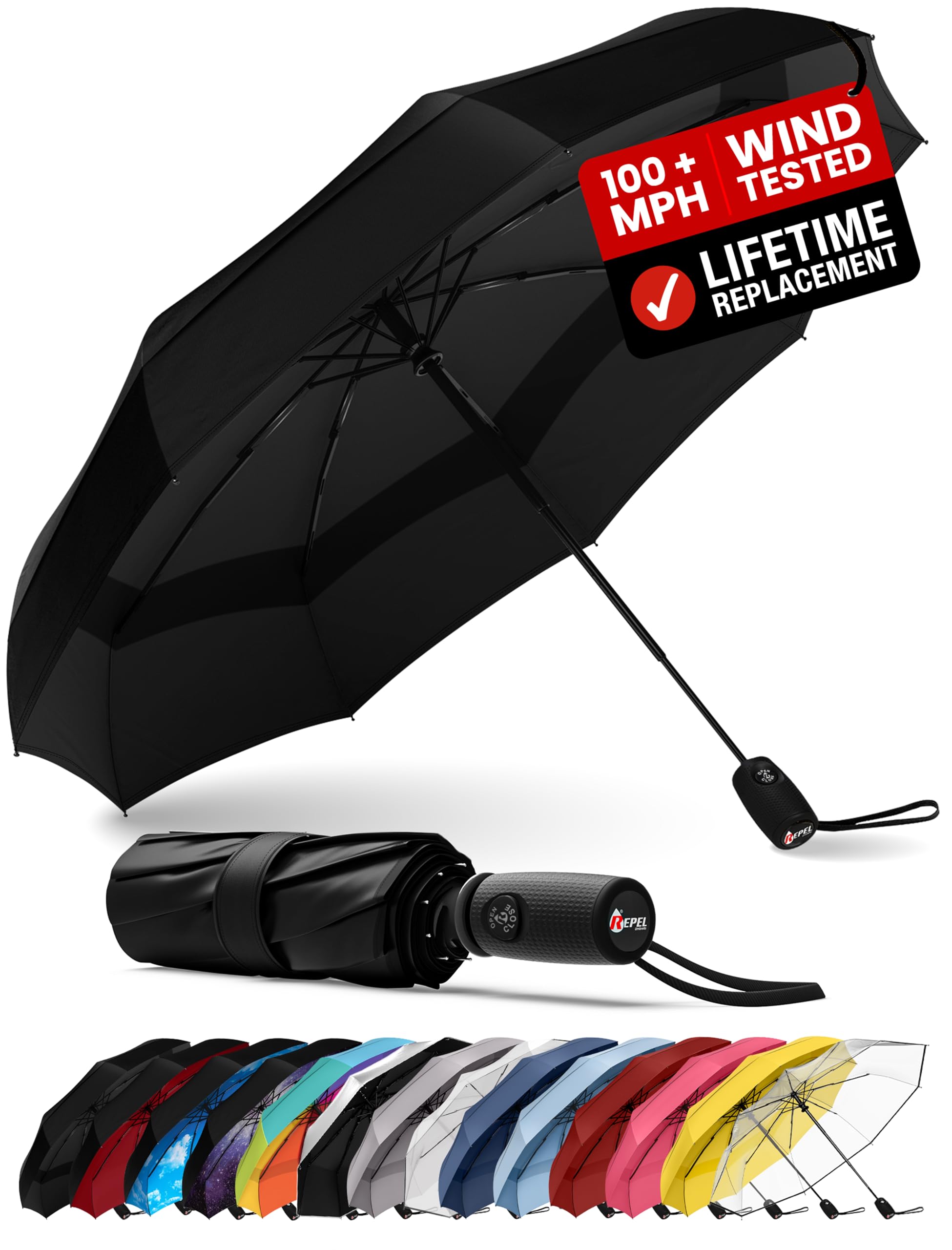
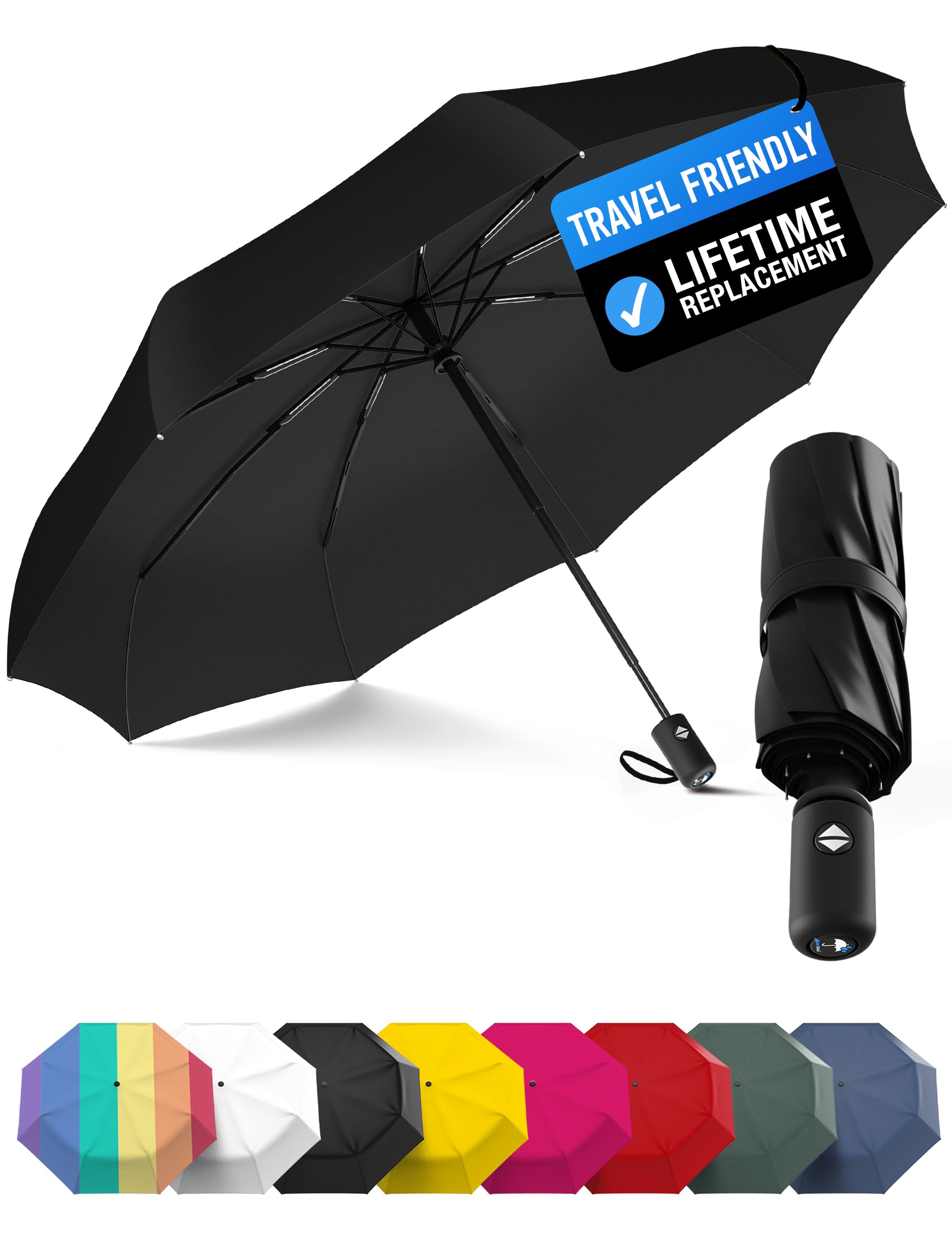
Repel Windproof Umbrella
Key Features
- Weight: 1.85 lbs
- Wind Resistance: Vented, up to 100 mph
- Opening Mechanism: Auto open/close
- Price: Mid-Range
A robust auto open/close umbrella that pops open instantly and handles strong gusts without inverting. Its vented ribs reinforce wind resistance, and the canopy provides one-person coverage without feeling oversized. Folded, it tucks into a backpack side pocket or shoulder bag with ease.
Commuters and travelers who prioritize wind protection over ultralight carry will find this umbrella a dependable daily companion. The auto-close shaft demands a firm push to collapse, making it a poor match for anyone with limited hand strength. Weight is noticeable but reinforces the durable feel.
Pros
- Sturdy build resists strong gusts without flipping inside out.
- Compact folded size slips easily into backpacks and purses.
- Generous coverage for a single user without excess bulk.
Cons
- The auto-close shaft requires a strong push to collapse, which can be difficult for those with limited hand strength.
- Inconsistent quality control may lead to a unit that fails prematurely.
For daily commuters and travelers who want a wind-resistant, compact umbrella that won’t flinch in a storm, the Repel delivers. Those who need a lighter carry or effortless close should look elsewhere.
Best for Light Rain, Style
TUMELLA Windproof Umbrella
Key Features
- Weight: 1.06 lbs
- Opening Mechanism: Auto open/close
- Price: Budget
At just 9.84 inches folded, the TUMELLA stands out as one of the most compact options in the travel umbrella category, with a vivid palette that outshines utilitarian rivals. While the sun-and-rain dual-purpose pick in this lineup adds UV coverage, the TUMELLA doubles down on head-turning style and a size that slips into purses without a bulge.
Light-rain commuters on a budget who prioritize looks and packability will enjoy its cheerful presence and solid initial build. Heavy-wind conditions reveal its ceiling: the canopy may invert in stronger gusts, so it’s best kept for drizzly days rather than stormy commutes.
Pros
- Eye-catching design with vibrant color options
- Sturdy build quality for a budget umbrella
- Fits easily into purses and backpacks at under 10 inches folded
Cons
- Closing the umbrella requires extra hand strength; the shaft can feel stiff
- Wind resistance varies; it may flip inside out in stronger gusts
Budget-conscious style seekers who face mostly light rain and mild winds will appreciate the compact design and colors—just don’t expect it to handle gusty conditions.
Best for Balanced Commute
Rain-Mate Compact Umbrella
Key Features
- Weight: 0.72 lbs
- Wind Resistance: Fiberglass ribs
- Opening Mechanism: Auto open/close
- Price: Mid-Range
The Rain-Mate Compact Umbrella delivers a spacious canopy and sturdy fiberglass ribs at a mid-range price, making it a practical choice for daily commuters who value coverage and construction over extreme wind resistance. Unlike ultra-windproof designs that add weight and complexity, this model stays light and packable while still feeling solid in hand.
It’s best for moderate-climate use where a portable 11.5 oz weight and auto open/close matter. The closing stroke requires a firm push — a manageable tradeoff for those not needing one-hand collapse. Occasional early durability hiccups have been noted, so this sits as a capable everyday umbrella rather than a multi-year guarantee.
Pros
- Sturdy fiberglass rib construction with a clean, modern look.
- Compact folded design (about 12 inches) fits easily in bags and purses.
- Generous canopy provides ample coverage without feeling oversized.
Cons
- Closing requires a firm push to compress the shaft — not effortless one-handed.
- Early frame or fabric wear may occur in some units, reducing longevity.
For commuters wanting a roomy, sturdy umbrella that won’t weigh down a bag, the Rain-Mate delivers where it counts — just be ready for a two-handed close and don’t expect it to survive years of heavy wind.
Best for Dripless Car Entry
QWB Inverted Umbrella
Key Features
- Weight: 0.8 lbs
- Wind Resistance: 10 fiberglass ribs
- Opening Mechanism: Auto open/close
- Price: Mid-Range
The inverted canopy design traps wet panels inside after closing, so you don’t drip water onto car seats or clothes. A built-in carabiner handle clips onto backpack straps for hands-free commuting. Unlike budget reverse folders that struggle in gusts, this one’s 10 fiberglass ribs add stability in wind.
This umbrella works for commuters who want a water-trapping design and the convenience of a carabiner. The auto-close demands a firm push, so those with reduced hand strength may find it frustrating. While most units hold up, occasional early durability reports mean it’s not for daily heavy use.
Pros
- Reverse fold captures rainwater inside, preventing drips on entry.
- Ten reinforced fiberglass ribs hold up in strong gusts.
- Carabiner handle clips to a bag for easy, hands-free carry.
Cons
- Some units may break after limited use, hinting at inconsistent quality control.
Commuters who want a dripless car entry and backpack clipping will appreciate the design — just expect a firm handshake when collapsing.
Best for Sun Protection
Seniny Windproof Umbrella
The Seniny umbrella effectively blocks UV and heat, offering genuine sun protection alongside rain coverage at a budget-friendly price. Unlike some budget UV umbrellas that merely claim protection, this model’s sun-blocking effect is consistently noted. It folds compactly to slip into purses or backpacks, making it easy to carry daily.
This umbrella suits the sun-conscious traveler who wants one lightweight tool for both rain and sun. It’s not built for heavy daily use—consider it a lightweight companion for milder conditions and occasional downpours.
Pros
- UV protection that blocks rays and heat, confirmed by user feedback.
- Build quality feels appropriate for the low price.
- Highly portable—fits easily in a purse or door pocket.
Cons
- Closing mechanism may require more force than expected.
- Durability can vary; some units may struggle with frequent use.
A practical choice for budget-conscious travelers who want UV and rain protection in one compact package, as long as durability isn’t the top priority.
Best for Windy Regions
Weatherman Travel Umbrella
Key Features
- Wind Resistance: 55 mph, fiberglass frame
- Opening Mechanism: Auto open, manual close
- Price: Luxury
While the top pick focuses on everyday auto open/close convenience, the Weatherman stakes its claim on uncompromising wind toughness. Its industrial fiberglass frame shrugs off gusts that invert lesser umbrellas, and the lifetime guarantee underscores confidence in longevity. The tradeoff is a manual close — you collapse it by hand, which some will find inconvenient at this premium price. The canopy is compact enough for a purse or backpack, though coverage may feel slightly smaller than full-sized travel umbrellas. It’s built for storm-prone commuters and travelers who value durability over push-button closing.
Pros
- Superb wind resistance stands up to strong gusts
- Top-tier build quality and sturdiness
- Attractive design with reflective safety trim enhances visibility
Cons
- Premium price point
- Manual close requires two hands; no auto-close feature
If wind resistance and a lifetime guarantee outweigh the lack of one-button closing, the Weatherman is a travel umbrella built to outlast storms.
Best for Reverse Fold Value
LANBRELLA Reverse Umbrella

Key Features
- Weight: 0.79 lbs
- Wind Resistance: 8 fiberglass ribs
- Opening Mechanism: Auto open/close
- Price: Budget
The reverse fold keeps water off your clothes and car seat when you duck inside, and at 0.79 lbs it disappears into a bag. Closing requires a firm push, and unit durability can be inconsistent — better as an occasional-use backup for light rain days.
Pros
- Reverse fold traps wet panel inside, preventing drips on clothes and car interiors.
- Lightweight and compact; fits easily into purses, backpacks, and glove boxes.
Cons
- Durability is inconsistent; occasional breakage can occur on first use.
A budget-friendly reverse umbrella that shines on light rain days when keeping drips off your car seat matters — but treat it as a backup, not a daily workhorse, given occasional durability hiccups.
Best for Larger Coverage
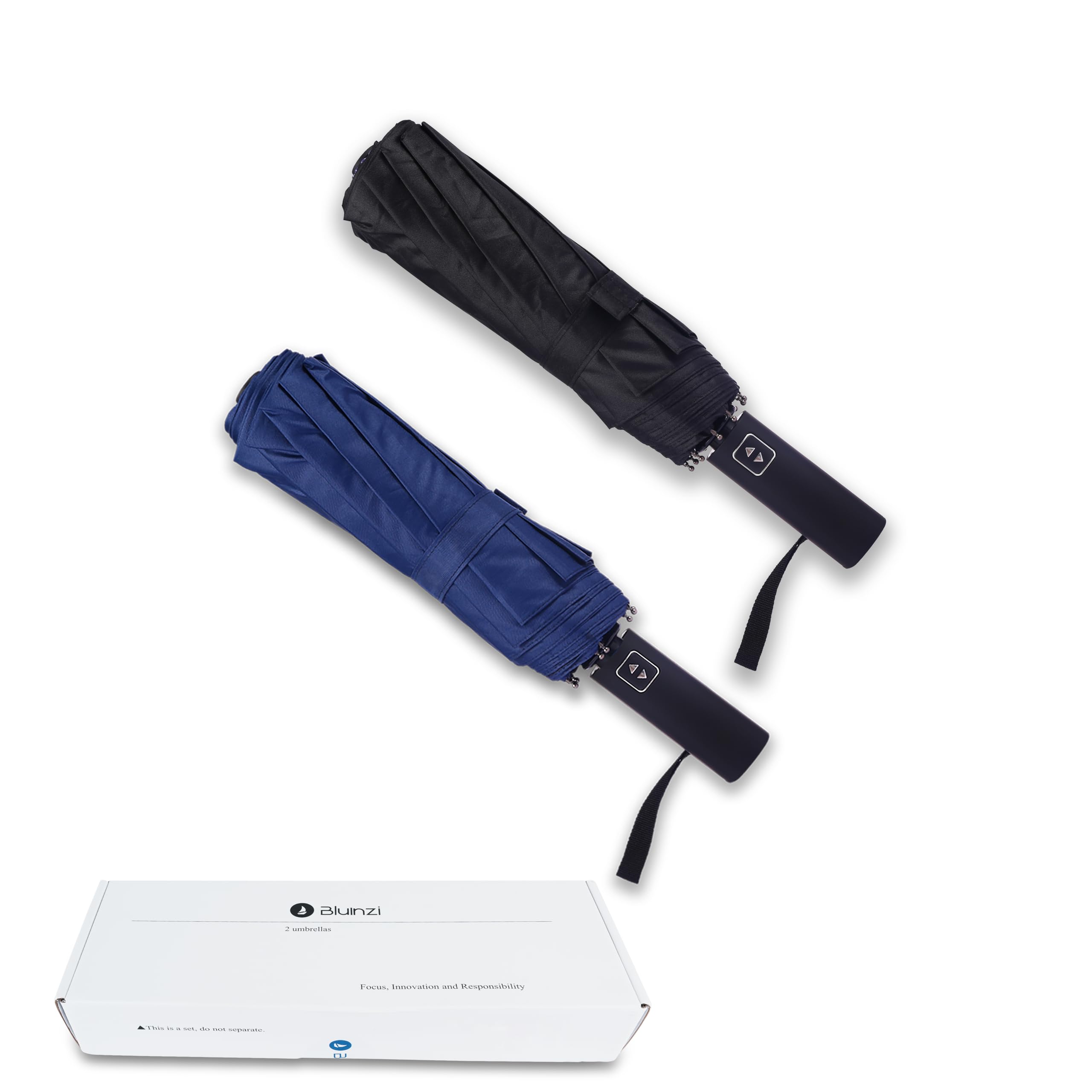
Bluinzi 46-Inch Umbrella
Key Features
- Weight: 1.98 lbs
- Wind Resistance: 10-rib fiberglass
- Opening Mechanism: Auto open/close
- Price: Mid-Range
The Bluinzi’s 46-inch arc and double 10-rib frame provide generous shelter, and the water-resistant canopy holds up well. At nearly 2 lbs, it’s too heavy for daily bag carry, and the closure mechanism demands considerable effort — this suits a car umbrella or anyone who prioritizes coverage over compact portability.
Pros
- Spacious 46-inch canopy provides ample rain coverage.
- Tough build and good water resistance keep you dry.
Cons
- Closing the umbrella takes noticeable strength; one-hand closure is not realistic.
For a car umbrella or anyone who values a large canopy over slim portability, this is a capable option.
Best for Budget Backup
Yoobure Travel Umbrella

This umbrella delivers UV-blocking rain protection and a generous color palette at a budget-friendly price. The compact frame slips into a backpack or purse without bulk. Closing the auto-open shaft requires a firm push, and long-term durability can be inconsistent — some units may show early wear. It suits sun-sensitive students and travelers who need occasional coverage and can accept a stiff close.
Pros
- Vibrant color choices and a compact folded size fit easily into a purse or daypack.
- UV-blocking canopy adds sun protection to rain defense at a budget price.
Cons
- The auto-close shaft demands a moderate push to collapse, which some may find stiff.
A sensible choice for occasional rain and sun when you want a compact, colorful umbrella at minimal cost — as long as the firm closure doesn’t bother you.
Best for Calm Rain Only
Gorilla Grip Compact Umbrella

Key Features
- Weight: 0.9 lbs
- Wind Resistance: 23 mph rating
- Opening Mechanism: Auto open/close
- Price: Budget
At 0.9 pounds and 11.5 inches folded, the Gorilla Grip slips into purses with room to spare, and its bold colors make it a standout. However, the canopy flips inside out in even moderate breezes, confining it to calm, rainy strolls.
Pros
- Weighs just 0.9 lbs and folds to 11.5 inches, slipping into a purse without weighing it down.
- Available in a range of vibrant colors that add a touch of style on gloomy days.
Cons
- Collapsing the shaft can require more hand strength than compact umbrellas usually demand.
For calm, city drizzles where weight matters more than wind resistance, it’s a useful purse companion.
Best for One-Time Use
Mr. Pen Windproof Umbrella

Ultra-low cost makes this umbrella a candidate for one-time emergency use. Closing it takes considerable force — buyers with hand strength concerns will find it nearly impossible. The canopy struggles in wind and may invert, with frame durability that degrades after limited exposure. Best treated as a throwaway backup, not a daily companion.
Pros
- Extremely affordable, priced below a typical morning coffee
- Bright color options make it easy to spot in a bag
Cons
- Wind resistance is weak; canopy may invert and frame can become damaged after limited use
A budget-friendly emergency piece that fits in a glovebox; accept it might not survive a second storm.
How to Choose
A mini umbrella’s real-world windproofing comes down to rib material and canopy venting, not marketing claims.
Folded Length
Mini umbrellas that fold to 9–11 inches slip easily into a purse or backpack side pocket. At this size, the shaft telescopes down tightly, but a shorter folded length often means the canopy is smaller and the frame uses thinner sections to reduce bulk. If your daily bag has room, a 12-inch fold can offer better structural integrity because the shaft sections overlap more, resisting bending. Choose 9 inches for a clutch or slim backpack; allow 11–12 inches if you prioritize sturdiness over absolute minimalism.
Weight
Under 1 pound feels effortless in a purse, but weight correlates directly with frame gauge and canopy fabric thickness. Sub-0.8 lb umbrellas typically use ultralight aluminum and thin pongee, which buckle under wind load more easily. Models in the 0.9–1.5 lb range give the ribs enough mass to flex without snapping, trading a few ounces for vastly better wind survival. For everyday commuting, that extra weight buys peace of mind; save the featherweights for rare, unexpected drizzles.
Wind Resistance
A true windproof mini umbrella has fiberglass ribs that bend under pressure instead of kinking permanently, and a double-layer or vented canopy that lets gusts escape through a mesh-topped opening. Without a vent, wind hits the underside and lifts the canopy like a parachute, flipping it inside out. Manufacturer wind-speed claims vary wildly, but as a rule of thumb, 23 mph and below is calm-weather only, 55 mph indicates a heavy-duty frame, and 100 mph labeled umbrellas are outliers that typically pass in real gusts. Look for at least fiberglass rib construction and a visible vent to avoid instant failure on blustery streets.
Opening Mechanism
Auto open/close convenience comes with a hidden trade-off: the same strong spring that fires the canopy outward also stores tension that you must overcome to collapse the shaft. On compact models, that spring is housed in a narrow tube, concentrating the force and making the final click-down surprisingly strenuous. If you or someone you’re buying for has arthritis or limited hand strength, test the close action before committing—or choose a manual-close model that opens with a push of a button but collapses with a gentle pull, avoiding the fight entirely.
Canopy Size
A 38–42 inch arc covers one person’s shoulders, while 43–46 inches offers more generous shelter at the cost of added wind-catch area and folded bulk. Larger canopies act like bigger sails; the same umbrella that keeps you drier in a drizzle can become a liability in gusts. For crowded city sidewalks, a 42-inch canopy balances coverage and maneuverability, while a 46-inch arc works well if you’re usually alone and want a dry bag or groceries under it.
FAQ
Why is my travel umbrella so hard to close?
The auto-close spring that pops the canopy open also has to compress back into a short shaft tube, which multiplies the force needed. Small travel umbrellas pack that spring into a tighter space, making the last few inches of closing feel like a gym workout. If you struggle, try bracing the handle against your hip and pushing with both hands, or shop for a manually closing model that eliminates the spring fight entirely.
Can a compact umbrella really be windproof?
Only a handful genuinely resist strong gusts. Fiberglass ribs flex instead of snapping, and a vented canopy lets wind pass through rather than lifting the umbrella inside out. Most budget compact umbrellas fail past 20 mph breezes despite their labeling. The exception is something like the Weatherman with a reinforced frame rated for 55 mph, but expect to pay a premium for that real-world performance.
How long do compact travel umbrellas last before breaking?
Ultra-budget models often fail after just a few uses—thin metal ribs bend or the auto-close mechanism jams. Mid-range picks with fiberglass ribs can last one to two years of regular commuting. Premium umbrellas backed by lifetime warranties, like Weatherman, are engineered for years of heavy use but cost significantly more. If longevity matters, skip the sub-$10 disposables.
What is the best compact umbrella for windy cities?
The Weatherman Travel Umbrella withstands 55 mph gusts with its industrial fiberglass frame and is backed by a lifetime guarantee, making it the top choice for consistently windy places. For a less expensive alternative, the Repel Windproof Umbrella handles everyday wind well with vented ribs and a 100 mph-rated design, though its auto-close spring may be stiff. Both are better than flimsy budget options that flip inside out at the first crosswind.