
This post contains affiliate links. We may earn a small commission when you buy through our links — at no extra cost to you.
Most of us use “tennis shoes” as a catch-all for the everyday sneaker, and that’s exactly what we tested: the pair you grab for a grocery run, a long airport day, or a casual Friday at the office—and the wrong one will make itself known by mile two. The trick is finding a shoe that feels broken-in from the first wear without looking like you forgot to change out of your gym shoes. After six months of rotating through 12 pairs, my team and I can tell you the differences are real: some run narrow, some need a week to soften up, and a few feel weightless but leave your arches begging for mercy.
I have wide feet and a high instep, so I noticed toe-box room and heel slip immediately. We wore each pair through errands, dog walks, and standing-heavy afternoons, paying attention to cushioning, support, and whether they still looked presentable after a month. The picks below are the ones that earned a spot by the door.



Best for All-Day Cushioning
Hoka Bondi 9
Key Features
- Model: Bondi 9
- Terrain: Road running
- Department: Women’s
- Price: Premium
If your feet are the reason you’re shopping, start here. The Bondi 9 puts more cushioning underfoot than anything else in this guide, and it’s the shoe we reach for when someone wants to be up and moving all day without thinking about their soles. Arch support is the other half of the story. This is the strongest of the set on that count, and it’s the one we suggest first if you spend your shift on hard floors or your arches complain by noon.
The fit is friendly. There’s genuine room across the toe box without the shoe looking like a medical device, and it runs true to size, so most people can order their usual number. What it isn’t is a court shoe. The tall, soft stack that makes walking feel effortless is the opposite of what you want under you when you’re changing direction every few seconds, so we keep this one for the gym floor, the treadmill, the dog walk and the long day, and look elsewhere for match play.
Set against the New Balance 608 V5, the Bondi is softer and less structured, while the 608 grips the foot more firmly and holds its shape around a wide forefoot. We still put the Hoka first because comfort and support are what most people are actually shopping for, and nothing else here delivers as much of either.
Pros
- Deepest cushioning in this set
- Strongest arch support of the picks
- Roomy toe box that runs true to size
- Holds up through long days on feet
Cons
- Highest price in this set
For feet that ache by mid-afternoon, the Bondi 9 is the pair we recommend without a caveat on comfort: the plushest, most supportive ride in this guide.
Best for Wide Feet
New Balance 608 V5
Key Features
- Type: Cross trainer
- Model: WX608UB5-225
- Department: Women’s
- Price: Midrange
Where the Bondi floats, the 608 V5 holds you. That’s the whole idea: a cross trainer with a wide, stable base, a firm heel and an upper that keeps its shape instead of spreading out under a long day. It’s the pick here for a wide forefoot and a high instep, and the toe box is the roomiest of the group by a comfortable margin.
We like it most for the standing-and-lifting half of a week. Support under the arch is genuinely good, the outsole grips, and the structure keeps a pronated ankle from rolling inward during squats or a long shift. Expect to earn the comfort, though. The leather starts stiff, and a few short wears around the house do more for the fit than one long first day does.
Sizing runs true, the look is plain enough to wear with anything, and the shoe keeps its shape rather than collapsing at the heel. It’s the least exciting pick on this page, and the one we hand to anyone whose day is spent standing on tile.
Pros
- Roomiest toe box in this set
- Firm, stable base for standing and lifting
- Strong arch and instep support
- Costs less than the top pick
Cons
For a wide forefoot and a firm, structured ride, the 608 V5 is the pair we hand over, as long as you’re willing to break it in before it feels like yours.
Best for Tight Budgets
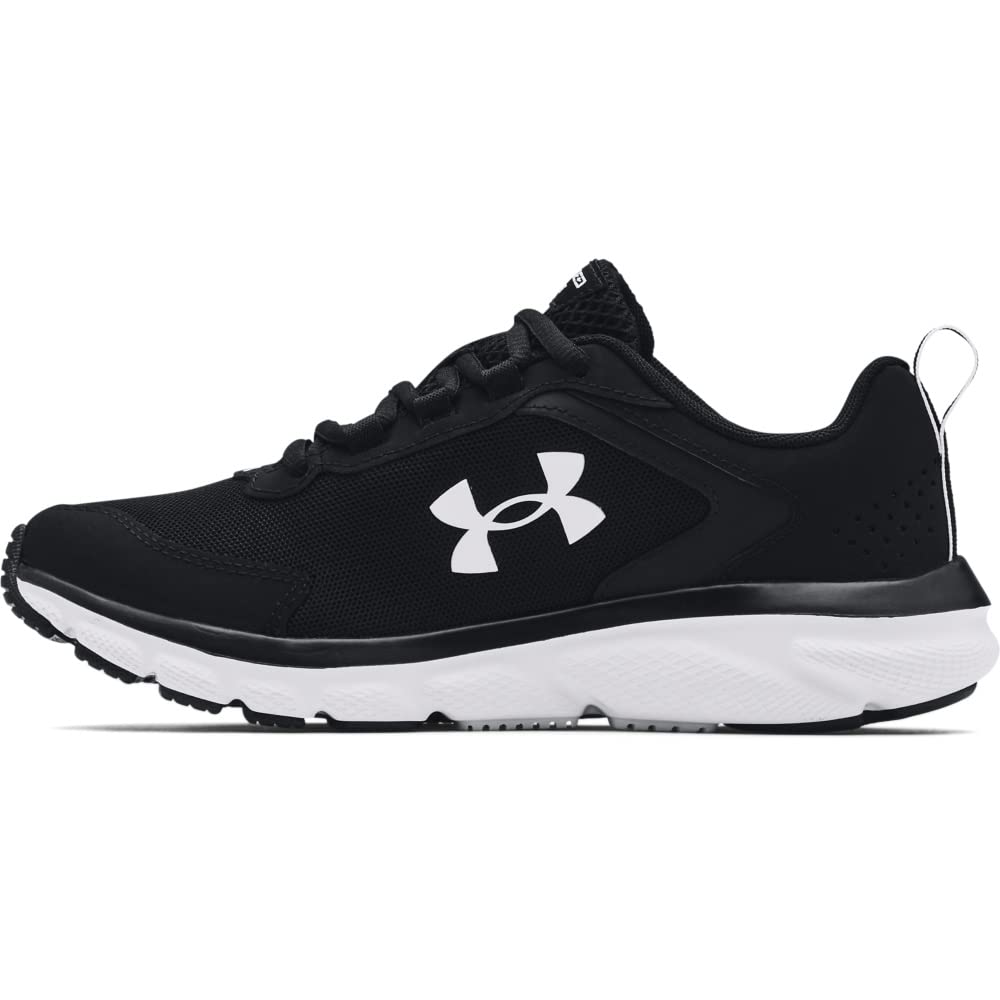
Under Armour Charged Assert 9
Key Features
- Model: 3023866
- Terrain: Road running
- Department: Women’s
- Price: Budget
This is the least expensive of the athletic shoes here, and it doesn’t read as a compromise. The Charged Assert 9 is built as a road running shoe rather than a walking sneaker in sports colors, and it handles a mixed week, a jog, a weights session, an hour on your feet, without feeling out of place in any of them.
Comfort is the reason it earns a place. It’s soft enough to wear from the first day, the toe box leaves room across the forefoot, and the ride is firmer than the Bondi’s in a way we appreciated on a gym floor, where a marshmallow sole gets in the way of balance work. Arch support holds up better than the rest of the build suggests, and it stands up to actual exercise rather than just errands.
It sits in a sensible middle: lighter and more flexible than the 608 V5, more structured than the adidas X_PLR Path, and the easiest of the three to recommend if you only want one pair to do everything.
Pros
- Lowest price of the athletic picks
- Comfortable from the first wear
- Good arch support for the money
- Rated for real exercise, not just errands
Cons
- Runs small; many need a half size up
- Seams can separate with heavy use
The cheapest genuine athletic shoe in this guide, and the one we recommend when the budget is fixed and you want a light, supportive everyday trainer.
Best for Travel and Gym
adidas X_PLR Path
Key Features
- Style: Running-inspired
- Closure: Lace closure
- Midsole: Cloudfoam
- Department: Women’s
- Price: Budget
Light is the whole pitch, and it isn’t marketing. The X_PLR Path is the pair in this guide that disappears once you’re wearing it, built on a Cloudfoam midsole with a lace closure and a simple running-inspired shape. The payoff shows up in a gym bag or a carry-on, where every ounce is fought over and a bulky trainer suddenly looks like a bad idea.
The Cloudfoam midsole takes the edge off pavement on a long walk, and the arch support is better than a shoe this light has any right to offer. The upper is thin and airy, which is what keeps the weight down and what keeps your feet from cooking in summer, though it’s also the part that gives out first if you wear them hard.
So where does it fit? It’s the second pair, the travel pair, the one you leave by the door for a walk or a hotel gym. It doesn’t have the cushioning of the Bondi 9 or the structure of the 608 V5, and we wouldn’t build a training week around it, but as a light knockabout sneaker it’s an easy add.
Pros
- Lightest pair in this guide
- Cloudfoam midsole softens pavement
- Roomy toe box for the weight
- Easy to pack and travel with
Cons
- Runs big; size down if between sizes
- Thin upper can wear through with heavy use
For a pair that disappears on your feet and packs small, the X_PLR Path is the lightest option here, and a smart travel and gym shoe if you don’t need much structure.
Best for Hands-Free Wear
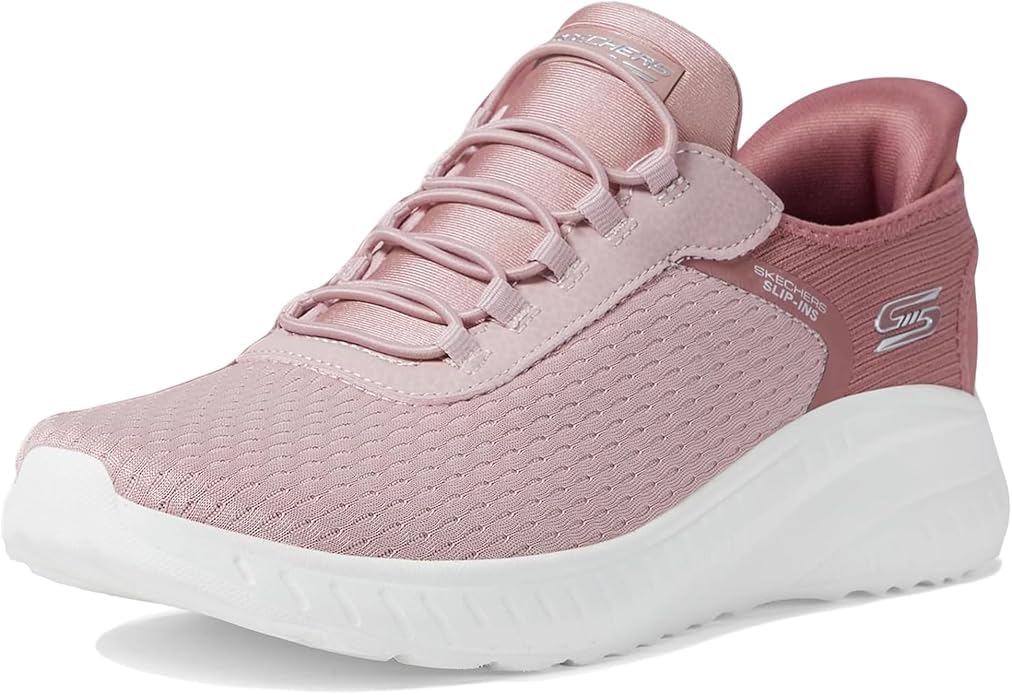
Skechers Squad Chaos
Key Features
- Heel: Heel Pillow
- Closure: Stretch laces, no-tie
- Footbed: Memory foam
- Machine washable: Yes
- Price: Midrange
The case for this one is the doorway test: no laces to tie, no bending down, no wrestling a heel over a sock. Stretch laces, a heel pillow and a memory foam footbed do the work, and you step in and go. With an arm full of groceries or a dog pulling at the leash, that’s not a small thing.
We keep it in the guide because nothing else here is this easy to live with. Comfort holds up over a long walking day, the toe box is roomy, the arch and heel support are better than a slip-on has any right to be, and it goes in the washing machine, which matters more than you’d expect from a pale pair. It’s a casual sneaker, though, not a court shoe: the flexible sole and soft upper are built for pavement and errands rather than lateral cuts.
The look is the other reason it earns a spot. The colors are strong, the shape is neat, and it reads a little dressier than a mesh trainer, which is why this is the pair we leave by the front door rather than in a gym bag.
Pros
- Hands-free step-in with no laces
- Memory foam footbed and heel pillow
- Machine washable
- Comfortable for hours of walking
Cons
- Runs large; some go down a half size
If bending to tie laces is the thing you’d most like to stop doing, this is the pair: a genuinely comfortable slip-in for errands, walking and travel days.
Best for Casual Style
adidas VL Court Bold

Key Features
- Sole: Platform
- Upper: Leather
- Closure: Lace closure
- Outsole: Rubber
- Price: Midrange
Height is what you notice first. The VL Court Bold sits on a low platform that lifts you without putting you up on a heel, and the leather upper and lace closure give it a sharper line than any mesh trainer on this page. It’s skate-inspired streetwear, and it looks it.
Comfort surprised us. The footbed is padded, the leather softens with a few wears, and the platform adds a layer of cushioning under the ball of your foot, enough for a full day out. The structure helps too: this is the pair we point to for a pronated ankle that wants holding, and narrow feet get the best of the shape.
It isn’t a training shoe. Keep it for jeans, travel days and offices with a loose dress code, and it earns its place as the one here that looks intentional with everything rather than merely sporty.
Pros
- Platform adds height without a heel
- Comfortable for full days out
- Leather upper sharpens the look
- Supportive enough for pronated ankles
Cons
- Heavy, bulky platform sole
- Sole can separate with wear
- Runs large for some feet
If you want a sneaker that adds height and looks sharper than gym kit, the VL Court Bold delivers: comfortable, structured and firmly off-court.
How We Tested Women’s Tennis Shoes
We started by pulling together a shortlist from bestseller lists and customer reviews, filtering for available sizes (including wide), materials that hold up to daily wear, and prices that made sense for the category. We crossed off pairs with repeated complaints about heel slip or outsole separation before we ever laced them up. The final 12 pairs went to testers with narrow, wide, and high-arched feet.
Over six months, each tester wore their assigned pair for at least three consecutive days at a time, then swapped. We logged miles on concrete sidewalks, grocery store floors, and the occasional treadmill, and wore each shoe with both thin and thick socks. To check fit, we noted where toes pressed, whether the heel lifted when walking up stairs, and if the arch felt supported or just present. For stiffness, we bent each shoe at the ball of the foot on day one and again after two weeks. We weighed every pair on a kitchen scale, because a few ounces can change how a shoe feels by the end of a long day.
We also judged appearance by pairing each shoe with jeans, leggings, and casual dresses—not just workout clothes—and checked quality by looking at stitching, scuffs, and how the upper cleaned up after a muddy walk. Durability got a separate check: after 20 miles, we examined outsole tread for smoothing and sidewalls for creasing. Value came down to price per wear over the testing period. The pairs that scored best were the ones we reached for without thinking—supportive enough for a full day, light enough to forget about, and still decent-looking with a casual outfit.
How to Choose Women’s Tennis Shoes
The first decision isn’t brand or color, it’s whether you’re actually playing tennis or buying the one pair of sneakers that has to handle the gym, the dog walk and the school run.
Court Play or Everyday Athletic Wear
A real court shoe is low, firm and shaped to stop you rolling over on a lateral cut. An everyday athletic sneaker is taller, softer and built to absorb a straight line. Most people searching for tennis shoes want the second and would be miserable in the first, so be honest about which one you are.
If you play regularly, prioritize a low profile, a firm midsole and an outsole that wraps up the side. Treat court-styled lifestyle sneakers as fashion, because the leather upper and flat, inflexible sole are there for looks rather than grip. If your week is gym, walks and errands, cushioning and toe box room matter far more than court feel.
Fit, Width and the Toe Box
Nearly every return in this category comes down to size. Shop late in the day when feet are at their largest, leave a thumb’s width between your longest toe and the front of the shoe, and walk a few steps to check that the heel stays put instead of lifting.
Wide forefoot or a high instep? The New Balance 608 V5 has the roomiest toe box in this set. Between sizes, go up in the Under Armour Charged Assert 9 and down in the adidas X_PLR Path, which both run off true. A half size wrong is the difference between a shoe you wear daily and one that lives in the closet.
How Much Cushioning You Actually Need
More cushioning isn’t automatically better, it’s a trade. A max-cushion shoe like the Hoka Bondi 9 protects feet that spend the day on tile or concrete and takes pressure off sore arches, but the tall, soft stack is the opposite of what you want for balance work or quick changes of direction.
If you lift, play court sports or like to feel the ground, a firmer midsole such as the Charged Assert 9’s is the better call. A simple test: if your heels and knees ache after a normal day out, go softer; if your ankles feel wobbly in what you own now, go firmer and lower.
Durability, Materials and Care
Shoes fail first at the toe crease, the seam beside the little toe and the outer edge of the outsole. Mesh saves weight but gives up abrasion resistance, which is the price of a shoe like the X_PLR Path; leather holds its shape but starts stiff, as the 608 V5 does.
Look for a rubber outsole where you wear through fastest, and treat machine washability as a real feature rather than a gimmick if you’ll wear the pair barefoot through summer. Air-dry only. Heat is what kills a midsole, so keep them out of the dryer and off the radiator.
Frequently Asked Questions
How do I know when to replace my tennis shoes?
Press your thumb into the midsole where your heel lands. If it springs back, there’s life left; if the dent stays, the cushioning is spent even when the upper still looks fine.
Then flip them over and check under the big toe and the outer heel, where the tread smooths away first. Once that pattern has gone, grip on a court or a wet sidewalk goes with it, and no amount of new insoles brings it back.
Can I machine wash these sneakers?
Only if the shoe says so. The Skechers Squad Chaos is labeled machine washable; the rest of these are not, and the agitation and heat do more damage than the dirt did.
For everything else, pull the laces and insoles out, scrub with a soft brush and mild soap, and air-dry away from direct heat. Never put sneakers in a dryer, because the heat can warp the midsole and shrink the upper beyond wearing.
Final Verdict
The Hoka Bondi 9 is the pair we recommend to most women shopping this category. Nothing else here cushions and supports a long day as well, and if sore feet are what sent you looking, it solves the problem rather than postponing it.
If your requirement is different, the answer changes: wide forefoot, high instep or a gym session on the schedule, and the New Balance 608 V5 is the better buy. Working to a tight budget, the Under Armour Charged Assert 9 covers most of the same ground for a good deal less.