
This post contains affiliate links. We may earn a small commission when you buy through our links — at no extra cost to you.
Shopping for a singer means wading through products that promise professional-grade performance but often deliver party-toy quality. A karaoke mic might be fun for a night, but a serious vocalist needs tools that build or protect their instrument.
The real divide isn’t between cheap and expensive – it’s between a toy and a training aid. A karaoke mic offers instant party fun but won’t help pitch accuracy. Lozenges labeled ‘for singers’ can soothe a dry throat, but some come with side effects. Singing straws require daily technique work to show results. This guide identifies five picks that actually serve a specific singing need – from quiet practice to songwriting.
Whether the singer in your life is a shower crooner or a stage performer, the right gift respects their current ability. No hype, no gimmicks – just tools that do what they say.


Best for Vocal Students, Teachers
Anatomy of the Voice
Key Features
- Primary Use: Education
- Portability: Book, 8×6 inches
- Build Quality: Hardcover, heavy paper
- Value for Money: Mid-range, excellent
- Price: $$
The diagrams in this book translate complex vocal structures into visual logic that even beginners can follow. Each section pairs anatomical drawings with straightforward text, so readers learn how the larynx, diaphragm, and breath support interact without needing a medical background. The logical progression from basic mechanics to advanced concepts suits both first-time learners and experienced coaches looking to refine their teaching cues.
This is best for singers who want to understand the mechanics behind their voice — vocal students, teachers, and speech therapists will find it useful as a study companion or teaching aid. It requires time and attention to absorb; it will not replace hands-on practice or vocal exercises. If the gift recipient prefers directly actionable warm-ups or performance tips, a guided vocal exercise book or device would be a better fit.
Pros
- Detailed anatomical illustrations make abstract concepts visually clear.
- Explanations are structured logically, building from basic to advanced topics.
- Writing style avoids jargon, keeping the material accessible to non-medical readers.
Cons
- As a purely educational reference, it does not include vocal exercises or practice routines.
- The format requires dedicated reading time — not something to skim before a performance.
For singers committed to understanding their instrument on a deeper level, this book delivers lasting value without hype.
Best for Kids & Families
BONAOK Karaoke Mic Q37
Key Features
- Primary Use: Fun
- Sound Quality: Mediocre echo
- Portability: Handheld, 7 oz
- Build Quality: Plastic, variable QC
- Value for Money: Excellent budget fun
- Price: $
This wireless karaoke mic blends Bluetooth simplicity with a built-in speaker and echo effects, making it a grab-and-go option for casual singing sessions. It pairs instantly with any smartphone and requires zero instruction, which explains its strong following among families and party hosts. However, the maximum volume may not fill a large room, and the sound quality leans toward playful rather than accurate — this is a toy for entertainment, not a tool for improving pitch or tone.
Pros
- Bluetooth pairing is simple enough for young children to handle.
- Brings energy to parties with minimal setup and no external speakers required.
Cons
- In larger rooms, the volume may not be strong enough to carry over background noise — best for close-group settings.
If your goal is laughter and group participation, this mic holds up well. For anyone training their voice, the top pick in this guide is the better choice.
Best for Serious Vocalists
Sing Ring SOVT
Key Features
- Primary Use: Vocal training
- Sound Quality: Effective, SOVT
- Portability: Pocket-sized, 2 oz
- Build Quality: Solid brass
- Value for Money: Premium, research-backed
- Price: $$$
The OOVO Sing Ring brings peer-reviewed SOVT research into a compact brass body with four resistance levels in one device — no swapping parts. This tool suits serious vocalists and speech therapists who warm up daily and want a portable, durable option. The premium price and metallic aftertaste are real considerations: it’s a focused tool for dedicated users, not a casual gift.
Pros
- Four resistance levels in a single brass device — no parts to swap during warm-up.
- Compact and light enough to carry in a zippered case with carabiner.
- Supports breath control and vocal stability through controlled resistance.
Cons
- Can feel premium-priced compared to simpler straw-phonation tools.
- May leave a metallic aftertaste that requires rinsing after each use.
Best for singers and voice professionals who want a research-grounded warm-up tool and are willing to accept a higher price and a bit of maintenance.
Best for Performers, Frequent Use
GRETHER’S Pastilles
Key Features
- Primary Use: Throat care
- Portability: Small bag, 44 pieces
- Build Quality: Sugar-free, natural ingredients
- Value for Money: Mid-range, premium cost
- Price: $$
GRETHER’S Blackcurrant Pastilles deliver targeted throat relief with a natural sugar-free formula that performers find effective. Unlike organic remedies that can carry side effects, these pastilles have a clean ingredient profile and a pleasant tart-sweet taste that avoids the cloying sweetness of standard lozenges.
Best for professional singers and voice-over artists who need dependable throat comfort during extended sessions. The per-piece cost runs higher than typical lozenges, and the pastilles can soften in warm pockets or bags, so storage matters.
Pros
- Pleasant blackcurrant taste that avoids excessive sweetness
- Effectively soothes dry throat and reduces scratchiness during long vocal sessions
Cons
- Heat-sensitive packaging means pastilles can soften into a sticky lump in warm conditions
- Premium pricing per piece makes regular daily use a splurge compared to standard lozenges
A practical addition to a singer’s kit, as long as you accept the higher per-lozenge cost and keep the bag out of direct heat.
Best for Budding Songwriters
Songwriter’s Journal
Key Features
- Primary Use: Songwriting
- Portability: Hardcover, 8.25×6.25 inches
- Build Quality: Hardcover, 160 pages
- Value for Money: Budget, inspiring
- Price: $
The Songwriter’s Journal lowers the barrier to starting a song with its built-in prompts, chord diagrams, and dedicated staff pages. It’s a thoughtful gift for new songwriters and teens who want structure without the intimidation of a blank notebook. The tradeoff: the page layout follows a fixed format, so experienced creators who prefer freeform or complex arrangements may find it restrictive.
Pros
- Structured prompts reduce the blank-page barrier for beginners
- Includes chord diagrams and staff notation space in one journal
- Hardcover binding and budget-friendly price for a meaningful gift
Cons
- Fixed page layout can feel restrictive for complex or non-traditional song structures
A practical starting point for new songwriters and a low-risk gift — but experienced creators will want a blank notebook instead.
Best for Apartment Singers
BELTBOX 3.0
Key Features
- Primary Use: Quiet practice
- Sound Quality: 20-30 dB reduction
- Portability: Includes carry bag
- Build Quality: Foam + silicone
- Value for Money: Premium, niche use
- Price: $$$
The BELTBOX 3.0 dampens singing volume enough for quiet apartment practice or backstage warm-ups without disturbing others. The foam-and-silicone build feels solid, and the included carry bag makes it travel-friendly. For singers who need to rehearse in shared spaces, this is a practical workaround — just note the initial chemical smell (which fades after airing out) and possible sinus pressure for those with sensitive sinuses.
Pros
- Cuts vocal projection substantially for discreet practice anywhere.
- Portable design that fits in a bag and sets up in seconds.
- Sturdy construction with a comfortable strap and storage case.
Cons
- New mask can have a strong chemical odor that requires airing out before use.
- Some users find the mask presses on sinuses during extended wear.
Right for apartment singers and performers who need a silent warm-up space, provided the initial smell and potential fit issues don’t rule it out.
Best for Music Students
Music Journal

Key Features
- Primary Use: Music education
- Portability: Hardcover, 6.3×8.1 inches
- Build Quality: Durable cover, 160 pages
- Value for Money: Budget, well-made
- Price: $
This sturdy journal pairs ruled lines for lyrics with blank staff paper for notation, backed by a hardcover that survives daily carry. It works well for voice students tracking warm-ups or melody ideas. Compared to the Songwriter’s Journal, it lacks guided prompts to lower the barrier for beginners – better as a general music notebook than a targeted songwriting tool. Staff lines may appear faint with lighter pens; a darker pen resolves that.
Pros
- Makes a thoughtful gift for music lovers and voice students.
- Dual pages let you write lyrics and music notation side by side.
Cons
- Staff lines can be faint with lighter pens – a darker pen is recommended.
For a singer who also studies music theory or jots down melody ideas, this journal offers a simple, affordable way to combine lyrics and notation – just keep a dark pen handy.
Best for Vocal Students
AirVō Pro Straw
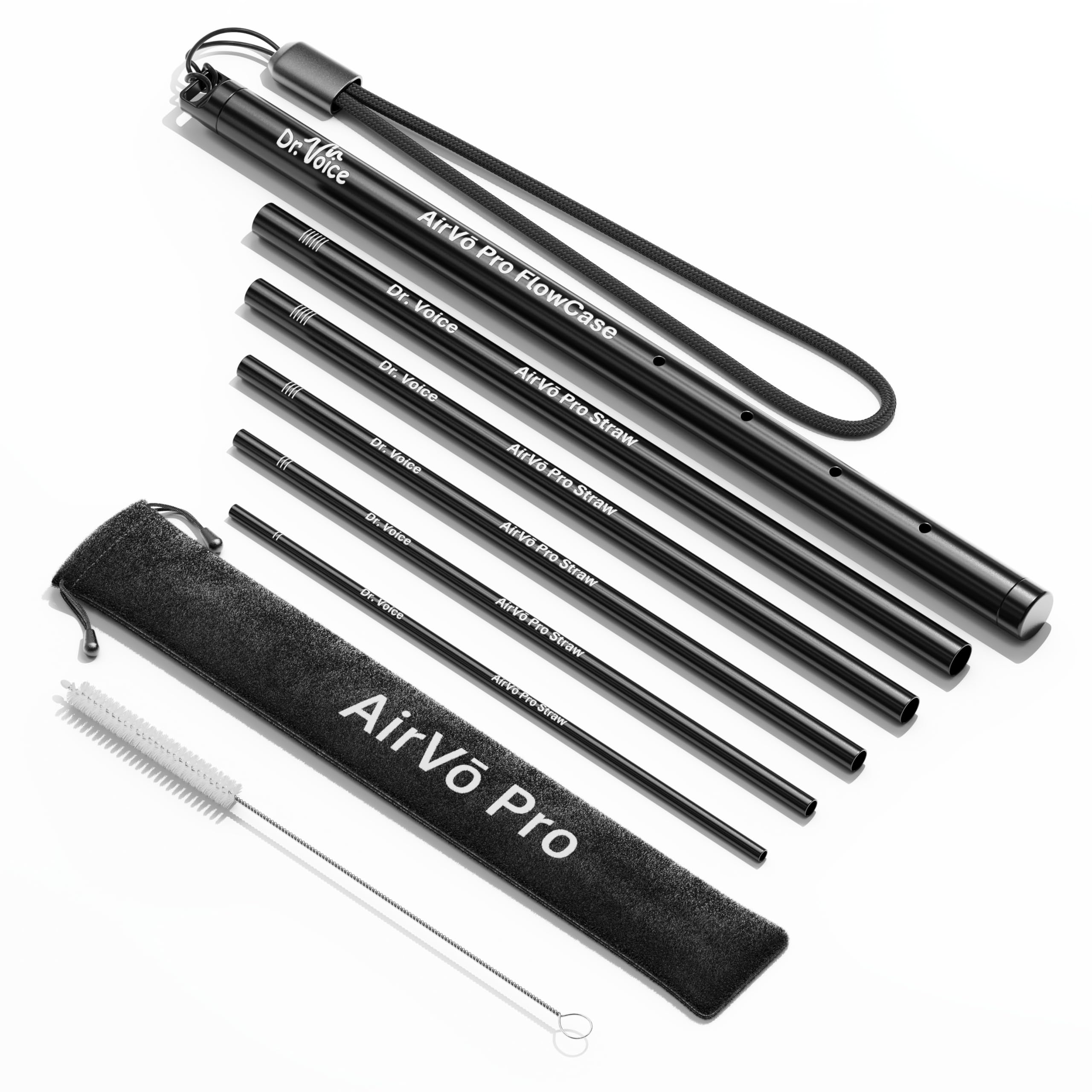
Key Features
- Primary Use: Vocal training
- Sound Quality: SOVT, biofeedback
- Portability: Nested design, pouch
- Build Quality: Stainless steel, 5 straws
- Value for Money: Good, many levels
- Price: $$
This SOVT kit delivers 11 resistance levels in a nesting stainless steel design with biofeedback, ideal for vocal students and therapists who already know straw phonation. The minimal printed guidance means beginners without prior SOVT knowledge may need external instruction — a boundary that keeps this kit focused on dedicated users rather than casual gift recipients.
Pros
- Stainless steel construction holds up to regular use
- Compact nested design fits easily in a gig bag
Cons
- Instructions assume familiarity with SOVT exercises
Fits best for singers who know their way around SOVT and want a wide range of resistance in one portable tool.
Best for Budget Beginners
Sound Straw

Key Features
- Primary Use: Vocal training
- Sound Quality: SOVT, single resistance
- Portability: Single straw, portable
- Build Quality: Metal, simple
- Value for Money: Budget, good entry
- Price: $
SoundStraw is an effective entry point for vocal strengthening and clarity improvement through daily straw phonation, backed by consistent positive feedback. However, it offers only one resistance level, which limits its usefulness as vocal skills develop—singers who progress will eventually need a more adjustable tool like the comprehensive resistance kit.
Pros
- Builds vocal strength with regular use
- Improves voice clarity through daily practice
Cons
- Single resistance level may limit progress for those seeking more challenge
For singers curious about straw phonation on a tight budget, SoundStraw provides a low-risk introduction—but plan to upgrade if your training progresses.
Best for Pitch Accuracy
Korg VPT-1

Key Features
- Primary Use: Pitch training
- Sound Quality: Synth tones, poor low
- Portability: Battery-powered, small
- Build Quality: Plastic, compact
- Value for Money: Mid, limited range
- Price: $$
The Korg VPT-1 brings a five-line staff display and adjustable difficulty levels to vocal practice at a mid-range price. Its synthetic reference tones and poor low-note detection limit its usefulness for bass/baritone voices, but singers with mid-range voices get clear visual feedback to improve pitch accuracy.
Pros
- Helps improve pitch accuracy through visual feedback.
- Portable and lightweight for easy transport.
Cons
- Reference tones sound synthetic and unpleasant; low-note detection is limited.
Best suited for vocal students and mid-range singers who prioritize visual pitch training over audio quality.
Best for Quick Voice Relief
CLYOR Voice37

Key Features
- Primary Use: Voice remedy
- Portability: 2 oz bottle
- Build Quality: Organic herbs, liquid
- Value for Money: High price per ounce
- Price: $$$
This natural remedy uses organic herbs to soothe hoarseness and clear the voice, with a pleasant honey-like taste that makes it easy to take. However, the premium price for a 2 oz bottle and the potential for side effects — nausea, headaches, or throat irritation in some users — make it a gamble for gifting. It works well for singers who tolerate it, but first-time buyers should approach cautiously.
Pros
- Soothes hoarseness and clears the voice for singing.
- Improves vocal clarity and endurance during performances.
Cons
- May trigger side effects like nausea or headaches in sensitive users.
Worth considering if the recipient has used it before without issues — otherwise, start with a small bottle to test tolerance.
Best for Music Lovers
Music Notebook

Key Features
- Primary Use: Gift, music themed
- Portability: Hardcover, 8.3×6.1 inches
- Build Quality: Faux leather, 200 pages
- Value for Money: Budget, personalized
- Price: $
This personalized notebook combines faux-leather durability with 200 pages for notes or lyrics. It makes a thoughtful gift for music lovers. However, staff paper is not confirmed, so it may not meet the needs of singers or songwriters who rely on notation lines. Best suited as a general music accessory rather than a dedicated songwriting tool.
Pros
- Makes a thoughtful, personalized gift for music lovers
- Well-made and durable construction
Cons
Best as a personalized gift for music fans who want a durable notebook for general use, but skip it if staff paper is required.
Best for Budget Sovt Try
TOPBOMED Straw

Key Features
- Primary Use: Vocal training
- Sound Quality: SOVT, unverified
- Portability: Single straw, bag
- Build Quality: Metal, basic
- Value for Money: Budget, no feedback
- Price: $
Under $15, this metal SOVT straw from TOPBOMED is the cheapest way to try straw phonation. The storage bag is a nice touch. Since no user feedback topics exist, effectiveness is unverified—best for beginners who want a low-cost experiment, not those needing proven results.
Pros
- Metal construction feels more durable than disposable plastic straws.
- Budget-friendly price removes financial risk for first-time SOVT users.
Cons
- No detailed user reviews exist to confirm its vocal training benefits.
A low-cost entry point for straw phonation, best suited for those willing to try without proven user feedback.
Best for Absolute Beginners
Pitch Pipe Tuner

Key Features
- Primary Use: Pitch reference
- Sound Quality: Thin, often off-key
- Portability: Small, velvet case
- Build Quality: Chrome-plated brass
- Value for Money: Budget, unreliable
- Price: $
This traditional pitch pipe gives you a chromatic C-C scale in a compact chrome-plated brass body with a sliding note selector. It works as a low-cost pitch reference for basic vocal exercises or choir warm-ups where absolute precision isn’t critical. The catch: some units produce notes that are flat or sharp, and a few notes may not sound at all — quality consistency is a gamble. Best suited as a back-up or for absolute beginners who just need a rough tonal anchor.
Pros
- Cost-effective pitch reference for basic vocal warm-ups
- Chrome-plated brass pipe with included velvet case
Cons
- Pitch accuracy can vary and some notes may not sound at all between units
Pick this only if you need an ultra-budget pitch reference and are willing to check each note before relying on it — a passable starter tool, not a daily driver.
How to Choose
The best gift for a singer depends on whether they practice for improvement or sing for fun – and many products blur that line.
Purpose: Fun vs. Serious Practice
A karaoke mic is built for entertainment, not vocal development. Its speaker and echo effects mask pitch errors, so a beginner might think they sound better than they do. For a singer who wants to improve, a training tool like a SOVT straw or a book on vocal anatomy offers real feedback. The choice comes down to whether the recipient sees singing as a hobby or a craft.
Sound Quality & Effectiveness
Sound quality in electronics often suffers when features are added to hit a low price. Bluetooth karaoke mics, for example, introduce latency and compression that degrade the signal. For training tools, effectiveness depends on consistent use – singing straws will not fix pitch overnight, but they strengthen breath support when used daily. Books and journals have no sound issues but require active engagement.
Portability & Ease of Use
A gift that travels well gets used more. Handheld mics and compact SOVT tools fit in a bag, while a hardcover journal is easy to grab for songwriting on the go. Bulkier items like the BELTBOX mask or a bottle of throat spray are better for home use. The trade-off: portability often means fewer features or smaller capacity, so match the form factor to where the singer spends most of their time.
Build Quality & Durability
Plastic karaoke mics are light but prone to failures – multiple reviews report units dying within months. Brass or stainless steel SOVT tools last years with basic cleaning. Journals with hardcovers withstand tossing in a backpack. Avoid products with moving parts or electronics at the lowest price point unless the buyer is okay with disposable quality. Durable materials add weight but justify the cost over time.
Value for Money
Budget gifts under $20 often deliver exactly what you pay for: temporary fun or a single use. Mid-range tools ($20–$35) offer the best balance of quality and gifting thoughtfulness. Premium items above $35 need to prove their worth through materials, research backing, or multiple features. A book that costs $25 and is read cover to cover holds more value than a cheap mic that collects dust.
FAQ
Can a karaoke microphone help me improve my singing voice?
Karaoke microphones are designed for entertainment, not vocal training. They add echo effects and do not provide pitch feedback, so they won’t help you sing better. If improvement is the goal, look for a SOVT straw or a vocal anatomy book instead.
How long does it take to see results from a singing straw?
Most users report noticing improved breath control and vocal stability after 2–4 weeks of daily use (5–10 minutes per session). Consistency matters more than duration. If used sporadically, expect minimal change.
Do Grether’s pastilles actually work for dry throat?
Yes, they are effective for soothing dry throat and mild scratchiness, thanks to natural ingredients like blackcurrant extract. However, they are sugar-free and contain no menthol, which may disappoint those expecting a cooling sensation. The main drawback is the price – about $0.39 per pastille.
Is the Korg VPT-1 worth it for pitch training?
The Korg VPT-1 is a decent pitch trainer for soprano and alto voices, but it struggles with low notes and its reference tones sound synthetic and unpleasant. For casual pitch practice it works, but serious singers are better off with a smartphone app or a dedicated SOVT tool that builds the voice rather than just measuring it.