
This post contains affiliate links. We may earn a small commission when you buy through our links — at no extra cost to you.
A travel camera backpack has to do two things at once: protect expensive gear and fit under an airplane seat. Most sub-$100 bags get the first part right only on paper—zippers fail, dividers shift, and the ‘waterproof’ coating washes off after one rainstorm.
The real trade-off isn’t price versus quality. It’s capacity versus durability: the biggest bags often sacrifice stitch strength, and the lightest bags cut padding. For the average traveler, the sweet spot is a compact hardshell with side access—enough room for a DSLR, two lenses, and a laptop, without the bulk that encourages abuse.
This guide is built around that balance. Each pick has been vetted for the features that actually matter on the road: internal volume, laptop fit, access speed, and how the tripod strap feels after a full day of walking.
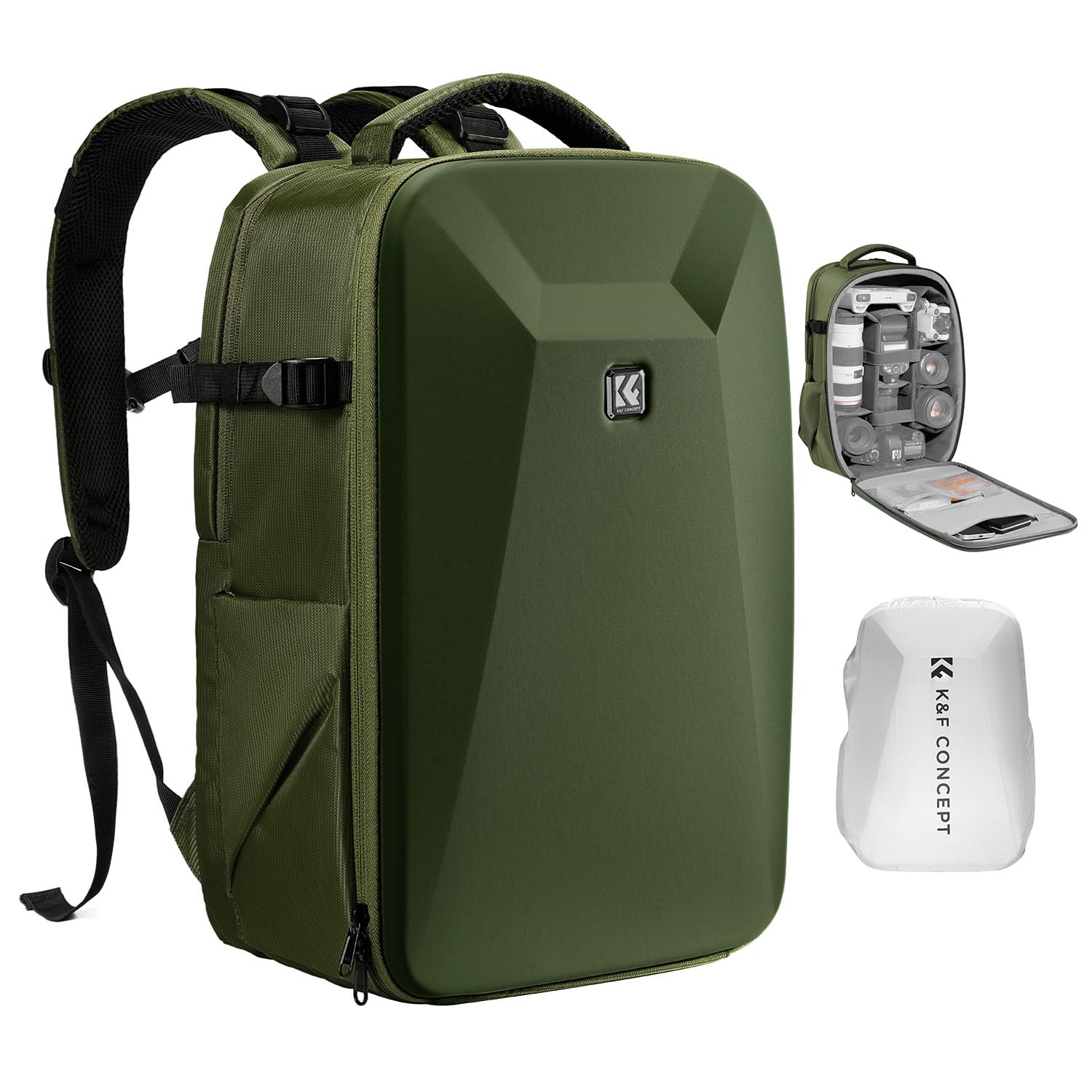


Best for Hobbyist Travelers
K&F Hardshell 22L
Key Features
- Volume: 22 L
- Laptop Fit: Up to 15.6"
- Access Type: Top, side
- Tripod Carry: Side straps
- Rain Protection: DWR coating
The K&F Hardshell 22L delivers a level of impact protection rarely seen at this price point. The EVA hard shell front shields your camera and lenses from bumps and scrapes during travel, giving you confidence when stowing the bag in overhead bins or under a seat.
Inside, the 22-liter capacity provides organized storage for a DSLR body and three to four lenses, plus a dedicated 15.6-inch laptop compartment. Padded dividers keep gear separated, and the front tripod holder secures your travel tripod without adding bulk. At 4 pounds, the bag stays comfortable during airport sprints or short hikes.
This backpack suits hobbyist photographers and travelers who want a balance of protection and value. It is not built for professionals who need a truly rigid hard case that can withstand heavy drops — the front shell is firm but has some flex, which some users find softer than expected. If your gear stays in carry-on luggage and sees occasional bumps, the tradeoff is well worth the savings.
The value proposition is strong: for under $60, you get a bag that competes with models costing twice as much. Materials feel sturdy, zippers operate smoothly, and durability complaints are virtually absent — issues that plague many budget alternatives.
Pros
- Hard shell front shields gear from impacts during travel
- Well-organized 22L interior fits a DSLR kit with laptop
- Exceptional value for the price point
- Padded compartment accommodates laptops up to 15.6 inches
Cons
- Front shell is less rigid than a true hard case — may not suit those expecting solid plastic
For travelers and hobbyists who want solid protection and organization without the premium price, this backpack delivers exactly what it promises.
Best for Pro Kit Carry
MOSISO 35L Large
Key Features
- Volume: 35 L
- Laptop Fit: Up to 16"
- Access Type: Top, front
- Tripod Carry: Front straps
- Rain Protection: Included cover
The MOSISO 35L camera backpack delivers the most interior volume you’ll find in its price bracket – enough for two camera bodies, a handful of lenses, and a 16-inch laptop. While the top pick in this guide balances protection and durability for everyday carry, the MOSISO prioritizes sheer packing capacity, making it a strong choice for travel-heavy shoots.
This bag suits travelers who need to bring a full professional kit on occasional trips rather than daily commutes. The generous layout comes with a notable trade-off: stitching and zippers can show wear after months of regular use, so this is better as a travel companion than an everyday workhorse. Budget-conscious photographers with extensive gear will appreciate the value, but those who need a bag that withstands daily abuse should look elsewhere.
The interior padding and adjustable dividers keep gear secure during transit, and the external tripod holder accommodates standard models. The hardshell PU leather front adds a layer of protection against bumps, though the overall durability of the zippers and seams is the primary consideration for long-term ownership.
Pros
- Spacious interior fits two camera bodies and multiple lenses
- Great value for a large capacity bag
- Well-padded and organized interior
Cons
- Stitching and zippers may show wear after months of regular use – better suited for occasional travel
If you need to carry a full professional kit on occasional trips and don’t mind the potential durability tradeoff, the MOSISO 35L delivers unmatched capacity for the price.
Best for Street Photographers
TARION TB04 15L
Key Features
- Volume: 15 L
- Laptop Fit: Up to 15"
- Access Type: Side quick-draw
- Tripod Carry: Side straps
- Rain Protection: Included cover
The TARION TB04 stands out among compact camera backpacks with its side-access design — a zippered panel on the right side lets you reach the camera body without swinging the bag around or setting it down. Weighing just over 2 pounds and holding 15 liters, it includes a padded compartment for a 15-inch laptop, a detachable rain cover, and a trolley sleeve for travel. The tradeoff for this quick-draw convenience is the limited space: it fits a mirrorless body with two to three lenses, but a full DSLR pro kit with multiple large zooms will be a tight squeeze.
This bag suits street photographers and travel vloggers who prioritize speed and mobility over maximum gear capacity. The compact size keeps it unobtrusive in crowded spaces, and the side access reduces the risk of dropping gear while juggling a camera. However, owners who carry heavier setups should note that the strap stitching can weaken over months of regular use — a limitation worth checking periodically. The lack of dedicated small pockets means accessories like spare batteries or memory cards end up loose in the main compartment unless you add pouches.
At a budget-friendly price, the TB04 delivers useful travel features and comfortable all-day carry. The rain cover and trolley sleeve add convenience, and the padded back panel keeps sweat at bay during warm days. The main compromise is the strap durability — a known vulnerability that may not affect lighter use. For those who need a quick-access bag for a mirrorless kit and don’t expect it to survive years of heavy hauling, this is a cost-effective choice.
Pros
- Quick side-access panel lets you pull out the camera without taking off the bag — ideal for capturing fleeting moments.
- Padded straps and lightweight frame keep the bag comfortable during long walking days.
- Includes rain cover, trolley sleeve, and a padded laptop slot for under $50.
Cons
- Strap stitching can weaken under regular use with heavy lenses.
- Limited interior pockets for small accessories like batteries or memory cards.
For street photographers and travel vloggers who value speed over capacity, this bag delivers on its core promise — just be mindful of the strap durability if you plan to carry heavier loads regularly.
Best for Mirrorless Beginners
CADeN D6 Compact
Key Features
- Volume: 17 L
- Laptop Fit: Up to 13"
- Access Type: Top only
- Tripod Carry: Side straps
- Rain Protection: Included cover
Weighing just 1.74 lbs and priced under $30, the CADeN D6 Compact is the lightest entry-level camera backpack we tested. It prioritizes portability over protection, with a slim nylon/polyester build and padded dividers that keep a mirrorless body and two lenses organized. For the price, the stitching and zipper feel adequate for casual use — a clear tradeoff against heavier, more armored options like the K&F Hardshell.
This bag fits photographers starting out with a mirrorless camera and a couple of lenses, or travelers who want minimal weight. The 17-liter interior accommodates small kits but won’t hold a full-frame DSLR with a telephoto zoom. Also, the laptop sleeve only fits up to a 13-inch MacBook — not a 15-inch machine. Zippers may show wear after months of regular use, so this is best for occasional travel rather than daily professional work.
Pros
- Weighs just 1.74 lbs, making it one of the lightest camera backpacks available.
- Priced competitively — offers solid build and padded organization for under $30.
- Good quality and storage for a small bag: padded dividers and sufficient space for mirrorless kits.
Cons
- 17-liter capacity can be limiting for users with multiple large lenses — suits minimalist kits only.
- Laptop compartment only fits 13-inch laptops — not suitable for larger devices.
- Zipper durability has been noted as a weak point; possible failure after extended use.
For beginner photographers traveling light with mirrorless gear, this backpack delivers unbeatable weight and value — just be prepared for its compact size and occasional zipper wear.
Best for Discreet Everyday
BAGSMART 25L Canvas
Key Features
- Volume: 25 L
- Laptop Fit: Up to 15"
- Access Type: Side, top
- Tripod Carry: Side straps
- Rain Protection: Included cover
The BAGSMART Canvas backpack blends into daily life with its clean ivory white exterior and canvas texture, while internal dividers and padded compartments keep a DSLR, two lenses, and accessories organized. Side and top access let you grab gear without removing the bag, and the included rain cover adds weather protection.
The padded shoulder straps and back panel make it comfortable for all-day walking through airports or city streets. It works equally well as a photography bag and a personal daypack — enough room for a 15" laptop, a jacket, snacks, or a small drone. The anti-theft lock on the main compartment adds peace of mind in crowded areas.
This bag suits travelers who want a camera backpack that doesn’t draw attention and can double as a normal pack. The 25L capacity fits a typical mirrorless or mid-range DSLR kit, but photographers with multiple bodies or large telephoto lenses may find the space tight. The top compartment stitching has been noted to tear under heavy, frequent loading — avoid stuffing it with heavy gear or using it as a primary work bag for daily professional abuse.
Pros
- Stylish canvas design that doesn’t look like a camera bag
- Organised interior with dividers, plus side and top access
- Comfortable padding for long carry days
- Includes rain cover and anti-theft lock for security
Cons
- Top compartment stitching may tear under frequent heavy loading
- 25L capacity limits large kits with multiple bodies or long telephotos
An affordable, stylish choice for travelers who want one bag for camera gear and personal essentials — but not tough enough for daily professional hauling.
Best for Drone + Gear
K&F 30L Large

Key Features
- Volume: 30 L
- Laptop Fit: Up to 16"
- Access Type: Side, top
- Tripod Carry: Side straps
- Rain Protection: Included cover
The bag’s 30L capacity and side-access design handle a drone kit or multiple lenses without feeling overstuffed. Comfortable straps and solid zipper/padding build hold up well over long carry days. The tradeoff is its 21-inch height: it clears most overhead bins but may not fit under smaller seats — check your airline’s sizer before relying on it as a personal item.
Pros
- Large capacity with good organization
- Comfortable for long wear
Cons
- May be too tall for some airline carry-on sizers
A good match for travelers who need 30L of space and don’t mind double-checking airline height limits — otherwise the hardshell top pick offers a more predictable fit.
Best for Long-Term Travel
LOVEVOOK 40L Expandable

Key Features
- Volume: 40 L expandable
- Laptop Fit: Up to 17"
- Access Type: Top, front
- Tripod Carry: Side straps
- Rain Protection: Included cover
The LOVEBOOK 40L Expandable backpack delivers exactly what its name promises: a bag that grows from 40 to 50 liters, complete with packing cubes and a rain cover. For travelers who need one bag to carry camera gear, clothes, and a laptop up to 17 inches, the volume-to-price ratio is hard to beat. The stylish exterior and comfortable straps make it suitable for long days on foot, and the top-and-front access works well for planned retrieval. Where it falls short is quick camera access — there’s no side opening, so swapping lenses requires unzipping the main compartment. And while the initial build feels solid, the long-term durability under regular heavy use remains an open question given the short time this model has been available.
Pros
- Expandable from 40L to 50L — enough space for a full travel kit plus personal items.
- Looks smart enough for city travel and includes useful extras like packing cubes and a rain cover.
- Priced well below most backpacks with comparable capacity, offering strong value per liter.
Cons
- No side access means you must open the top or front to reach gear — slower for impromptu shots.
- Durability over extended heavy travel use hasn’t been established yet, so early buyers take some risk.
If you need a single bag that can swallow a full camera kit plus travel essentials and you’re okay with top/front access only, the LOVEBOOK 40L brings huge volume at a budget-friendly price — just be aware that its long-term track record is still being written.
Best for Tablet Minimalist
BAGSMART 2-in-1 17L

Key Features
- Volume: 17 L
- Laptop Fit: iPad only
- Access Type: Top, converts to sling
- Tripod Carry: Not included
- Rain Protection: Not included
The BAGSMART 2-in-1 is a clever convertible that shifts from a compact backpack to a shoulder sling in seconds. At 17 liters, it slips under airline seats and holds a mirrorless body, one extra lens, and a 12.9" iPad without feeling bulky. The beige fabric looks smart and the build feels light — ideal for day trips where you want to travel hands-free but can switch to a sling for quick access on the move.
What keeps this from being a primary bag is the lack of a dedicated laptop compartment (tablets only) and occasional reports of the shoulder strap attachment wearing under heavier loads. It’s best seen as a specialized travel companion for tablet-only photographers packing a small mirrorless kit — not a daily driver for full DSLR setups or anyone who needs a 15-inch laptop slot.
Pros
- Converts from backpack to sling for easy access on the go.
- Lightweight and carry-on friendly — fits under most airline seats.
- Packs a small mirrorless kit and iPad without wasted space.
Cons
- Shoulder strap attachment may weaken under heavy loads over time.
- No dedicated laptop slot — max device is a 12.9" tablet.
A smart choice for day trips with a mirrorless camera and iPad, but skip it if you carry a laptop or heavier DSLR kit.
Best for Reliable Traveler
Lowepro BP250AW III

Key Features
- Volume: ~25 L
- Laptop Fit: Up to 16"
- Access Type: Side, top
- Tripod Carry: Side straps
- Rain Protection: Included cover
The Lowepro Fast Pack BP250AW III delivers the brand’s usual build quality and a fit that slides under most airline seats — a real plus for frequent flyers who want their camera gear within reach. The padded harness and tripod holder work well for day trips, and the rain cover adds peace of mind. However, the premium price and roughly 25L capacity put it behind more affordable options like the K&F Hardshell or MOSISO 35L when you need extra space or a lower upfront cost. This backpack suits travelers willing to pay for Lowepro’s reputation and support, but not those expecting a budget-friendly or high-volume pack.
Pros
- Comfortable harness and airline-friendly dimensions make it easy to carry through airports
- Side and top access to gear plus a dedicated laptop slot up to 15-16"
- Included rain cover and trolley sleeve add travel-ready convenience
Cons
- For stowing a tablet or sunglasses in the top pocket, the depth is limited — a minor reach compromise
- At around 25L, the capacity may feel tight if you need to pack a full pro kit plus personal items
Worth the price if airline fit and Lowepro’s build matter most, but skim on capacity or cost and a cheaper 30L+ pack will serve better.
How to Choose
The single most important spec is internal volume—because padded dividers eat up to 20% of the advertised liters.
Internal Volume
A 22L bag fits a mid-sized DSLR with 3-4 lenses plus a 15-inch laptop. 30L+ bags can hold two bodies and a drone, but the dividers reduce usable space. Check user photos of packed bags—not just the spec sheet.
The physical trade-off: larger bags are heavier and won’t slide under an airline seat. A 35L bag that fits overhead may still be too tall for budget carriers like Ryanair or Spirit. Measure your carry-on dimensions before buying.
Laptop Compartment
A true laptop slot is padded and separated from gear so hard edges don’t scratch the screen. Bags that claim ‘fits up to 15.6"’ often squeeze the laptop against the back panel, which reduces shock absorption. Look for a raised false bottom—if the bag is dropped, the laptop doesn’t hit the ground first.
Some budget bags ‘fit’ a 15-inch laptop only if you force it into a tight sleeve designed for a 13-inch. Measure your laptop’s actual height and width, not just the diagonal, and compare against the bag’s interior dimensions listed in the specs.
Access Type
Side-access is the single most praised feature in traveler reviews: you can swing the bag around, unzip one panel, and grab the camera without setting the bag down. Top-only access forces you to fully remove the pack and unzip everything, which is slower and leaves gear exposed to rain or theft.
Back-panel access (like the Think Tank Sprint) is great for hiking—you slide the pack off and open it on the ground, keeping the interior clean. But it requires a flat surface and more time. Choose based on whether you’re shooting on the move or settling at a scene.
Tripod Carry System
Most bags use side straps or a central strap that holds the tripod vertically or horizontally. Vertical attachment is more stable but adds height; horizontal attachment tucks the tripod close to the bag but can dig into your back. Try the system with your tripod before buying—some cheap straps are too stretchy to lock tight.
A tripod that flops around throws off balance. If the bag’s straps are plastic clips instead of metal buckles, expect them to slip over time. Consider a separate tripod holster if you carry a heavy carbon-fiber model.
Water Resistance & Rain Cover
Almost every sub-$80 bag claims ‘waterproof’ but only a few ship with a rain cover. DWR coatings wear off after a few months of friction against seats and jackets. A dedicated rain cover that stows in its own pocket is the only reliable defense in a downpour.
If the bag has a non-removable rain cover stitched into the bottom, it can’t be replaced when it tears. Look for a separate cover that fits snugly over the entire bag—especially the zippers, which are the first point of water ingress.
FAQ
Can I fit a 15.6-inch laptop in a camera backpack along with a DSLR and three lenses?
Yes, if the bag has at least 22L internal volume and a dedicated laptop compartment that measures at least 10.5 x 15.5 inches. The K&F Hardshell 22L and TARION TB04 both accommodate that setup. Bags smaller than 20L usually force you to choose between laptop and extra lenses.
Is a hardshell camera backpack worth it for protection compared to a padded soft shell?
A true hardshell (molded ABS or polycarbonate) offers better crush resistance for checked luggage or tight overhead bins. But many budget ‘hardshell’ bags use a flexible EVA front that feels stiff but dents under pressure. For most travel, a well-padded soft shell with thick foam dividers provides adequate protection at half the weight.
How do I attach a tripod to a camera backpack that has a side strap?
Most side straps use a one-wrap loop: loosen the strap, slide the tripod legs through, and cinch tight. For vertical carry, fold the tripod’s legs and secure the strap above the ball head. Test the tension—if the strap is too long, the tripod will sway with each step. A bungee cord or compression strap can double as a tripod holder.
Why do camera backpack zippers fail so often and how can I prevent it?
Budget bags use nylon coil zippers that wear out faster than metal YKK zippers. Overstuffing creates lateral stress on the zipper teeth, causing them to separate. To extend life, don’t force the bag closed if the zipper resists, and keep zippers lubricated with a silicone spray. Replace a failing zipper before it breaks mid-trip.